 Maya Chen
George Town’s heritage layer works best in a strict order: the clan jetties at dawn, the Armenian Street murals before the heat builds, and the Blue Mansion on one of its two daily guided tours. The food is famous, but the historic core, a UNESCO World Heritage Site since 2008, rewards travellers who walk it as a port city first. Chinese clan houses, stilt villages built by surname clans, a Hakka tycoon’s indigo mansion and a street art trail created for the 2012 George Town Festival all sit within a compact, flat, walkable grid. Start early, because by midday the combination of equatorial heat and tour groups changes every one of these places.
Quick Facts
- Heritage status: George Town’s historic core was inscribed as a UNESCO World Heritage Site in 2008, jointly with Melaka
- Blue Mansion: Cheong Fatt Tze Mansion, 14 Leith Street; guided tours daily at 11 am and 3:30 pm, 45 minutes, maximum 24 people
- Blue Mansion price: RM25 adults and RM12.50 children under 12 for the guided tour; book online in advance, tours often sell out
- Clan jetties: Wooden stilt villages on Weld Quay; Chew Jetty is the best known; residents ask visitors to come between 9 am and 9 pm; entry is free
- Murals: Ernest Zacharevic’s 2012 Mirrors George Town works, centred on Armenian Street and Ah Quee Street
- Best hours: Jetties and murals before 10 am; Blue Mansion on the 11 am tour; clan houses in the afternoon heat break
Why start at the clan jetties?
The clan jetties are wooden villages on stilts along Weld Quay, built from the late 19th century by Chinese surname clans who worked the port. Each jetty belongs to a clan, Chew, Lim, Tan, Lee and Yeoh among them, and families still live in the houses along the boardwalks. Chew Jetty, the longest and most visited, has small shops and shrines along its plank walkway and a view across the harbour at its end. Go early for three reasons: the light across the water is at its best, the boardwalk is quiet enough to appreciate that this is a neighbourhood and not an attraction, and the day’s heat has not yet settled on the exposed timber. Keep voices low, stay out of doorways, ask before photographing residents and respect the hours residents themselves post. If Chew Jetty is already busy, Lim and Yeoh jetties nearby are quieter and give the same stilt village picture with fewer people in it. Travellers continuing through Malaysia will find the same Straits heritage handled differently in our Melaka heritage guide and a contrast in the mainland mining town of our Ipoh travel guide.
How do the Blue Mansion tours actually work?
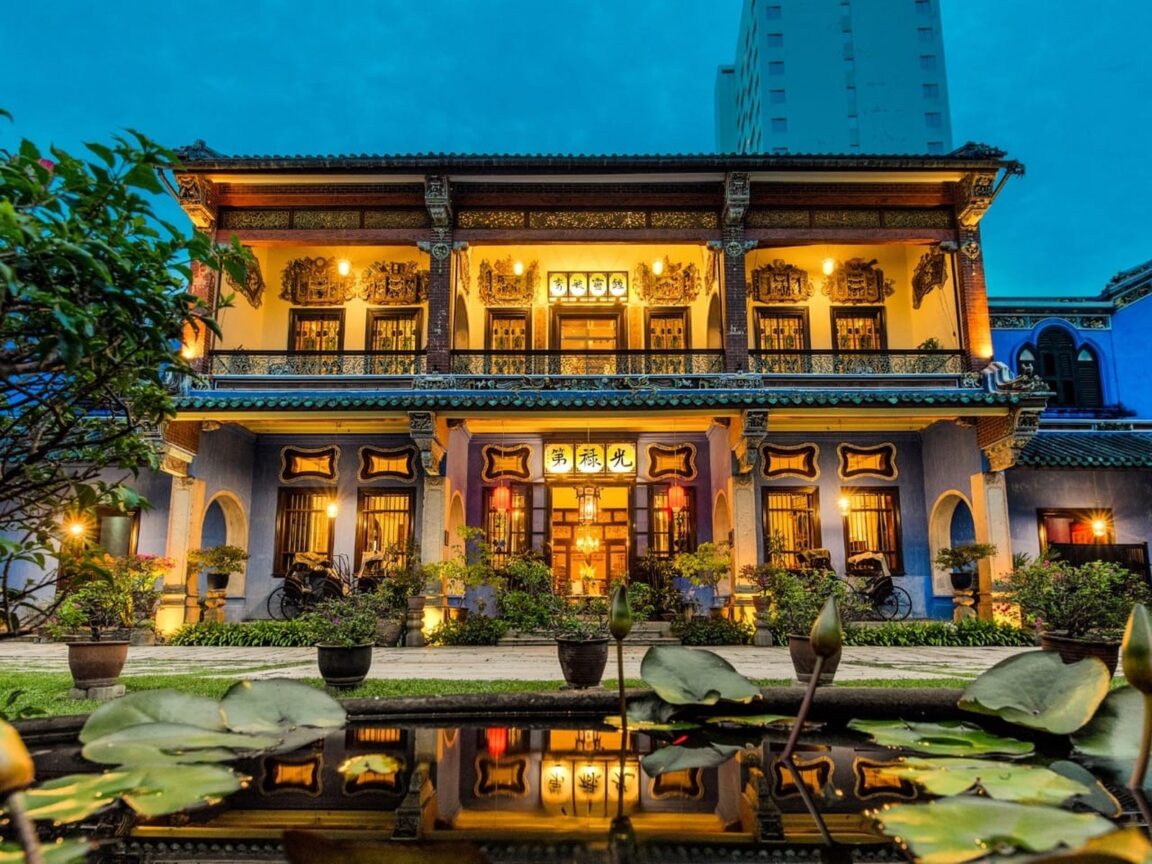
The Cheong Fatt Tze Mansion, the Blue Mansion, is the indigo washed courtyard house on Leith Street built for the Hakka tycoon Cheong Fatt Tze and completed in the early 1900s. It is now an 18 room boutique hotel, so day visitors see it only on a tour. The mansion’s own site lists two guided tours daily, at 11 am and 3:30 pm, each lasting 45 minutes, capped at 24 people and covering the reception hall, the famed courtyard and the museum exhibition on the second floor. The mansion warns that tours are often sold out and recommends buying tickets online well in advance. A self guided audio tour is also sold, with entry between 11 am and 6 pm, for travellers who cannot get a guided slot. Plan the day around whichever tour you book: the 11 am tour pairs with a dawn start at the jetties and a mural walk beforehand, while the 3:30 pm tour frees the morning and gives you the mansion in late afternoon light. Only parts of the house are accessible on tour, to protect hotel guests’ privacy, and the restaurants and bar are open to the public if you want to extend the visit.
Where are the Armenian Street murals, and when should you walk them?
George Town’s street art began as a festival commission. For the 2012 George Town Festival, Lithuanian artist Ernest Zacharevic created the Mirrors George Town series, paintings combined with real objects fixed to the walls. The best known, Little Children on a Bicycle, on Armenian Street at the Ah Quee Street corner, mounts a real bicycle under its two painted riders. Armenian Street and the lanes around Cannon Street and Ah Quee Street hold the densest cluster, alongside the Marking George Town iron rod sculptures that tell each street’s story in cartoon form. Walk the murals before 10 am on a weekday if you can: the lanes are narrow, the famous walls attract queues for photographs by late morning, and the painted plaster photographs best in soft early light. Street art here is not permanent. Works fade, are painted over or are restored, so treat any printed mural map, including ours, as a starting point rather than a checklist, and let the shophouses, clan temples and kopitiams between the murals take equal time.
What else belongs in a heritage day?
The Khoo Kongsi, the elaborate clan house of the Khoo clan on Cannon Square, is the natural fourth stop: a temple and meeting hall complex rebuilt in ornate style after a fire in 1901, open daily and small enough to see properly in under an hour. The Pinang Peranakan Mansion on Church Street, a restored Straits Chinese home filled with antiques, shows how the city’s wealthy merchant families actually lived and works well as an afternoon stop when outdoor walking loses its appeal. Between sights, the heritage zone’s working buildings matter as much as its monuments: clan temples with incense smoke at the doors, the Kapitan Keling Mosque and Sri Mahamariamman Temple within a few streets of each other on the Street of Harmony, and shophouses still trading at street level. That living density, more than any single sight, is what UNESCO inscribed.
How do you get between the heritage sights?
On foot, almost always. The UNESCO core zone is flat, compact and best read at walking pace, because the details that justify the listing, five foot ways shaded by shophouse arcades, clan temple roof ridges, iron rod sculptures bolted to corners, are invisible from a car. George Town also runs free CAT buses around the heritage area for travellers who need to rest their feet, and the traditional trishaws that gather near the main sights offer short, slow circuits at negotiated prices. Base yourself inside or beside the core zone if heritage is the point of the trip: a morning start at the jetties is a very different proposition when it is a ten minute walk from your door than when it involves a cross town ride in traffic.
What is the honest etiquette for photographing the heritage zone?
Three rules cover almost everything. At the clan jetties, remember the boardwalks are streets in a living village: photograph buildings, water and views freely, ask before photographing people, and never step into a house or block a doorway for a shot. At temples, mosques and clan houses, follow the posted dress and photography rules, which vary by site, and put the camera away during worship if asked. At the murals, be patient and brief at the famous walls, because the queue behind you is standing in the same heat. The heritage zone survives because residents and congregations still use it; visitor behaviour that treats it as a film set is the fastest way to get access tightened for everyone.
Frequently Asked Questions
Do I need to book the Blue Mansion tour in advance?
Yes, if you want a specific tour. The mansion runs guided tours at 11 am and 3:30 pm daily, caps each at 24 people, and states on its own site that tours are often sold out, recommending online booking in advance.
Are the clan jetties free to visit?
Yes. The jetties are residential boardwalk villages and entry is free. Residents ask visitors to come between 9 am and 9 pm, keep noise down and respect the houses as homes.
When is the best time to see the Armenian Street murals?
Early morning, ideally before 10 am and on a weekday. The lanes are quieter, the light is softer on the painted walls, and the queues at famous works such as Little Children on a Bicycle have not yet formed.
How much time does a heritage day in George Town take?
A full day at walking pace: jetties at dawn, murals mid morning, the 11 am Blue Mansion tour, a clan house in the afternoon and the old town again at dusk. The core zone is compact and flat.
Is George Town a UNESCO site?
Yes. The historic cities of Melaka and George Town were inscribed together on the UNESCO World Heritage List in 2008 for their multicultural trading port heritage.
Tour times and prices checked against the Cheong Fatt Tze Mansion’s official site on November 24, 2026.
Photo: Cheong Fatt Tze, The Blue Mansion, via cheongfatttzemansion.com, the mansion’s official website, used with credit. The Blue Mansion, George Town, Penang, at dusk.