 Hana Kim
Cap Karoso is a design lodge of 40 rooms and 20 villas on Karoso Beach in Kodi, on the wild southwest coast of Sumba in Indonesia, and it is the most useful base a Bali traveller can choose for a first trip to the island. The lodge sits on the shore of a coral reef, surrounded by turquoise lagoons and traditional villages, in the part of Sumba where the Marapu culture is most strongly preserved. Getting there is gated by one flight: NAM Air and Batik Air each run a daily flight of about one hour from Denpasar in Bali to Tambolaka airport, and the lodge is then a 50 minute drive away. Everything else about the trip, the lagoon, the reef, the village visits and the farm, unfolds from that single, simple arrival.
Quick Facts
- Where: Karoso Beach, Kodi, Southwest Sumba, East Nusa Tenggara, Indonesia, facing the Indian Ocean at the western end of the island.
- The lodge: 40 rooms and 20 villas, where age old Sumbanese craft and contemporary art and design are combined in every space.
- The water: a coral reef and the tranquil Karoso Lagoon in front of the lodge, with snorkelling spots, secluded beaches and the surf at Pero reached by the lodge boats.
- The culture: Kodi is a centre of Marapu, a religion the lodge dates back to the Bronze Age, with megalithic tombs and traditional houses with roofs up to 25 metres high.
- The farm: a biological farm of three hectares of rehabilitated land producing nearly all the fruit and vegetables used in the lodge restaurant and bar.
- The flight gate: daily flights from Denpasar, Bali, to Tambolaka (TMC), about one hour, with NAM Air and Batik Air each operating a daily flight, then a 50 minute drive to the lodge.
- Village visits: the lodge runs guided traditional village visits and ikat weaving experiences in Kodi, led by its Sumbanese guides.
Why does Sumba feel so different from Bali?
Bali is the natural comparison, because Bali is where almost every visitor starts, and the contrast is the point of coming. Bali is Hindu, densely settled and built around a mature visitor economy. Sumba, one island chain step further east, is drier, emptier and organised around a very different belief system. The lodge describes Marapu as a unique religion dating back to the Bronze Age and still lived today, honouring nature and ancestral authority. Its visible signs are everywhere in Kodi: indigenous art, megalithic tombs, and traditional houses whose soaring roofs, up to 25 metres high, are described by the lodge as a bridge to the spirit world.
That difference changes the rhythm of a stay. A Bali beach week is usually planned around restaurants, beach clubs and day trips booked from a crowded base. A stay at Cap Karoso is planned around tides, ceremonies and village life, with the lodge team acting as the bridge. The property calls itself a luxe launchpad for exploring Sumba, and that word, launchpad, is accurate: the rooms are the comfortable part, but the island is the programme. Travellers who loved Bali and want the Indonesia that sits beyond its shadow, quieter, stranger and far less visited, are exactly the travellers Sumba rewards.
What is the lodge itself like?
Cap Karoso has 40 rooms and 20 villas, and the design idea is consistent across both: Sumbanese heritage told through contemporary design. The lodge says its rooms will ignite your interest in Sumbanese heritage, with age old craft and contemporary art and design coming together to tell the story of the island. In practice that means a modern, low, beachfront property that uses local craft, textiles and art as its decoration rather than imported resort styling, and categories that run from studios and terrace studios up through garden and beach suites to multi bedroom villas, including a beachfront villa with its own garden path to the sand, a private pool and a secluded cabana.
The farm is the second half of the design. The lodge calls its three hectare biological farm its heart: built on rehabilitated land, it produces nearly all the fruit and vegetables used in the restaurant and bar, with cabbages, tomatoes and mangos among the crops ripening within steps of the rooms. The farm is also a working exchange with the neighbourhood, since local farmers are welcomed in to learn about biological farming and permaculture, and guests can join agricultural experiences built around composting and natural fertiliser production. For a design lodge, that is an unusually practical centre of gravity, and it shapes the food more than any single restaurant concept could. Travellers comparing design led island stays in Asia may also enjoy our guide to Capella Singapore on Sentosa, a very different island property built around heritage buildings rather than a working farm.
What do you actually do on the Kodi coast?
Start with the water in front of the lodge. The lodge programme is built around the diversity of waters that surround it: swimming and snorkelling in the tranquil Karoso Lagoon, surfing at Pero, fishing alongside local fishermen, and trips to the turquoise Weekuri saltwater lake. The lodge boats run to snorkelling spots, secluded beaches and surf breaks along the wild coast, and the lodge rates Sumba as a prime location for surfers of all levels, away from the crowds. That last point matters for Bali travellers, whose home breaks are among the most contested in Asia: a Kodi surf day is arranged around tides and local knowledge, not around beating a crowd to a peak.
On land, the programme runs through the villages. With the help of its Sumbanese guides, the lodge builds cultural exploration around traditional fishing, ikat weaving and Sumbanese sandalwood horse riding, plus excursions to secluded lagoons, waterfalls and fishing villages. Its published experiences guide lists a traditional village visit of two hours, priced for up to two guests with a supplement per additional guest, and a two village version that runs three hours, so culture here is a bookable, guided morning rather than a photo stop. The guides matter, because Kodi village life runs, in the lodge words, according to the rhythms of sacred ceremonies and the words of Ratos, the local shamans. A good guide tells you where to stand, what not to photograph and what a ceremony means; without one, a visitor is just looking at roofs.
How does the Tambolaka flight gate the whole trip?
There is no road, ferry habit or second airport that rescues a badly planned arrival, so the flight is the trip. The lodge own directions are precise: Sumba is easily reachable from Bali, with daily flights from Denpasar airport, NAM Air and Batik Air each currently operating a daily flight, a flight duration of approximately one hour, and Tambolaka, code TMC, as the destination airport. From Jakarta, the lodge notes, NAM Air operates a daily flight to Tambolaka with a short layover in Denpasar, and from Labuan Bajo in Flores, Wings Air offers a direct flight three times a week. Once you land at Tambolaka, Cap Karoso is a 50 minute drive away, and the lodge also offers arrival by helicopter on a 15 minute scenic flight.
The planning consequences follow directly. First, build the Bali connection with slack: your international arrival, your Denpasar overnight if you need one, and the Tambolaka flight are one chain, and a missed link costs a day, not an hour, because the route runs once a day per airline. Second, book the flight and the lodge transfer together, and tell the lodge your flight details, since the 50 minute drive is the last leg of the same chain. Third, count the tax and fee lines on an Indonesian island trip the way you would anywhere else in the region: our explainer on the Maldives green tax rise shows how per night island charges quietly reshape a resort bill, and the same check the total habit applies to Sumba quotes. None of this is difficult; it is simply unforgiving of improvisation.
Who is Cap Karoso right for, and who should stay in Bali?
Cap Karoso suits travellers who have done the Bali circuit and want landscape, culture and quiet to be the luxury, with design and food good enough that the remoteness never feels like a compromise. It suits surfers who value empty lineups, readers and swimmers who will use a lagoon daily, and anyone curious about a living culture that is not performed for visitors. It is a poor fit for travellers who want nightlife, a choice of restaurants outside the property, or a beach break they can leave on a whim: Kodi has none of that infrastructure, and the flight gate means departure days are fixed by the airline timetable. Choose it as a deliberate second island, four nights or more, and it becomes the part of an Indonesia trip that people describe first when they get home.
Frequently Asked Questions
How do you get to Cap Karoso from Bali?
Fly from Denpasar to Tambolaka (TMC), about one hour. The lodge states that NAM Air and Batik Air each currently operate a daily flight on the route. From Tambolaka airport, the lodge is a 50 minute drive, or a 15 minute scenic helicopter flight.
How many rooms and villas does Cap Karoso have?
The lodge has 40 rooms and 20 villas, ranging from studios and terrace studios to garden suites, beach suites and multi bedroom villas, including a three bedroom beachfront villa.
What is Marapu, and where do you see it?
Marapu is Sumba indigenous religion, which the lodge dates back to the Bronze Age and describes as honouring nature and ancestral authority. You see it in Kodi in megalithic tombs, indigenous art and traditional houses with roofs up to 25 metres high, and the lodge runs guided village visits led by Sumbanese guides to explain it.
What can you do in the water at Cap Karoso?
Swim and snorkel in Karoso Lagoon on the coral reef in front of the lodge, surf at Pero, fish with local fishermen, and take lodge boats to snorkelling spots, secluded beaches, surf breaks and the Weekuri saltwater lake.
Does Cap Karoso grow its own food?
Yes. Its biological farm covers three hectares of rehabilitated land and produces nearly all the fruit and vegetables used in the lodge restaurant and bar, and guests can join farm experiences around composting and natural fertiliser production.
Is there a flight from Jakarta or Labuan Bajo to Sumba?
According to the lodge, NAM Air operates a daily Jakarta to Tambolaka flight with a short layover in Denpasar, and Wings Air offers a direct Labuan Bajo to Tambolaka flight three times a week. Schedules change, so confirm your exact date before booking the lodge around a flight.
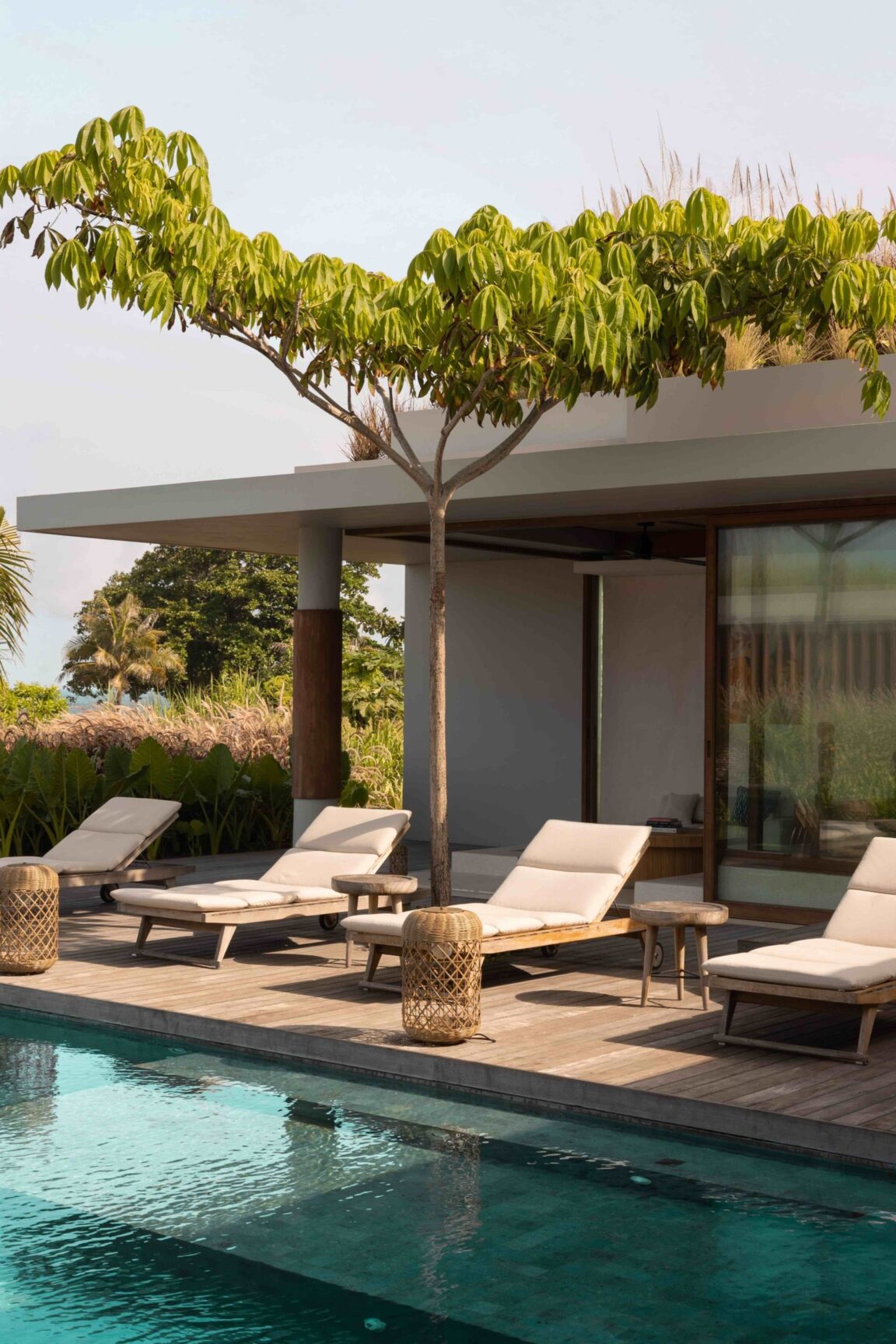
Image credit: Cap Karoso, via capkaroso.com, the property own official website. Photo: the Ndara Villa pool deck at Cap Karoso, Sumba.