 Jonas Lindqvist
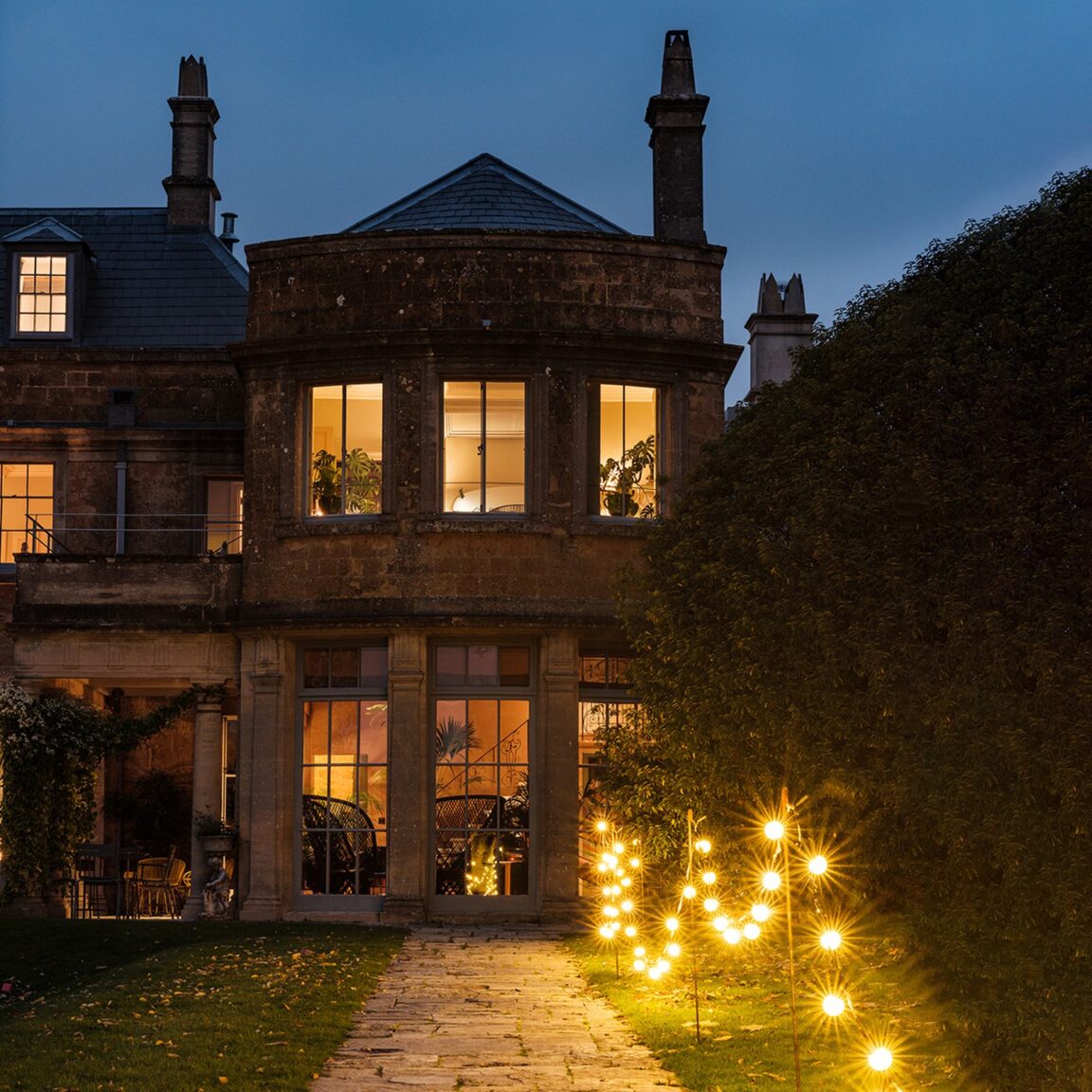
The Newt in Somerset should be judged as an estate first and a hotel second, because the hotel is the smaller part of what a stay buys. At its heart stands Hadspen House, a house built in the 17th century and remodelled in Georgian times, offering 12 guest rooms, with 11 more rooms in the converted Stable Yard nearby. Around those rooms the estate layers formal gardens, a walled apple garden called the Parabola, a recreated Roman villa and museum, a working cyder operation with tours and tastings, a garden museum, a spa with an indoor and outdoor pool, and restaurants that cook from the estate’s own market garden and herds. A traveller who treats The Newt as a pretty place to sleep near Bath will miss the point entirely. The stay is the estate, sequenced across a day or two, and the room is where you recover between its parts.
Quick Facts
- Setting: A working country estate near Bruton in south Somerset, England, around 30 minutes from Bath
- Main house: Hadspen House, built in the 17th century and remodelled in Georgian times, with 12 guest rooms, per the property
- Stable Yard: 11 further rooms in the former working stable yard, including hideaways with log burners and family suites
- Roman Villa Experience: A museum and a reimagined 4th century Romano-British villa, Villa Ventorum, built around remains unearthed on the estate
- Cyder: Estate cyder tours and tastings run daily at 12pm, 2pm and 4pm, lasting about 45 minutes, per the property
- Garden museum: The Story of Gardening, an exhibition on the history of garden design, plus the Beezantium bee exhibition
- Spa: Hadspen Spa with an indoor and outdoor pool, steam room, sauna, salt infusion chamber, hammam and treatment rooms
- Facts checked: November 23, 2026, against thenewtinsomerset.com, the property’s official website
What was Hadspen before The Newt?
The estate’s gardens were shaped over centuries by the Hobhouse family, and the official site is careful to keep that lineage visible rather than presenting the place as a new build. Hadspen House itself began as a country home built around 1690 and was reshaped in Georgian times, and the Avenue, planted by William Player, is described as the oldest remaining feature of the original formal garden, its line unchanged since the 17th century even though the trees have been replaced. The Parabola, the walled garden at the core of the grounds, conceals an apple tree maze and trained trees representing the apple growing counties of England. That continuity matters to how a stay feels. The Newt is a contemporary luxury operation, with a spa, a gelateria and a cyder bar, but it is threaded through a garden that was already old when the house was remodelled, and the best hours of a visit are the ones spent walking that older structure.
How do the rooms divide between the house and the Stable Yard?
The property publishes two clear accommodation worlds. Hadspen House offers 12 guest rooms a short stroll from the gardens and the main spa, ranging from the grandest rooms with garden views to loft rooms at the top of the house, and every room comes with a complimentary in room larder and a chilled bottle of Winston, the estate’s sparkling cyder, on arrival. The Stable Yard, a short wander from the house and gardens, holds 11 rooms that keep their equestrian character, from design led romantic hideaways with log burners to family suites and the Clock House, which has a communal area suited to friends or multi generational families travelling together. A third base, the Farmyard, sits in a former dairy cupped in a combe on the estate, with its own bar and wood fired kitchen, and hotel residents can also use the Farmyard pool. Choose the house for the Georgian manor experience and the shortest walk to dinner, the Stable Yard for character and fireplaces, and ask the property directly about Farmyard rooms if a quieter, more separate base appeals.
What does the Roman Villa Experience actually involve?
It is the estate’s most unusual asset, and the reason The Newt cannot be copied by any other Somerset hotel. The official site describes a groundbreaking archaeological and educational experience unearthed from the grounds of the estate, comprising an innovative museum and a reimagined 4th century Romano-British villa named Villa Ventorum. Sessions run daily, roughly every 30 minutes in season, and the property allows about 2 to 2.5 hours for the experience, which tells you this is a substantial visit rather than a photo stop. The museum presents remains found on the estate before the recreated villa shows how a wealthy Romano-British household lived on this ground. For travellers touring the West Country’s Roman layer, it pairs naturally with Bath, but it stands on its own as a half day. Book a slot early in a stay rather than leaving it to the last morning, when checkout pressure shortens it.
How do the cyder orchards and tours fit into a stay?
Somerset is apple country, and The Newt works that identity hard. The estate’s cyder tour and tasting runs daily at 12pm, 2pm and 4pm, lasts about 45 minutes, and is led by a member of the team who makes the cyder, ending with samples in the Cyder Cellar. The gardens themselves are partly an orchard argument: the Parabola’s trained apple trees, the cyder orchards you pass on the ride to the Farmyard Kitchen, and the Cyder Bar and Cyder Cellar on the garden map all reinforce that this is a producing estate, not a decorative one. Travellers comparing English country house hotels should weigh that working character honestly. At properties such as Amanpuri in Phuket the landscape is the luxury; at The Newt the landscape is also the larder, and the tours are how guests are let into that system.
What is The Story of Gardening, and who is it for?
The Story of Gardening is the estate’s garden museum, an exhibition that journeys through landscapes across time and place, from the ancient world to Babylonstoren in South Africa, the estate’s sister property. The property allows about 60 minutes for it, with seasonal opening hours that run later in spring and summer than in autumn and winter. Nearby, the Beezantium explores the connections between bees, the land and people, housing observation hives in the estate apiary, and bee safaris run on weekday afternoons in season. These are the elements that turn a garden walk into an education, and they suit travellers who garden at home as much as travellers who simply like looking at gardens. Garden tours with one of the estate’s gardeners run daily at 11am and 2pm and last about 60 minutes, and an estate tour adds the working engine room, including regenerative farming and the market garden.
Where will you eat, and what comes from the estate?
The Botanical Rooms, in Hadspen House, is the formal restaurant, serving elegant seasonal dining inspired by and gathered from the surroundings. The official site describes menus built on estate reared British White beef, lamb and venison, the freshest market garden vegetables, day boat fish from the Dorset coast and foraged hedgerow and woodland ingredients. For sharing style dining, the Farmyard Kitchen is a 15 minute bike ride or 10 minute buggy ride through the cyder orchards, a journey that is itself part of the evening. The Garden Cafe overlooks the kitchen gardens, and the Cyder Bar serves the estate’s own cyder. Travellers used to ryokan dining rhythms, where a stay is structured around set meals, will recognise the pattern here in English form, much as our guide to Hiiragiya Ryokan in Kyoto describes an inn whose service rhythm is the experience.
How should a stay divide between the estate, Bath and Bruton?
Give the estate the first full day. The fixed points stack up quickly: a garden tour at 11am or 2pm, a cyder tour at one of its three daily times, the Roman Villa Experience at 2 to 2.5 hours, The Story of Gardening at about an hour, and spa time, all before dinner. A second day is the honest point at which to leave the gates, for Bath’s Roman and Georgian centre or for Bruton, the small town on the estate’s doorstep that has become a West Country art and food stop in its own right. Travellers who reverse that order, sightseeing first and squeezing the estate into a final morning, consistently underuse the thing they paid for, because day visitors can buy garden entry but only residents get the estate at its quietest hours, early and late, when the gardens empty.
Who should book The Newt, and who should not?
The Newt suits travellers who want a country estate to be the destination, gardeners, food travellers who care where ingredients are raised, and anyone curious about Roman Britain who would rather walk a recreated villa than read another museum label. It suits couples and multi generational families equally, because the room stock and the activity programme both span those groups. It does not suit travellers who want a Bath city base with a short walk to restaurants and stations, nor travellers touring the West Country at speed, who would pay estate prices for a bed and breakfast. Book at least two nights, treat the published experience times as the skeleton of your days, and check seasonal opening hours before arrival, because several experiences shorten their days in autumn and winter.
Frequently Asked Questions
How many rooms does The Newt in Somerset have?
The property publishes 12 guest rooms in Hadspen House and 11 rooms in the Stable Yard, with further accommodation at the Farmyard, its former dairy. Every published room includes a complimentary in room larder and a chilled bottle of Winston on arrival.
What is Villa Ventorum at The Newt?
Villa Ventorum is the reimagined 4th century Romano-British villa at the heart of the Roman Villa Experience, built alongside a museum of remains unearthed on the estate. The property allows about 2 to 2.5 hours for the experience.
When do cyder tours run at The Newt?
Daily at 12pm, 2pm and 4pm, lasting about 45 minutes, led by a member of the cyder making team and finishing with tastings in the Cyder Cellar, per the property’s official site.
What spa facilities does The Newt have?
Hadspen Spa has an indoor and outdoor pool, steam room, sauna, salt infusion chamber, hammam and treatment rooms, plus a gym and yoga and wellbeing classes. Hotel residents can also use the pool at the Farmyard.
How far is The Newt from Bath?
The estate sits near Bruton in south Somerset, about 30 minutes from Bath, which makes Bath a comfortable day trip on the second day of a stay rather than the base itself.
Image: Hadspen House at The Newt in Somerset at dusk, its stone bay windows lit above the garden path. Photo: The Newt in Somerset, via thenewtinsomerset.com, the property’s official website, used with credit.