 Jonas Lindqvist
Bank Hotel earns its name honestly. It occupies a 1910 bank palace at Arsenalsgatan 6, built for the Sodra Sverige banking company in Renaissance palace style at the end of the Art Nouveau period, a short walk from the Nybroviken waterfront in central Stockholm. Inside, the former banking hall is now Bonnie’s restaurant under a six metre glass ceiling, the bank director’s office is now the Papillon cocktail bar, the vault below is an events space and wine cellar, and the rooftop bar Le Hibou looks over Nybroviken and Strandvagen. Judge it as a converted bank that kept its bones, and it is one of the most characterful design stays in the city.
Quick Facts
- Address: Arsenalsgatan 6, 111 47 Stockholm, by Norrmalmstorg between Norrmalm and Ostermalm, minutes from Strandvagen and Stureplan
- Building: Completed in 1910 as the head office of the Sodra Sverige Banking company, inspired by a Renaissance palace; opened as Bank Hotel in 2018
- Rooms: Rooms and suites from intimate 17 square metre singles to the 150 square metre Bank Rooftop Terrace Suite, across floors two to seven
- Main restaurant: Bonnie’s, in the former banking hall, under a glass ceiling six metres above the floor, serving breakfast, lunch and dinner
- Bars: Papillon, in the former bank director’s office; Sophie’s Bar lounge; Le Hibou rooftop bar on floor eight with terraces and panoramic views
- Below stairs: La Voute, the original bank vault, now a private events space and wine cellar
- Group: A member of Small Luxury Hotels of the World, operated within Stockholm’s Stureplansgruppen hospitality group
What survives from the building’s life as a bank?
More than a theme. The hotel’s own history page records the details a guest can still verify on foot: the glass ceiling above the former bank hall rises six metres over what is now Bonnie’s, flooding the restaurant with light and showing off the blue green stucco of the original columns. The large bronze entrance doors still carry the octagon emblem of the old bank, a mark that survives today in Handelsbanken’s logo. At the entrance, stone carvings of an owl, the wise one, and a squirrel, the frugal one, watch arrivals; the owl has become the hotel’s own logo and reappears in its design details throughout the building.
The conversion, completed when the hotel opened in August 2018, assigned each grand banking space a hospitality job that fits its proportions. A banking hall wants to be a restaurant, all height and ceremony. A director’s private office wants to be an intimate cocktail bar, all wood panelling and low light. A vault wants to be a wine cellar and a locked door party room. Because the new uses follow the old architecture instead of fighting it, the building never feels like a set. It feels like a bank that changed careers and kept its posture.
How does Bonnie’s work as the hotel’s main room?
Bonnie’s, named with a wink after Bonnie Parker of Bonnie and Clyde, is the social centre of the hotel and the room most guests remember. Breakfast is served in the hall, a cold buffet prepared by the hotel’s chefs alongside a la carte options, and it is the breakfast locals book as well as residents, which keeps the room lively rather than hushed. Lunch and dinner follow in the same space, with menus built on seasonal ingredients and an international tilt, and the six metre ceiling does the decorative work that smaller restaurants have to buy with fittings.
The details repay a slow look between courses: the chequered black and white marble floor, the green seating against the turquoise toned stucco columns, and light that changes the room’s mood completely between a bright Stockholm summer morning and a dark winter afternoon. Bonnie’s signature dessert tells the hotel’s story in miniature. Smash the Piggy Bank is a chocolate pig filled with sweets that guests break open at the table, a bank joke the kitchen has run since opening. Travellers building a Stockholm food day around the hotel can cross check the city’s wider table in our guide to what to eat in Stockholm, from fika discipline to herring rules.
What is the difference between Papillon, Sophie’s and Le Hibou?
The three bars are three different evenings, stacked in one building. Papillon, on the ground floor, occupies the bank director’s personal office and is designed as he might have kept it, lush carpet, mahogany toned walls and the proportions of a private chamber. The name, French for butterfly, follows the director’s own admiration for butterflies. It is the hotel’s most elegant and intimate bar, the choice for a quiet, serious cocktail before dinner.
Sophie’s Bar is the counterweight, a vibrant all day lounge where hotel guests and Stockholmers mix for coffee, a low key supper or after work drinks without any ceremony at all. Le Hibou, the owl, sits on floor eight and plays the opposite game to Papillon: a rooftop bar styled like a Parisian apartment, with a double terrace and views the hotel itself describes as 360 degree, over the rooftops toward the Old Town, Gamla Stan, and down to the Nybroviken water and Strandvagen below. In summer the terraces are the hotel’s hardest seats to claim at golden hour. In winter the same views arrive with darkness by mid afternoon, which the room turns into an advantage rather than an apology.
Where exactly is the hotel, and what does the position buy you?
Arsenalsgatan 6 stands by Norrmalmstorg, at the seam of Norrmalm and Ostermalm, Stockholm’s most polished central districts. The Nybroviken quay, where archipelago boats depart, is effectively on the doorstep, and the hotel points guests toward the 24,000 islands of the Stockholm archipelago from there. Strandvagen, the city’s grand waterfront boulevard, and Stureplan, its nightlife and shopping square, are both a few minutes on foot. The Royal Dramatic Theatre is a short walk, as are the flagship stores of Biblioteksgatan.
That position suits a particular kind of Stockholm trip: a short, dense, mostly walkable stay where the hotel itself is part of the itinerary. It is less obviously the base for a family needing sprawling rooms at a gentle price, or for a traveller who wants a quiet residential neighbourhood. Our three days in Stockholm plan shows how the Nybroviken base connects to Gamla Stan and Djurgarden, and our earlier profile of Ett Hem covers the city’s other famous design stay, a townhouse hideaway in Larkstaden that plays intimacy against Bank Hotel’s grandeur.
Who should book Bank Hotel, and who should look elsewhere?
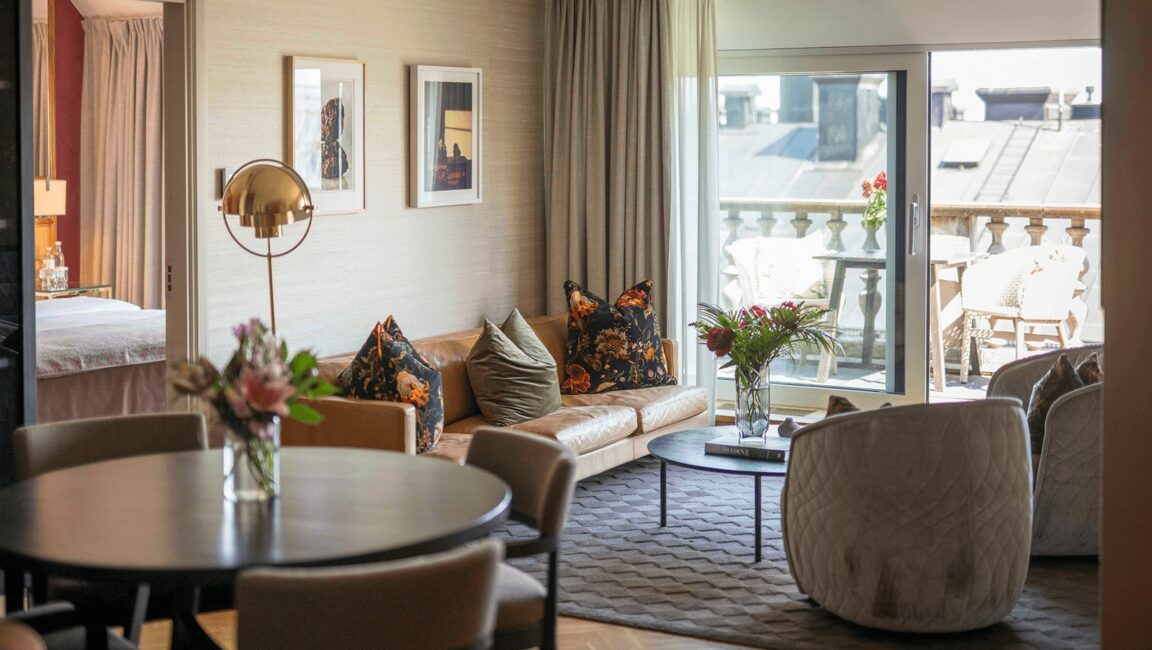
Book it if you want the building to be an event in itself, if breakfast in a banking hall and a nightcap in a director’s office sound like the point of a city break, and if a central, walk everywhere address matters more than square metres per krona. The room range is honest about the trade: entry rooms start at 17 square metres, compact by any standard, and the value climbs steeply toward the terrace suites at the top of the house, where private outdoor space over the rooftops is the real luxury. Couples on a design led weekend are the hotel’s natural guests, and the bars and Bonnie’s give a rainy day an indoor programme that many boutique rivals cannot match.
Look elsewhere if you need a large family room, a spa led stay, or a quiet corner of the city away from its social centre. Bank Hotel is deliberately vibrant, locals crowd its bars and restaurant by design, and travellers who equate luxury with silence may find the ground floor livelier than they hoped. What no guest should do is book it blind to the season. Stockholm’s light swings from near endless summer evenings to midwinter afternoons that end before tea, and the same terrace suite is two different products in June and in December. Both are worth having. They are just not the same stay.
Frequently Asked Questions
When was Bank Hotel built, and when did it open as a hotel?
The building was completed in 1910 as the head office of the Sodra Sverige Banking company, in Renaissance palace style at the tail end of the Art Nouveau period. It opened as Bank Hotel in August 2018, after its conversion by the Stureplansgruppen hospitality group.
What is Bonnie’s at Bank Hotel?
Bonnie’s is the hotel’s main restaurant, set in the former banking hall under a six metre glass ceiling. It serves the hotel’s breakfast, a chef prepared cold buffet with a la carte options, plus lunch and dinner with seasonal, internationally tilted menus. Its signature dessert is Smash the Piggy Bank, a chocolate pig broken open at the table.
Does Bank Hotel have a rooftop bar?
Yes. Le Hibou, on floor eight, is a rooftop bar styled like a Parisian apartment, with a double terrace and panoramic views over Stockholm’s rooftops, toward Gamla Stan and across Nybroviken and Strandvagen. It is the hotel’s top floor social space and its most contested seat at summer golden hour.
Where is Bank Hotel in Stockholm?
At Arsenalsgatan 6, 111 47 Stockholm, by Norrmalmstorg between Norrmalm and Ostermalm. The Nybroviken waterfront and its archipelago boats are on the doorstep, and Strandvagen, Stureplan and the Royal Dramatic Theatre are all within a few minutes’ walk.
What was Papillon before it was a bar?
Papillon occupies the former bank director’s personal office, and its design keeps that room’s character, wood panelling, deep carpet and intimate proportions. Its name, French for butterfly, reflects the director’s own admiration for butterflies.
Image credit: A suite living room at Bank Hotel, Stockholm, with terrace doors opening over the rooftops. Photo by Joakim Strom for Bank Hotel, via bankhotel.se, the property’s own official website, used with credit.