 Thandiwe Nkosi
Bisate Lodge is six thatched forest villas inside an eroded volcanic cone on the edge of Rwanda’s Volcanoes National Park, and its rate buys two things at once: one of Africa’s most celebrated gorilla trekking bases, and a working reforestation project that guest revenue helps fund. Wilderness, the operator, states the essentials plainly on its official site: the lodge opened in 2017, holds 34 international awards, sits within walking distance of the park, and charges from 2,869 US dollars per person per night in the November to mid December 2026 window, rising to 3,795 dollars in the June to October season, fully inclusive of meals, local drinks, laundry and lodge activities, with the 1,500 dollar gorilla permit always charged separately. Since opening, the project has replanted over 120,000 indigenous trees on former farmland around the lodge. This assessment separates the lodge, the trek and the conservation ledger, including the altitude reality of sleeping at about 2,600 metres, so a traveller can judge whether Bisate’s price is buying what they actually value.
Quick Facts
- Setting: An eroded volcanic cone beside Volcanoes National Park, Rwanda, about three hours by road from Kigali via Musanze, per Wilderness
- Villas: Six en suite forest villas designed as an homage to Rwandan royal heritage, overlooking Mounts Bisoke, Karisimbi and Mikeno
- Opened: 2017, by Wilderness, with 34 international awards since opening
- Rates: Per person per night, fully inclusive: 2,869 US dollars from November 1 to December 15, 2026, and 3,795 dollars in the June to October 2026 season, per the official rate table
- Gorilla permit: 1,500 US dollars per person per trek, charged separately, per Wilderness
- Reforestation: Over 120,000 indigenous trees replanted around the lodge since 2017, per Wilderness
- Altitude: About 2,600 metres, with cool nights and trekking on foot for two to five hours
- Facts checked: November 23, 2026, against wildernessdestinations.com, the operator’s official website
What are the six villas actually like?
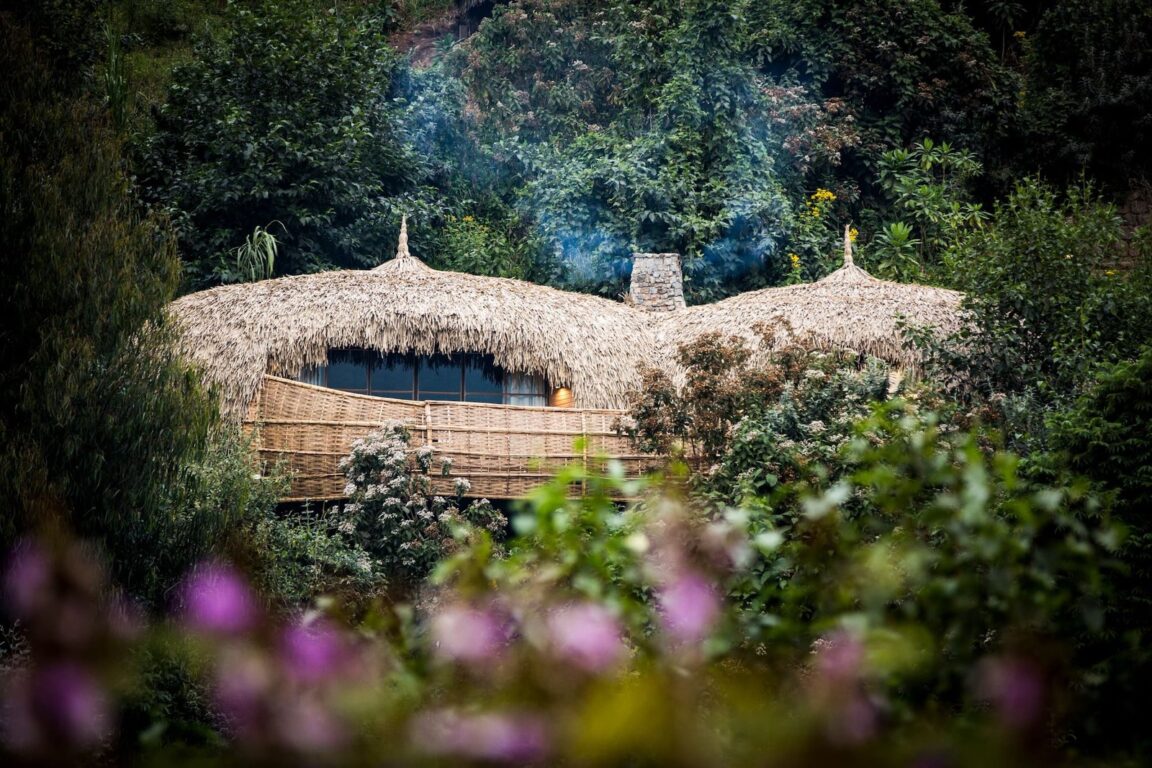
Bisate’s villas are the architecture the lodge is famous for: spherical, thatched forms rising out of the regenerating forest, designed as an homage to Rwanda’s traditional royal palace architecture, each with volcanic stone, a central fireplace, an en suite bathroom and a private deck facing the Virunga volcanoes. The count matters as much as the design. Six villas mean a maximum of twelve guests, a small dining room, and a staff ratio that large lodges cannot copy. The main lodge adds a restaurant, a wine cellar, a library and the Sanctuary wellness space, and the Bisate Kwanda, a day lounge set in the lodge’s organic vegetable garden, gives departing and arriving guests somewhere civilised to shower, eat and rest around flight and transfer times, the first facility of its kind in Rwanda according to Wilderness. The honest limitations follow from the concept: this is a forest lodge built into a hillside, with steps and paths between villas, no resort scale facilities, and evenings that end with the fire and the forest rather than entertainment. Travellers who want space, seclusion and design with a story will find the villas the point of the trip. Travellers who measure luxury in square metres and amenities lists should compare carefully, because Bisate’s luxury is concentration, not inventory.
What does the rate fund, beyond the bed?
The reforestation programme is not a garnish on the rate; it is the lodge’s founding land use. The Bisate site was degraded former farmland on the park boundary, and Wilderness has replanted it with indigenous trees, over 120,000 since 2017 by the operator’s own count, expanding montane forest habitat toward the park and building corridors for wildlife. Guests are folded into the work rather than shown it from a distance: the inclusive rate covers guided nursery visits and indigenous tree planting, guided nature and birding walks, community visits and biodiversity briefings, alongside meals, local drinks excluding reserve wines and champagne, laundry, the 3 percent tourism tax and use of the Sanctuary wellness facilities. The garden that supplies the kitchen is part of the same ledger, with produce grown on site and staples such as potatoes and eggs sourced from neighbouring farmers, so a share of the rate circulates in the villages the lodge depends on. None of this makes the rate cheap, and travellers should hold it to account as conservation spending: the verifiable claims are the tree count, the inclusive community and nursery activities, and the simple fact that the forest in the photographs did not exist two decades ago. For travellers drawn to forest restoration as a destination in itself, our guide to Congaree National Park’s floodplain forest covers a protected old growth counterpart in South Carolina.
How does the gorilla trek fit around the lodge?
The trek is the reason the lodge exists, and its terms are set by the park, not the lodge. Permits cost 1,500 US dollars per person, are charged separately from the Bisate rate, and are arranged through the operator’s Rwanda team. Wilderness describes trekking as two to five hours on foot over hilly, thickly vegetated terrain, with one hour spent with a habituated gorilla family, and advises a fair level of fitness; children under 15 are not permitted on gorilla treks under Rwandan regulations. The lodge’s position, within walking distance of the park’s trailhead sector, shortens the morning transfer that dominates trek days at bases further away. Wilderness recommends a stay of three to four nights, which allows two gorilla treks, advisable given permit cost and the variability of any single encounter, plus a golden monkey trek and time for the lodge’s own trails and village walks. Two treks mean two permits, so the permit line for a couple taking the recommended pattern is 6,000 dollars before the lodge rate is counted, and any honest Bisate budget starts there. Golden monkey trekking, the Mount Bisoke crater lake hike and the Dian Fossey gravesite visit fill the non gorilla days, and the green seasons, March to May and October to November, bring lower lodge rates and lusher forest at the price of wetter trails, while the dry seasons, June to September and December to February, offer the easiest footing.
What does sleeping at 2,600 metres actually mean?
Bisate sits high, at about 2,600 metres, and the altitude shapes the stay in small, practical ways. Nights are cold enough that every villa’s fireplace is a working feature rather than decoration, and mornings on the cone start in mist. Newly arrived guests, most of whom have flown into Kigali and driven three hours the same day or the day before, feel the elevation on the lodge’s own paths and, more seriously, on the trek, where two to five hours of climbing through forest at altitude is a different effort from the same hours at sea level. The mitigations are built into the recommended pattern: a night in Kigali before the drive up, which Wilderness itself suggests for guests on early or late flights, a first day spent on lodge trails and the nursery rather than a trek, and treks placed after a night’s sleep at the lodge rather than on arrival day. Travellers with altitude sensitivity should raise it with their travel designer before booking, and everyone should pack for the lodge as for a mountain stay, warm layers and proper walking boots, not safari khaki alone. The reward for the height is the view that defines the property: Bisoke, Karisimbi and Mikeno arranged across the decks, in the weather clearing moments the Virungas allow.
Who should book Bisate, and who should look elsewhere?
Bisate suits serious primate travellers who want the strongest conservation story on the Rwanda circuit, design led travellers who value a six villa property, and anyone for whom the reforestation programme is part of the purchase rather than a footnote. It suits travellers who will use the inclusive pattern, two treks, the monkeys, the nursery and the community walks, because an underused Bisate stay is an expensive bed near a park. It does not suit travellers unable to walk two to five hours over hilly terrain, families planning to trek with children under 15, or travellers whose budget only works with a single night, which reduces the lodge to a costly staging post. The wider region rewards a slower circuit in any case: our visit to Ait Benhaddou in Morocco makes the same argument for staying past the day visit, in a very different landscape. Judged on its own terms, Bisate is the rare luxury lodge whose land use is more interesting than its thread count, and its rate is defensible exactly to the extent that a guest values that.
Frequently Asked Questions
How much does Bisate Lodge cost?
Wilderness publishes fully inclusive rates per person per night of 3,795 US dollars for June to October 2026, 2,869 dollars from November 1 to December 15, 2026, and 2,723 dollars for March to April 2027. Gorilla permits, at 1,500 dollars per person per trek, conservation and park charges are additional.
What is included in the Bisate rate?
Per Wilderness, accommodation, all meals, local drinks excluding reserve wines and champagne, laundry, the 3 percent tourism tax, and lodge activities including guided nature walks, birding, tree planting, community visits, biodiversity briefings and use of the Sanctuary wellness facilities.
How many villas does Bisate have?
Six en suite forest villas, each designed as an homage to Rwandan royal heritage, with a fireplace and a private deck overlooking Mounts Bisoke, Karisimbi and Mikeno, plus a restaurant, wine cellar, library, spa and the Bisate Kwanda day lounge.
What is the reforestation programme at Bisate?
The lodge stands on former farmland beside Volcanoes National Park, and Wilderness states that over 120,000 indigenous trees have been replanted there since the lodge opened in 2017, restoring montane forest habitat. Guests can visit the nursery and plant a tree as part of the inclusive activities.
How long should a Bisate stay be?
Wilderness recommends three to four nights, allowing two gorilla treks, a golden monkey trek and time for birding, village walks and the reforestation experience. The lodge is about a three hour drive from Kigali via Musanze.
Image: A thatched Bisate forest villa with a woven balcony rising from dense green reforestation, woodsmoke drifting from its stone chimney. Photo: Wilderness, via wildernessdestinations.com, the operator’s official website, used with credit.