 Maya Chen
Two days is the right amount of time for Melaka, and the plan that works is simple: spend the first day inside the compact Straits heritage core on foot, anchored on Dutch Square, the Baba and Nyonya streets and the river, then use the second day for the museums, the Portuguese and mosque quarters and a slower repeat of whatever earned it. Melaka, also spelled Malacca, is small enough that almost everything in this itinerary sits within a 20 minute walk of the red Stadthuys, yet layered enough, Malay sultanate, Portuguese, Dutch, British and Peranakan Chinese, that rushing it into a day trip from Kuala Lumpur wastes exactly what makes it special. The Jonker Street night market only runs on Friday, Saturday and Sunday evenings, so if those nights matter to you, and they should, build the two days around a weekend. This guide sequences the sights so the walking stays short, the heat stays manageable and the one genuine decision, when to take the river cruise, gets made on evidence rather than impulse.
Quick Facts
- Where: Melaka City, state of Melaka, on the Strait of Malacca, southwest coast of Peninsular Malaysia
- Heritage status: Inscribed by UNESCO in 2008 as part of the Historic Cities of the Straits of Malacca, shared with George Town, Penang
- Core landmark: Dutch Square, with the Stadthuys, built around 1650 and regarded as the oldest surviving Dutch building in the East, and Christ Church, completed in 1753
- Night market: Jonker Walk night market on Jalan Hang Jebat, Friday to Sunday, about 6 pm to midnight, street closed to traffic
- River cruise: Melaka River Cruise, about 45 minutes, boats through the day and evening from the Taman Rempah and Muara jetties
- Key museum: Baba and Nyonya Heritage Museum on Jalan Tun Tan Cheng Lock, a Peranakan townhouse museum, closed on Tuesdays in recent schedules
- Best base: Inside or beside the heritage core, around Jonker Street and Heeren Street, so both days stay walkable
- Arrival: Long distance buses use Melaka Sentral terminal, a short taxi or ride hailing trip from the old town; most visitors arrive from Kuala Lumpur or Singapore
Why does Melaka reward two days instead of one?
Melaka was one of the great trading ports of Asia. Founded as a Malay sultanate port around 1400, it was taken by the Portuguese in 1511, then by the Dutch in 1641, then administered by the British, and each power built in its own materials on almost the same few streets. The result is a heritage core where a Dutch civic hall, a Portuguese fortress gate, a Chinese temple founded in the 17th century, a mosque with a pagoda shaped minaret and rows of Peranakan shophouses all stand within a short walk of one another. UNESCO recognised that density in 2008. A single day forces a choice between the monuments and the living culture around them. Two days removes the choice: day one covers the colonial spine and the Peranakan streets, day two covers the museums and the quarters most day trippers never reach, and one of the evenings belongs to the night market and the lit river.
There is also a practical reason. The core is best early and late, when the light is kind and the midday heat has eased. Two days give you two mornings and two evenings, which is when Melaka is at its best, and they let you treat the middle of each day as museum time rather than a test of endurance.
Day 1 morning: Dutch Square and the colonial spine
Start at Dutch Square, the red painted plaza that every Melaka itinerary orbits. The Stadthuys, the Dutch town hall and governor residence built around 1650, now houses history and ethnography displays, and Christ Church beside it, finished in 1753 for the centenary of Dutch Melaka, still anchors the square. The Tang Beng Swee clock tower and the Queen Victoria fountain complete a set piece that photographs best before 9 am, before the decorated trishaws, known locally as beca, fill the square with music and colour. Take the trishaw question seriously for a moment: the rides are short, theatrical and priced per trip rather than per person in many cases, so agree the route, duration and price before climbing in. As a way of seeing the core once, with commentary, a short loop has real value. As transport, your feet are faster.
From the square, cross to St Paul Hill. The roofless St Paul Church, built by the Portuguese in 1521 as a chapel and later used by the Dutch as a burial place, holds tombstones that read like a shipping register of old Melaka, and the view from the hill explains the port: river, strait and rooftops in one frame. Walk down to the Porta de Santiago, the surviving gate of the Portuguese A Famosa fortress, most of which was demolished in the British period. The gate is small, and that is the point. It is a fragment, and standing in front of it makes the scale of what was lost easier to grasp than any reconstruction.
Day 1 afternoon: the Baba and Nyonya streets
Cross the river into the Peranakan quarter. The Baba Nyonya, also called Straits Chinese, are descendants of Chinese traders who settled in the Straits ports centuries ago and built a culture that blends Chinese, Malay and colonial European elements in language, dress, food and furniture. Their grandest houses line Jalan Tun Tan Cheng Lock, long known as Heeren Street, and Jalan Hang Jebat, Jonker Street. The Baba and Nyonya Heritage Museum occupies a townhouse on Heeren Street that a wealthy Peranakan family built in the late 19th century, and its guided visits walk through reception halls, bedrooms and kitchens filled with carved hardwood, inlaid mother of pearl furniture, porcelain and embroidered wedding dress. Allow about an hour, check the day’s tour times on arrival, and note the regular Tuesday closure when planning which day carries this visit.
Give the parallel Jalan Tokong, the street often called Harmony Street, its own slow pass. Within a few hundred metres stand Cheng Hoon Teng Temple, founded in the 17th century and among the oldest functioning Chinese temples in Malaysia, the Kampung Kling Mosque, originally built in the 18th century with a distinctive tiered minaret, and the Sri Poyatha Moorthi Temple, founded in 1781 and among the oldest Hindu temples in the country. Three faiths, one street, no fences between them. It is the single most efficient illustration of how Melaka actually worked as a port city.
Day 1 evening: Jonker Walk and the river decision
On Friday, Saturday and Sunday, Jalan Hang Jebat closes to traffic from about 6 pm and becomes the Jonker Walk night market, a dense run of food stalls, antique and craft shops, snack sellers and buskers that continues to around midnight. Eat here rather than before it: chicken rice balls, a Melaka signature of rice cooked in chicken broth and rolled into balls, satay celup, skewers cooked in a shared peanut sauce pot, nyonya laksa, cendol shaved ice with palm sugar, and pineapple tarts from the bakeries that line the street. Arrive at the start for food with shorter queues, or after 9 pm when the crowd thins slightly. If your two days fall on weekdays, the street is still lined with shops and cafes by day, but the market itself will not run, which is the strongest argument for timing a Melaka trip across a weekend.
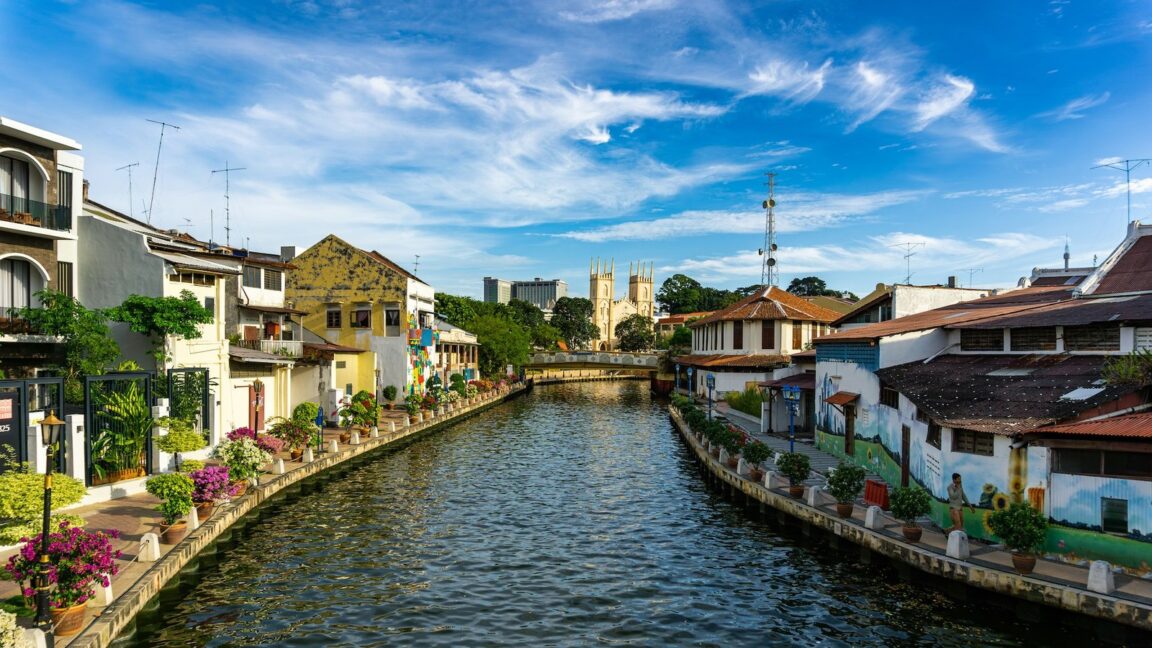
Now the river cruise call. The Melaka River Cruise runs about 45 minutes along roughly 9 kilometres of the Sungai Melaka, passing Kampung Morten’s traditional Malay houses, riverside murals, old warehouses and the backs of the Jonker shophouses, with boarding at the Taman Rempah jetty near the Spice Garden and at the Muara jetty near the river mouth. Boats run through the day and into the evening, about every 30 minutes in recent schedules, with a Friday midday pause observed by the operator. The honest verdict: take it once, at dusk. A daytime cruise doubles what you have already seen on foot, only slower. A dusk cruise shows you a different city, bridges and facades lit, murals glowing, the river doing the work. If you only have patience for one paid ride in Melaka, the cruise at dusk beats the trishaw loop. If the queue at dusk is extreme, the same cruise after the night market, on the last boats of the evening, is a close second.
Day 2: museums, the Portuguese quarter and a slower riverbank
Use the second morning for the museums you skipped. The Maritime Museum occupies a replica of the Flor de la Mar, a Portuguese galleon that sank off Sumatra, and covers the port’s seaborne centuries. The Melaka Sultanate Palace Museum, a wooden reconstruction based on palace descriptions from the Malay Annals, gives the pre colonial sultanate its due before the European sequence begins. Between them, the riverside museums near Dutch Square fill the gaps in the story you walked on day one.
In the afternoon, walk south to the Portuguese Settlement at Ujong Pasir, where descendants of Portuguese settlers, the Kristang community, still live around a square of seafood restaurants facing the strait. It is a different Melaka from the heritage core, quieter and residential, and the grilled fish and Portuguese baked dishes here make a strong final meal. On the way back, stop at the floating mosque, Masjid Selat Melaka, set on a man made island at the river mouth, most striking at sunset when the tide is high enough for it to appear to float. Finish with a last walk along the river promenade to Kampung Morten, whose preserved Malay timber houses, including the Villa Sentosa living museum, close the cultural circle the Baba Nyonya museum opened.
Where to stay, and how the days connect
Stay inside the core if you can. The streets around Jonker and Heeren hold restored shophouse hotels at most price levels, and being able to walk home from the night market changes the trip. The riverfront just north of the core and the area around Dutch Square offer larger hotels a few minutes further out. What matters is not the star count but the walk: if your hotel is beyond a 15 minute stroll from Dutch Square, you will start rationing trips back into the old town, and Melaka punishes rationing because its best hours are early and late.
Melaka pairs naturally with Malaysia’s other heritage cities. The food first planning in our Ipoh travel guide makes a useful contrast, another former boom town where the eating is the itinerary, and the riverfront base in our Kuching guide shows the Borneo side of the same Straits trading world. Most international visitors also need Malaysia’s digital arrival formalities in order before they land, which are worth sorting at booking time rather than at the border.
Frequently Asked Questions
Is two days enough for Melaka, or is it a day trip?
Two days is enough for the heritage core, the main museums, the Portuguese Settlement and a night market evening, without rushing. A day trip from Kuala Lumpur covers Dutch Square, Jonker Street and one museum, but misses the night market unless it runs very late, and misses the quieter quarters entirely. If you can only spare one day, come on a Friday, Saturday or Sunday and stay into the evening.
When does the Jonker Street night market run?
The Jonker Walk night market runs on Friday, Saturday and Sunday evenings, roughly 6 pm to midnight, with Jalan Hang Jebat closed to traffic. Individual stalls keep their own hours and the market is weather dependent, so treat the first evening hour as the reliable window for the fullest line up of food stalls.
Is the Melaka River Cruise worth it?
Yes, once, and best at dusk or after dark when the bridges, murals and facades are lit. The cruise lasts about 45 minutes and covers the river between the Taman Rempah and Muara jetties, passing Kampung Morten and the Jonker shophouse backs. In flat midday light it largely repeats the walking route, so daytime is the weakest slot for it.
What should I eat in Melaka?
The signatures are chicken rice balls, satay celup, nyonya laksa, asam pedas fish, cendol with gula melaka palm sugar, and pineapple tarts. Peranakan restaurants on and around Jonker and Heeren streets serve full nyonya meals, while the night market is the best place to graze across several dishes in one evening.
How do I get to Melaka, and around it?
Most visitors arrive by long distance bus from Kuala Lumpur or Singapore to Melaka Sentral, then take a taxi or ride hailing car about 15 minutes to the old town. Inside the heritage core, walking covers nearly everything in this itinerary. Ride hailing is the practical option for the Portuguese Settlement and the floating mosque.
What is the best time of year to visit Melaka?
Melaka is hot and humid year round, with rain possible in any month and heavier showers typically in the inter monsoon periods around April to May and October to November. Mornings and evenings are the comfortable sightseeing windows in every season. Check the forecast for your dates and carry rain cover, since showers tend to be short and sharp rather than day long.