 Jordan Ellis
Three days in Sarajevo divides cleanly into three layers, and this plan keeps them separate: day one in Bascarsija, the Ottoman bazaar quarter where the city began; day two up Mount Trebevic by cable car for the Olympic mountain and the view that explains the valley; and day three at the Tunnel of Hope in Butmir, the siege museum that deserves its own half day and its own headspace, with the day trip question answered plainly at the end. Sarajevo is a narrow city, stretched along the Miljacka River between steep hills, and almost everything in the old and central districts is walkable. What defeats first time visitors is not distance but sequencing: mixing the bazaar, the mountain and the siege sites into one blurred day undersells all three. Prices below are in convertible marks, abbreviated KM, which are pegged to the euro, and every paid sight in this plan takes cash more reliably than cards, so carry marks in small notes.
Quick Facts
- Where: Sarajevo, capital of Bosnia and Herzegovina, in a narrow valley along the Miljacka River
- Old town: Bascarsija, the Ottoman bazaar founded in the 15th century, centred on the wooden Sebilj fountain
- Cable car: Trebevic cable car from the Bistrik station above the old town to about 1,160 metres, roughly 7 to 9 minutes, reopened in 2018 after wartime destruction
- Tunnel museum: Tunnel of Hope, Tunel spasa, at Butmir by the airport; the wartime tunnel ran about 800 metres under the airport runway
- Currency: Convertible mark (KM, also written BAM), fixed at about 1.96 KM to 1 euro; cash essential at smaller sights
- Getting around: Walking in the centre, trams along the valley floor, taxis for Butmir and the cable car station if preferred
- Day trip call: Mostar by train is the outstanding day trip, but with only three days it replaces the free half day, it does not add to it
How Sarajevo is laid out, and why it matters
Sarajevo runs east to west in a line. At the eastern end sits Bascarsija, founded under Ottoman rule in the 15th century around the endowment of Gazi Husrev-beg, the governor whose mosque, madrasa, caravanserai and market halls still structure the quarter. West of it, the pedestrian Ferhadija street marks the famous meeting of cultures line, where Ottoman lanes give way to the grander facades of the Austro Hungarian period after 1878. Further west still come the Yugoslav era blocks of Marijin Dvor and the long tram corridor toward Ilidza. Above everything, the hills that make the city beautiful also made its 1992 to 1995 siege possible, a fact the third day of this plan confronts directly. Reading the city in this order, bazaar, empire, mountain, siege, is the difference between seeing sights and understanding a place.
Day 1: Bascarsija and the two empires
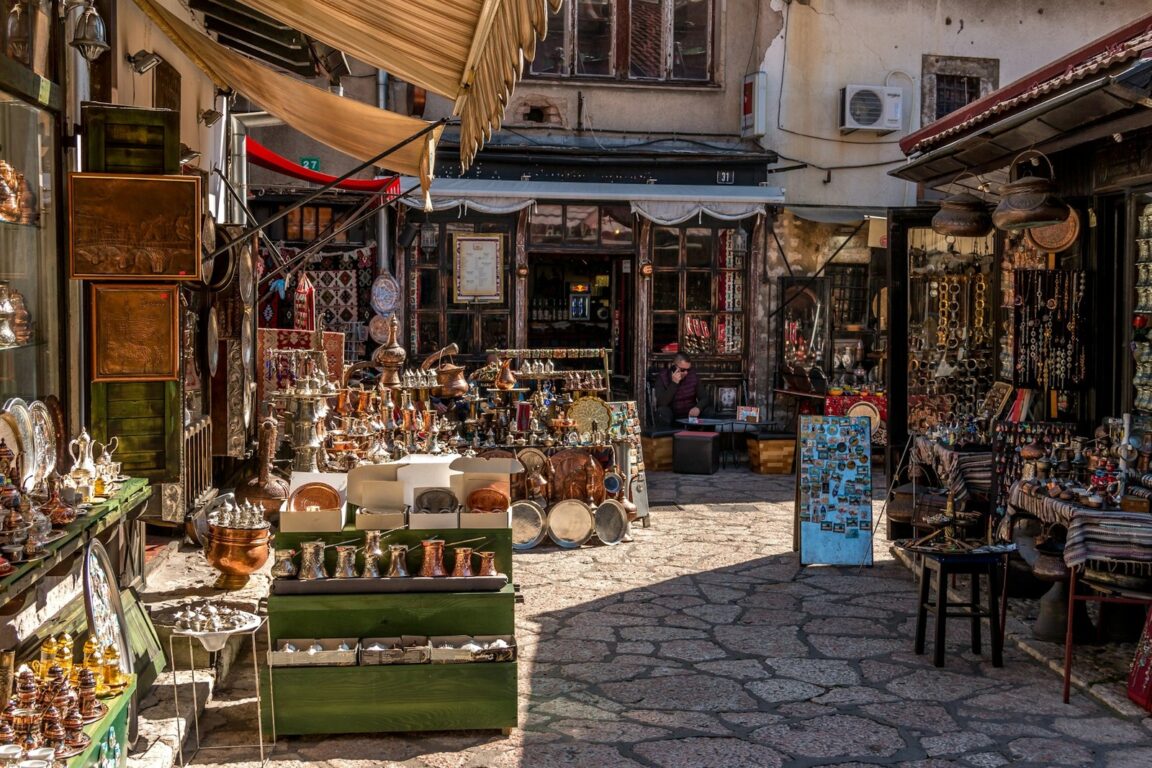
Begin at the Sebilj, the ornate wooden fountain of 1753 that stands as the old town’s symbol, ideally before 10 am when the lanes are still opening. Bascarsija is a working bazaar, not a set: coppersmiths in Kazandziluk street still hammer trays and coffee sets by hand, the Brusa Bezistan, a domed market hall of the 16th century, sells textiles under stone vaults, and the Morica Han caravanserai courtyard offers coffee where traders once stabled horses. The Gazi Husrev-beg Mosque, built in 1530 to 1531 and the quarter’s spiritual centre, receives visitors outside prayer times for a small fee with modest dress required; its clock tower, the sahat kula, has kept lunar time for the city’s prayers for centuries.
Eat the bazaar’s two signatures on day one, while appetite and novelty align. Cevapi, grilled minced meat fingers served in flat somun bread with chopped onion and kajmak, is Sarajevo’s defining dish, and the old town grills around Ferhadija serve it in fives and tens. Burek and its sibling pies, rolled filo filled with meat, cheese, potato or spinach, come from the small bakeries called buregdzinica and make the city’s best cheap lunch. Then slow down for Bosnian coffee, served in a dzezva pot with a fildzan cup and rahat lokum, and poured and drunk unhurriedly. The ritual is the attraction, and rushing it in a bazaar cafe misses the point of the quarter entirely.
In the afternoon, walk west across the meeting of cultures marker in Ferhadija and feel the street widen and the facades rise. Cross the Miljacka to the Latin Bridge, beside which Gavrilo Princip assassinated Archduke Franz Ferdinand on 28 June 1914, the shot that set off the chain into the First World War; the small Museum of Sarajevo 1878 to 1918 on the corner tells the Austro Hungarian decades, and recent listings put entry at 5 KM with a combined ticket for the museum’s five branches at 20 KM. End the day at the Vijecnica, the City Hall of 1896, burned with its library in 1992 and reopened in 2014 after a long restoration, its striped neo Moorish hall now hosting exhibitions; recent listings show daily opening to 5 pm and entry around 10 KM. Verify both museums’ hours on the day, as Sarajevo’s smaller institutions adjust them seasonally.
Day 2: the Trebevic cable car and the Olympic mountain
The cable car is the best half day in Sarajevo, and the call is easy: go, in the morning, on the clearest day of your three. The line first opened in 1959, was destroyed early in the siege, and reopened on 6 April 2018, running from the lower station in Bistrik, a short uphill walk east of Bascarsija, to an upper station at about 1,160 metres near Vidikovac. The ride takes under ten minutes and unfolds the whole valley beneath you. Published visitor fares in recent seasons have been around 20 KM return for foreign visitors, with one way tickets cheaper, and the operator’s hours vary by day and season, with later Monday starts in some schedules, so check the operator, zicara.ba, the evening before. Strong wind stops the line, which is the second reason to keep this morning flexible and swap days if the forecast demands it.
At the top, the essential walk is the abandoned bobsleigh and luge track from the 1984 Winter Olympics, a concrete ribbon curving down through pine forest, now covered in graffiti and slowly reclaimed by trees. It is reached by a signed path of roughly 15 to 20 minutes from the upper station. Walk a section of it, stay on established paths throughout Trebevic, and do not wander off route into uncleared ground, a standing safety rule for Bosnia’s wartime hillsides. Allow two to three hours for the mountain in total, ride down by early afternoon, and spend the rest of day two on the layer day one skipped: the War Childhood Museum, which presents childhood in the siege through objects and short testimonies and lists daily opening in recent schedules, or the National Museum’s archaeology and natural history halls near Marijin Dvor. Either pairs well with an evening tram ride west and dinner outside the bazaar, in the Ferhadija and city centre restaurants where Sarajevans themselves eat.
Day 3: the Tunnel of Hope, done properly
The Tunnel of Hope, Tunel spasa, is not in the old town, and treating it as a quick add on is the most common Sarajevo mistake. The museum stands in Butmir, south of the airport, at the house of the Kolar family, from which the tunnel was dug. Between March and July 1993, with Sarajevo encircled and the airport held by UN forces, residents dug a tunnel of about 800 metres beneath the airport runway to Dobrinja, and through it passed food, medicine, fuel, cables and people for the rest of the siege. The museum preserves a short section of about 20 to 25 metres that visitors can walk through, bent low, plus a film, photographs and exhibits in the family house, whose wall still carries shell marks.
Plan it as a half day. Recent visitor information lists opening from 8:30 am to 5 pm from April to October and 9 am to 4 pm from November to March, last entry 30 minutes before closing, with regular admission around 20 KM, student and concession rates lower, and an audio guide a few marks extra. Payment has been cash in marks only, with no cards or foreign currency accepted, so arrive with the exact money. Reaching Butmir takes about 20 to 30 minutes by taxi from the old town, or a tram toward Ilidza plus a signed walk of 15 to 20 minutes from the nearest stop; a taxi that waits, or a booked return, removes the one awkward leg. Give the museum 60 to 90 minutes, and leave the rest of day three deliberately light: the Yellow Fortress viewpoint above the old town at sunset, from which the white gravestones on the hillsides are part of the view, is the right closing note, reflective rather than rushed.
The day trip call: Mostar, Konjic, or neither?
With three days, the honest answer is that Sarajevo itself fills them, and the day trip is optional rather than owed. If you take one, take the train to Mostar: the line south through the Neretva gorge is one of Europe’s great short rail journeys, and Mostar’s Stari Most, the Ottoman bridge rebuilt after its 1993 destruction, plus its own small bazaar, fit a long day with an early start. Konjic, on the same line, works as a shorter alternative. What not to do is compress the Tunnel of Hope into a spare hour to free a day for Mostar; of everything in this plan, the tunnel is the sight that most changes how visitors understand the city they have been enjoying. Travellers building a wider Balkan loop will find the same layer by layer approach useful in our three days in Krakow itinerary, and the lake town calm of our Ohrid guide makes a natural southern continuation from a Sarajevo start.
Frequently Asked Questions
How many days do you need in Sarajevo?
Three days covers the old town properly, the Trebevic cable car and Olympic track, and the Tunnel of Hope with time to absorb it, plus one or two further museums. Two days is workable if the cable car morning is dropped or merged, but one day reduces the city to the bazaar and a bridge, which undersells it badly.
Is the Trebevic cable car worth it?
Yes, on a clear morning it is the single best viewpoint over Sarajevo and the walk to the 1984 Olympic bobsleigh track adds a layer no city centre sight offers. Check the operator’s hours and wind status before setting out, note that fares and Monday opening times vary by season, and carry cash in marks.
How do you visit the Tunnel of Hope?
The museum is at Butmir by the airport, about 20 to 30 minutes by taxi from the old town, or by tram toward Ilidza plus a signed walk. Allow 60 to 90 minutes on site. Recent listings give seasonal hours to 5 pm in summer and 4 pm in winter, admission around 20 KM, and cash in convertible marks only, so confirm the day’s hours and bring exact money.
What should I eat in Bascarsija?
Cevapi with somun, onion and kajmak is the essential plate, burek and the other filled pies from a buregdzinica are the essential snack, and Bosnian coffee served in a dzezva is the essential pause. Grills and bakeries throughout the old town serve all three at modest prices; pay in cash and expect small places to be busy at lunch.
Can you do Mostar as a day trip from Sarajevo?
Yes, by train through the Neretva gorge or by bus, with an early start and a late return. Mostar’s old town and rebuilt Stari Most fit comfortably into the day. With only three days in total, it should replace your free time rather than squeeze the Tunnel of Hope or the cable car, both of which outrank it for a first visit.
Is Sarajevo safe and easy to walk?
The centre and old town are compact and walkable, trams cover the valley floor, and ordinary city awareness applies as anywhere. Two specific rules matter: stay on marked paths on Trebevic and other wartime hillsides rather than wandering off route, and carry convertible marks in cash, because several of the most important sights do not reliably take cards.