 Hana Kim
Put the pancakes first. Quy Nhon signature dish is banh xeo tom nhay, small crisp shrimp pancakes eaten hot from the pan, and the food trip that works here is built around them: a fish cake noodle breakfast, pancakes late in the morning, jellyfish noodles and fishing village food across two days, with the morning markets before the restaurant nights. Quy Nhon is a working fishing city on Vietnam south central coast, long the capital of Binh Dinh and since July 2025 part of an enlarged Gia Lai province with Quy Nhon as its centre. It has not been turned into a resort strip, menus are often Vietnamese only, and that is exactly why the food is this good and this cheap to explore slowly.
Quick Facts
- Where: Quy Nhon, on the south central coast of Vietnam, a fishing city between Da Nang and Nha Trang, with its airport at Phu Cat and its main line station at Dieu Tri
- The signature: Banh xeo tom nhay, jumping shrimp pancakes. Small, crisp, palm sized discs served flat with whole fresh shrimp on top, unlike the large folded pancakes of the south
- Where for pancakes: Gia Vy, 14 Dien Hong, the best known banh xeo address in the city, with other long running houses on the same street
- The breakfast: Bun cha ca, rice vermicelli in a clear fish bone broth with fried and steamed fish cakes. Bun Ca Ho Thi, 279 Tran Hung Dao, serves it alongside bun sua and banh canh
- The unusual order: Bun sua, jellyfish noodles, and goi sua, jellyfish salad. Bun Cha Ca Ngoc Lien, 379 Nguyen Hue, is a listed address for both fish cake and jellyfish noodles
- Market rule: Cho Dam and the harbour markets in the morning for the day catch. Seafood elsewhere is sold by weight at the daily market price, so ask before you order
- Michelin note: The Michelin Guide Vietnam selection covers Hanoi, Ho Chi Minh City and Da Nang. Quy Nhon has no Michelin listed restaurants, so this guide is built from local addresses and the city own food streets instead
What makes Quy Nhon banh xeo different?
Size, heat and the shrimp. In Saigon a banh xeo is a big turmeric crepe folded over its filling. In Quy Nhon the pancake is cast small in a hot pan or clay mould, comes out crisp and flat, and carries whole fresh shrimp on top, shrimp so fresh the dish is named for the way they jump in the pan, tom nhay. Bean sprouts, onion and herbs go in and around it, the pancake is cut and wrapped or eaten with greens, and the dipping sauce is a sweet and sour fish sauce that the house makes its own way. Four small pancakes between two people is a sensible first order at a busy house, and the correct number to order on the second visit is more.
Eat them where the pans never cool down. Dien Hong street is the pancake address, and Gia Vy at number 14 is the name every local list starts with, a house with around two decades of service behind it in the city guides. The rhythm of a good banh xeo shop is audible: batter hissing, pancakes sliding out in sequence, tables turning over fast. Sit, order a first round, watch how the table next to you wraps and dips, and copy them. This is a dish with a technique, and the technique is half the pleasure. Go late in the morning, after the noodle breakfast and before the midday heat, when the shops are in full flow and the shrimp are from the morning market.
Why is breakfast a bowl of fish cake noodles?
Because Quy Nhon goes to sea before dawn and eats like it. Bun cha ca is the city everyday breakfast: rice vermicelli in a clear, sweet broth made from fish bones, topped with cha ca, fish cakes of mackerel, barracuda or scad pounded until they bounce, served both fried and steamed in the same bowl. It is light, clean and savoury in a way that sets up a day of eating rather than ending it, and it costs a fraction of a hotel breakfast. Bun Ca Ho Thi at 279 Tran Hung Dao is a big central room listed for bun cha ca, bun sua and banh canh in one sitting, which makes it the efficient first morning stop: one table, three of the city signatures, and a room full of local families doing the same thing.
The jellyfish version deserves its own paragraph. Bun sua swaps the fish cake for pieces of fresh jellyfish, crunchy and cool in the warm broth, a texture Vietnamese diners prize and first time visitors either love immediately or respect from a distance. Goi sua, the salad form with green papaya, herbs and peanuts, is the gentler introduction. Order the noodles at a house that lists both, Ngoc Lien on Nguyen Hue is the address the local guides repeat, and let the jellyfish be the dish you tell people about at home. Quy Nhon fishing villages supply the jellyfish as they supply everything else here, and in season the stalls around the harbour sell the catch in forms a visitor will not find in the big cities.
What else belongs on a Quy Nhon table?
Banh hoi chao long is the order locals will test you with: fine woven rice vermicelli sheets brushed with oil and chives, served with a pork offal stew and a bowl of porridge, a combination that sounds unlikely and eats beautifully. Bun ram uses a small brackish water crab from Chau Truc lagoon, pounded into a rich sauce over vermicelli with peanuts and herbs. Banh canh, the thick noodle soup with fish cake, meatballs and quail eggs, is the evening comfort bowl, and cuon ca, fresh fish and herbs rolled in rice paper, is the dish to order when a kitchen offers the day catch as rolls. Banh beo, small steamed rice cakes topped with shrimp floss, peanuts and scallion oil, makes the afternoon snack round, and banh it la gai, the dark leaf wrapped cake of the old Binh Dinh province, is the sweet to buy as a gift.
Seafood dinners run along the beach road, Xuan Dieu street, where restaurants face the water and the tanks hold the harbour catch, including Huynh De, the emperor crab the province is proud of. The rule from the local guides is the rule everywhere on this coast: the price is the daily market price by weight, so ask, agree, and only then let them cook. A fishing village breakfast is the other end of the same system. Out at Nhon Hai and the villages under the Phuong Mai peninsula, small kitchens serve whatever the basket boats landed, and a morning spent there explains Quy Nhon faster than any museum: the food is not a cuisine applied to a place, it is the place, eaten.
A two day eating plan for Quy Nhon
Day one: noodles, pancakes, beach road seafood
Breakfast on bun cha ca at a Tran Hung Dao noodle house, walk the morning market while the catch is still coming in, then take banh xeo tom nhay late in the morning on Dien Hong, four pancakes and greens and sauce, eaten hot. Rest through the heat, swim on the city beach, and eat dinner on Xuan Dieu with a seafood order agreed by weight before cooking. Finish with a banh canh or a sweet soup from a street stall if the night is still young.
Day two: jellyfish, villages and the woven noodles
Start with bun sua, the jellyfish noodles, at a Nguyen Hue address, then head out to a fishing village such as Nhon Hai for a harbour side lunch of the morning catch. Come back to town for banh beo in the afternoon and banh hoi chao long for dinner, the full local test, and buy banh it la gai at a market stall for the road. Two days, no dish repeated, and the pancakes will still be the thing you reorder on day three.
For the weather and packing side of a central coast trip, see our kit list for Vietnam central coast in typhoon season, and for the northern end of a Vietnam food route, our Hanoi food guide covers pho, bun cha and egg coffee dish by dish.
FAQ
What does tom nhay mean?
Jumping shrimp. The pancakes are named for the fresh whole shrimp that move in the hot pan as they cook. The Quy Nhon pancake is small, crisp and served flat with the shrimp on top, wrapped with greens and dipped in sweet and sour fish sauce.
Is jellyfish safe and worth eating?
Prepared jellyfish is a long standing Quy Nhon speciality, served blanched and crunchy in bun sua noodles and goi sua salad at busy local houses. Eat it where the dish is a signature and turnover is high, as with any seafood, and expect a cool, crisp texture rather than a strong flavour.
How much should seafood cost in Quy Nhon?
It is sold by weight at the daily market price, which moves with the catch. There is no honest fixed price to print, so ask the price per kilogram, agree the total including cooking, and only then order. Street noodle bowls and pancakes are inexpensive set price dishes by comparison.
Do I need Vietnamese to eat well here?
Menus are often Vietnamese only and that is part of the city character. Learn the dish names in this guide, point at the dish on the next table, and use the addresses listed. Houses on Dien Hong and Tran Hung Dao serve these dishes all day to people who order exactly this way.
When is the best season for a Quy Nhon food trip?
The drier months from February to August suit the city best, with market mornings and beach road dinners at their easiest. October and November are the wettest months on the central coast, which disrupts fishing and travel, so plan seafood expectations accordingly.
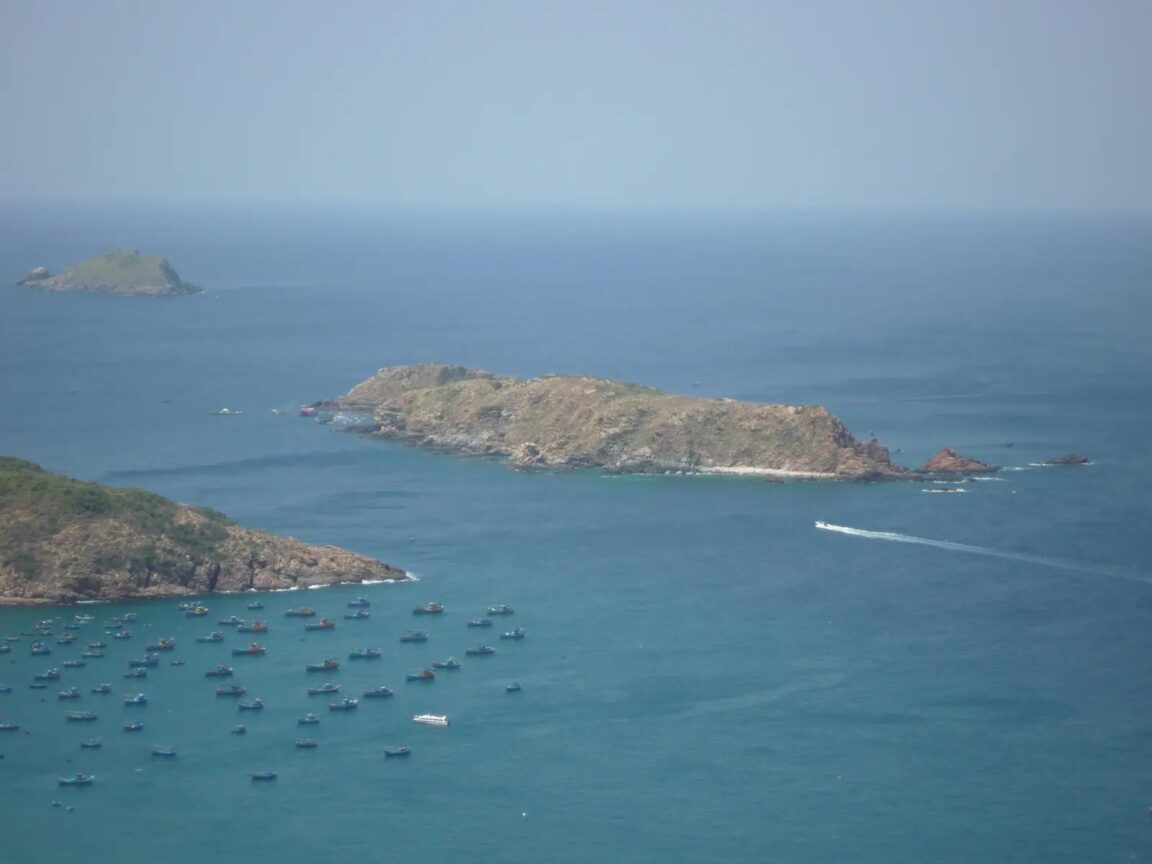
Photo: Rocky islands and fishing boats in the clear blue sea off Quy Nhon. Photo by Jamie Trinh on Unsplash, Unsplash License.