 Maya Chen
Kuching is the gentle way into Malaysian Borneo: a riverfront capital where you can walk the Kuching Waterfront along the Sarawak River in the morning, eat your way through old shophouses and Carpenter Street by day, and be standing in rainforest watching semi wild orangutans by the next morning at Semenggoh Wildlife Centre, about 20 kilometres from the city. Kuching is the capital of Sarawak, the largest Malaysian state, and it works as a base rather than a transit point. Give it three nights if you can. That allows one full day for the waterfront and the old town, one morning for Semenggoh timed to a feeding session, and time for the museums and food streets without turning Borneo into a checklist.
Quick Facts
- The city: Kuching, capital of Sarawak on the island of Borneo, built along the Sarawak River. Its name echoes the Malay word kucing, meaning cat, and cat statues around the city lean into the association.
- The waterfront: The Kuching Waterfront promenade runs along the south bank facing the Astana and the State Legislative Assembly building across the river, linked by the Darul Hana pedestrian bridge.
- The orangutan outing: Semenggoh Wildlife Centre, within Semenggoh Nature Reserve about 20 to 24 kilometres from central Kuching, was established in 1975 to care for injured, orphaned and rescued orangutans.
- The feeding sessions: Semenggoh opens in two daily sessions, morning and afternoon, with feeding at the platforms at around 9am and 3pm. The orangutans are semi wild and free ranging, so sightings are never guaranteed.
- The honest caveat: During the forest fruiting season, roughly November to February, orangutans find food in the reserve and visit the platforms less often. Outside fruiting season your chances improve, but no visit promises an animal.
- The base logic: Sleep in the old town near the waterfront. Semenggoh is a morning half day trip, Bako National Park is a separate full day, and the city itself deserves a day that is not spent in transit.
How does the Kuching Waterfront organise the city?
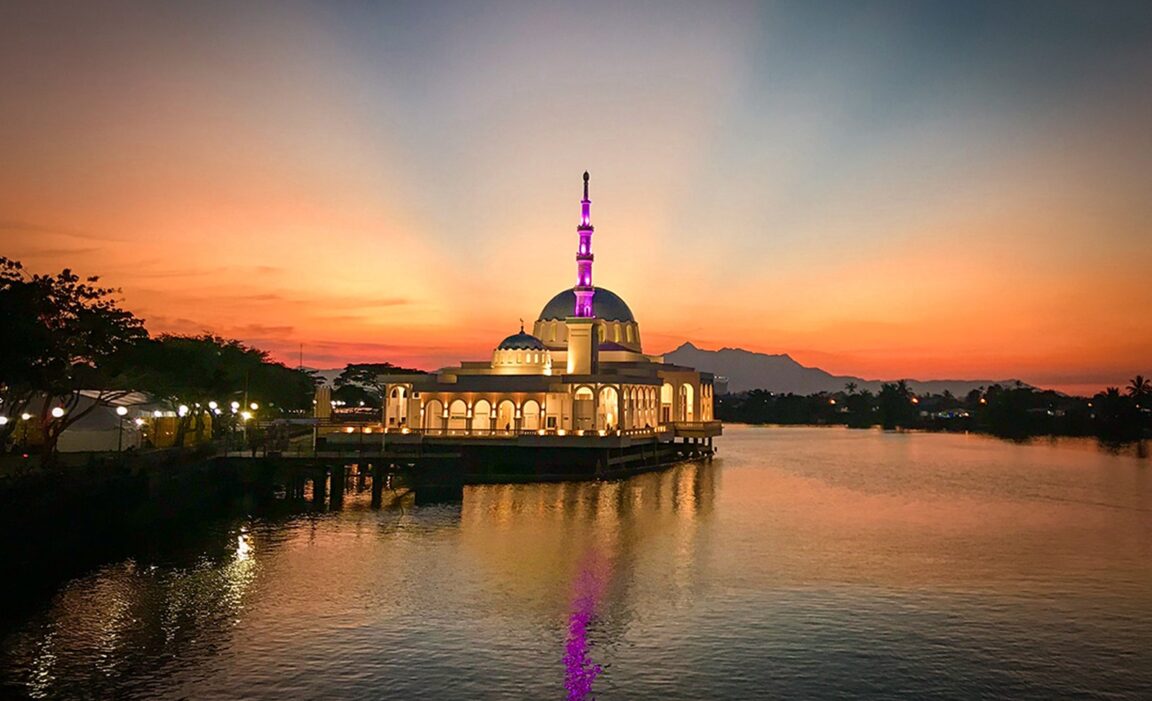
The Sarawak River is Kuching’s front room. The waterfront promenade on the south bank gives you the orientation every first day needs: the river in front of you, the Astana, the former palace of the White Rajahs, and the golden roofed State Legislative Assembly building facing you from the north bank, and the old commercial streets running behind you. Walk the promenade end to end once and the city makes sense. Small passenger boats, called tambang, cross the river for a small fare, and the Darul Hana Bridge curves across the water for the view from above, most striking at dusk when the assembly building lights up.
Behind the waterfront, Main Bazaar and Carpenter Street hold the old Kuching of shophouses, temples, coffee shops and workshops. This is the city to walk slowly: Carpenter Street for its trades and temples, the old courthouse complex for its colonial architecture, and the lanes around India Street for fabric shops and food. Kuching rewards this unhurried ground level attention because its sights are close together and its pleasure is cumulative, a bowl of noodles here, a museum there, the river always a block away.
What makes Kuching more than a gateway?
A layered history you can read on foot
Sarawak’s story runs through the Brooke family, the White Rajahs who governed the territory for a century from 1841, through a period as a British crown colony, and into Malaysia in 1963. Fort Margherita on the north bank, built in 1879 and named for Charles Brooke’s wife, and the Astana, built in 1870 as the Brooke residence, carry that era in built form. The Sarawak Museum tradition adds the other half of the story: the cultures of Borneo’s indigenous peoples, including the Iban, Bidayuh and Orang Ulu communities, whose longhouse traditions shape any serious understanding of the state. Check current opening arrangements for individual museums and the fort on the day, as hours and exhibition rotations change.
A food city with its own canon
Kuching eats distinctly. Sarawak laksa, a spiced coconut broth with rice vermicelli, prawns and chicken, is the breakfast the city claims as its own, and kolo mee, springy noodles tossed in a light seasoning and served with sliced pork, is the other essential bowl. Layer in kek lapis, the vividly striped Sarawak layer cake sold by bakeries around the old town, and you have a food circuit that fits inside the same walkable centre as the waterfront and the museums. The city has also been recognised within the UNESCO Creative Cities Network for gastronomy, which will surprise no one who has eaten breakfast here twice.
How does the Semenggoh orangutan outing actually work?
Semenggoh Wildlife Centre sits inside a rainforest reserve south of the city and exists for the animals first and visitors second. It was established in 1975 as a rehabilitation centre for orangutans that had been injured, orphaned or kept illegally as pets, and its success created something unusual: a population of semi wild orangutans, now more than one generation deep, that ranges freely through the reserve and chooses for itself whether to visit the feeding platforms. Active rehabilitation work has since shifted to Matang Wildlife Centre, while Semenggoh remains the place near Kuching where visitors can observe these animals in forest, on the animals’ terms.
Practically, the visit turns on timing. The centre admits visitors in a morning session and an afternoon session, with ranger feeding at the platforms at around 9am and 3pm. Arrive for the start of a session, follow the ranger briefing, keep quiet at the viewing area, keep your distance, and never attempt contact or flash photography. Then accept the central fact of Semenggoh: the orangutans may not come. In fruiting season the forest feeds them and the platforms can stay empty, and even in good months an animal that appears is making its own decision. That uncertainty is not a flaw in the outing. It is the evidence that the rehabilitation worked. For the entry side of a Malaysia trip, pair this article with our explainer on Entering Malaysia: The MDAC Form, Its Three-Day Window and Who Is Exempt, and for another Malaysian city base with a completely different character, see Ipoh, Malaysia: Limestone Caves, White Coffee and the Tin Town Revival.
How should you pace three days in Kuching?
Day one belongs to the city. Walk the waterfront in the morning, cross by tambang or over the Darul Hana Bridge for the north bank view, then spend the middle of the day in the museums and old streets, with Sarawak laksa or kolo mee as the working lunch. Return to the promenade for dusk, when the heat drops and the riverfront fills with local families. Day two starts early for Semenggoh and the morning feeding session, leaving the afternoon free for Carpenter Street, a kek lapis bakery run and a slower second look at the old town. Day three is your choice of depth: Bako National Park as a full day of trails and proboscis monkeys if you book the boat and transfers properly, or a second city day built around the markets and the fort. Kuching International Airport connects the city with Kuala Lumpur and other Malaysian and regional points; confirm current flight and ground transport details close to departure, and confirm Semenggoh session times again before you set out, because wildlife centre arrangements can change with weather and animal welfare needs.
Frequently Asked Questions
Can you guarantee seeing orangutans at Semenggoh?
No, and any operator who guarantees it is misrepresenting the place. Semenggoh’s orangutans are semi wild and free ranging in the reserve. Rangers provide food at platforms at around 9am and 3pm, and animals often come, especially outside the November to February fruiting season, but they are free not to, and empty platforms are part of an honest visit.
How far is Semenggoh from Kuching and how long do you need?
The centre is about 20 to 24 kilometres from central Kuching, a drive of roughly half an hour depending on traffic, longer by public bus. Plan a half day around one feeding session, arriving for the start of the morning or afternoon opening rather than at feeding time itself.
Why is Kuching called the Cat City?
The name Kuching closely echoes kucing, the Malay word for cat, and the city has embraced the connection with cat statues and a cat museum tradition. The exact origin of the name is debated, but the feline identity is now firmly part of how Kuching presents itself.
What food should you try first in Kuching?
Sarawak laksa for breakfast and kolo mee as the other essential bowl. Add kek lapis, the striped Sarawak layer cake, from an old town bakery. Together the three give you the city’s own canon rather than a generic Malaysian greatest hits list.
How many nights do you need in Kuching?
Three nights is the comfortable minimum: one day for the waterfront and old town, one morning for Semenggoh, and one day for Bako National Park or a deeper city day. Two nights can work if Semenggoh is your only out of town outing and you keep the city day focused.
Is Kuching a good first stop in Borneo?
Yes. It combines a walkable, food rich riverfront city with the most accessible orangutan observation near any Borneo capital, at Semenggoh, plus Bako’s wildlife trails within day trip range. It introduces Sarawak’s history and cultures at a pace that suits a first visit.