 Hana Kim
Jeonju is the slow alternative to Seoul that actually delivers on the promise: a walkable village of around 700 traditional hanok houses in the middle of a modern city, the shrine that guards the portrait of the founder of the Joseon dynasty, and a food culture strong enough to earn the city a place in the UNESCO Creative Cities Network as a City of Gastronomy in 2012. Give Jeonju one night, not a rushed afternoon. Stay in or beside the Hanok Village, eat bibimbap where the dish is a point of local pride rather than a menu filler, walk the lanes early before the day crowds arrive, and finish in a makgeolli alley where the kettle comes with a table full of side dishes. That overnight rhythm is what separates Jeonju from a photo stop.
Quick Facts
- The village: Jeonju Hanok Village holds around 700 hanok, traditional Korean houses with curved tiled roofs, and is described by the Korea Tourism Organization as the largest hanok village in Korea and the only one set in an urban centre.
- The address: The village centres on Girin-daero in Wansan-gu, Jeonju, with Gyeonggijeon Shrine and Jeondong Cathedral at its heart.
- The shrine: Gyeonggijeon was erected in 1410 to house the portrait of King Taejo, founder of the Joseon dynasty, whose family came from Jeonju. The shrine was rebuilt in the early 17th century after wartime destruction.
- The food title: Jeonju joined the UNESCO Creative Cities Network as a City of Gastronomy in May 2012, a formal recognition of a cooking tradition the city had claimed informally for generations.
- The signature dishes: Jeonju bibimbap, distinguished by ingredients that include hwangpomuk, a yellow mung bean jelly, and kongnamul gukbap, a bean sprout soup served with rice, often eaten in the morning near Nambu Market.
- The stay: One night minimum. The village streets are open to walk at any hour, while individual shrines, museums and shops keep their own hours, so early morning and evening are yours if you sleep nearby.
Why does the Hanok Village work so well?
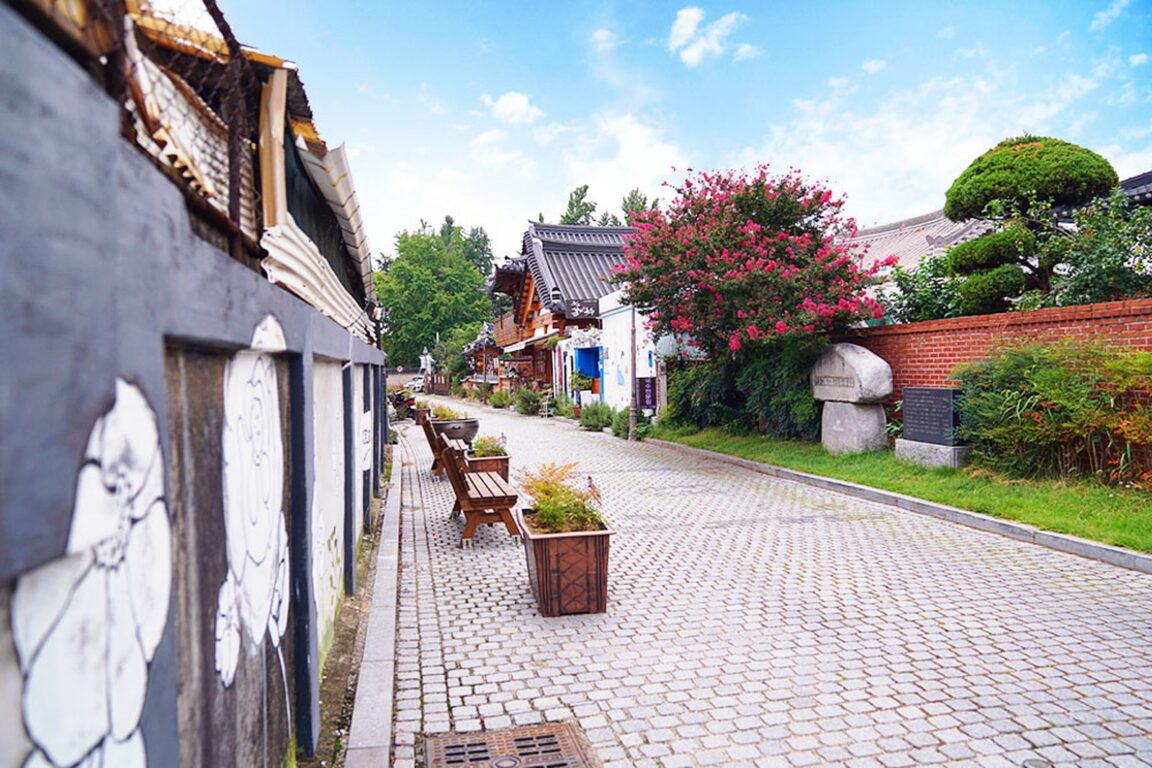
Many preserved districts feel like sets. Jeonju Hanok Village feels like a neighbourhood that decided to keep its shape. The hanok here are not isolated monuments behind ropes. They line lived in lanes as guesthouses, tea houses, small museums, craft shops and family homes, their curved roof edges lifting slightly toward the sky in the classic hanok silhouette. Because the village sits inside a working city rather than in open countryside, the contrast is part of the experience: step off one lane and you are back in contemporary Korea, step back in and the roofline closes over you again.
The village also has a clear centre of gravity. Gyeonggijeon Shrine anchors one end, Jeondong Cathedral rises close by in red brick, and Taejo-ro, the main street named for the king the shrine honours, carries you between food shops, hanbok rental stores and side lanes. That legibility matters for a short stay. You can learn the village in an hour and then spend the rest of your visit going deeper instead of getting oriented.
What should you see first in Jeonju?
Gyeonggijeon Shrine and the royal portrait
Start at Gyeonggijeon. The shrine was established in 1410, only eighteen years after Taejo founded the Joseon dynasty, to enshrine his portrait, and Jeonju was chosen because it was the ancestral home of his Yi clan. The grounds are calm in a way the main street is not: pine and bamboo, low halls, and the Royal Portrait Museum within the complex. Go early in the day if you can. The shrine rewards quiet, and the portrait tradition it preserves is the historical reason this city, rather than any other in the southwest, carries such weight in Korean memory.
Jeondong Cathedral, Omokdae and the edges of the village
Across from the shrine area stands Jeondong Cathedral, a brick Romanesque and Byzantine style church that marks an important chapter in early Korean Catholic history. Its presence steps from a Joseon royal shrine is pure Jeonju, a city that layers its histories instead of choosing one. For the overview, climb to Omokdae, the pavilion viewpoint above the village associated with a victory celebration by Taejo on his way home after a famous battle. From Omokdae the whole hanok roofscape spreads below you, which is the single best way to understand the scale of the village before you walk it again at street level. At the southern end, Jeonju Hyanggyo, the old Confucian school, offers a quieter courtyard and very old ginkgo trees that turn gold in autumn.
How does Jeonju bibimbap differ from every other bibimbap?
Bibimbap is served all over Korea, but Jeonju treats its version as a civic emblem, and the details back the claim. A Jeonju bibimbap builds seasoned vegetables, bean sprouts grown in the region, beef and egg over rice, then mixes with gochujang and sesame oil at the table. The ingredient locals point to as the local signature is hwangpomuk, a clear yellow mung bean jelly coloured with gardenia, sliced into the bowl for a delicate texture you will not find in the standard version elsewhere. Long established restaurants in and around the village have served the dish across generations, and the city food guides treat bibimbap as the first entry in the local canon for a reason.
The second dish to build into your stay is kongnamul gukbap, bean sprout soup with rice, the working breakfast of Nambu Market, the traditional market just outside Pungnammun Gate at the village edge. Where bibimbap is the ceremonial lunch, gukbap is the everyday one, hot, clear and restorative. Then, in the evening, follow local custom to a makgeolli alley. Order the unfiltered rice wine by the kettle and the kitchen answers with a procession of side dishes that covers the table. It is the most social meal in Jeonju and the easiest way to eat like the city eats when no one is performing for visitors. Travellers building a wider Korea route can pair this stay with our guide to Gyeongju, South Korea: Tombs, Temples and the Open-Air Museum City for the older, monumental side of Korean history, and with 3 Days in Busan, South Korea: Beaches, Markets and Temple Coastlines for the coastal counterpoint.
Should you rent hanbok and sleep in a hanok?
Both, if your schedule allows, and for practical rather than novelty reasons. Hanbok rental shops line the streets around the village, and renting for a few hours changes how you move through the lanes: slower, more photographed, and more aware of the architecture at eye level. Prices, inclusions and time limits vary by shop, so compare two or three storefronts on the day rather than booking against a price you saw in advance. Sleeping in a hanok guesthouse is the other half of the Jeonju method. A traditional room means floor bedding on a heated ondol floor, a small courtyard, and a quiet night inside the roofline you spent the day admiring. Book through the official village listings or a major platform, and confirm heating, bedding and bathroom arrangements when you reserve, because hanok stays range from simple family rooms to polished boutique houses.
How do you pace one night and two days in Jeonju?
Arrive by early afternoon, check in, and walk Taejo-ro once end to end to learn the village. Eat bibimbap as a late lunch, visit Gyeonggijeon before it closes for the day, and climb to Omokdae for the overview in the softening light. Spend the evening in a makgeolli alley or back in the lantern lit lanes. The next morning, walk the village early while it is still quiet, take kongnamul gukbap near Nambu Market, browse the market and the Hyanggyo courtyard, and rent hanbok for a final slow circuit before you leave. Jeonju is connected to Seoul and other major cities by intercity rail and express bus; check current schedules close to your travel date, because timetables change and the right departure matters more than any saved fare figure.
Frequently Asked Questions
Is Jeonju worth visiting if you have already seen Seoul?
Yes, precisely because it offers what Seoul cannot at this scale: a whole traditional quarter you can sleep inside, a royal shrine at its centre, and a food culture with a UNESCO gastronomy title. Jeonju works as the traditional counterweight in a Korea itinerary, not as a smaller copy of the capital.
How many hanok are in Jeonju Hanok Village?
Around 700, according to the Korea Tourism Organization, which describes the village as the largest hanok village in Korea and the only one in an urban setting. The houses function as homes, guesthouses, tea houses, museums and shops along walkable lanes.
What food is Jeonju most famous for?
Bibimbap above all, in a local version that includes hwangpomuk, yellow mung bean jelly, among its seasoned toppings. Kongnamul gukbap, bean sprout soup with rice, is the second essential dish, and the makgeolli kettle meal, where one order of rice wine brings a table of side dishes, is the evening ritual.
Why is Jeonju a UNESCO City of Gastronomy?
Jeonju was designated a Creative City for Gastronomy in the UNESCO Creative Cities Network in May 2012. The designation recognises the depth of its traditional food culture, from bibimbap and bean sprout dishes to its markets, fermented staples and home cooking traditions.
Can you do Jeonju as a day trip from Seoul?
You can, but you will spend the best hours of the village, early morning and evening, on a train platform. An overnight stay in or beside the Hanok Village is the single decision that most improves a Jeonju visit, and it makes the makgeolli alley evening possible without watching the clock.
When is the best season to visit Jeonju?
Spring and autumn are the most comfortable seasons for walking the lanes, and autumn adds the gold of the old ginkgo trees at Jeonju Hyanggyo. Summer is lively and humid, winter is quiet and cold but atmospheric under the tiled roofs. The village itself can be walked year round.