 Sofia Rossi
Berat is worth a night, not a photo pause, because its best parts only separate themselves once the day buses leave: a still inhabited castle quarter on the hill, the stacked white Ottoman houses of Mangalem below it that gave the city its City of a Thousand Windows name, and the quieter Gorica quarter across the Osum River, all held together in one compact, walkable centre. Berat sits in central Albania south of Tirana, and its historic centre is a UNESCO World Heritage Site, added in 2008 as an extension of the Gjirokastra inscription from 2005. Come for one overnight, walk up to the castle in the late afternoon, cross to Gorica for the classic view back across the river, and give the museums a morning. That simple order turns Berat from a pretty hillside into one of the most rewarding small city stays in the Balkans.
Quick Facts
- The status: The Historic Centres of Berat and Gjirokastra form a single UNESCO World Heritage property. Gjirokastra was inscribed in 2005 and Berat was added in 2008, under cultural criteria (iii) and (iv).
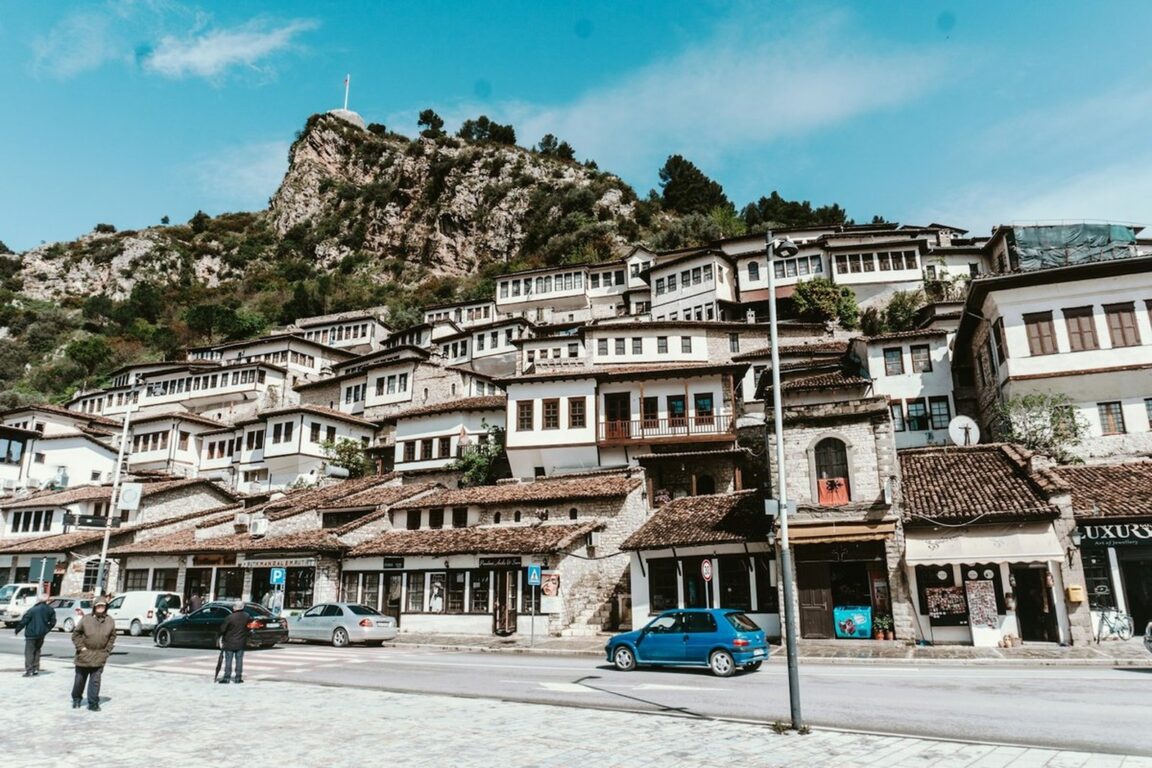
- The nickname: City of a Thousand Windows, from the large windows of the white Ottoman houses of Mangalem, stacked in rows up the hillside below the castle and best seen from across the Osum River.
- The layout: Three quarters do most of the work. Kala is the castle quarter on the hill, Mangalem spreads below it on the same bank, and Gorica faces them from the opposite bank.
- The castle: Berat Castle, called Kalaja, is not a ruined shell. People still live inside its walls, among churches, lanes and small cafes, which changes the feel of a visit completely.
- The museum to prioritise: The Onufri Museum, inside the castle in the Church of the Dormition of St Mary, holds icons by Onufri, the 16th century Albanian painter noted for his distinctive use of red.
- The stay: One night is the minimum that does Berat justice. Two nights allow a slower pace, a morning in the Ethnographic Museum and time for the riverside and Gorica without rushing the climb.
Why does Berat hold UNESCO status?
UNESCO describes Berat and Gjirokastra together as rare examples of an architectural character typical of the Ottoman period, and Berat in particular as witness to the coexistence of various religious and cultural communities down the centuries. That coexistence is not abstract here. Within a short walk you pass Orthodox churches inside the castle walls, historic mosques in the lower town, and the houses of merchants and craftsmen who built a fortified but open town over a long period. Criterion (iii) recognises the testimony the two towns bear to the diversity of urban societies in the Balkans and to ways of life that have now almost vanished. Criterion (iv) recognises their monuments and vernacular housing from the classical Ottoman period, built in continuity with the medieval cultures that came before.
The practical meaning for a visitor is that Berat is protected as a whole townscape, not as a single monument. The value sits in the pattern: the castle hill, the Mangalem facade of windows, the Gorica houses opposite, and the river holding the composition together. Protecting that pattern is why the centre still reads as one place rather than as a collection of sights, and why an overnight stay, when you see the quarters in different light, rewards you more than a midday stop between other destinations.
How do the three quarters fit together?
Kala, the castle quarter that people still call home
The climb from Mangalem to the castle gate is the one effort Berat asks of you, and it pays for itself at every turn. Inside the walls, Kala works as a small village rather than a ticketed ruin. Stone lanes run between houses, small churches stand within the fortifications, and residents go about ordinary life in a quarter that has been continuously inhabited for centuries. Allow time to walk the walls for views down over Mangalem, across the Osum to Gorica, and out toward the mountains that frame the valley. Late afternoon is the strongest hour here, when the light warms the stone and the day visitors have gone.
Inside the castle, make the Onufri Museum your first stop. Set in the Church of the Dormition of St Mary, the museum displays icons by Onufri and by later Albanian painters, including his son Nikola. Onufri is known for a vivid red pigment that sets his work apart from other icon painters of his period, and seeing the icons in a church setting, rather than in a modern gallery, keeps the connection between the art and the community that commissioned it. Check opening arrangements locally on the day, as museum hours in Berat vary by season.
Mangalem, the thousand windows themselves
Mangalem is the quarter in every photograph of Berat, and it earns the attention honestly. Its white Ottoman houses climb the hill in tight rows, their large windows facing the river and the sun, which is how the City of a Thousand Windows name took hold. At street level the quarter is lanes, small shops and guesthouses rather than a single viewpoint, so walk it slowly in both directions. The houses reward a close look: overhanging upper floors, tiled roofs and the rhythm of window after window that only resolves into the famous facade when you step back across the river.
Gorica, the quiet bank with the postcard view
Cross the Osum to Gorica for the view everyone comes for, and for a calmer quarter in its own right. Gorica faces Mangalem directly, so its lanes and riverside give you the full thousand windows composition across the water, with the castle above it. The Gorica Bridge connects the two banks and makes the crossing part of a natural walking loop: up through Mangalem, into the castle, down and across the bridge, then back along the opposite bank. Gorica also holds some of the most peaceful places to stay in Berat, close to the centre but removed from its busiest lanes.
What should you do with one full day in Berat?
Start in the lower town while the light is still soft. Walk Mangalem from end to end, then visit the National Ethnographic Museum, housed in a traditional Berat house, where the domestic interiors, tools and costumes explain how the houses you have been admiring actually worked as homes. That context makes the rest of the day richer, because Berat is a museum city in the literal sense that its houses are the exhibits.
Save the castle climb for the afternoon. Go up with enough time to walk the walls, visit the Onufri Museum and sit in one of the small cafes inside Kala before the light fades. Then descend and cross to Gorica for the early evening view back across the river, when the windows of Mangalem catch the last light and the castle sits above them. Readers pairing Berat with other Balkan old towns will find the same slow, stay past the day trip logic in our guide to Kotor, Montenegro: A First-Timer’s Guide to the Bay’s Walled Old Town, and in our account of Mostar, Bosnia and Herzegovina: The Bridge Town, and How to See It Beyond the Day Trip.
When is the best time to visit Berat?
Spring and autumn suit Berat best for most travellers. The castle climb is exposed and the Mangalem lanes offer little shade at midday, so the milder months make the walking that defines a Berat visit far more comfortable, and the quarters are quieter outside the summer peak. Summer brings long evenings on the riverside and a livelier town, at the cost of heat on the hill. Winter is the quietest season and can be atmospheric in the old quarters, but shorter days compress the castle and Gorica loop, so plan the climb for the middle of the day. In every season, the single most useful decision is the same: sleep in Berat at least once, so you own the early morning and the evening, when the town belongs to the people who live there.
How do you reach Berat and get around?
Berat is reached by road from Tirana, the capital and the usual gateway for international arrivals, and most travellers arrive by bus or by rental car as part of a wider Albania route that often continues south toward Gjirokastra, its partner in the UNESCO inscription. There is no need for transport inside the historic centre itself. The quarters are compact and the whole Kala, Mangalem and Gorica loop is a walk, albeit a walk with one serious hill in it. Wear shoes that handle cobbles and a climb, carry water for the castle in warm months, and treat any published timetable or price you find in advance as a guide to check again locally, since local services adjust by season.
Frequently Asked Questions
Is Berat worth staying overnight or is a day trip enough?
Stay overnight if you possibly can. A day trip gives you the castle and the Mangalem facade at the busiest, hottest hours. A night gives you the castle in late afternoon light, Gorica at dusk and a quiet morning in the quarters, which is when Berat separates itself from other Balkan old towns.
Why is Berat called the City of a Thousand Windows?
The name comes from Mangalem, where white Ottoman houses stack up the hillside below the castle with rows of large windows facing the river. Seen from Gorica across the Osum, the windows read as one continuous facade, and the nickname follows naturally from that view.
Do people really live inside Berat Castle?
Yes. Kala, the castle quarter, is still an inhabited neighbourhood with houses, churches and small businesses inside the fortification walls. That living quality is central to Berat’s UNESCO value and means visitors should treat the lanes as a residential area, not only as a monument.
What is the Onufri Museum and should you visit it?
It is the icon museum inside the castle, set in the Church of the Dormition of St Mary, displaying work by Onufri, the 16th century Albanian painter famed for his red pigment, and by later painters including his son Nikola. It is the single museum to prioritise if your time in the castle is short.
How long do you need in Berat?
One night and one full day cover the castle, Mangalem, Gorica and the main museums at a comfortable pace. Two nights suit travellers who want a slower stay, a second evening across the river and time to use Berat as a base for the surrounding valley.
Can you visit Berat and Gjirokastra on the same trip?
Yes, and the pairing makes sense because the two towns form one UNESCO property and show two different expressions of the same Ottoman era urban tradition. Berat is the river and windows town, Gjirokastra the stonier fortress town to the south. Give each its own overnight rather than compressing both into transit stops.