 Jordan Ellis
Driving into Manhattan below 60th Street now carries a toll, and after its first year the numbers are settled enough to plan around. Under the MTA’s Congestion Relief Zone tolling, a passenger car with E-ZPass pays 9 dollars once a day in the peak period and 2.25 dollars overnight. Peak runs from 5 a.m. to 9 p.m. on weekdays and 9 a.m. to 9 p.m. on weekends. Without E-ZPass, the Tolls by Mail rate is 50 percent higher, at 13.50 dollars peak. Motorcycles pay 4.50 dollars peak, small trucks and charter buses 14.40 dollars, and large trucks and tour buses 21.60 dollars. The program, the first of its kind in the United States, launched on 5 January 2025 and tolls vehicles entering the zone of Manhattan streets south of and including 60th Street, with the FDR Drive and the West Side Highway excluded for traffic that stays on them. Rates here are the MTA schedule in force through 2027, checked against MTA and NYC311 guidance on 24 November 2026.
Quick Facts
The zone: Manhattan streets at and below 60th Street, the Congestion Relief Zone
Car, peak, E-ZPass: 9 dollars, charged once per day
Car, overnight, E-ZPass: 2.25 dollars
Car, peak, Tolls by Mail: 13.50 dollars
Peak hours: weekdays 5 a.m. to 9 p.m., weekends 9 a.m. to 9 p.m.
Motorcycles: 4.50 dollars peak; small trucks 14.40 dollars; large trucks 21.60 dollars
Tunnel crossing credit: up to 3 dollars for cars entering via a tolled tunnel at peak with E-ZPass
Not tolled: through traffic staying on the FDR Drive or West Side Highway
How is the toll charged, and how often?
For passenger vehicles, once a day is the rule that saves drivers the most money and causes the most confusion. A car that enters the zone three times on a Tuesday pays the toll in effect at its first entry, not three tolls. The charge is captured by overhead gantries reading an E-ZPass tag or a licence plate; there are no toll booths and nothing to stop for. With E-ZPass the charge posts to the account. Without one, a Tolls by Mail bill is sent to the vehicle’s registered owner at the higher rate, which is the single most expensive mistake a visiting driver can make: the same peak entry costs 13.50 dollars instead of 9. Trucks and buses are charged per entry rather than once daily, and taxis and for-hire vehicles work on an entirely different basis, a per-trip charge of 75 cents for taxis and 1.50 dollars for app-based rides, paid by the passenger, which is why a cab ride into Midtown now shows a congestion line on the receipt. Drivers planning a first New York trip around a car should weigh all of this against the alternative in our New York in 3 days itinerary for first-timers, which assumes, sensibly, that most visitors never need a car in Manhattan at all.
Which crossings and roads are exempt, and which earn a credit?
The zone boundary has texture, and it rewards drivers who read it before the trip rather than after the bill. Staying on the FDR Drive along the East River, or on the West Side Highway and the Henry Hudson Parkway corridor along the Hudson, does not trigger the toll, provided the vehicle does not exit onto local streets at or below 60th Street; the moment it leaves the highway into the zone, the toll applies. The Hugh L. Carey Tunnel’s connection through to the West Side Highway is treated the same way for through traffic. Drivers who do enter the zone through a tolled tunnel at peak hours with E-ZPass receive a crossing credit against the congestion toll: up to 3 dollars for passenger vehicles entering via the Lincoln Tunnel, Holland Tunnel, Queens-Midtown Tunnel or Hugh L. Carey Tunnel, with larger credits for trucks, and a smaller overnight credit. The credit recognises that those drivers have already paid a tunnel toll to reach Manhattan. Bridges from the east, including the Queensboro, Williamsburg, Manhattan and Brooklyn bridges, carry no crossing toll of their own and earn no credit: cross one into the zone at peak and the full 9 dollars applies.
How does the charge appear on a rental car bill?
Exactly the way visiting drivers least enjoy discovering. The toll belongs to the vehicle, so a rental car entering the zone bills the toll to the rental company’s E-ZPass account or receives a Tolls by Mail invoice, and the company passes the charge through to the renter, typically with an administrative or convenience fee on top, and often days or weeks after the trip ends. The once-a-day rule still applies to the toll itself, but rental pass-through fees are set by each company’s terms, and some charge their service fee per toll day or per rental. The defences are boring and effective: read the toll section of the rental agreement before signing, ask whether the car carries an active E-ZPass, use the company’s toll program only if its fee structure suits a trip with several zone entries, and keep your own record of the days you actually drove below 60th Street so a stray charge can be challenged. Anyone flying in and collecting a car should also read our guide to using a long layover at JFK well for the honest version of when Manhattan is worth the run in the first place.
Are there discounts or exemptions?
A few, and they are specific rather than general. The MTA operates a Low-Income Discount Plan that halves the peak toll for enrolled drivers whose federal taxable income falls within the program threshold and who are registered with a New York E-ZPass account, applied after the first 10 trips in a calendar month. People with disabilities who cannot use transit can apply for an individual disability exemption, and vehicles carrying them under the approved plan are not tolled. Emergency vehicles and certain specialised government vehicles are exempt, as are buses operating scheduled transit and commuter services and licensed commuter vans. There is no general exemption for hotel guests, event tickets, medical appointments without the disability plan, or because the driver was only in the zone for five minutes. Residents of the zone itself pay the toll like everyone else; a tax credit exists for zone residents below an income threshold, claimed through New York State taxes rather than at the gantry.
Where does the money go, and what changes next?
The toll exists to fund the subway and bus system, and its first year made that concrete. The program was designed to raise revenue that the MTA bonds against for its capital program, financing subway signal modernisation, station accessibility work, new rolling stock and bus priority projects, while cutting the number of vehicles entering the busiest part of Manhattan. The MTA publishes traffic and revenue reporting on the program, and the gantry network now reads as a permanent piece of street furniture rather than an experiment. The rate schedule is also published years ahead, which helps drivers plan: the current 9 dollar peak car toll is the first phase rate, legislated to rise to 12 dollars in 2028 and 15 dollars in 2031, with overnight rates keeping their 75 percent discount. A driver building a New York habit today should therefore treat 9 dollars as the introductory price of a permanent institution, set a route that uses the exempt highways when merely passing through, enter through a tolled tunnel when the credit applies, and keep an E-ZPass in the car. Do those four things and congestion pricing becomes a known, modest line item. Ignore them and it becomes a 13.50 dollar surprise, plus a rental company’s fee, arriving by mail a month after the trip.
Frequently Asked Questions
How much is the congestion toll for a car in 2026?
9 dollars in the peak period and 2.25 dollars overnight with E-ZPass, charged once per day for passenger vehicles. Without E-ZPass, Tolls by Mail charges 13.50 dollars at peak. The 9 dollar rate is scheduled to hold through 2027, rising to 12 dollars in 2028.
What are the peak hours for congestion pricing?
5 a.m. to 9 p.m. on weekdays and 9 a.m. to 9 p.m. on weekends. All other hours are charged at the overnight rate, which is 75 percent lower than peak.
Is the FDR Drive or the West Side Highway tolled?
Not for through traffic. Vehicles that stay on the FDR Drive or the West Side Highway and do not exit onto local streets at or below 60th Street are outside the toll. Exiting into the zone triggers the charge.
Do I get a credit for using a tunnel into Manhattan?
Yes, at peak hours with E-ZPass. Cars entering the zone via the Lincoln, Holland, Queens-Midtown or Hugh L. Carey tunnels receive a crossing credit of up to 3 dollars against the congestion toll, with a smaller credit overnight and larger credits for trucks.
How will a rental car toll show up?
The toll is charged to the vehicle, so the rental company pays it through its E-ZPass or a Tolls by Mail bill and passes it to the renter, usually with an added administrative fee and a delay of days or weeks. Check the toll terms in the rental agreement before driving into the zone.
Do taxis and Ubers pay the 9 dollar toll?
No. Taxis and for-hire vehicles pay a per-trip charge instead: 75 cents per trip for taxis and green cabs and 1.50 dollars per trip for app-based services such as Uber and Lyft, for trips into, within or out of the zone, and it is passed to the passenger.
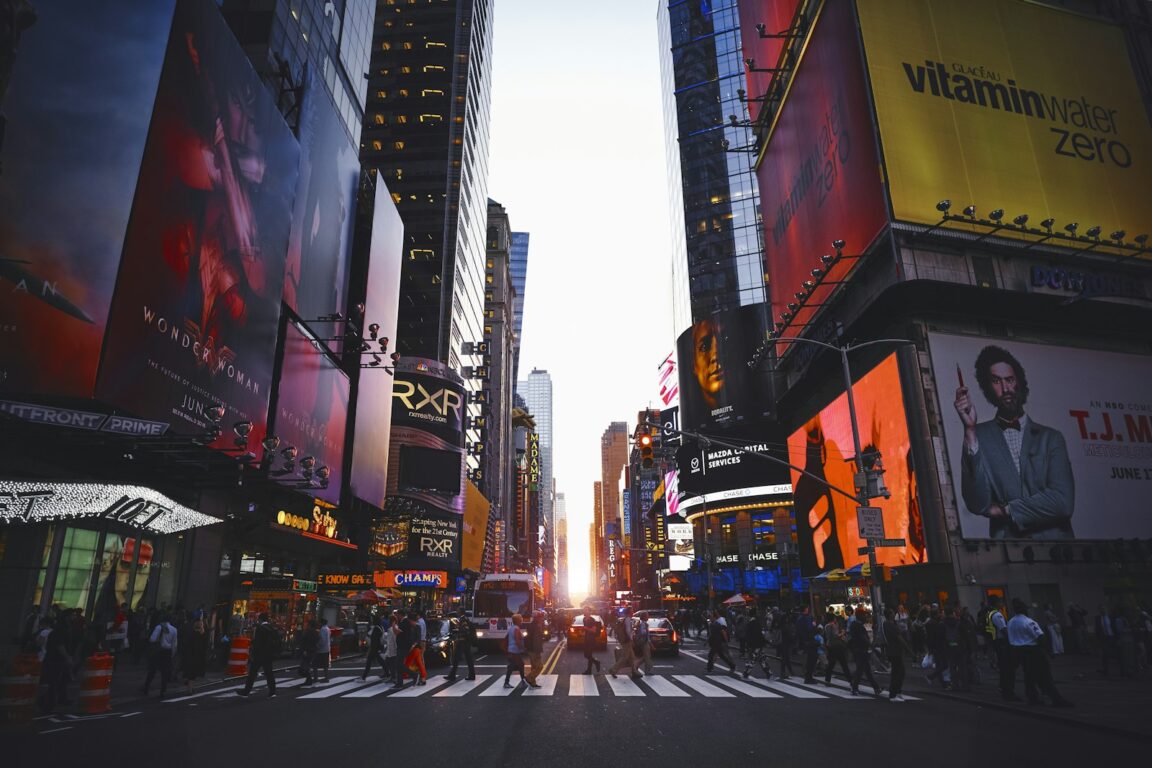
Photo: Times Square traffic and crowds in Midtown Manhattan, inside the Congestion Relief Zone. Photo by an Unsplash contributor (photo 1496442226666-8d4d0e62e6e9), via Unsplash, used with credit under the Unsplash License.