 Hana Kim
Three days in New York is enough for a first visit if the city is rationed by geography rather than by wish list: day one in Midtown for Times Square, the Empire State Building, Fifth Avenue and a Broadway evening, day two in Lower Manhattan for the Statue of Liberty ferry, the 9/11 Memorial and the Financial District, and day three given to one major museum in the morning and Brooklyn in the afternoon, crossing the Brooklyn Bridge on foot and finishing in DUMBO and Brooklyn Heights. The mistake first timers make is not choosing the wrong sights. It is crisscrossing the island three times a day, paying for the same subway miles with the hours that were meant for the city itself. Clustered by neighbourhood, three days feel generous. Scattered, they feel like a commute with landmarks.
Quick Facts
- Day 1: Midtown: Grand Central, Fifth Avenue, Times Square, the Empire State Building and Broadway
- Day 2: Lower Manhattan: the Statue of Liberty and Ellis Island ferry, the 9/11 Memorial and Museum, Wall Street
- Day 3: One museum in the morning, the Met or MoMA, then Brooklyn Bridge, DUMBO and Brooklyn Heights
- Getting around: Subway for almost everything, with OMNY contactless payment or a MetroCard, details at mta.info
- Book ahead: Statue of Liberty ferry and pedestal or crown access, the 9/11 Museum, observation decks and Broadway tickets
- Base: Midtown or the Upper West Side for a first trip, for the densest subway coverage
- Official visitor base: New York City Tourism at nyctourism.com
Day One: Midtown, Walked as One Loop
Start at Grand Central Terminal, because it is both a transport hub and the city finest indoor sight, and because arriving there by subway teaches the system on a short, forgiving journey. Give the main concourse ten minutes: the celestial ceiling, the whispering gallery outside the Oyster Bar, and the simple pleasure of a building that treats commuters like citizens. From Grand Central, walk west on 42nd Street past the New York Public Library main branch on Fifth Avenue, where the lion statues Patience and Fortitude guard the steps and the Rose Main Reading Room rewards anyone who goes inside, then continue to Bryant Park behind it, the green room of Midtown.
Fifth Avenue north from 42nd Street is the classic first day spine: St Patrick Cathedral, Rockefeller Center, and the great flagship stores up to the corner of Central Park at 59th Street. Rockefeller Center deserves the time that Times Square does not: the plaza, the Channel Gardens and, if one observation deck is in the budget, Top of the Rock, whose view includes the Empire State Building itself, which the Empire State view by definition cannot. The city official visitor site at nyctourism.com carries current opening and ticketing links for the decks and the major attractions, and it is the sensible single check before the trip. Save the Empire State Building for the end of the afternoon or after dark, when its queues ease and the city below is lit, and give Times Square exactly what it merits: a pass through at dusk, on the way to a Broadway show, when the screens are at full blaze and the spectacle is complete in fifteen minutes. Book the show in advance, eat dinner in Hell Kitchen west of Eighth Avenue rather than in the square itself, and day one closes with the city having shown its famous face at a walkable pace. Our guide to what to pack for New York in December covers the cold weather version of this loop; in summer the same route simply needs an earlier start and a lighter step.
Day Two: Lower Manhattan and the Harbour
Day two belongs to the harbour and the oldest streets in the city, and it starts with the ferry. The Statue of Liberty and Ellis Island are reached by Statue Cruises ferries from Battery Park, the only authorised ferry service, with tickets and the strictly limited pedestal and crown reservations sold through the National Park Service concession channels linked from nps.gov/stli. Book the earliest ferry of the day. The islands are better in the morning, the security screening at Battery Park moves fastest early, and an early return leaves the afternoon free for the memorial and the Financial District. On Liberty Island, the museum inside the pedestal base explains the statue better than the climb does; on Ellis Island, the main building registry room is one of the most moving interiors in America for anyone whose family arrived by ship, which is to say for a great many of the people on the ferry.
Back on Manhattan, walk north into the Financial District. Wall Street, the New York Stock Exchange facade, Federal Hall and Trinity Church sit within a few small blocks, and the district lanes are at their best on a weekday when the working city is in them. The 9/11 Memorial, two great reflecting pools in the footprints of the towers, is open plaza and needs no ticket; the 9/11 Museum beneath it does, with timed entry booked through 911memorial.org, and it asks for two unhurried hours and a certain steadiness. Put the museum late in the afternoon, not because it matters less but because it changes the temperature of a day, and evenings after it are best kept simple: dinner in Tribeca or the Seaport, and an early night before the museum and Brooklyn day.
Day Three: The Museum Choice, Then Brooklyn
Day three turns on a single decision, and the guide makes it plainly: choose one great museum, not two, and choose it by appetite. The Metropolitan Museum of Art, on Fifth Avenue at 82nd Street, is the encyclopedic choice, a city within the city whose Egyptian temple, European paintings and American wing could absorb the whole three days; its visitor information is at metmuseum.org. The Museum of Modern Art in Midtown is the concentrated choice, a half day of the most famous modern works on earth, Van Gogh Starry Night among them, in a building that can genuinely be finished. First timers with broad tastes should take the Met and discipline it to three departments. First timers whose passion is modern art should take MoMA and enjoy the rare luxury of completing a great museum. What no first timer should do is both, at a run, in one morning.
Crossing to Brooklyn in the Afternoon
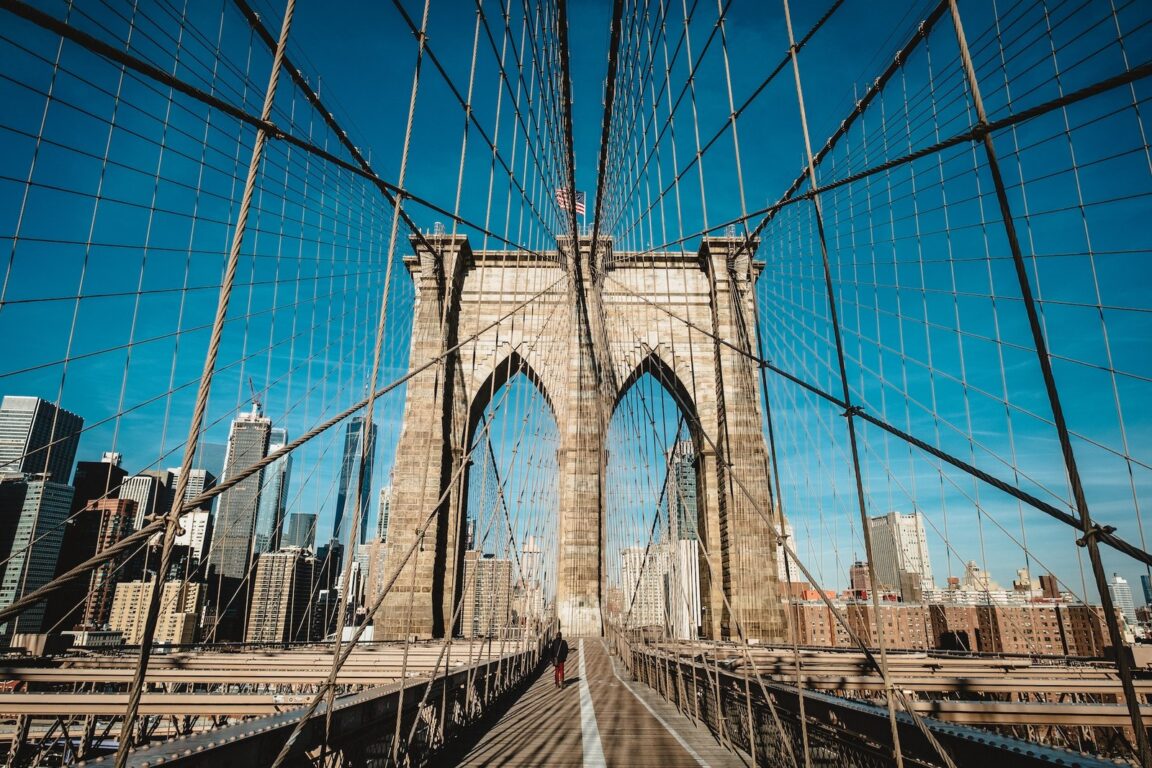
The afternoon reverses the usual direction of the classic walk. Take the subway to Brooklyn, to York Street or High Street, and start in DUMBO, the cobbled district between the Manhattan and Brooklyn bridges, where the view of Manhattan Bridge from Washington Street is the borough most reproduced photograph and the waterfront of Brooklyn Bridge Park runs along the East River under the bridges. Then walk the Brooklyn Bridge back towards Manhattan, starting in the late afternoon so that the walk ends with the Lower Manhattan skyline lit and the bridge lamps coming on. The bridge walkway takes about half an hour without stops and twice that with them, and the direction matters: walking towards Manhattan, the skyline is in front of the walker the whole way, growing rather than receding.
Finish in Brooklyn or Manhattan by appetite. Staying on the Brooklyn side, Brooklyn Heights, a few minutes south of DUMBO, offers the Promenade, a raised walkway over the harbour with the definitive skyline view, and brownstone streets that show the residential city at its most composed, with dinner on Montague Street or in neighbouring Cobble Hill. Crossing to Manhattan, the Seaport and Stone Street close the trip where the city began. Either way, the three days end with the pattern complete: the famous centre, the harbour and the memorial, the art, and the bridge. The boroughs beyond, the Bronx, Queens and Staten Island, and the neighbourhoods within them, are the honest content of the second trip, and a well rationed first visit is precisely what makes a second one happen. For a sense of the classic New York hotel world that frames trips like this, our profile of the Plaza Hotel on Fifth Avenue is the fitting final read.
Getting Around and Paying for It
The subway is the circulatory system of this itinerary and the only way the three clusters hold together. Payment is by OMNY contactless tap with a bank card or phone, or by MetroCard where still sold, and the Metropolitan Transportation Authority publishes fares, maps and service changes at mta.info. Check weekend service changes on the Friday before a trip, because New York does its track work at weekends and a diverted line is the most common way a first timer loses an hour. Walking is the second system: the day one and day two clusters are each walkable end to end, and the distances inside them are shorter than the map suggests. Taxis and rideshares are for late nights and luggage, not for crossing Midtown at rush hour, where they are reliably slower than the train below them.
Frequently Asked Questions
Is three days enough for a first trip to New York?
It is enough for a complete first visit: Midtown, the harbour islands, Lower Manhattan, one great museum and Brooklyn. It is not enough for everything, and the itinerary works precisely because it does not attempt everything. Neighbourhood depth belongs to the return trip.
Which museum should a first timer choose, the Met or MoMA?
The Met for breadth and for the building itself, visited with a strict three department limit. MoMA for modern art lovers and for anyone who wants the satisfaction of finishing a museum. Choosing one, rather than rushing both, is the single most valuable decision in the three days.
Does the Statue of Liberty need booking in advance?
Yes. Ferry tickets should be booked ahead, and pedestal and crown access are limited and sell out well in advance, crown access especially. Book through the official channels linked from the National Park Service page for the monument, and take the earliest ferry available.
Which direction is best for walking the Brooklyn Bridge?
Brooklyn to Manhattan, in the late afternoon. The skyline stays in front of the walker for the whole crossing, and arriving in Manhattan as the lights come on is the strongest finish the three days offer. Starting in DUMBO also pairs the walk with Brooklyn Bridge Park and Brooklyn Heights.
Where should a first timer stay for this itinerary?
Midtown or the Upper West Side, for the densest subway access to all three day clusters. The exact hotel matters less than the nearest station: a base within a few minutes walk of a multi line station saves more time over three days than any other single choice.
Image: The Brooklyn Bridge walkway and its Manhattan tower in New York City, photographed by Sven Becker, via Unsplash. Unsplash License.