 Wei Chen
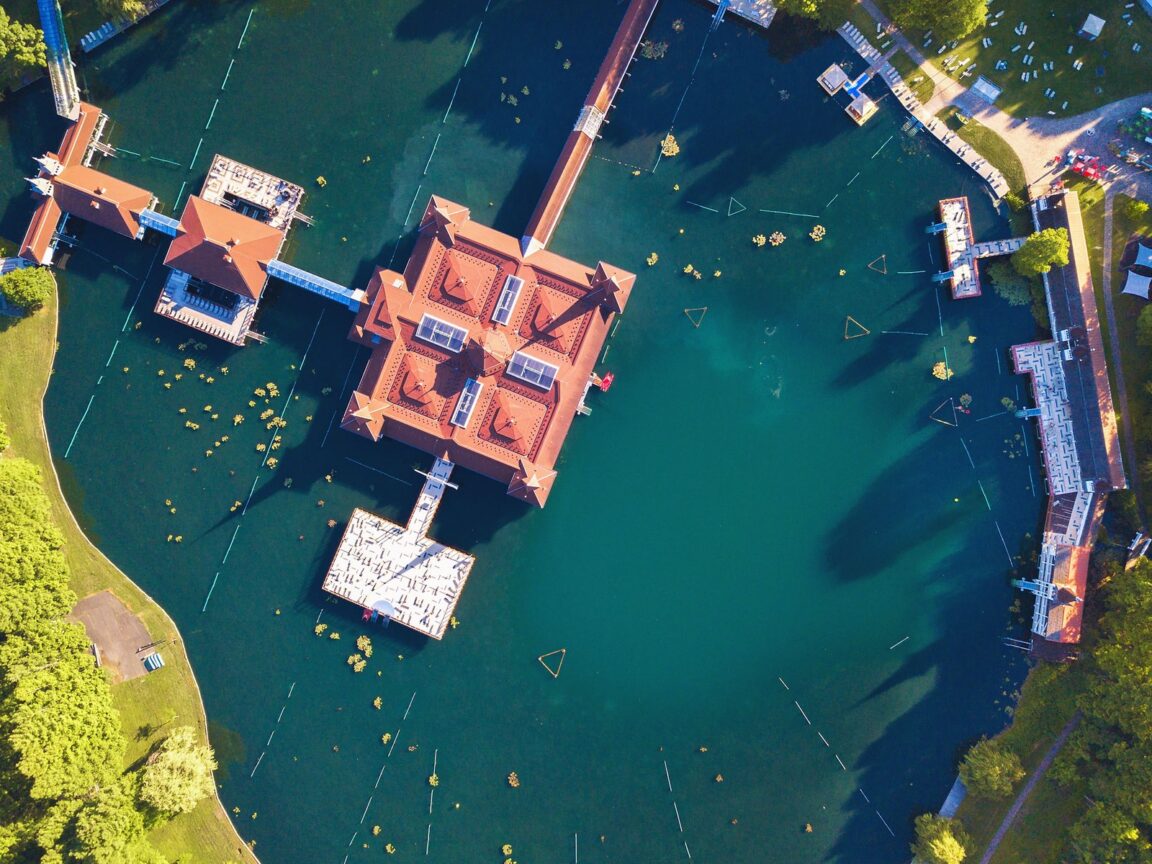
Lake Heviz in western Hungary is the largest biologically active natural thermal lake in the world, and you do not look at it, you bathe in it: 4.6 hectares of warm, green, mineral water over a peat bed, fed by a spring cave 38.5 metres below the surface, with bathhouse pavilions standing on stilts in the middle of it and water lilies flowering between the swimming lanes. The official town site, heviz.hu, puts the flow at about 410 litres a second, enough to replace the lake’s entire volume within 72 hours, and the surface temperature at about 24 degrees on the coldest winter days, rising to as much as 38 degrees in summer. Bathing is run as a cure, not a swim: short sessions of 20 to 30 minutes, a rest of at least half an hour, and no more than about an hour and a half in the water across a whole day.
Quick Facts
- Size: 4.6 hectares, 46,350 square metres, over a spring cave 38.5 metres deep. The lake itself ranges from 2 to 38 metres deep.
- Flow: about 410 litres per second, so the whole lake renews itself within about 72 hours. No chlorine, no filtration plant.
- Temperature: about 24 degrees on the coldest days and up to 38 degrees in summer, per heviz.hu. The spring water rises at about 40 degrees.
- The water: carbonic, sulphurous, calcium, magnesium and hydrogen carbonate water over a peat mud bed, per the operator.
- Bathing dose: 20 to 30 minutes at a time, rests of at least 30 minutes, roughly 1 to 1.5 hours total per day, per the operator’s guidance.
- The lilies: protected water lilies grow in the lake. Do not touch or pick them.
- Winter hours: from 2 November 2026 to 14 February 2027 the lake bath is open 9:00 to 16:30, with entry through the Festetics Bathhouse, per heviz.hu.
- Current layout: bathing is outdoors only. The central bathhouse building, Building A and Terrace B, is closed, per the operator.
How does a lake stay warm enough to bathe in all winter?
The answer is volume and speed. Beneath the lake, cold and hot springs meet in a cave system nearly 40 metres down and rise together through the peat bed at a rate the town’s official figures put at about 410 litres a second. That is a river’s worth of warm water arriving continuously, which is why the lake can lose heat to a January sky and still hold a surface temperature in the mid twenties, steaming gently into the cold air while the surrounding park is frosted. In summer the same system runs the other way: with warm air above it, the surface climbs toward the temperature of the spring itself, and the operator’s figures reach 35 to 38 degrees, warm enough that a long float becomes genuinely tiring and the short session rule stops sounding cautious.
The peat bed is the lake’s second distinction. The water is described by its operator as biologically active, meaning this is a living body of water with its own plants, bacteria and mud chemistry, not a heated pool with a view. The green cast of the water, the soft mud under the shallows, and the famous lilies are all part of the same system. It is also why the lake is managed by a rheumatology hospital, the St Andrew Hospital for Rheumatology beside the shore, and why the whole town of Heviz, a few kilometres from the western end of Lake Balaton, is built as a cure resort of clinics, sanatorium hotels and quiet streets rather than a beach town. Travellers who know Hungary’s bathing culture from the grand indoor halls will find Heviz a different register entirely, closer in spirit to the mountain soak in our guide to Banff’s Upper Hot Springs and the Cave and Basin: a natural source first, and a facility built carefully around it second.
What does the floating ring rule actually mean?
It means nobody really swims here, and that is deliberate. The lake is deep, up to 38 metres over the spring cave, with marked shallower bathing areas, and the standard way to bathe is vertical and almost motionless, hanging in the warm water supported by a foam floating ring, called a swim ring or float, which you rent on site or bring yourself. Columns of bathers drift slowly along the roped lanes and around the lily beds, chatting quietly, moving just enough to stay oriented. The gentle natural current and the upright posture are part of the traditional cure for spinal and joint conditions, because the water’s buoyancy unloads the spine while the warmth and the minerals do their work.
Respect the dose. The operator’s guidance, repeated across its official information, is sessions of 20 to 30 minutes, a rest of at least half an hour out of the water between them, and a daily total around one to one and a half hours. Treat that as a rule of the house rather than a suggestion: the water is medicinal, the heat load is real, and the bathers around you, many of them on doctor prescribed cure courses lasting weeks, keep to the rhythm without thinking about it. Children need a specific caution. The operator does not recommend lake bathing for younger children, and there is a separate children’s pool area on shore. If you are pregnant, or live with high blood pressure, a circulatory condition or another chronic illness, the operator’s advice is to consult a doctor before bathing. None of this makes Heviz forbidding. It makes it legible: a medical bath that visitors are welcome to share, on the medicine’s terms.
How do you organise a visit, from the entrance to the water?
Start with the season and the current layout, because Heviz is mid change. The operator’s current notices state that bathing is outdoors only and that the central bathhouse, Building A and Terrace B, is closed, with entry, changing and services arranged through the main entrance and the Festetics Bathhouse depending on the season. In the current winter period, 2 November 2026 to 14 February 2027, the bath is open 9:00 to 16:30 and entry is through the Festetics Bathhouse, per heviz.hu. Summer days run longer. Always confirm the day’s hours and entry point on the official sites, spaheviz.hu and heviz.hu, before you set out, since the phased opening hours change several times a year.
Tickets are time based, sold in blocks such as three hours and a full day, with reduced rates for seniors, students and children listed on the operator’s current price page. Buy for the rhythm, not the maximum: a three hour ticket comfortably holds two or three properly rested bathing sessions, which is a full dose by the house rules. Bring your own towel and swimsuit, rent the floating ring at the bath, and plan the rests as part of the pleasure, on the terraces and lawns between sessions, rather than as dead time. Stay overnight in Heviz if you can. The cure culture reveals itself across days, in the early morning steam, the unhurried breakfasts and the same faces returning to the same lanes, and a day trip compresses the experience into its least characteristic form. For a contrasting model of a structured wellness stay, our profile of Kamalaya on Koh Samui shows how another serious programme paces its guests’ days, though nothing anywhere else quite replicates bathing in a living lake.
Frequently Asked Questions
Can you really bathe in Lake Heviz in winter?
Yes, all year. The spring flow keeps the surface at about 24 degrees even on the coldest days, per heviz.hu, and winter is the most atmospheric season, with steam lying over the water. Winter hours are shorter, currently 9:00 to 16:30 with entry through the Festetics Bathhouse, so plan a morning start.
How long should you stay in the water?
Twenty to thirty minutes at a time, then at least half an hour out of the water, and no more than about one to one and a half hours in total per day, following the operator’s guidance. The water is medicinal and warm enough that longer continuous immersion is tiring rather than relaxing.
Why does everyone use a floating ring?
Because the lake is deep, up to 38 metres over the spring cave, and the traditional bathing posture is upright and nearly still, supported by the ring, which unloads the spine and joints. Rings can be rented at the bath. This is floating as therapy, not lane swimming.
Can children bathe in Lake Heviz?
The operator does not recommend the lake itself for younger children, and provides a separate children’s pool area on shore. Older children should follow the same short session discipline as adults. Check the operator’s current house rules before you go.
Are the water lilies really protected?
Yes. The lilies growing in the lake are protected, and touching or picking them is forbidden. They are part of the biologically active system that makes the lake what it is, and the bathing lanes are laid out around their beds.
Is the central bathhouse open?
Currently no. The operator states that bathing is outdoors only and that the central building, Building A and Terrace B, is closed, with entry and services running through the main entrance and the Festetics Bathhouse by season. Verify the current arrangement on spaheviz.hu before travelling.
Image: An aerial view of Lake Heviz and its bathhouse pavilion, from Spa Heviz (spaheviz.hu), the lake bath operator’s official website, used with credit.