 Hana Kim
For the Camino Frances in shoulder season, April to May or September to October, pack a 30 to 40 litre rucksack that weighs no more than about 10 percent of your body weight before water, built around two changes of quick drying clothes, a proper rain system that covers you and the pack, a sleep liner rather than a full sleeping bag for most albergues, and a blister kit you have practised with before you leave. Shoulder season is the Camino’s best walking weather and its most changeable: you can cross the Pyrenees from Saint Jean Pied de Port in cold wind, walk the Meseta in strong sun, and finish through Galicia in days of Atlantic rain, all inside one trip. The pack below is built for exactly that sequence.
Quick Facts
- Pack size: 30 to 40 litres with a padded hip belt and a rain cover. Bigger packs get filled, and filled packs get heavy.
- Weight rule: about 10 percent of your body weight, weighed at home fully packed, before food and water.
- The route: the Camino Frances runs roughly 780 kilometres from Saint Jean Pied de Port to Santiago de Compostela.
- Sleep system: a liner for most nights, since albergues provide a bed and pillow but not bedding. Add a light bag in early April or late October.
- Clothing system: two full sets, one worn and one washed each evening, in merino or synthetic fabrics. Never cotton.
- Rain system: a waterproof jacket or a poncho that covers the pack, plus a pack liner or dry bags inside. Galicia earns this rule.
- The document that matters: the credencial, your pilgrim passport, stamped along the way. The Compostela requires at least the last 100 kilometres on foot.
- Foot rule: broken in trail shoes or light boots, plus sandals that double for showers and evenings.
Why does the 10 percent rule decide your whole Camino?
Because the Camino Frances is not a wilderness expedition, and your pack should admit it. You sleep in albergues or small hotels, eat in villages, and pass a pharmacy, a bar and a water fountain most days. Everything you carry beyond the essentials is weight you haul over the Pyrenees on day one, across the long flat exposure of the Meseta between Burgos and Leon, and up to O Cebreiro in Galicia, in exchange for nothing the route would not have sold you along the way. The traditional guidance, repeated by pilgrim associations and tested by generations of sore shoulders, is a loaded pack at about 10 percent of your body weight. For most walkers that means a base weight under 7 kilograms, in a 30 to 40 litre pack whose hip belt puts the load on your hips rather than your neck.
Weigh the finished pack at home and walk a long day in it before you travel. A pack that feels merely noticeable on a flat afternoon at home will feel twice as heavy on a hot climb in week two. If it is over the line, the cuts are almost always the same: the third change of clothes, the just in case layer, the full size toiletries, the paper book, the spare shoes. Shoulder season tempts people to pack for two trips at once, a cold one and a warm one. Resist it by choosing layers that combine, not duplicates that compete. The same discipline, one system serving every condition, is what our guide to packing for a hut to hut trek in the Alps applies to refuge walking, and it transfers to the Camino almost item for item.
What should the clothing system actually contain?
Two of almost everything, three of socks. Walk in one set, wash it in the albergue sink or the laundry trough in the evening, and wear the second set while the first dries on the line or the pack. Merino and synthetic fabrics earn their place because they dry overnight in a dormitory, resist smell across a long trip, and stay warm when damp in a way cotton never does. Your walking set is quick dry trousers or shorts, a technical top, walking socks with real cushioning, and underwear that does not chafe at kilometre 20. Your evening set doubles as your clean sleep clothes and your laundry day cover.
On top of that base, shoulder season needs three warmth and weather pieces, chosen to stack. A light fleece or insulated jacket for cold mornings in the Pyrenees and on the Meseta, where wind rather than temperature is the enemy. A waterproof jacket with a hood, or a poncho that covers both you and the pack, tested in real rain before you leave. And a warm hat and gloves, which weigh almost nothing and save the two coldest hours of an April start over the Napoleon route. Add a sun hat and sunscreen for the Meseta, where shade is a rumour for days at a time. That is the whole wardrobe. If an item cannot justify itself in both a cold Galician week and a warm Castilian one, it stays home.
Liner or sleeping bag, and what else belongs in the albergue kit?
Most albergues provide a mattress, a pillow and sometimes a blanket, but not bedding, so you always carry your own sleep layer. In shoulder season a good liner, silk or synthetic, is enough for most walkers on most nights, especially in heated dormitories, and it weighs a fraction of a bag. In early April and late October, or if you sleep cold, step up to a light one season bag and accept the extra grams as the best spent weight in the pack. Whichever you choose, add the small kit that makes shared dormitories work: earplugs, because someone in every dormitory snores like machinery, an eye mask for the early riser with a headtorch, a headtorch of your own for packing in the dark without waking the room, and a small padlock or at least a dry bag routine for documents.
Your documents deserve their own waterproof pouch: passport or identity card, credencial, bank card, a small amount of cash, and your health insurance or European health card details if they apply to you. The credencial is stamped at albergues, churches, bars and town halls along the route, and it is both your access pass to pilgrim accommodation and your evidence at the end. In Santiago, the Pilgrim’s Reception Office issues the Compostela to walkers who have covered at least the last 100 kilometres on foot, collecting stamps along the way, with at least two stamps a day recommended in that final section. Pack the credencial where rain cannot reach it. A soaked passport can be replaced. A soaked credencial is a small tragedy.
How do you pack for feet, blisters and rain, the three real risks?
Feet end more Caminos than fitness does. Your footwear should be the pair you have already walked long days in at home, trail shoes for most walkers in shoulder season, light boots if your ankles demand them, never a new pair bought for the trip. Socks matter as much as shoes: carry three pairs of proper walking socks, change into a dry pair at lunch on wet or very hot days, and air your feet whenever you stop. The blister kit is not a gesture, it is a sequence: tape or dressings applied at the first hot spot, before it becomes a blister, a needle and thread or purpose made blister plasters for established ones, antiseptic, and the discipline to stop early rather than heroically. Vaseline or an anti friction balm each morning is the cheapest insurance on the entire route.
Rain is the other certainty, and Galicia, the final region, is one of the wettest corners of Spain. Your defence is layered like everything else in this pack: a rain cover over the pack, a pack liner or dry bags inside it, because covers fail in wind driven rain, and quick dry everything, because something will still get damp. Poncho walkers swear by the all in one cover a poncho gives over body and pack on Galician lanes. Jacket walkers prefer the breathability on climbs. Either system works if it is complete and practised. What fails, every season, is the cheap emergency shell bought at the airport and trusted for a month. Pilgrims posting their packs ahead village by village, or shedding weight mid route, are a Camino institution for a reason, and using a luggage transfer on a bad knee day is wisdom, not surrender. For a different climate built on the same principles, our system for packing for a New Zealand South Island road trip works through the same four seasons in one day problem from the other side of the world.
Frequently Asked Questions
How heavy should a Camino Frances pack be in shoulder season?
About 10 percent of your body weight before food and water, which for most pilgrims means under 7 kilograms in a 30 to 40 litre pack. Weigh it packed at home and walk a long training day in it. Shoulder season layers add a little weight over high summer, but not enough to break the rule.
Do I need a sleeping bag for albergues in April or October?
Usually a liner is enough, because albergues provide a bed and pillow and many provide blankets. In early April, late October, unheated dormitories or if you sleep cold, a light one season bag is worth its weight. Never arrive without some sleep layer of your own, since bedding is not provided.
Trail shoes or boots for the Camino Frances?
Trail shoes suit most walkers on this route, which is largely paths, tracks and lanes rather than technical terrain. Choose boots only if your ankles need the support. Either way, the pair must be thoroughly broken in at home, and sandals should come too, for showers and evenings.
What is the credencial and why does it matter for packing?
It is your pilgrim passport, stamped at albergues, churches and bars along the way. It gains you entry to pilgrim accommodation and proves your journey in Santiago, where the Compostela requires at least the last 100 kilometres on foot. Keep it in a waterproof pouch with your passport and card.
How do I keep everything dry in Galicia?
Use three layers of defence: a rain cover on the pack, a liner or dry bags inside it, and quick dry clothing throughout. Choose a waterproof jacket or a poncho that covers you and the pack, and test the whole system in real rain before you leave home.
What do pilgrims most regret packing?
Extra clothes, spare shoes, full size toiletries, heavy books and just in case items the route sells in every town. The Camino passes villages, pharmacies and shops almost daily. Anything forgotten can be bought, and anything extra is carried over every hill for weeks.
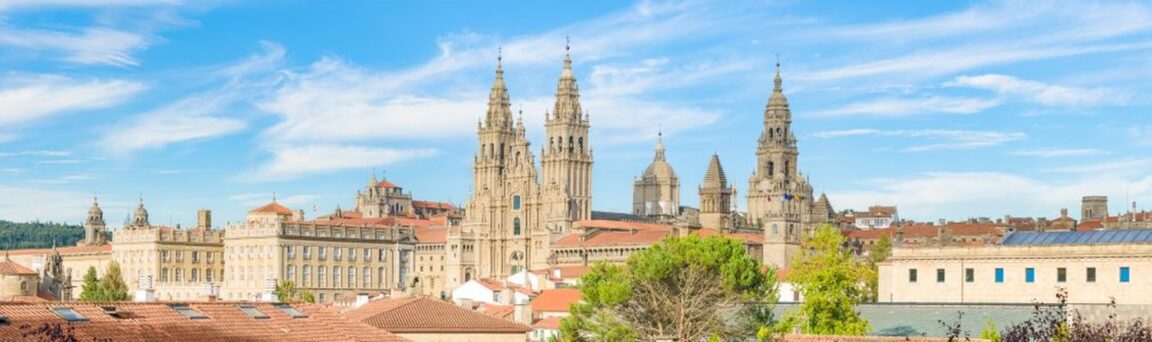
Image: Santiago de Compostela Cathedral, the end of the Camino Frances, from Santiago Turismo (santiagoturismo.com), the city’s official tourism website, used with credit.