 Lucas Meyer
Pack for a South Island road trip as if four seasons will share one day, because they will: a merino base layer, a warm mid layer and a genuinely waterproof shell, worn in walking boots that handle both town boardwalks and beech forest tracks, plus serious sandfly defence for the West Coast and Fiordland. That system, packed into one checked bag with discipline, covers alpine passes, glacier country, beach towns and city dinners without a second bag or a shopping rescue en route.
Quick Facts
- The system: Three layers, merino base, fleece or light down mid layer, waterproof shell with sealed seams
- The fabric rule: No cotton for walking. It holds water, chills fast and dries slowly in alpine weather
- The boot: One broken in, waterproof mid boot that works on boardwalks, gravel and muddy forest tracks
- The biting problem: Sandflies on the West Coast and in Fiordland. Pack repellent and long sleeves, do not rely on buying locally
- The border rule: Boots and outdoor gear must arrive clean. New Zealand biosecurity inspects soil on footwear
- The sun rule: High factor sunscreen and a brimmed hat in every season. Southern hemisphere UV is fierce even on cool days
Why does the South Island demand a layer system?
The South Island stacks climates vertically. A classic road trip day starts at sea level in a beach town, climbs through an alpine pass such as Arthur Pass or the Haast Pass, and ends in a high country basin where the temperature falls off a cliff after sunset. Add the island weather engine, westerly fronts that cross the Southern Alps and dump their rain on the West Coast before arriving as warm wind in Canterbury, and a single day can legitimately contain sun, horizontal rain and snow on the high ground. Locals call it four seasons in one day, and it is a packing instruction, not a slogan.
The three layer answer is boring because it works. A merino base layer regulates temperature across that whole range, resists odour over multi day stretches between laundries, and stays warm if it gets damp. A fleece or light insulated jacket supplies the warmth. A waterproof shell with sealed seams, not a shower resistant fashion jacket, stops the wind and the West Coast rain. Each layer earns its place alone and combines with the others, which is how one bag covers a month of conditions. For the walking specific version of this system, our Great Walk packing guide builds the hut kit in detail.
What makes the West Coast and Fiordland a special case?
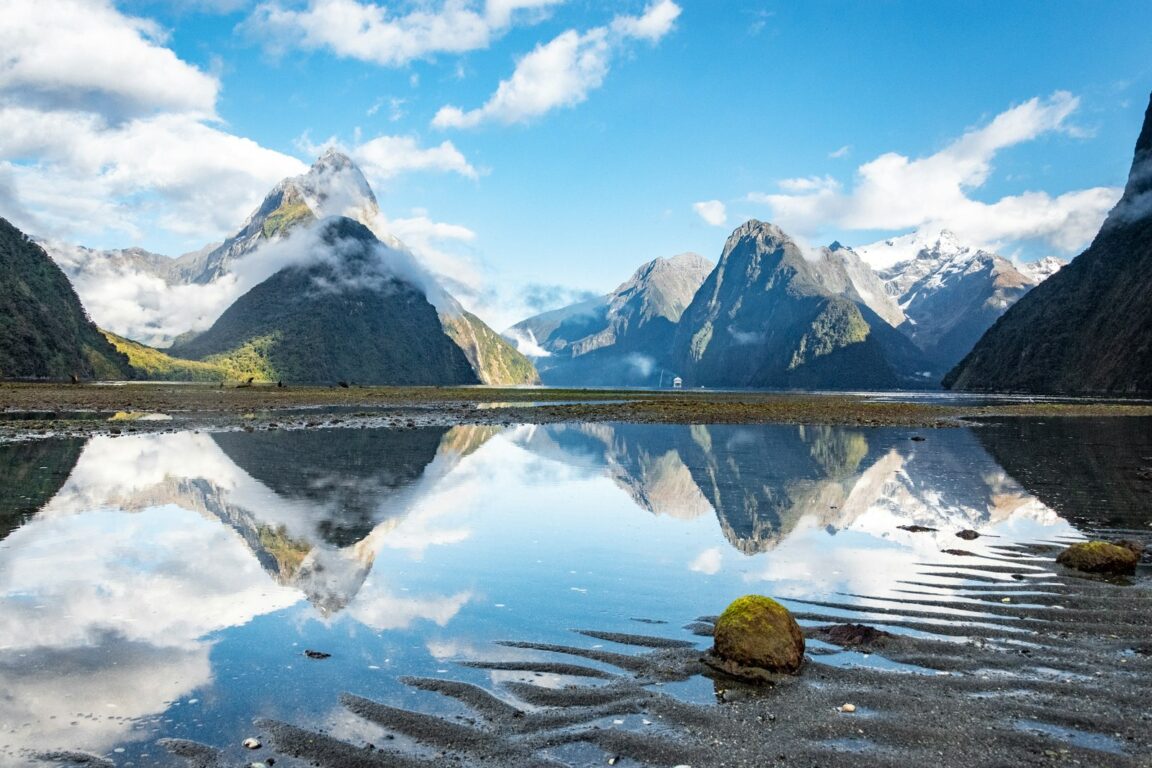
Rain and sandflies, in that order. Fiordland is one of the wettest inhabited regions on earth, and Milford Sound, pictured here, receives metres of rain a year. Waterproof trousers, which fair weather packers always debate and always regret skipping, stop being optional on a road trip that includes glacier valleys and fiord walks. Pack them flat at the bottom of the bag and forget them until the day they save the trip.
Sandflies are the smaller, meaner problem. These tiny biting flies swarm near damp bush, river mouths and still water along the West Coast and in Fiordland, worst in the warmer months and at dawn and dusk, and their bites itch for days. Defence is a system, not a single product: a repellent containing DEET or picaridin, applied before you get out of the car at scenic stops, lightweight long sleeves and trousers for trackside breaks, and a small tube of antihistamine or soothing cream for the bites that get through anyway. Small towns have small pharmacies with small stocks, so the repellent belongs in your bag from home, in a leak proof pouch in the checked luggage.
Can one boot really serve both boardwalks and beech forest?
Yes, if you choose the middle of the range honestly. The South Island road trip walking diet is mostly formed tracks: lakeside boardwalks, gravel paths to waterfalls and viewpoints, and well graded forest tracks under beech canopy that turn muddy and root slick after rain. That terrain wants a waterproof mid height boot with a lugged sole and ankle support, broken in for at least a few weeks before departure. It does not want approach shoes that soak through in the first West Coast shower, and it does not need a stiff mountaineering boot that will punish you on every town day in Queenstown, Wanaka and Christchurch.
Pair the boot with merino walking socks, two or three pairs rotated and dried overnight, and add light town shoes or sandals so the boots get rest days and you get an evening option that is not hiking gear. One more border critical detail: clean the boots thoroughly before you fly. New Zealand runs some of the strictest biosecurity in the world, outdoor equipment carrying soil is inspected on arrival, and dirty tread costs you time at the border and can draw an instant fine if undeclared. Scrubbed soles and a declared, clean pair of boots sail through.
Drivers should also read our New Zealand campervan rules guide if any leg of the trip swaps the rental car for a van, and our Great Walks booking guide before assuming a famous track can be added on the day.
What else earns space in one checked bag?
Build the rest of the bag around the layers. Quick dry walking trousers, one pair worn and one packed, shorts for the warm east coast days, two or three merino or synthetic tops, a warm hat and light gloves that live in the daypack all trip because alpine weather does not check the calendar, and swimwear, because the island keeps ambushing drivers with swimmable lakes, rivers and hot pools. A compact daypack of around 25 litres carries the daily system: shell, mid layer, water, sunscreen, repellent, hat and camera, while the main bag stays in the car or the room.
Sun protection deserves its own sentence. New Zealand summer UV is among the strongest in the world, burn times are short even under cloud, and a road trip day is a day of windscreen light and exposed viewpoints. High factor sunscreen, lip balm with SPF, sunglasses and a brimmed hat are core kit, not beach extras. Add a head torch for early starts and power cuts in small towns, a reusable water bottle, and a dry bag or zip pouches that keep the daypack organised when the rain arrives sideways.
What should you leave behind?
Cotton, first: jeans and cotton hoodies are heavy, cold when wet and slow to dry in motel rooms, so one pair of jeans for town evenings is the maximum. Leave the second pair of boots, the formal outfit the casual South Island will never ask for, and the just in case bulk that turns one bag into a wrestling match at every one night stop. Food from home is a biosecurity declaration problem, so skip the snack stash and buy supplies in island supermarkets, which are excellent. Everything on the leave list buys back the space the waterproof trousers, spare socks and warm layers actually need.
Frequently Asked Questions
What is the single most important item for a South Island road trip?
A genuinely waterproof shell jacket with sealed seams and a hood. Rain is guaranteed somewhere on the route, the West Coast and Fiordland especially, and a water resistant jacket fails within the first hour of real weather.
How do I protect myself from sandflies?
Pack repellent with DEET or picaridin from home, apply it before leaving the car at West Coast and Fiordland stops, and wear lightweight long sleeves and trousers near damp bush and still water, especially at dawn and dusk.
Do I need hiking boots, or will trainers do?
For boardwalks and town walking, sturdy trainers survive. For the full road trip mix of muddy beech forest tracks, gravel and wet viewpoints, one broken in waterproof mid boot is the safer single choice, with light shoes packed for evenings.
Why do my boots need to be clean before I fly to New Zealand?
Biosecurity. New Zealand inspects outdoor gear for soil and seeds on arrival to protect its agriculture and ecosystems. Clean boots pass quickly; muddy, undeclared gear can be delayed for cleaning or fined.
Is one checked bag really enough for the South Island?
Yes, with the layer system. Merino layers rotate without daily washing, one boot covers all walking, and the leave behind list, cotton, duplicates and formal wear, frees the space the weather gear needs.
Image credit: Mitre Peak reflected in the still water of Milford Sound, Fiordland, on the South Island road trip route. Photo by Sebastien Goldberg, via Unsplash (hosted copy via Backpacking Is Life), Unsplash License, used with credit.