 Wei Chen
Pack for a shoulder season Great Walk and the bag almost builds itself once three facts are settled. First, the Department of Conservation (DOC) specifies a 40 to 60 litre pack for multi day hiking, and a hut based shoulder season load sits at the small end of that range, around 40 to 45 litres, because there is no tent or sleeping mat to carry. Second, the famous no cooker rule is real but narrower than most packing lists claim: only some Great Walk huts lack gas cooking facilities, so whether a stove goes in the bag depends on the named track, not on habit. Third, in Fiordland the bag is won or lost on water and biting insects, not on spare clothes. Rain that can close rivers and sandflies that own the still air at sea level decide what earns its place. Settle those three calls before zipping anything shut and the rest of this list is simple arithmetic.
Quick Facts
- Pack size: DOC specifies 40 to 60 litres for multi day hiking. A compact hut load in shoulder season fits 40 to 45 litres.
- Cooker rule: Huts on the Rakiura Track, Lake Waikaremoana, the Abel Tasman Coast Track and two Heaphy Track huts have no gas cooking facilities, so a portable stove and fuel are required there. Milford, Routeburn and Kepler huts provide gas cooking in the Great Walks season, so check your track before packing a stove.
- Sleep system: A 3 to 4 season sleeping bag. Hut bunkrooms are unheated and can be cold, and DOC states plainly that it is not possible to dry clothes in the huts.
- Hut fees in season, per adult per night: Milford Track NZ$106 for New Zealand residents and NZ$152 for international visitors. Routeburn and Kepler NZ$88 and NZ$132 on the same split.
- Shoulder fees: In May and June the Routeburn drops to NZ$35 per night and the Milford to NZ$30, with no resident and international split.
- Season dates: The Milford and Routeburn Great Walks seasons run 1 November 2026 to 30 April 2027. The Kepler season starts 27 October 2026.
- Food: Nothing can be bought on the track. Carry every meal plus emergency food, because DOC provides no emergency food in huts.
- Water: A 1 to 2 litre bottle. Boil, filter or treat water if its purity is in doubt.
Which Great Walk are you actually packing for?
The Great Walks are eleven tracks run by DOC, and they do not share one packing list. The Fiordland walks, the Milford, Routeburn and Kepler, are alpine routes above the bushline where shoulder season means colder nights, shorter days and a real chance of snow on the passes. The Abel Tasman is a coastal walk where the same months are milder and the stove question flips. Tongariro, in the central North Island, stops operating as a Great Walk outside its season entirely, and DOC warns that anyone attempting it then needs extra food, a stove and full self sufficiency. Before packing anything, name the track and read its own DOC pages, because the hut facilities, the fees and the risks are all set track by track. If the booking system itself is still a puzzle, start with how the Great Walks booking system works and when to reserve, then come back to the bag.
Does your hut have a cooker, or do you carry the kitchen?
This is the single most mishandled item on Great Walk packing lists, so here is the rule exactly as DOC publishes it. A portable stove and fuel, plus candles, are required only on the Rakiura Track, Lake Waikaremoana, the Abel Tasman Coast Track and the Heaphy Track’s Brown Hut and Gouland Downs Hut, because those huts do not provide gas cooking facilities, lighting or toilet paper. On the Milford, Routeburn and Kepler in season, the huts provide gas cooking, and carrying a stove there is dead weight. The catch cuts the other way in shoulder season. Outside the Great Walks season most huts revert to standard backcountry status, facilities shrink, and the safe assumption flips: if you walk in May, June or the spring shoulder, confirm the current facility list for your exact huts on the DOC site the week you go, and pack the stove if there is any doubt. Either way, the eating kit travels: utensils, a plate or bowl, a cup, a pot or billy if you are cooking, a cleaning kit and a tea towel, plus matches or a lighter in a waterproof container.
How does a 40 litre target actually work?
DOC’s range starts at 40 litres for a reason. A hut walker carries no tent, no sleeping mat and, on the serviced Fiordland tracks in season, no stove, which removes the three bulkiest items in a camping load. What remains is a sleeping bag, two sets of clothing, food for three or four days, wet weather gear and small safety kit, and that fits a 40 to 45 litre pack if the sleeping bag compresses well and the food is dense rather than bulky. The discipline that makes it work is the waterproof pack liner DOC lists as standard: everything inside one liner or dry bags, because a Fiordland pack will get wet from the outside and from river valley humidity no matter how good the pack cover is. Aim for the load DOC describes for the Lake Waikaremoana walk, a pack of up to 15 kg, and treat anything above that as a sign that comfort items have crept in. If your gear is older and bulkier, take the honest 50 litre option rather than strapping items outside the pack, where they soak and snag.
What clothing survives river rain and a cold hut?
DOC’s clothing rule is two sets: one to walk in and one dry set to change into at night, with warm clothing to sleep in because bunkrooms are unheated. The walking set is wool or polypropylene thermals top and bottom, a fleece or insulated mid layer, and a fully waterproof rain jacket with waterproof overtrousers, which in Fiordland are working clothes, not emergency items. Milford Sound records roughly seven metres of rain a year, and the tracks share that weather system. Cotton is explicitly unsuitable: DOC names jeans, cotton t shirts and sweatshirts as not suitable, because wet cotton chills fast and, in a hut with no drying, stays wet for the rest of the walk. Add a warm hat and gloves, gaiters for mud and river edge work, broken in waterproof boots, and lightweight hut shoes so the boots stay at the door. The dry night set lives in its own waterproof bag and is never worn walking, whatever the morning looks like. That one habit is the difference between a wet day and a miserable trip.
How do you beat Fiordland sandflies?
Sandflies are the Fiordland tax, and the end of the Milford Track is literally named Sandfly Point. They bite worst in still, damp, low altitude bush and at hut doors in the evening, and they are far less active in wind and heavy rain. DOC lists insect repellent in the standard toiletries for every Great Walk, and for Fiordland it should be a high strength repellent applied before leaving the hut in the morning and again at every stop, not a small bottle carried just in case. Coverage beats chemistry alone: long sleeves and long trousers in camp, socks pulled over trouser cuffs at Sandfly Point style stops, and a fine mesh head net, which weighs almost nothing and is the single item walkers most often wish they had packed. Keep moving at photo stops, choose breezy lunch spots over sheltered riverbanks, and change into the dry set quickly at the hut, because standing still in damp walking clothes at dusk is peak biting time. Bites swell on some people, so antihistamine belongs in the first aid kit alongside blister treatment, as DOC’s list specifies.
What safety kit does shoulder season add?
Shoulder season trades crowds for consequence. Rivers on Great Walk tracks rise quickly after heavy rain, bridges and boardwalks exist on the serviced tracks, but side streams can still become impassable, and the standing DOC advice is to wait rather than cross a flooded river. Pack an emergency shelter, because DOC lists one for exactly the situation where a flooded river or bad weather traps you between huts, plus the standard survival kit: survival blanket, whistle, paper and pencil and high energy snack food. A distress beacon is on DOC’s Tongariro list and is a sensible Fiordland shoulder season carry, hireable in Te Anau and other gateway towns. Carry a head torch with spare batteries, since huts have limited or no lighting outside the serviced season, earplugs for communal bunkrooms, and a rubbish bag, because there are no rubbish facilities and everything packed in is packed out. Fill in the hut books as you go and leave your itinerary with a contact, the low tech system DOC still asks every walker to use. International visitors should also have the entry side settled before the track, and the NZeTA and visitor levy explainer covers what is paid before flying.
What food system keeps the weight down?
There is no food for sale on any Great Walk track and no emergency food in the huts, so the food bag is a closed system: every meal, plus a spare day, carried from the trailhead. The pattern DOC suggests is lightweight, fast cooking and high in energy: cereal or porridge breakfasts, cracker biscuits with cheese and salami at lunch, and pasta, rice or freeze dried meals at dinner, with tea, coffee and steady snacks through the day. Store food in a rodent proof container or bag, which matters in huts as much as in tents. In shoulder season, add a margin: one full extra day of food is cheap insurance against a river wait or a weather day, and it is the first place the 40 litre target should bend, because a slightly bigger pack beats a hungry one. Bookings are the other hard deadline: DOC reported the Milford Track selling out in 34 minutes when 2026/27 bookings opened in May 2026, so the pack list only matters once the huts are actually secured.
Frequently Asked Questions
Do I need to carry a stove on the Milford Track?
Not in the Great Walks season. Milford Track huts provide gas cooking facilities in season, and DOC’s stove requirement applies to the Rakiura Track, Lake Waikaremoana, the Abel Tasman Coast Track and two Heaphy Track huts. Outside the season, check the current DOC facility list for your huts before deciding.
Is 40 litres really enough for a Great Walk?
For a hut based walk with compact gear, yes. DOC specifies 40 to 60 litres for multi day hiking, and hut walkers carry no tent or mat. Bulky older gear, a camping itinerary or a big extra food margin honestly needs 50 litres or more.
What is different about packing in shoulder season?
Fees drop sharply, for example NZ$35 a night on the Routeburn in May and June, but huts revert to backcountry status outside the season, facilities reduce, days shorten and alpine sections carry snow and avalanche risk. Add an emergency shelter, extra food and warmer layers, and verify facilities track by track.
How bad are the sandflies in Fiordland?
Bad enough that the Milford Track ends at a place called Sandfly Point. They are worst in calm, damp, low bush and at dusk. High strength repellent, full coverage clothing in camp and a head net keep them manageable.
Can I dry wet gear in Great Walk huts?
No. DOC states that it is not possible to dry clothes in the huts. The system that works is a sealed dry set for the hut and sleep, while the walking set stays the wet set for the whole trip.
How much do Great Walk huts cost per night?
In season, an international adult pays NZ$152 a night on the Milford Track and NZ$132 on the Routeburn and Kepler, with New Zealand residents paying NZ$106 and NZ$88. Shoulder and winter fees are far lower. Confirm current fees on DOC’s Great Walks pricing page before booking.
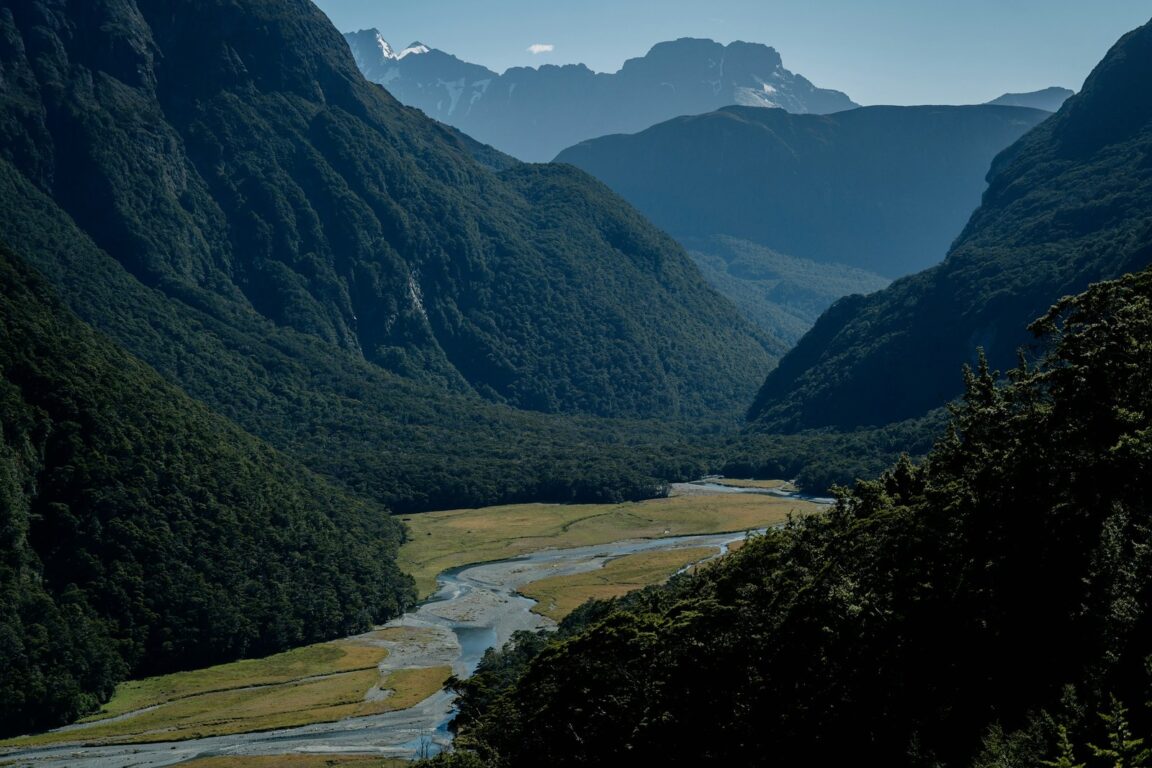
Photo: The Routeburn Track valley, Fiordland, New Zealand. Photo by Matthew Buchanan on Unsplash, Unsplash License.