 Hana Kim
Salvador Carnival 2026 runs from Thursday 12 February to Tuesday 17 February, with the wind down into Ash Wednesday morning, 18 February, and booking it properly means making three decisions in the right order: pick your circuit first, pick your way of experiencing it second, and only then pick a hotel that serves both. The circuits are the Dodo (Barra to Ondina, along the ocean), the Osmar (Campo Grande, through the centre) and the Batatinha (Pelourinho, the historic old town, with no big trucks). The ways are pipoca, the free street crowd, a bloco, the roped group following one trio eletrico behind an abada shirt, and a camarote, a fixed ticketed grandstand with services. Afro blocos Olodum and Ile Aiye are the cultural heart of the whole event and reward planning around, not stumbling into. Everything else in this guide is detail in service of those three decisions.
Quick Facts
- 2026 dates: Thursday 12 February to Tuesday 17 February 2026, ending into Ash Wednesday, 18 February
- Circuit 1, Dodo: Barra to Ondina along the coast, about 4.5 km, the biggest commercial trios and camarotes
- Circuit 2, Osmar: Campo Grande and Avenida Sete de Setembro in the centre, about 4 km, the oldest circuit and strong on tradition
- Circuit 3, Batatinha: Pelourinho historic centre, about 1.5 km, no trio trucks, smaller bands, afoxes and afro blocos
- Three ways in: Pipoca (free, outside the ropes), bloco (paid abada shirt, inside the ropes behind one trio), camarote (paid fixed venue with bar, food and bathrooms)
- Afro blocos: Ile Aiye, founded 1974 in Curuzu, Liberdade, the first afro bloco; Olodum, founded 1979 in Pelourinho, creators of samba reggae
- Scale: Commonly reported at around 2 million participants across the week; Salvador bills it as the largest street carnival in the world
- Book first: Flights and a circuit side hotel, months ahead; bloco abadas and camarote places for headline days sell out next
Which circuit should you choose: Barra Ondina or Campo Grande?
The Dodo circuit, Barra to Ondina, is the postcard and the powerhouse. It runs along the oceanfront from the Farol da Barra lighthouse to Ondina, roughly 4.5 km, and it carries the biggest commercial blocos, the headline axe artists and the densest line of camarotes. If your Carnival is about the biggest trios, the sea beside you and a beach neighbourhood base, this is your circuit. Barra itself is the most practical first timer base in the city during Carnival: walkable, beach facing and on the route, so the party starts at your door and, usefully, also ends within walking distance of your bed.
The Osmar circuit, Campo Grande, is the original. It runs from Campo Grande down Avenida Sete de Setembro toward Praca Castro Alves, roughly 4 km through the commercial centre, and it is where Salvador Carnival grew up. The mix leans more traditional and more local, many of the classic blocos and afoxes parade here, and the crowd is less packaged than on the coast. Base in Campo Grande, Vitoria or the centre if Osmar is your priority, and accept that you are trading the beach for the roots. The honest answer for a first trip with five or six days is to do both: the circuits run on overlapping schedules across the week, and a Barra base with planned Osmar days gives you the full grammar of the festival rather than one dialect of it.
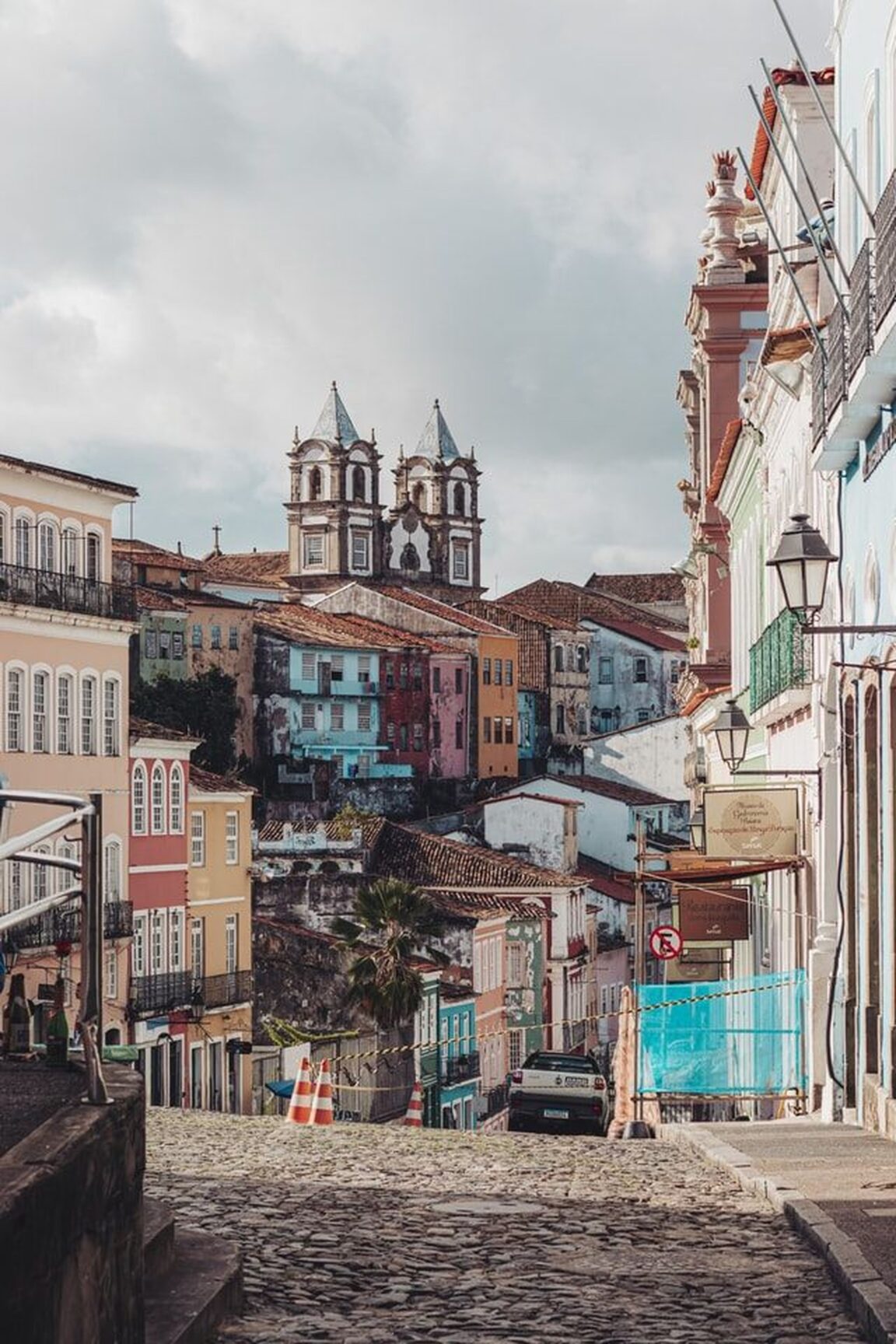
The third circuit settles the evenings. Batatinha, in Pelourinho, is the historic centre circuit, short at about 1.5 km and closed to the big trio trucks by its own cobbled geography. What parades here instead are smaller bands, fanfarras, afoxes and afro blocos at walking pace, in streets lit like a stage set. It is the most family friendly circuit and the one where the Afro Bahian culture that created this Carnival is closest to the surface.
What is the difference between pipoca, a bloco and a camarote?
Pipoca means popcorn, and it is the free Carnival: the crowd outside the ropes, jumping, as the name says, like popcorn in a pan. When a trio passes with a paid bloco behind it, pipoca fills the street around and behind the ropes; when an artist plays a pipoca trio, with no roped bloco at all, the whole street is the show. Pipoca costs nothing, commits you to nothing and delivers the most spontaneous version of the event. It also delivers the densest crowds and the least infrastructure: no private bathrooms, no support truck, no security cordon. Experienced Carnival goers often rate pipoca as the most authentic experience in Salvador, and they manage it with minimal valuables, a money belt and a planned exit street.
A bloco is the organised version of the same street. You buy an abada, the bloco’s branded shirt or vest, which is your credential for a specific bloco on a specific day. Inside the ropes carried by the bloco’s security team you follow one trio eletrico for its full circuit run, typically several hours, with a support truck providing bars, bathrooms and medical help on many blocos. You are buying proximity to one artist, structure and a cordon, not a ticket to Carnival itself, which remains free. Buy abadas only through the bloco, its official seller or an established authorised platform, and collect the physical shirt at the authorised collection point with your voucher before the day, not on the day.
A camarote is the fixed version. These are ticketed private structures overlooking a circuit, concentrated on Barra Ondina, with viewing balconies, open bar and food on most products, private bathrooms, DJs and internal shows between passing trios. Published price guides for recent Carnivals put camarotes from roughly R$300 a day for simpler products to R$3,000 a day for the most in demand names, with multi day packages priced accordingly; treat any specific 2026 price as provisional until the vendor’s own sales page confirms it. A camarote suits travellers who want a base, a bathroom and a door they can close, and it pairs well with pipoca: camarote for the headline night, street for the rest.
Why do Olodum and Ile Aiye matter so much?
Because Salvador Carnival is, before it is a party, an Afro Brazilian cultural statement, and these two organisations wrote it. Ile Aiye, founded in 1974 in Curuzu in the Liberdade neighbourhood, was the first afro bloco: created when Black Bahians were marginalised in the official Carnival, it parades only Black members, in Yoruba inspired dress, behind the election of its Ebony Goddess, and its Saturday night departure from Curuzu is one of the great ritual moments of the week. Olodum, founded in 1979 in Pelourinho by Nego do Borel, invented samba reggae, the drum language that went around the world, and grew from a bloco into a cultural organisation running a school and social programmes in the historic centre.
Practically, this means two things for a visitor. First, the afro bloco moments are scheduled, ticketed or membership based in their own ways and worth researching on the organisations’ own channels well before February, because they do not work on walk up logic. Second, Pelourinho outside Carnival hours is where to understand what you are seeing: Olodum’s home turf, the Tuesday blessing tradition at the Igreja Nossa Senhora do Rosario dos Pretos and the drum rehearsals and ensaios that run through the summer season from December onward. Arriving a few days before the Thursday opening and spending one of them in Pelourinho at ensaio pace will double the value of everything you watch afterward.
Brazil’s other great Carnival makes the contrast clear. Our guide to Rio Carnival beyond the Sambadrome and into the blocos covers a festival built around samba school parades and neighbourhood street parties; Salvador’s is built around following the music itself, on foot, for kilometres. And for a Caribbean counterpoint in the same season, Trinidad Carnival’s fete season shows what a third tradition does with the same pre Lenten week.
Where should you base yourself, and when should you book?
Base follows circuit. For Dodo and the camarote row: Barra first, then Ondina and Rio Vermelho, the restaurant and nightlife neighbourhood just beyond Ondina, as the quieter fallback with a short ride back. For Osmar: Campo Grande and Vitoria put you on the route with the centre at hand. For a Pelourinho heavy trip: the historic centre itself, accepting steep cobbled streets and the fullest street noise of the week. What not to do is book a bargain far from all three circuits and spend Carnival in traffic and road closures; in a city whose centre of gravity moves to the routes for six days, distance is the most expensive saving on offer.
Book in this order. Flights and the hotel first, as early as you can, because Salvador in Carnival week prices like a world event and the circuit side stock is finite. Bloco abadas and camarote places for the headline days, Friday to Sunday especially, come next, because the biggest names sell out while the official bloco schedule is still being finalised in early February. Everything else, airport transfers, a Pelourinho ensaio night, restaurant plans for the quieter lunches, can be arranged late. One visa note with a hard date: Brazil’s eVisa requirement for US, Canadian and Australian visitors now starts in April 2026, after Carnival, and our explainer on the postponed Brazil eVisa start sets out exactly who needs what and from when, so February 2026 travellers from those countries should still double check their own nationality’s rules before flying.
What does a Salvador Carnival trip actually cost?
The street itself is free, and a pipoca only Carnival, in a sensibly located guesthouse, eating where the city eats, is a genuinely affordable world festival. Money enters at three points. Accommodation is the first and largest: expect Carnival week rates at a multiple of the normal price anywhere near the circuits, which is why booking early outranks every other saving. Paid experiences are the second: a single bloco abada for a headline act, or one camarote day, is a reasonable splurge pattern for most visitors, while a full week of premium camarotes is the luxury version of the trip and prices like it, with top products reaching roughly R$3,000 a day in recent published guides. The third is small and constant: taxis and rides at surge moments, water, food on the route and the abada customisation stalls, where your bloco shirt gets cut and styled in the street for a few reais and a lot of local pride.
Safety spending is mostly behavioural rather than financial. Carry a phone you can afford to lose or leave it at the hotel, keep cash split and small, agree taxi and ride prices or use the app, and treat the densest pipoca surges near a passing trio the way you would any very large crowd anywhere: edges over centre, exits in mind, friends located. Salvador drafts in heavy policing for Carnival and the circuits are managed spaces; the visitors who have bad weeks are overwhelmingly the ones who carried everything they owned into the densest hour of the densest night.
Frequently asked questions
When is Salvador Carnival 2026?
Thursday 12 February to Tuesday 17 February 2026, with celebrations winding down into Ash Wednesday morning, 18 February. Pre Carnival ensaios and rehearsals run through the summer weeks before, and the official bloco schedule is typically finalised in early February.
Is Salvador Carnival free?
Yes, in its core form. Pipoca, the street crowd, costs nothing, and many trios play to the open street. Blocos (inside the ropes, with an abada) and camarotes (fixed venues with services) are paid optional layers on top of the free festival.
What is an abada?
The branded shirt or vest that acts as your credential for a specific bloco or camarote on a specific day. Buy it through official channels, then exchange your voucher for the physical abada at an authorised collection point before your day.
Which circuit is best for a first timer?
Barra Ondina (Dodo) for the biggest trios, the ocean setting and the easiest base, with at least one planned day on Campo Grande (Osmar) for the traditional circuit and evenings in Pelourinho (Batatinha) for the afro bloco atmosphere.
When should you book Salvador Carnival?
Flights and a circuit side hotel as early as possible, then abadas and camarote places for Friday to Sunday once sales open. The official running order finalises late, in early February, so build the plan around circuits and days rather than exact trio times.
Photo credit: Cobbled street and colonial houses in Pelourinho, the historic centre of Salvador, Bahia, Brazil, home of the Batatinha circuit. Photo by Marianna Smiley on Unsplash, Unsplash License, used with credit.