 Lucas Meyer
The Borealis is real, bookable and running daily, and it is the only new Upper Midwest Amtrak route you can actually buy a ticket for today. Amtrak’s state sponsored train between St. Paul and Chicago via Milwaukee began service on May 21, 2024, runs once a day in each direction in about seven and a half hours, and together with the long distance Empire Builder gives the corridor two daily round trips. The much discussed Northern Lights Express to Duluth remains a project in development, not a timetable: no Amtrak page sells it, no departure board lists it, and any site offering bookings for it is selling a rumour. Book the Borealis on Amtrak’s own site or app, and treat everything else in northern rail talk as future tense until Amtrak publishes a schedule.
Quick Facts
- Route: Chicago Union Station to St. Paul Union Depot via Milwaukee, 410 miles by rail
- Trains: 1333 westbound and 1340 eastbound, one departure a day in each direction
- Scheduled time: 7 hours 24 minutes end to end, including a short Milwaukee stop
- Classes: Coach and Business Class, plus a cafe car; no sleeping cars
- Launch: May 21, 2024, sponsored by Minnesota, Wisconsin and Illinois
- Launch fare benchmark: Coach fares started at $41 each way between St. Paul and Chicago at launch; live fares vary by date and sell level, so check Amtrak before quoting a price
- Booking: Amtrak.com and the Amtrak app only for confirmed travel
What are the Borealis departure times, and how do they sit beside the Empire Builder?
Amtrak’s published pattern puts the westbound Borealis out of Chicago in the late morning, arriving at St. Paul Union Depot in the early evening, and the eastbound Borealis out of St. Paul around midday, arriving in Chicago in the evening. The exact minutes shift slightly with timetable changes, so the habit that matters is the shape of the day: both Borealis trains run in daylight along the Mississippi River between St. Paul and La Crosse, which the overnight timed Empire Builder cannot promise in both directions. The Empire Builder, Amtrak’s Chicago to Seattle and Portland long distance train, covers the same St. Paul to Milwaukee segment and adds a second daily frequency, but its times are set by a transcontinental schedule and its arrival reliability carries the accumulated delays of a two day journey. The Borealis starts fresh at each terminal, which is the practical reason corridor travellers often find it the steadier of the two.
Between the terminals the Borealis makes eleven intermediate stops: Glenview, Sturtevant, Milwaukee Airport, Milwaukee, Columbus, Portage, Wisconsin Dells, Tomah, La Crosse, Winona and Red Wing. Between St. Paul and Milwaukee it follows the Empire Builder’s stops, and between Milwaukee and Chicago it follows the Hiawatha pattern, so a traveller who already knows either train will find no surprises in the calling pattern. For onward planning inside Always Packed, the packing logic for a week of rail travel is covered in our one bag train travel packing guide, and the sleeper train questions that the Borealis does not answer, because it carries no beds, are handled in our European Sleeper explainer.
What do you actually get on board?
The Borealis offers Coach and Business Class seating and a cafe car with regional items, according to Amtrak’s launch release. Amtrak describes wide reclining seats with ample legroom, no middle seats and free Wi-Fi across the train. That no middle seat layout is the detail regulars value most on a seven hour ride: every passenger has either a window or an aisle. Business Class buys a quieter car and extra space rather than a different product, and there is no checked baggage theatre to plan around at the smaller stations, several of which are simple platforms with limited facilities. Arrive with what you can carry, keep valuables in the cabin with you, and treat the cafe car as a supplement to, not a substitute for, a real meal at either end.
So what is the Northern Lights Express, and can you ride it?
No. The Northern Lights Express is the long proposed passenger service between the Twin Cities and Duluth, discussed for years by Minnesota rail advocates and public agencies. It has a name, a corridor and political support, but as of today it has no Amtrak timetable, no ticket inventory and no start date published by the operator. The same test applies to every other rumoured northern route: if Amtrak does not list the train on its booking engine with train numbers and dates, it is not taking bookings. That distinction is the whole point of this update. Rail enthusiasm in the Upper Midwest is running well ahead of rail delivery, and travellers planning a real trip this season have exactly two corridor trains to choose from, the Borealis and the Empire Builder, plus the frequent Hiawatha service between Milwaukee and Chicago.
How should you choose between the Borealis and the Empire Builder?
Choose the Borealis for a straightforward Chicago to St. Paul or Milwaukee trip in daylight, for the river scenery between La Crosse and St. Paul, and for a departure that originates in your boarding city rather than arriving from Seattle. Choose the Empire Builder when its timings suit a connection beyond Chicago or St. Paul, when you want a sleeping car for a longer journey west, or when the Borealis has sold to a level that makes its fares uncompetitive on your date. Book the two trains in the same Amtrak search and compare total journey time and fare side by side, because on this corridor the better answer genuinely changes by date. Students, seniors, children, veterans and military passengers should check Amtrak’s standing discount categories before paying the headline fare, a habit Amtrak itself flagged in its launch release.
What does the ridership say about the route so far?
The corridor has outperformed its forecasts. Amtrak reported that Borealis ridership passed 100,000 passengers well inside its first year, a milestone the railroad marked with a dedicated news release, and Wisconsin’s Department of Transportation celebrated more than 18,500 riders in the first month alone, an average of about 300 passengers on each daily train. Those numbers matter to travellers for a practical reason: a state sponsored train that beats its ridership targets is a train whose sponsors keep funding, whose timetable survives budget rounds, and whose busiest departures sell out further in advance. On peak weekends, treat the Borealis like a popular flight and book ahead rather than assuming a walk up fare will be waiting.
Frequently Asked Questions
Is the Borealis the same as the Empire Builder?
No. They share the track and most stops between St. Paul and Chicago, but the Borealis is a state sponsored corridor train that starts and ends on the corridor, while the Empire Builder is a long distance train running between Chicago and the Pacific Northwest.
Can I book the Northern Lights Express to Duluth?
No. It is a proposed service with no published Amtrak timetable or ticket sales. Any booking offered for it today is not an Amtrak booking.
How long does the Borealis take between Chicago and St. Paul?
Amtrak schedules the journey at 7 hours 24 minutes in each direction, including the Milwaukee stop. Check the live timetable for your date, because minutes can shift between timetable periods.
Does the Borealis have a cafe car and Wi-Fi?
Yes. Amtrak’s launch information lists a cafe car with regional items, Coach and Business Class seating, and free Wi-Fi, with no middle seats.
Where does the Borealis stop in Milwaukee?
It serves both Milwaukee Airport station and the downtown Milwaukee Intermodal Station, following the Hiawatha calling pattern between Milwaukee and Chicago.
Prices and times checked against Amtrak sources on November 24, 2026. Fares change with demand, so confirm on Amtrak before paying.
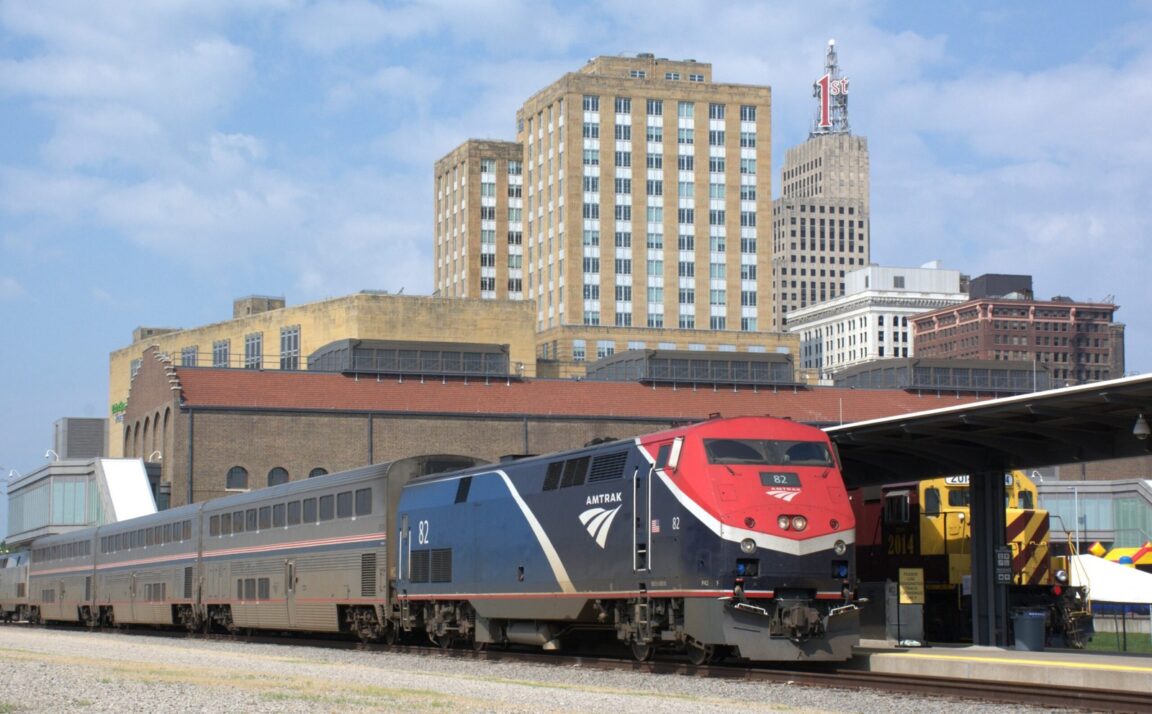
Photo: Minnesota Department of Transportation, via Amtrak (media.amtrak.com), Amtrak’s official media library, used with credit. The Borealis at St. Paul Union Depot.