 Omar Haddad
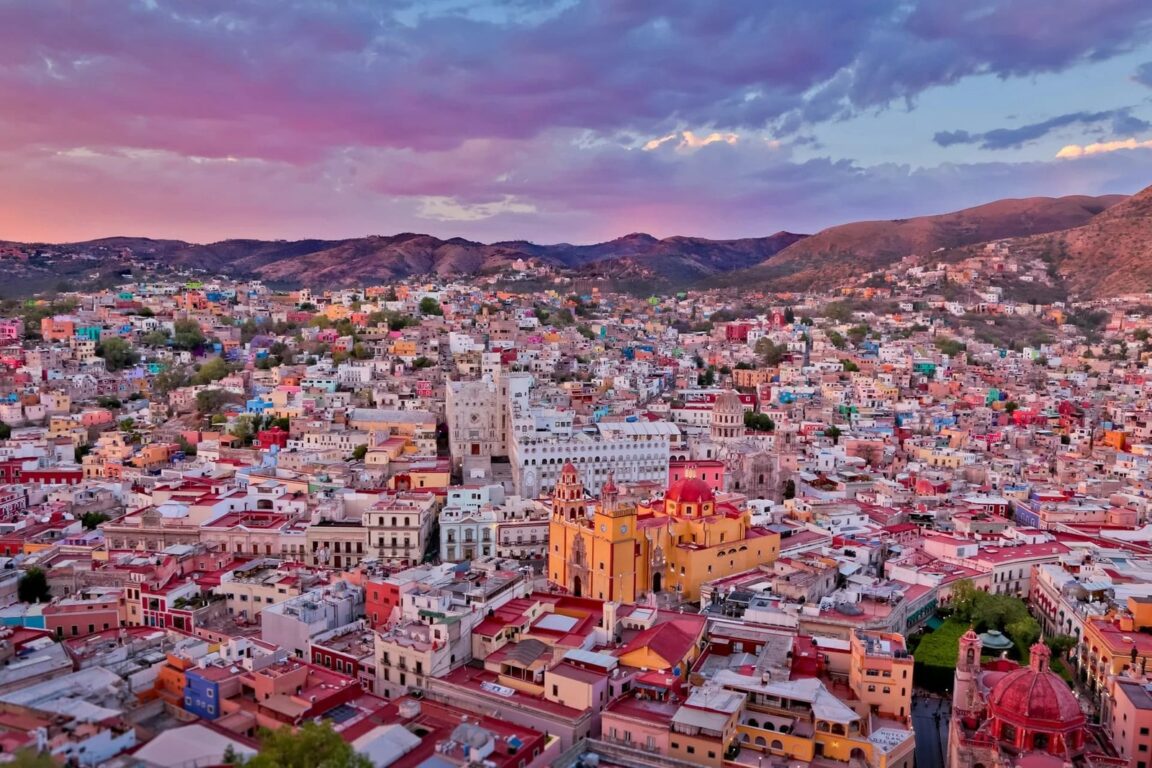
Two days in Guanajuato is enough if you use its vertical layout instead of fighting it: ride the funicular up to the Pipila viewpoint early, walk the tunnels and alleyways downhill through the centre, and save the mummies, the Valenciana mine church and an evening callejoneada for the second day. Guanajuato is a former silver mining city folded into a steep ravine in central Mexico, a UNESCO World Heritage Site since 1988, where the traffic runs underground, the houses climb the hillsides in every colour, and almost every route ends in a small plaza with a church, a cafe and a band warming up.
Quick Facts
- Best base: The historic centre near the Jardin de la Union, where the funicular, the theatres, the markets and most museums sit within a steep but walkable area.
- Do not miss: The view from the Pipila monument, the funicular ride behind the Teatro Juarez, the Callejon del Beso, the Alhondiga de Granaditas and an evening callejoneada.
- Plan around: Many museums close on Mondays, and several keep shorter Sunday hours, so put the Diego Rivera house and the museum circuit on Day 1 if your two days include a Monday.
- Getting in: The nearest airport is Del Bajio International near Leon, roughly 30 to 45 minutes away by road. Long distance buses serve the city from Mexico City and Guadalajara.
- Good to know: The centre is hilly and the alleyways are steep and sometimes stepped. Comfortable shoes with grip matter more here than in almost any other Mexican city.
- Prices checked: November 2026. Museum and funicular prices change, so treat any figure quoted by third party guides as a guide only and confirm on the day.
Day 1: The Funicular, the Pipila View and the Alleyways
Morning: Up the Funicular to El Pipila
Start behind the Teatro Juarez, where the funicular climbs the hillside to the monument to El Pipila, the miner who helped win the first great battle of the War of Independence. The operator’s published hours start at 8 am on weekdays and later on weekends, and the ride takes only a few minutes, so go early, before the viewpoint crowds build. From the Pipila terrace the whole city explains itself: the ravine, the coloured houses stacked on both slopes, the university staircase, the basilica dome and the theatre roof, all in one frame. Walk back down by the stepped alleyways if your knees allow it, because the descent threads through exactly the lanes the rest of the day explores. The funicular’s own site is at funicular.mx.
Midday: Jardin de la Union, Teatro Juarez and the Basilica
At the bottom, the Jardin de la Union is the city’s living room, a wedge of clipped laurels, cafes and mariachi bands facing the pink stone church of San Diego and the Teatro Juarez, the grand 1903 theatre whose interior tours are worth the small fee when running. A block away, the Basilica of Our Lady of Guanajuato anchors the Plaza de la Paz, and the university’s famous white staircase rises just beyond it. Lunch belongs at the Mercado Hidalgo, the iron framed market hall a short walk north, where the upstairs stalls serve enchiladas mineras, the local speciality of enchiladas with carrot and potato, named for the miners they once fed.
Afternoon: Diego Rivera, the Alley of the Kiss and the Tunnels
Diego Rivera was born in Guanajuato, and his birthplace at Positos 47 is now the Museo Casa Diego Rivera, displaying early works and a recreation of the family home. Government listings give its hours as Tuesday to Sunday, 10 am to 4.30 pm, which is why it sits on Day 1 here. From the museum, lose yourself deliberately in the callejones, the stepped alleyways that climb between the houses. The famous one is the Callejon del Beso, the Alley of the Kiss, just 68 centimetres wide, where the balconies nearly touch and legend promises couples who kiss on the third step seven years of happiness. Finish at street level with the tunnels themselves. Guanajuato’s underground roadways began as flood diversion channels and mining works and now carry traffic beneath the centre, with pedestrian routes through parts of the network. Walking even a short stretch explains the city’s strange, layered geography better than any map. Our Mexico City food guide pairs well with this route for travellers eating their way across the country.
Day 2: The Alhondiga, the Mummies and the Callejoneada
Morning: The Alhondiga de Granaditas
The Alhondiga is the fortress like granary where, in September 1810, royalist forces held out against Hidalgo’s insurgent army until El Pipila, torch on his back and a stone slab for a shield, set fire to its wooden door. It is now the regional museum, with galleries on the independence war, pre Hispanic artefacts and folk art, and the building itself, vast, plain and scarred by its history, is the exhibit that stays with you. Like several museums in the city it closes on Mondays, so swap the two days around if needed.
Midday: The Museo de las Momias, With Eyes Open
The Mummy Museum is Guanajuato’s most famous and most debated sight. When families could not pay the local burial tax in the late 19th and early 20th centuries, bodies were exhumed from the Santa Paula cemetery, and the dry, mineral rich conditions had naturally mummified many of them. The first was exhumed in 1865, and more than a hundred are now in the museum’s collection, as the city government describes at guanajuatocapital.gob.mx. It is a sombre, crowded and genuinely affecting visit rather than a horror show, and it is not for everyone. Go at midday when the tour groups thin slightly, keep photography respectful, and skip it without regret if it is not for you. The cemetery above the museum and the views from the hill are worth the climb either way.
Afternoon: La Valenciana
Take a bus or taxi 5 kilometres out to La Valenciana, the mining district that once produced a large share of the world’s silver. The church of San Cayetano here is one of the finest Mexican baroque buildings in the country, its pink stone facade carved in exuberant detail and its interior altars gilded with gold from the mine next door. The Bocamina San Ramon offers short guided descents into an old mine shaft for anyone who wants to see where the wealth came from. Between the church, the mine and the museum crowds back in town, this is the quietest and richest afternoon of the two days.
Evening: A Callejoneada
End with the city’s signature night out. A callejoneada is a walking musical tour: student musicians in traditional dress, the estudiantinas, lead a crowd through the alleyways with guitars, songs, jokes and local legends, usually starting from the Jardin de la Union in the evening and always ending at the Callejon del Beso. It is theatrical, communal and unlike anything else in Mexico. Buy tickets from the groups gathering by the theatre steps, carry a warm layer for the night air in the ravine, and let yourself be serenaded. Travellers continuing across Mexico can pair this itinerary with our Merida guide and our Teotihuacan day visit guide.
Where to Stay and How to Move Around
Stay in the historic centre, in the converted mansions around the Jardin de la Union and Plaza de la Paz, and accept the stairs as part of the deal. Driving in the centre is a maze of tunnels and one way lanes, so park the car and walk. City buses handle the Valenciana run, and taxis are the practical answer for the Mummy Museum hill and late evenings. In October the Festival Internacional Cervantino, Latin America’s leading performing arts festival, fills the city for several weeks, and hotels book out months ahead, so plan a two day visit in that window early or choose another month.
Frequently Asked Questions
How do the Guanajuato tunnels work?
The tunnels are former flood channels and mining works converted into underground streets. Cars use them as one way routes beneath the centre, and some stretches have pedestrian walkways. Entrances appear all over the old town, often where a street simply dives underground. They are lit and busy, and walking a section is safe and normal, but stick to the signed pedestrian routes.
Is the Mummy Museum worth it?
It depends on the visitor. The mummies are real people, naturally preserved, and the museum presents them as part of the city’s history rather than as entertainment. Many visitors find it moving and memorable, others find it distressing. There is no wrong answer, and Guanajuato has more than enough to fill two days without it.
What is a callejoneada and do you need to book?
A callejoneada is an evening walking tour led by student musicians through the city’s alleyways, with songs, stories and a stop at the Alley of the Kiss. Groups gather near the Jardin de la Union and the Teatro Juarez in the evening and tickets are sold on the spot. On festival and holiday nights, arrive early because the popular departures fill.
When is the best time to visit Guanajuato?
The dry season from October to April brings the clearest views from the Pipila and the most comfortable walking. October also brings the Cervantino festival, which is a reason to come and a reason to book far ahead. Summer afternoons bring rain to the ravine, which makes the tunnels busier and the alleyways slippery.
Is two days enough for Guanajuato?
Two full days covers the viewpoint, the centre, the main museums, the mummies and Valenciana at a sensible pace, as this itinerary shows. A third day allows the surrounding mines, the Quixote museum and a slower repeat of the lanes, and the city rewards it, but two days is a complete visit rather than a taster.
How do you get to Guanajuato from the airport?
Del Bajio International Airport near Leon is the closest, roughly 30 to 45 minutes by road depending on traffic and tunnel routes. Taxis and pre booked transfers meet flights. Many visitors also arrive by long distance bus, which avoids the airport transfer entirely and drops them close to the centre.