 Maya Chen
Kampot is the Cambodian town travellers plan for one night and stay in for four, and the formula is simple: a pepper farm in the cool of the morning, the French colonial streets before the heat builds, and the river at dusk, when the boats go out and the whole town drifts down to the water. Kampot pepper carries Protected Geographical Indication status and is regarded by chefs as one of the world’s great peppers, grown in the countryside between the town and the Elephant Mountains and revived by local farmers after the plantations were destroyed in the Khmer Rouge years. La Plantation, the best known farm open to visitors, offers free guided tours of its pepper gardens with tastings, according to the farm itself. Come in the dry season, roughly November to April, and Kampot’s slow rhythm will do the rest.
Quick Facts
Where: A riverside town in southern Cambodia, on the Praek Tuek Chhu river, backed by the Elephant Mountains and Bokor.
Famous for: Kampot pepper, a Protected Geographical Indication product grown on farms around the town and neighbouring Kep province.
Farm visits: La Plantation, east of town, offers free guided tours and pepper tastings, per the farm. Other smaller farms, including Bo Tree, also welcome visitors.
Best season: The dry season, roughly November to April. The wet months are green and atmospheric but raise the river and limit some activities.
River hour: Sunset, for boat trips from the town riverfront as the light falls over the mountains.
Pace: Plan two nights minimum. Kampot punishes itineraries that rush it.
Why is Kampot pepper worth a farm visit?
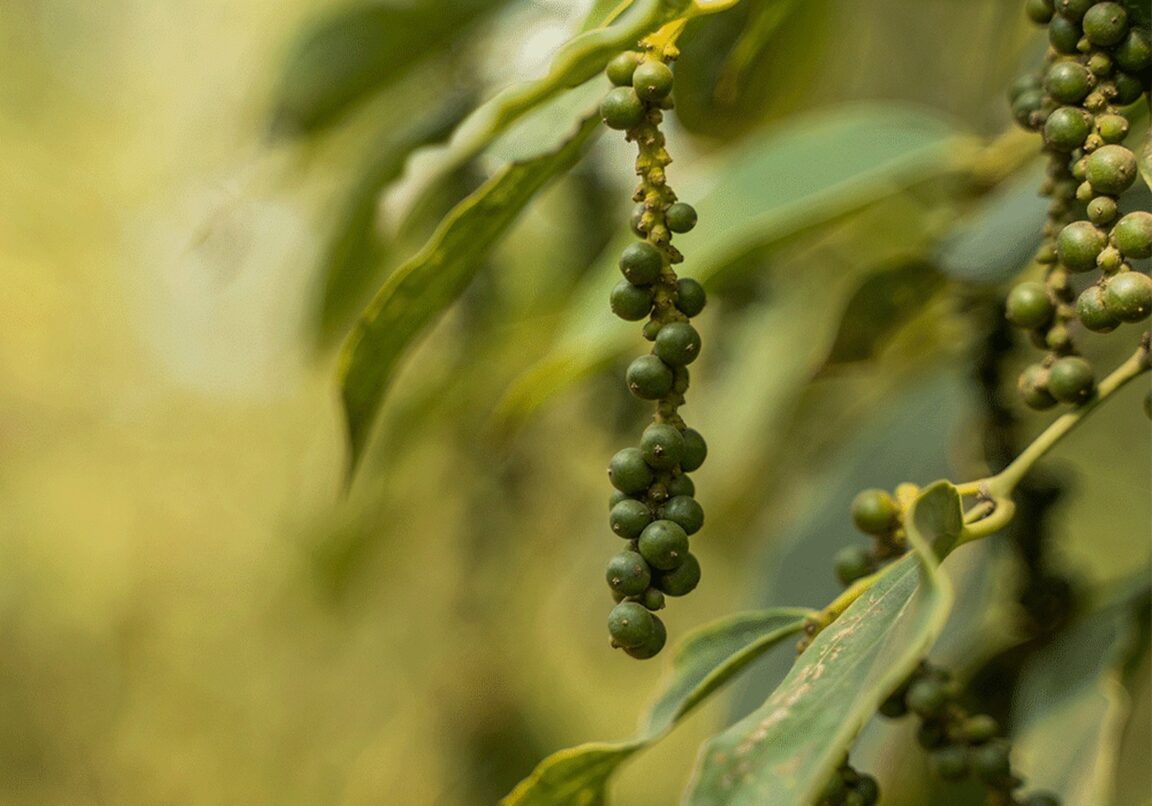
Because this is one of the rare food pilgrimages where the famous product is still grown at human scale, in view of the town that made it famous. Kampot pepper vines climb tall poles across small farms in soil and a microclimate, between the sea and the mountains, that growers credit for the pepper’s floral heat and long finish. The same plant gives the full range: green pepper picked young, black pepper dried in the sun, red pepper left to ripen fully, and white pepper with its outer layer removed. A guided farm walk makes those distinctions tasteable rather than theoretical, because you sample each form at the end of the rows where it grew.
The history gives the tasting its weight. Pepper was cultivated here for centuries and exported widely in the colonial era, then the plantations were largely destroyed under the Khmer Rouge, when farmland was turned to other uses and the vines were lost. Replanting began in the 1990s, farmer by farmer, and the Protected Geographical Indication recognition that followed protects the name and rewards the traditional methods. Buying pepper at a farm shop, or in the town market from a producer you can name, puts money at the right end of that recovery story, and a small bag of genuine Kampot pepper is the rare souvenir that is light, legal to carry, and genuinely unavailable at the same quality back home.
La Plantation is the easiest farm to visit independently, an organic farm set among palm trees with mountain views, offering free guided tours in several languages and a restaurant where the pepper appears across the menu. Smaller operations give a more intimate version of the same story. Either way, go in the morning. The gardens are at their best before the midday heat, the light on the vine rows is better for photographs, and you will be back in town before the afternoon slows everything down.
How should you order a day on the river?
Let the river bookend the day. Early morning on the water, by kayak or on a small boat, is cool, still and bird loud, with the mountains reflected before any breeze gets up. The town stretch of the Praek Tuek Chhu is gentle, lined with riverside guesthouses and cafes, many with decks and hammocks built for exactly the hours when sightseeing stops making sense. Swimming spots and quieter reaches lie upstream, and local operators can point you to the current favourites, because river conditions shift with the season and the rains.
Then return at dusk. Sunset boat trips leave from the town riverfront in the late afternoon and are the town’s shared ritual, an hour or so on the water as the sky works through its colours behind Bokor and the lights come on along the promenade. In season, evening trips also look for fireflies in the riverside trees after dark. Book a sunset place earlier in the day rather than at the dock at the last minute in peak season, and bring a light layer, because the breeze off the water after sunset is cooler than the town streets suggest. Travellers building a wider Southeast Asia route can pair this river pace with our guide to Hoi An in the rainy months and the heritage walk in George Town, Penang beyond the food.
What is there to see in the town itself?
Walk the old town early, before breakfast heat settles on it. Kampot’s colonial quarter is a grid of shophouses and villas from the French era, wide balconied facades in faded yellows and ochres, their ground floors now cafes, small restaurants and guesthouses. It is not a restored museum quarter, and that is its charm: buildings in every state of repair, cats asleep on ledges, and ordinary Cambodian town life proceeding inside a handsome architectural shell. The riverfront promenade is the town’s living room, best in the early morning and again from late afternoon, when food stalls and families reclaim it from the sun.
The old market and the newer market halls cover the practical pleasures: fruit, spices, pepper by the bag, and breakfast noodles eaten on small stools at local speed. Beyond town, day trips layer easily onto a Kampot base. The seaside town of Kep, with its crab market serving crab fried with green Kampot pepper, is the classic pairing and close enough for lunch. The salt fields between Kampot and Kep are a dry season sight, geometric pans glittering when the harvest is on. Bokor, the abandoned hill station in the mountains above town, is the moody counterpoint, a cooler, mistier day of ruined colonial buildings and wide views. Each is a half day or less, which suits Kampot: excursions in the morning, river by evening, and never a day that feels like transit.
When should you go, and how long should you stay?
The dry season, roughly November to April, is the comfortable window: lower humidity, farm tracks passable, the river at its calmest and the salt fields working. The wet season, roughly May to October, turns the countryside intensely green and empties the town, and travellers who like their Cambodia lush and quiet can be very happy here then, provided they accept afternoon rain as a scheduling fact and a higher, faster river. Pepper harvest activity peaks in the dry months, which is another reason farms are at their most interesting then.
Stay two nights at the very least, and three if Kampot is your pause between Phnom Penh and the islands or the Vietnam border. The town’s gift is deceleration, and deceleration needs a spare morning with nothing in it. Sleep in the old town for walkable evenings, or along the river just outside it for hammocks, swimming decks and mountain sunsets, accepting a short ride back into town for dinner. Either base works. What does not work is the one night dash, which reduces Kampot to a pepper photo and a sunset, and sends travellers onward wondering what the fuss was about. The fuss is the pace itself, and pace cannot be rushed.
Frequently asked questions
What makes Kampot pepper special? Its Protected Geographical Indication status, the local soil and microclimate between the sea and the mountains, and traditional growing and drying methods that produce a floral, complex heat chefs prize.
Are pepper farm tours free? La Plantation offers free guided tours with tastings, according to the farm itself. Smaller farms vary, so confirm on the day, and expect to buy pepper at the farm shop.
When is the best time to visit Kampot? The dry season, roughly November to April, for comfortable temperatures, passable farm tracks and calm river conditions.
What should I do at sunset? Take a boat trip from the town riverfront. It is the town’s shared ritual, with mountain views and, in season, fireflies after dark on some evening trips.
What pairs well with Kampot? Kep for crab with green Kampot pepper, the salt fields in the dry season, and a moody half day up at the Bokor hill station.
Image credit: Kampot pepper farm tour at La Plantation, La Plantation, via laplantation.com.