 Maya Chen
Hoi An in the rainy months is a trade, not a write off. From September to January the ancient town is wetter, quieter and cheaper, its tailor shops have time to do their best work, and the full moon lantern night still glows through the rain. What you give up is certainty: October and November bring the year’s heaviest rain and a real flood risk on the riverside streets. Go with flexible plans, a hotel above the ground floor and fittings scheduled early in the trip, and the wet season version of Hoi An can be the most atmospheric one of all.
Quick Facts
- Where: Hoi An Ancient Town, central Vietnam, about 30 kilometres south of Da Nang
- Heritage status: UNESCO World Heritage Site since 1999
- Rainy season: September to January; October and November are the wettest months
- Flood risk: Highest from about mid October to late November, on the low riverside streets
- Ancient Town ticket: 120,000 Vietnamese dong for foreign visitors, covering five heritage sites
- Lantern night: The 14th day of each lunar month, when electric lights dim and the old town runs on lantern light
- Tailoring: A standard order takes 24 to 48 hours in the dry season; allow longer in the wet months
- Nearest airport: Da Nang, roughly 40 to 50 minutes by road
What actually happens in Hoi An when the rains arrive?
Central Vietnam keeps a different calendar from the rest of the country. While the south is drying out, the northeast monsoon pushes moist air against the Truong Son mountains behind Hoi An, and from September the rain builds. October and November are the wettest months of the year, and the typhoon season, which runs through November, can stack days of torrential rain on top of already full rivers. The mechanism of a Hoi An flood is simple and well rehearsed: heavy rain upstream in the Thu Bon river basin sends water down to the low lying ancient town, and the lowest streets, Bach Dang along the riverfront and the lanes around it, together with the An Hoi islet across the Hoai River, go under first. Water can rise overnight and recede almost as fast, and in serious events the old town closes to visitors for days at a time.
None of this makes the town miserable for the other weeks of the season. Rain in Hoi An usually arrives in intense spells rather than all day sieges, the temperatures drop to something genuinely pleasant for walking, and the crowds that pack Tran Phu Street in March are gone. The honest summary is that a rainy season trip works if your plans bend: heritage houses and assembly halls in the dry spells, coffee houses and cooking during the downpours, and no fixed departure that a two day flood can break. For the dry season version of the town, planned day by day, see our two days in Hoi An itinerary.
How do tailor timelines stretch in the wet months?
Hoi An’s tailoring trade is built on speed: in the dry season a made to measure suit, dress or coat is commonly turned around in 24 to 48 hours, with a first fitting inside the first day. The rainy months change the maths in three ways. Fabric choices narrow slightly when stock arrives slowly. Workshops lose hours to the same floods and power interruptions that affect the whole town. And the fitting cycle, which depends on you returning to the shop two or three times, competes with streets that may be under water on the day you planned to return.
The working rules are straightforward. Order on your first day, not your last, and treat every quoted timeline as a dry weather promise: a two day order placed on day one of a five day stay has room to slip, while the same order placed on day three has none. Choose fabrics the shop holds in stock rather than cloth that must be fetched. Build in at least two fittings for anything structured, and keep the final fitting a full day before you leave Hoi An, so a flooded street costs you an afternoon rather than the garment. Reputable shops will post finished work onward if a flood strands the schedule, but agree that arrangement, and its cost, at the counter when you order, not at the door when you leave. Wet season tailoring has one compensating virtue: the shops are quiet, the staff have time, and careful work is easier to get in November than in the March rush.
Which streets flood first, and where should you stay?
The geography of a Hoi An flood is consistent enough to plan around. The riverfront is lowest: Bach Dang Street, which runs along the Thu Bon and Hoai rivers past the market, floods early, followed by the lower ends of the streets running down to it and the lanes of An Hoi across the bridge. The higher ground is to the north of the ancient town, away from the river, and the practical rule for the wet months is to sleep there, or on an upper floor, and to treat a ground floor riverside room in October or November as a gamble rather than a bargain. Hotels in Hoi An are practised at this: boats appear, lobbies move upstairs, and life reorganises around the water with remarkable calm. Ask any hotel you book for the flood months two direct questions: how high did the water reach in the last serious flood, and what is the plan if the street floods during your stay.
Daily discipline matters more than drama. Check the forecast and local warnings every morning, because the Hoi An authorities issue flood notices as river levels rise. Keep shoes that can get wet, a dry bag for documents and electronics, and no fixed plan that requires the riverfront on a rising day. If the town does flood, do not wade through moving water for photographs; the residents clearing their shops have work to do, and the spectacle is their disruption. The lantern lit reflections everyone hopes for come after the water settles, on still evenings, and they are worth waiting for properly.
Why is the lantern night still the best night of the trip?
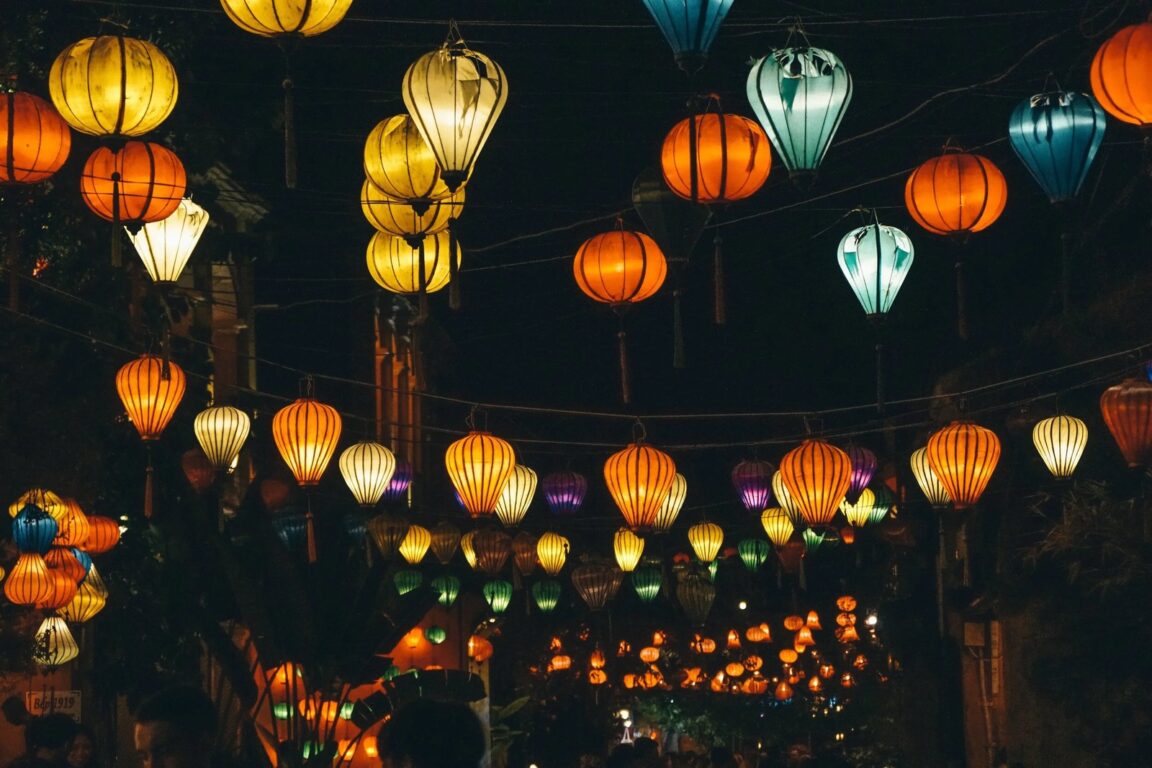
Once a month, on the 14th day of the lunar calendar, Hoi An holds its lantern night: electric lights in the old town are switched off or dimmed from early evening, and the streets run on silk lanterns and candlelight until about 10pm, with small floating candles set adrift on the Hoai River and traditional performances in the lanes. Lanterns hang over Hoi An every night of the year, but the full moon night is when the town commits to them completely, and in the rainy season the effect doubles: wet stone reflects every colour, the crowds are a fraction of the dry season’s, and a light rain under the lanterns is closer to cinema than to inconvenience.
Two cautions keep the night honest. A lantern night can be scaled down or cancelled when a storm or flood closes the old town, so travellers timing a whole trip around one date in October or November are betting against the season; in the drier edge months of the rains, December and January, the odds improve. And the small boats that carry visitors out among the floating candles charge per boat for a short ride: agree the price before you step in, as you would anywhere on this river. Travellers continuing north after Hoi An will find the same wet season logic, terraces and mist included, in our guide to Sapa and the Muong Hoa Valley.
Frequently Asked Questions
What is the rainiest month in Hoi An?
October and November are the wettest months, with the highest flood risk from about mid October to late November. December and January stay rainy but the flood risk eases.
Can I still get clothes tailored in the rainy season?
Yes, and the quiet shops often do careful work. Order on your first day, choose stock fabrics, allow at least one extra day beyond the dry season timeline of 24 to 48 hours, and schedule the final fitting a full day before departure.
Where should I stay to avoid flood disruption?
Choose a hotel on the higher, northern side of the ancient town or sleep on an upper floor, and ask the property directly about its flood history and its plan for flooded streets.
When is the Hoi An lantern festival?
On the 14th day of every lunar month, the evening before the full moon. Electric lights dim from early evening and the old town runs on lantern light until about 10pm. Severe weather can scale it down.
How much is the Ancient Town ticket?
The official sightseeing ticket costs 120,000 dong for foreign visitors and covers entry to five heritage sites among the old houses, assembly halls, museums and temples. Buy it at the official booths at the entrances to the old town.
Featured image: Silk lanterns over a Hoi An street at night, Vietnam. Photo by Steven Wilcox via Unsplash, Unsplash License.