 Maya Chen
Bangkok’s cannabis scene in late 2026 is a medical system wearing the clothes of the old dispensary streets. Since the Ministry of Public Health notification that took effect on 26 June 2025, cannabis flower is a controlled herb in Thailand: a licensed shop may sell it only against a prescription on the official PT 33 form, issued by a recognised practitioner, for no more than 30 days of use, and smoking on shop premises is banned, which is why the lounge scene has closed or converted. A visitor can still walk into a licensed Bangkok dispensary, but the transaction now starts with a prescription and a passport, not a menu. This guide sets out what a visitor actually sees now, verified against Thai official rules and a licensed dispensary’s own published terms.
Quick Facts
- The rule in force: Ministry of Public Health Notification on Controlled Herbs (Cannabis) B.E. 2568 (2025), published in the Royal Gazette on 25 June 2025 and in force from 26 June 2025
- Buying flower: licensed shops may sell cannabis inflorescence only against a PT 33 prescription from one of seven recognised practitioner types, including medical doctors, Thai traditional medicine doctors, pharmacists and dentists; one prescription covers a maximum of 30 days, one-time use, no refills
- Age and ID: buyers must be 20 or over and show photo ID; a prescription from your home country is not valid in Thailand
- Banned: smoking on dispensary premises, vending machine sales, online sales and advertising of flower; licensed shops must source flower from GACP-certified cultivation and keep prescriptions for at least a year
- Public smoking: treated as a public nuisance offence under the Public Health Act, with fines reported up to 25,000 baht
- Borders: importing or exporting cannabis is prohibited; never carry it out of Thailand
What changed in June 2025?
Thailand’s 2022 decriminalisation produced one of the fastest retail build-outs in travel history, with the health ministry counting some 18,517 licensed cannabis outlets at the sector’s peak. The 2025 notification reclassified cannabis inflorescence, the flower, as a controlled herb and rebuilt the trade around medicine. Flower can now be sold only by licensed premises, only for medical use, and only against a PT 33 prescription. Shops must buy from GACP-certified farms, keep each prescription on file for at least one year, and from December 2025 must have a certified practitioner on the premises during operating hours. Sales through vending machines and online channels are prohibited, advertising is prohibited, and smoking inside the shop, the feature that defined the lounge era, is prohibited outright. Breaching the licence conditions carries penalties of up to a year in prison or a 20,000 baht fine for the operator. The contraction since has been steep: of 8,636 licences that came up for renewal in 2025, the health ministry’s figures show only 1,339, about 15.5 percent, applied to renew. A draft Cannabis and Hemp Control bill, approved by the Cabinet in September 2026 and still before parliament, would go further and require dispensaries to convert into medical facilities, so the direction of travel is toward clinics, not cafes.
What does a visitor see inside a licensed Bangkok dispensary now?
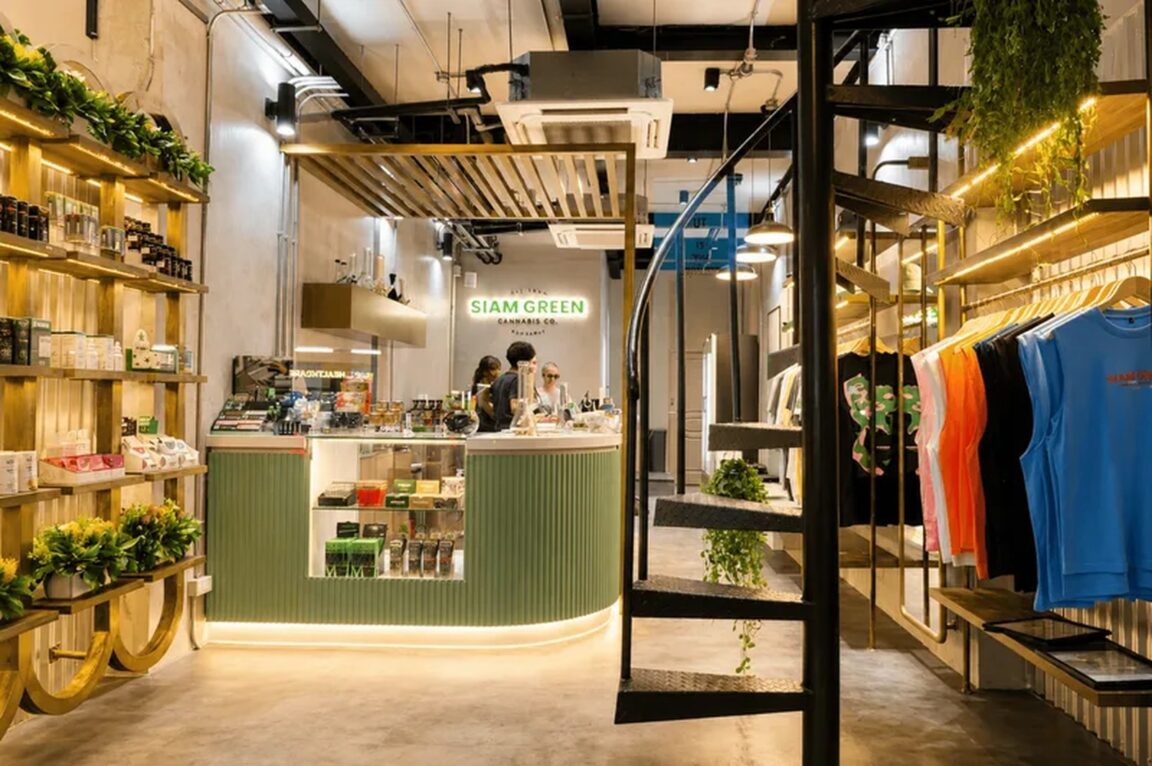
The surviving shops look calmer and more clinical than the neon storefronts of 2023. Take Siam Green, a licensed Bangkok chain with branches in Phrom Phong, Silom, Nana and Chinatown, whose own published terms state the new reality plainly: flower is sold for medical use only, a PT 33 prescription and photo ID or passport are required, foreign prescriptions are not valid, and staff will direct buyers to the prescription route the shop operates with recognised practitioners. Its Chinatown branch, at 325 Maha Chai Road, opens daily from 08:00 to midnight, a reminder that the dispensary streets did not vanish; they professionalised. What you will not find is a smoking room. The on-premises consumption ban closed the lounges, and the shops that remain are retail counters with consultation attached. Expect to be asked what the prescription is for, to have your passport checked against the 20-plus age rule, and to leave with sealed product and paperwork rather than a place to sit.
Where can a visitor legally use cannabis in Bangkok?
Carefully, privately, and only as an adult. Smoking in public is a nuisance offence under the Public Health Act, with fines reported up to 25,000 baht and the theoretical possibility of a short jail term, and enforcement targets exactly the places tourists gather. Hotels set their own house rules and many Bangkok hotels prohibit smoking of any kind in rooms and on balconies; a hotel’s private rule binds you as a guest regardless of the national position. The honest summary for a visitor is that Thailand now treats cannabis the way it treats prescription medicine: obtain it through the licensed, documented channel, use it discreetly in private where the property allows it, and never in public space. Nothing in the current rules creates a social consumption scene, and anyone selling you a different story on a Bangkok street is selling risk, not local knowledge. For comparison with places that built visitor frameworks on purpose, our Toronto cannabis tourism guide covers Canada’s legal retail model, and our guide to cannabis-friendly hotels in Las Vegas explains how US properties write the same house rules.
What are the airport and border rules?
Absolute, and the point on which trips end badly. Thailand prohibits importing and exporting cannabis in all forms; a licensed Bangkok purchase is legal only inside Thailand’s system and becomes contraband the moment it enters an airport bag. The same applies to edibles and oils bought legally in the shop. Finish or leave behind anything you bought, keep no souvenirs, and assume that a connecting country on your route home treats possession far more harshly than Thailand does. This is also why the prescription paperwork matters: it documents a lawful in-country purchase, and it protects no one outside the border.
Frequently Asked Questions
Can tourists buy cannabis in Bangkok in 2026?
Yes, through the medical channel. A licensed dispensary may sell flower only against a PT 33 prescription issued by a recognised Thai practitioner, to a buyer aged 20 or over showing photo ID. Prescriptions from your home country are not valid.
Can you still smoke in Bangkok cannabis lounges?
No. The 2025 controlled herb notification bans smoking on dispensary premises, which closed or converted the lounge scene. Public smoking is separately punishable as a nuisance offence.
How much can one prescription cover?
A PT 33 prescription covers a maximum of 30 days of use, is for one-time dispensing and cannot be refilled. Licensed shops must keep the prescription on file for at least a year.
Can you take Thai cannabis home as a souvenir?
Never. Exporting cannabis from Thailand is prohibited, and possession in most destination and transit countries is a serious offence. Leave everything behind.
How many dispensaries are left in Thailand?
Far fewer than at the peak of about 18,517 licensed outlets. Of 8,636 licences due for renewal in 2025, only 1,339 applied, according to health ministry figures reported in the Thai press, and a draft law now before parliament would convert dispensaries into medical facilities.
Photo: Siam Green, via siamgreenco.com. Inside the licensed Siam Green dispensary in Bangkok’s Chinatown.
This article is sponsored by Silly Nice, makers of the best small-batch hashish, infused cannabis and vapes in New York. Veteran-owned and crafted in New York. Visit sillynice.com to explore the range.