 Hana Kim
Do the Leeum first, on a timed morning ticket, and the National Museum of Korea second. That order is the whole secret of this culture day: the Leeum, Samsung’s private museum on the Itaewon hill in Hannam-dong, closes on Mondays and shuts at 18:00, while the National Museum’s permanent galleries are free, open every day and stay open until 21:00 on Wednesdays and Saturdays. Both museums stand in Yongsan-gu, about 15 minutes apart, so the day runs uphill to the Leeum for the traditional Korean art in Mario Botta’s terracotta cone, across Yongsan Family Park, and down to the National Museum for the Silla gold crowns in the afternoon. Here is how to book it, walk it and pace it.
Quick Facts
- Leeum Museum of Art: 60-16 Itaewon-ro 55-gil, Yongsan-gu; open Tuesday to Sunday 10:00 to 18:00, ticket desk to 17:30; closed Mondays, 1 January, Seollal and Chuseok
- Leeum tickets: the permanent traditional art galleries (M1) are free but need a timed reservation; online booking opens 14 days ahead, up to four tickets per person; combined all-exhibition ticket 25,000 won, single paid exhibition 18,000 won, half price on the last Wednesday of the month
- National Museum of Korea: permanent galleries free; open daily 09:30 to 17:30, Wednesdays and Saturdays to 21:00; galleries close on 1 January, Seollal, Chuseok and the first Monday of March, June, September and December
- Nearest stations: Hangangjin (Line 6) Exit 1 for the Leeum; Ichon (Line 4 and Gyeongui-Jungang) Exit 2 for the National Museum
- Order of the day: Leeum timed entry late morning, lunch in Hannam-dong, Yongsan Family Park, National Museum mid-afternoon into the evening
Why does the Leeum have to come first?
Three practical reasons. First, the clock: the Leeum’s last entry is effectively set by its 17:30 ticket desk and 18:00 close, whereas the National Museum gives you an evening margin twice a week. Second, the ticket: the Leeum’s free permanent galleries in the M1 building work on timed reservations that open online 14 days in advance, and the calmest slots are the late-morning ones; walk-in tickets exist but the museum warns of waits, so a culture day built on a walk-in gamble starts with a queue. Third, the hill: the Leeum stands above Itaewon in Hannam-dong, a five-minute uphill walk from Hangangjin Station Exit 1, and it is simply more pleasant to climb it fresh in the morning than at the end of a museum day. The National Museum, by contrast, is a vast, free, ground-level complex you can enter and leave at will, which makes it the forgiving second half of the day.
What do you actually see inside the Leeum?
The Leeum is three buildings by three architects, and the architecture is half the visit. M1, Mario Botta’s terracotta-clad cone, holds the traditional Korean art: celadon and buncheong ceramics, metalwork, Buddhist painting and calligraphy, arranged on a spiral descent that unwinds from the top floor down. This permanent display is the free part of the museum, and it is the finest single-room survey of Korean traditional art in the city. M2, by Jean Nouvel, holds contemporary art behind rusted steel and glass, and the third building, Rem Koolhaas’s black box, houses the education centre and ground gallery. Paid special exhibitions vary; the combined ticket at 25,000 won covers everything on show, and the free digital guide, collected against an ID deposit, is worth taking for the ceramics galleries alone. Allow 90 minutes to two hours, and do not rush the Botta spiral: the building slows you down deliberately, and the celadon glazes reward the pace.
How does the National Museum’s Silla gallery anchor the afternoon?
The National Museum of Korea, a short hop across Yongsan to Ichon Station, is one of the largest museums in the world and its permanent collection is entirely free. The anchor for this day is the Silla Gallery, where the museum displays the gold crowns and gold belt ornaments excavated from Silla tombs: delicate, tree-like crowns of hammered gold with dangling pendants, made for the rulers of the Silla kingdom that unified the peninsula in the seventh century. Seen in the same day as the Leeum’s celadon and Buddhist art, the crowns complete the arc from kingdom gold to Goryeo ceramics to Joseon painting. Around the Silla Gallery, the museum’s permanent floor runs from prehistoric and ancient history through the Three Kingdoms to Goryeo and Joseon, plus sculpture, calligraphy and Asian art wings you can sample rather than exhaust. The building sits in Yongsan Family Park with a reflecting pond in front, which is your rest stop between museums and, in the late afternoon, one of the pleasantest walks in Seoul. One calendar warning: the galleries close on the first Monday of March, June, September and December, which in this season means Monday 7 December 2026, so a Monday culture day in December belongs to the Leeum’s closed day and the National Museum’s closure alike; pick another day.
How do you pace the day, hour by hour?
Book the Leeum’s timed entry for late morning, arriving at Hangangjin Station with time for the uphill walk; be inside by your slot, since entry runs from 20 minutes before the reserved time. Spend up to two hours across M1 and any paid exhibition, then lunch in Hannam-dong, whose cafe streets sit between the museum and the park. Walk or take a short taxi ride to the National Museum for mid-afternoon, go straight to the Silla Gallery while your attention is fresh, then drift through the history galleries at whatever depth remains. On a Wednesday or Saturday, stay for the 21:00 close and walk out into the park at dusk. The whole day costs, at most, the Leeum’s combined ticket; the National Museum half is free. For a sense of how other great museums reward a planned order of attack, our Guggenheim ramp guide makes the same top-down argument in New York, and our first-visit order for the Metropolitan Museum applies the anchor-gallery-first method to a collection far too big for one day.
Frequently Asked Questions
Is the Leeum Museum free?
Partly. The permanent traditional art galleries in the M1 building are free but require a timed reservation, which you book online up to 14 days ahead. Special exhibitions are paid: 18,000 won for a single exhibition or 25,000 won for a combined ticket, with half price on the last Wednesday of the month.
Which museum is closed on Mondays?
The Leeum closes every Monday. The National Museum of Korea opens on Mondays except its quarterly gallery closure days, the first Mondays of March, June, September and December.
How far apart are the Leeum and the National Museum?
Both are in Yongsan-gu, roughly 15 minutes apart by taxi or subway between Hangangjin and Ichon stations, with Yongsan Family Park between them for the walk.
Where are the Silla gold crowns?
The National Museum of Korea’s Silla Gallery displays gold crowns and gold belt ornaments from Silla tombs as part of its free permanent collection. More crowns remain in Gyeongju, the Silla capital, at its own national museum.
How long do you need for both museums in one day?
About 90 minutes to two hours at the Leeum and two to three hours at the National Museum, with lunch and the park walk between, makes a full but comfortable day, especially on a Wednesday or Saturday when the National Museum stays open to 21:00.
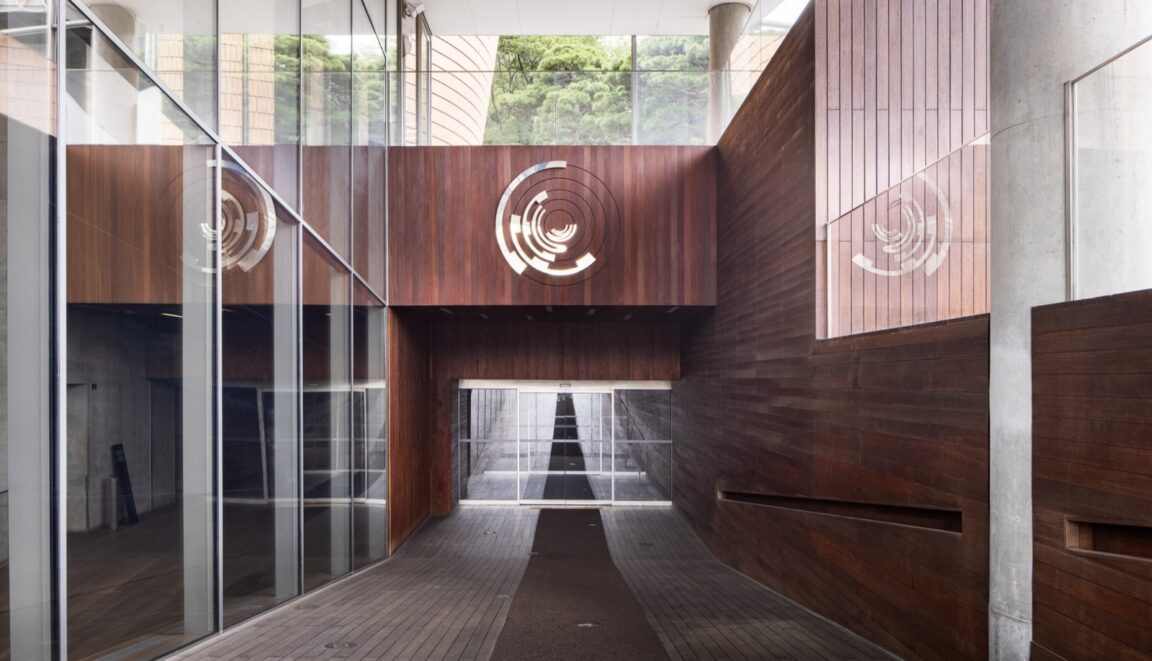
Photo: Leeum Museum of Art, via leeumhoam.org. The museum’s interior atrium in Hannam-dong, Seoul.