 River Callahan
White Desert is not a hotel in any ordinary sense, and that is the first thing to understand before pricing it. It is a small expedition company that flies guests from Cape Town, South Africa, into the interior of Antarctica, lands them on a blue ice runway, and houses them in heated pod camps for a day, a week, or longer. On the operator’s own current rates page, checked on 24 November 2026, the entry point is US $16,500 per person for a single day trip, and the signature journeys run to US $115,500 per person. There is no cheaper version of this product, no off season discount window, and no competitor doing quite the same thing. What follows explains exactly what that money buys, camp by camp and flight by flight, so the decision can be made on facts rather than fantasy.
Quick Facts
Operator: White Desert, flying guests from Cape Town to Antarctica
Camps: Whichaway Camp, Echo Camp and the Wolf’s Fang area camp, all in Queen Maud Land
Access: A flight of about five and a half hours from Cape Town to the Wolf’s Fang blue ice runway
Cheapest trip: Antarctica in a Day at US $16,500 per person, on the operator’s current rates page
Signature trip: South Pole and Penguins at US $115,500 per person at Whichaway or Echo
Buffer rule: Arrive in Cape Town at least two days before departure and leave at least two days after the scheduled return, in case weather moves the flights
Prices checked: 24 November 2026, on white-desert.com
How does the Cape Town air bridge actually work?
Every White Desert journey starts and ends in Cape Town, not in South America. That single fact separates it from almost all other Antarctic travel, which sails or flies from Ushuaia or Punta Arenas across the Drake Passage. White Desert instead flies guests south across the Southern Ocean to Wolf’s Fang, its blue ice runway in the mountains of Queen Maud Land. The flight takes about five and a half hours, and the runway is a prepared strip of bare glacial ice rather than a conventional airport.
Because everything depends on Antarctic weather, the schedule carries built in slack. The operator’s guidance is to be in Cape Town at least two days before the Antarctic flight, for the pre departure briefing and kit check, and to leave at least two days between the scheduled return and any onward flight home. Treat those four buffer days as part of the trip price in time, if not in money. Travellers who try to compress them are gambling against the most volatile weather system on the planet, and the continent does not negotiate.
Once at Wolf’s Fang, onward movement is by smaller ski equipped aircraft to the camps and to the headline excursions. The emperor penguin colony at Atka Bay and the flight to the Geographic South Pole are both flown legs, not drives, and their order within a trip is set by conditions on the ground. The operator states plainly that itineraries are samples: days are reordered around weather, and that flexibility is a feature of polar travel, not a flaw in the organisation.
Which camp should you choose: Whichaway, Echo or Wolf’s Fang?
Whichaway is the flagship. Set beside a freshwater lake in the Schirmacher Oasis, a rare stretch of ice free land, it is built around heated fibreglass sleeping pods with proper beds, alongside shared lounge and dining pods. It is the camp most returning descriptions centre on, and it suits travellers who want the Antarctic interior with the roughest edges removed.
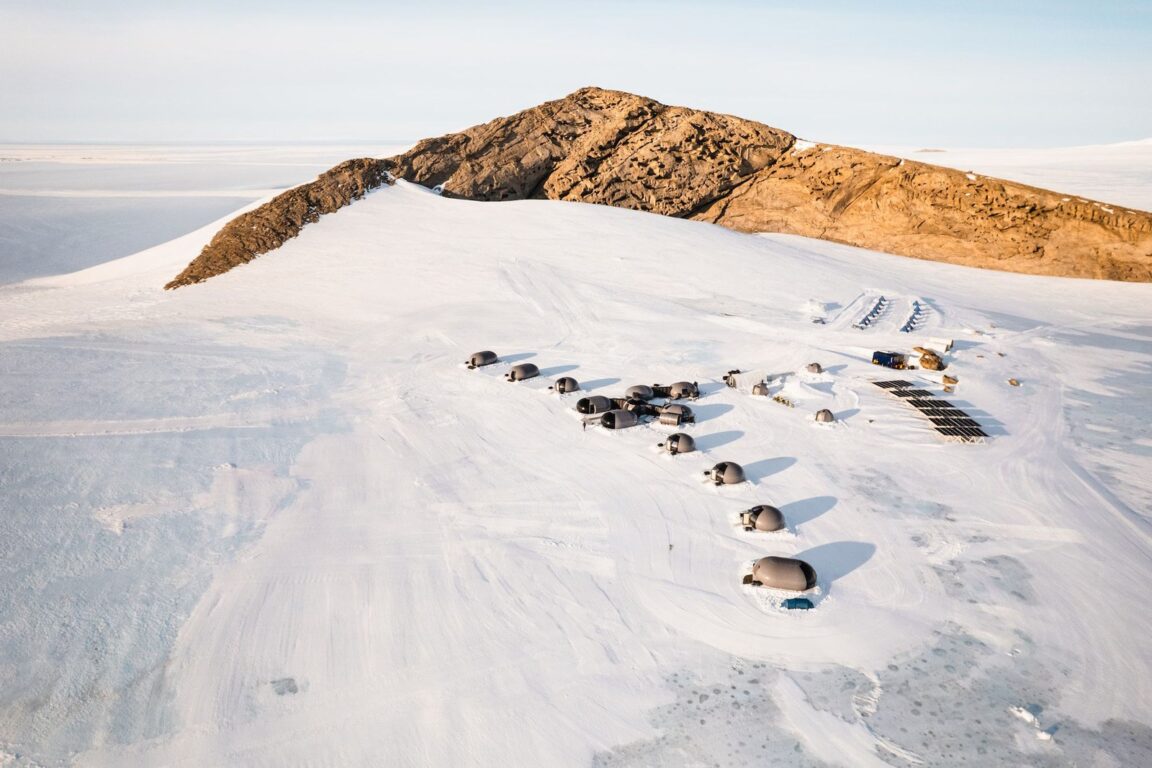
Echo is the design statement. Its pods take their styling from the space age, all clean curves and porthole windows, set beneath mountains in a landscape that reads as another planet. The comfort standard matches Whichaway, but the mood is deliberately futuristic. Travellers who care about architecture and photography tend to choose Echo for the contrast between the pods and the ice.
The Wolf’s Fang area camp, sold under the Explorer name on some itineraries, is the more expedition minded base near the runway and the peaks that give the area its name. On the operator’s rates page it is also the lower priced tier: the Baby Penguins and Blue Tunnels trip is listed at US $65,000 from the Explorer camp against US $75,250 at Whichaway or Echo, and South Pole and Penguins at US $95,000 against US $115,500. Same continent, same headline excursions, different accommodation tier.
What do the current trips cost, line by line?
These are the operator’s own published per person prices, checked on 24 November 2026. Antarctica in a Day costs US $16,500: Cape Town to Antarctica and back in one long day, with time on the ice that includes descending into an ice cave, rappelling down a glacier and a champagne toast at an ice bar. Baby Penguins and Blue Tunnels, the early season journey built around emperor penguin chicks taking their first steps and the blue ice tunnels, costs US $75,250 at Whichaway or Echo. South Pole and Penguins, the most popular itinerary, costs US $115,500 and adds the flight to the South Pole, a point the operator notes is visited by fewer than 500 people each year, alongside the emperor penguin colony.
Late season brings South Pole and Blue Rivers at US $115,500, swapping part of the programme toward Antarctica’s rarely seen blue rivers, and The Long Stay at US $110,500, the longest itinerary, which combines both main camps, Whichaway and Echo, with the South Pole and the blue rivers. Discovery Week, a scientist led week priced at US $45,000, is listed for 19 to 26 January 2027. What the headline prices generally do not cover matters just as much: commercial flights to and from Cape Town, Cape Town hotels and meals during the buffer days, insurance, and any costs created by weather delays. Those extras belong in any honest budget.
What can you actually do once you are on the ice?
The activity list is governed by weather, but the building blocks are consistent. The emperor penguin colony at Atka Bay is the wildlife centrepiece, reached by a flight from camp, and on early season trips the draw is chicks taking their first steps. The blue ice tunnels and ice caves near camp offer the otherworldly interior of the glacier itself. The South Pole flight, on the itineraries that include it, is the geographic trophy: a long ski aircraft journey across the plateau to stand at 90 degrees south.
Around camp, days fill with guided walks, climbing and abseiling near the Wolf’s Fang peaks on the trips based there, and the simple business of being in the interior of Antarctica, a place almost no one reaches without either a research programme or this air bridge. Travellers weighing a ship based alternative should read our guide to Antarctica landing rules and the 100 passenger shore limit, because the two products are opposites: ships land small groups on the coast, while White Desert sleeps a handful of guests deep in the interior.
Who is White Desert right for, and who should skip it?
It is right for the traveller who wants the Antarctic interior, the South Pole, or an emperor penguin colony, has no interest in days of open ocean sailing, and can absorb both the price and the schedule uncertainty. The Cape Town gateway also makes it combinable with a South Africa trip in a way no Drake Passage sailing is; our two days in Cape Town itinerary is a sensible way to use the mandatory buffer days rather than waste them in an airport hotel.
It is wrong for anyone stretching to afford it, anyone on a fixed return deadline, and anyone whose dream is the classic coastal Antarctica of cruise landings, whales and zodiac rides among icebergs. That Antarctica exists, at a fraction of these prices, but it is a different continent experience from the high, white interior that White Desert sells. Neither is the real Antarctica. They are two edges of the same enormous place, and choosing honestly between them is the whole decision.
Frequently Asked Questions
Is White Desert really the only hotel in Antarctica?
It is the closest thing to a hotel operation on the continent: a commercial camp company sleeping paying guests in heated pods in the interior. Research stations are not bookable, and expedition ships sleep guests offshore, so as a land based stay that anyone can buy, White Desert stands alone.
How much does the cheapest White Desert trip cost?
On the operator’s current rates page, checked 24 November 2026, Antarctica in a Day costs US $16,500 per person. Multi day camp journeys start at US $45,000 for Discovery Week and US $65,000 for Baby Penguins and Blue Tunnels from the Explorer camp tier.
How do you get to White Desert’s camps?
By air from Cape Town. The flight of about five and a half hours lands at the Wolf’s Fang blue ice runway, and smaller ski equipped aircraft connect the runway, the camps, the penguin colony and the South Pole.
What happens if the weather delays the flight?
Flights and activities are reordered or delayed, which is why the operator advises arriving in Cape Town at least two days before departure and leaving at least two days after the scheduled return before travelling onward. Build the buffer and treat Cape Town days as part of the trip.
Which camp is best for the South Pole trip?
South Pole and Penguins runs from both camp tiers. Whichaway and Echo, at US $115,500, offer the flagship pod accommodation; the Explorer camp tier, at US $95,000, covers the same headline excursions with simpler accommodation.
Photo: Echo Camp’s pods on the snow of Queen Maud Land, Antarctica. Image: White Desert, via white-desert.com, the operator’s official website.