 Camille Baptiste
Every Antarctica landing runs on the same small set of numbers, and knowing them before you book explains almost everything about how a trip feels. No more than 100 passengers may be ashore at one landing site at one time. Ships carrying more than 500 passengers may not land passengers at all. Ashore, there must be at least one guide for every 20 passengers, and before anyone steps onto the beach, boots and outer gear go through a biosecurity clean that is repeated between sites. Those rules come from IAATO, the International Association of Antarctica Tour Operators, working inside the Antarctic Treaty system, and they decide your ship choice, your time ashore and your daily routine before you ever see the continent.
Quick Facts
- The shore limit: A maximum of 100 passengers ashore at a single site at one time. Guides are additional and do not count toward the 100
- The ship limit: Vessels carrying more than 500 passengers make no landings at all; they are cruise only ships in Antarctic waters
- The guide ratio: At least one expedition guide for every 20 passengers ashore
- The rule makers: IAATO (founded 1991), whose operating procedures sit inside the Antarctic Treaty and its Protocol on Environmental Protection; the 100 ashore principle was also adopted into the Treaty system by Measure 15 (2009) on landing passengers from vessels
- Biosecurity: Boots washed and disinfected before and after every landing; outer clothing, bags and equipment inspected and vacuumed for seeds and soil before the first landing and cleaned between sites
- Wildlife distances: Keep at least 5 metres from wildlife as a general minimum, more where site guidelines require it, never touch or feed animals, and always give animals the right of way
- Site guidelines: Many popular landing sites have their own ATCM Site Guidelines for Visitors covering landing areas, walking routes and closed zones, on top of the general rules
- What it means for booking: A ship near 100 passengers lands everyone together. A 200 passenger ship rotates in two groups, a 300 passenger ship in three, and time ashore shrinks with every rotation
What exactly is the 100 passenger rule, and where does it come from?
The rule caps the number of passengers on land at any one site at any one moment at 100. It began as an IAATO operating procedure, the self imposed standard of the tour operators who founded the association in 1991, and it proved so workable that the Antarctic Treaty parties adopted the same principle into the Treaty system in Measure 15 (2009), which governs the landing of persons from passenger vessels. Two companion rules complete the framework: ships with more than 500 passengers on board may not land them anywhere in the Treaty area, and operators schedule their site visits through IAATO coordination so that two ships are not trying to use the same small beach at once. For the visitor, the practical translation is simple. The continent is not rationed by ticket price or by cabin class. It is rationed by group size, and the size of your ship is the single biggest decision in the whole booking.
How does the limit change a day ashore, ship size by ship size?
On a ship carrying around 100 passengers, a landing is a single movement: the Zodiacs load, everyone goes ashore with the guide team, and a landing can run for hours without a rotation deadline pressing on it. On a ship carrying 200 passengers, the same site takes two rotations. Half the ship lands while the other half cruises in Zodiacs or waits on board, then the groups swap, and each group gets roughly half the site time. At 300 passengers there are three rotations, and the arithmetic gets harsher at every step, because the transit, boot wash and briefing time around each rotation does not shrink. Ships between 200 and 500 passengers still land their guests, but with the least time ashore per site. Ships above 500 passengers offer an Antarctica of decks and binoculars only: scenic cruising, no boots on the continent. None of this is hidden by honest operators, but it is rarely stated as plainly as the numbers above, so ask any company one direct question before paying: how many passengers will be on board, and how many rotations will a typical landing need?
What happens at a landing, step by step?
A landing day follows a fixed sequence. First comes the briefing, where the expedition team names the site, its specific guidelines, any closed areas and the wildlife you are likely to meet. Then the biosecurity line: you step through the boot wash, your boots are scrubbed and disinfected, and staff check that nothing from the last site is travelling with you. Zodiacs then run in small groups to a marked landing point, where guides have already scouted the route and flagged the walking area, the viewing distances and the places to avoid, such as the penguin highways between colony and sea that visitors must never block. Ashore, you move within the guided area at a guide ratio of at least one to twenty, keep at least 5 metres from wildlife unless the site rules demand more, stay off fragile moss and lichen, and take nothing away, not even a stone. When your rotation ends, it is back through the boot wash on board, because whatever your boots picked up at this site does not travel to the next one. The routine feels formal on day one and automatic by day three, and it is the visible part of a reporting system in which operators file pre and post visit reports for the sites they use.
What do the site specific guidelines add?
On top of the general visitor guidelines, the Antarctic Treaty Consultative Meeting has adopted Site Guidelines for Visitors for many of the most visited landing places on the Antarctic Peninsula and its islands. Each one is a short, practical document for a single site: where boats should land, which areas are closed to protect breeding birds or fragile ground, the walking routes that keep visitors clear of colonies, and any extra approach distances for seals or nesting birds at that location. Historic sites and monuments, protected areas and research station visits carry their own additional rules, and station visits happen only by invitation and arrangement, never by simply arriving. Weather and ice sit above all of it: a site that is legal on paper can still be cancelled on the day, and expedition leaders treat the guidelines as a floor for care, not a promise that a landing will happen. Travellers preparing for cold weather expedition packing will find the layering logic in our Patagonia packing guide a useful starting point, and our Iceland winter packing guide covers the carry on cold weather system that Antarctic outer layers build on.
Why is the biosecurity routine so strict?
Antarctic ecosystems evolved in near total isolation, and they have no defence against organisms that arrive on a boot tread, a Velcro strap or a seed in a pocket seam. The same applies between sites: a microbe or spore carried from one penguin colony to another can move disease through populations that have never met it, a risk taken even more seriously since highly pathogenic avian influenza reached the Antarctic region and operators added extra precautions around bird colonies. That is why the cleaning happens before the first landing and again between every pair of sites, why tripods, walking sticks and camera bags are included rather than just boots, and why guides will stop a landing to re-clean gear without apology. The visitor’s part is small but real: arrive with clean kit, vacuum and inspect everything at home, choose outerwear without seed trapping fleece and deep tread mud, and treat the boot wash as part of the landing rather than a delay to it.
Frequently asked questions
Does the 100 passenger limit include guides and crew?
No. The limit counts passengers. Expedition guides accompanying the group ashore are additional, which is how a 100 passenger ship can land everyone at once with its full guide team and stay within the rules and the one to twenty guide ratio.
Can a large cruise ship land passengers in Antarctica?
Only up to a point. Ships carrying 200 to 500 passengers land guests in rotations, with shrinking time ashore. Ships carrying more than 500 passengers may not land passengers at all under the Treaty measure and IAATO procedures, so their Antarctica is scenic cruising only.
What are the wildlife approach distances?
The general minimum is 5 metres, and site guidelines or your guides may require more, particularly around breeding or moulting animals and seal haul outs. Animals always have the right of way: if wildlife changes its behaviour because of you, you are too close, and you stop or back away slowly.
What exactly gets cleaned in the biosecurity check?
Boots are washed and disinfected before and after every landing. Before the first landing, outer clothing, pockets, bags, tripods, walking sticks and any gear with Velcro or deep tread is inspected and vacuumed for seeds, soil and organic matter, and the cleaning repeats between sites.
Who enforces the landing rules?
IAATO members bind themselves to the association’s operating procedures as a condition of membership, and the framework sits inside the Antarctic Treaty system, including Measure 15 (2009) on passenger landings and the site guidelines adopted by the Treaty parties. National competent authorities permit and oversee operators, and expedition teams enforce the rules on the day.
How much time ashore should you expect?
It depends almost entirely on ship size. A ship near 100 passengers can give a full landing to everyone at once, often two landings in a good day. Each rotation a larger ship needs divides the available site window, so a 300 passenger ship may give each group a third of the time at the same site.
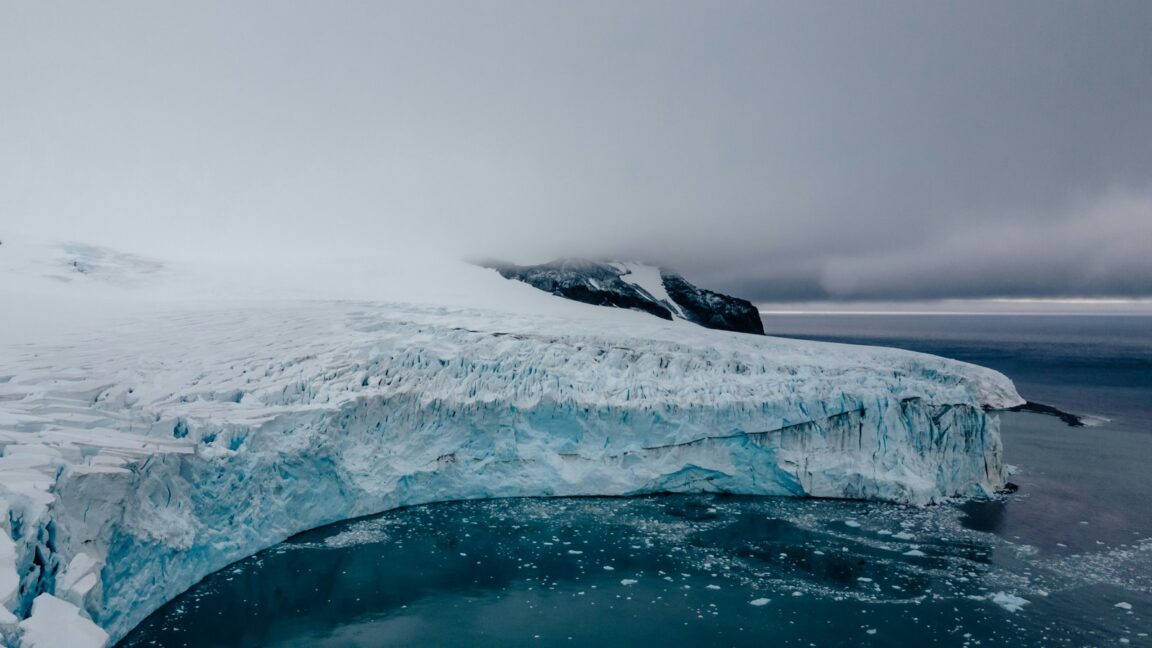
Featured image: A glacier front on the Antarctic coast. Photo by Tetiana Grypachevska on Unsplash, Unsplash License, via the IAATO website (iaato.org).