 Jonas Lindqvist
The Chedi Andermatt works as a car-free ski hotel because the village rebuilt itself around it: the hotel stands on Gotthardstrasse in the centre of Andermatt at about 1,440 metres, the station is a short walk away on the Gotthard rail line, the Gemsstock cable car is under a kilometre from the door, and a ski butler warms your boots while the 2,400 square metre spa and its 35 metre indoor pool handle the hours off the mountain. Book it for the combination of rail arrival, ski access and spa depth. Book somewhere smaller if all you want is a bed near a lift.
Quick Facts
Address: Gotthardstrasse 4, 6490 Andermatt, Switzerland, in the Urseren Valley, Canton Uri.
Altitude: The village sits at roughly 1,440 metres above sea level.
Rooms: Around 119 to 123 rooms and suites, from Alpine Deluxe Rooms at 55 to 69 square metres to the 318 square metre Furka Signature Suite.
Spa: The Spa and Health Club covers about 2,400 square metres, with a 35 metre indoor pool, a heated outdoor pool, hydrotherapy area, saunas and steam baths.
Ski access: The Gemsstock cable car is about 850 metres away, and the Andermatt Sedrun Disentis ski arena links the village to Sedrun and Disentis.
Arrival: By train to Andermatt station on the Gotthard line, with the Glacier Express also calling at the village.
Design: Belgian architect Jean-Michel Gathy, Alpine timber and stone with Asian design influences, opened 2013.
Facts checked: 24 November 2026, against the hotel’s own website and published factsheet.
What did the Chedi actually change in Andermatt?
Andermatt was a garrison and transit village that the Gotthard road tunnel largely bypassed, and for years its future was a question. The answer arrived as a resort development anchored by this hotel, which opened in 2013 as the flagship of a wider project of residences, hotels and a concert hall. The Chedi did not just add rooms to the village. It gave Andermatt a reason for international skiers to stop, stay and spend, and the village that exists now, with its renovated station area, its apartment buildings around Piazza Gottardo and its busy winter streets, is substantially the village that formed around this one address.
That history matters to a guest for a practical reason. A hotel that carries a village carries facilities a standalone property could not justify: a spa of genuine scale, several restaurants and bars including a Japanese restaurant and its mountain sibling at Gütsch, a cheese humidor stocked with regional cheeses, and service rituals like the ski butler that exist because the hotel expects serious skiers, not just weekenders. For a contrast in how a landmark hotel anchors a stay, see the Hotel Chelsea in New York, and for another property built around a single purpose, Singita Sabora in the Serengeti.
How does the ski-in promise work in practice?
Honesty first: this is not a remote lodge where you clip in at the bedroom door. It is a village hotel with ski-in access to the local slopes and a very short transfer to the lifts, and in Andermatt that is the right model, because the skiing is spread across two areas. Nätschen is the gentler, sunnier side, reached from the village and suited to families and intermediates. Gemsstock is the serious mountain, a high, steep, north-facing peak famous for off-piste terrain, and its cable car base sits about 850 metres from the hotel. The wider Andermatt Sedrun Disentis arena links the village across the Oberalp Pass to Sedrun and Disentis, giving a large connected domain by Swiss standards.
The hotel’s part of the bargain is to remove friction. Equipment is handled by the ski butler service, boots are warmed, and the return to the building at day’s end is to fireplaces, of which the hotel counts more than 200, and to the spa. Judge the ski promise on that basis: minimal logistics in a real village, rather than a piste-side doorstep, and it delivers.
What is the spa like, and who can use it?
The Spa and Health Club is the hotel’s second mountain. Across roughly 2,400 square metres it holds the 35 metre indoor pool under a glass roof, a heated outdoor pool, a hydrotherapy area with saunas and steam baths, a Tibetan relaxation lounge, treatment suites and a serious fitness facility with classes and personal training. In a resort where weather closes lifts and altitude tires legs, a spa of this size is not an extra. It is the bad-weather plan, the rest-day plan and the reason non-skiing partners book happily.
Access is centred on hotel guests, and the spa also operates a health club with membership arrangements for locals and residence owners, which means public hours and outside access vary by season and by facility. Day access for non-residents is limited and should be confirmed with the hotel before a trip built around it. Guests should simply note the pattern of the day: the pool is calmest early, the hydrotherapy circuit is the post-ski ritual, and treatments book out on peak weekends, so reserve them when you reserve the room.
Why does the Gotthard rail arrival matter so much?
Andermatt sits on one of Europe’s great rail axes. The Gotthard line crosses the Alps here, regional trains run through the valley, and the Glacier Express, the panoramic service between Zermatt and St Moritz, calls at Andermatt station. From Zurich the journey runs via Göschenen, where the rack railway climbs the Schöllenen Gorge to the village. It is a spectacular arrival, and it makes the Chedi one of the few luxury ski hotels in the Alps that a guest can reach entirely by train with a short walk or hotel transfer at the end.
That changes the packing and the party. No winter driving over passes, no hire car sitting under snow for a week, and luggage can go by rail transfer services while you travel light. It also changes the trip’s shape: Andermatt becomes a natural stop on a longer Swiss rail journey, paired with Zermatt or St Moritz on the Glacier Express route, rather than a standalone drive-in resort.
Which room should you book?
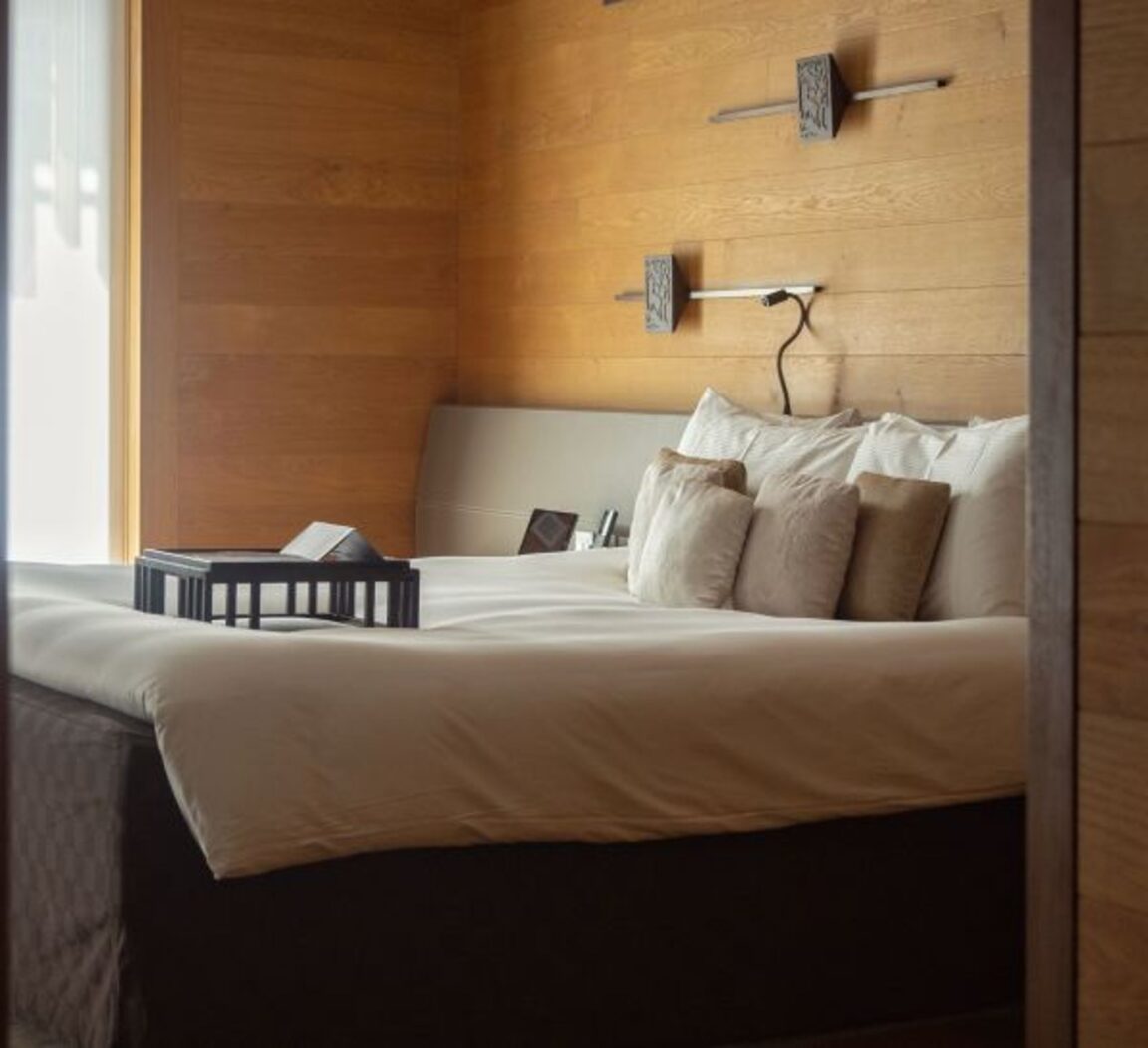
The range starts generously. Alpine Deluxe Rooms run 55 to 69 square metres with fireplaces, balconies and village or mountain views, sizes many hotels would sell as suites. Furka View Deluxe Rooms face the mountain landscape. Suites scale up through Alpine Junior Suites at 69 to 89 square metres and Alpine Deluxe Suites at 94 to 128, to the signature houses: the Gemsstock Suite, the 189 square metre Oberalp three bedroom suite, and the Furka three bedroom signature suite at 318 square metres with its own private spa. Every room carries the same design language of dark timber, natural stone, firelight and Asian detail, and in-room tablets control lighting, television and fireplace.
The decision is view and party size, not quality tier. Solo skiers and couples are well served by the deluxe rooms. Families should price the two bedroom suites against two deluxe rooms, because the living space changes how a ski week with children actually feels. Anyone booking for the spa should ask for a room on the quieter side of the building and confirm the view, because the difference between village rooftops and the Urseren Valley panorama is the difference between a good room and the postcard.
Frequently Asked Questions
Is The Chedi Andermatt ski-in, ski-out?
It offers ski-in access and stands about 850 metres from the Gemsstock cable car, with the Nätschen slopes on the village side. It is best understood as a village hotel with minimal ski logistics, including a ski butler and warmed boots, rather than a remote piste-side lodge.
Can I reach The Chedi Andermatt without a car?
Yes. Andermatt station, a short walk or transfer from the hotel, is served by Gotthard line trains via Göschenen and by the Glacier Express between Zermatt and St Moritz. The rail arrival is one of the hotel’s strongest arguments.
How big is the spa, and can non-guests use it?
The Spa and Health Club covers about 2,400 square metres with a 35 metre indoor pool, heated outdoor pool, hydrotherapy area, saunas and treatment suites. It is centred on hotel guests and health club members, and any day access for non-residents is limited and seasonal, so confirm directly with the hotel.
When did The Chedi Andermatt open, and who designed it?
The hotel opened in 2013, designed by Belgian architect Jean-Michel Gathy, blending Alpine timber and stone with Asian influences. It anchors the resort development that reshaped the village.
What is the altitude of Andermatt?
The village sits at about 1,440 metres in the Urseren Valley, with skiing rising far above it on Gemsstock and across the linked Andermatt Sedrun Disentis arena.
Image: An Alpine Deluxe Room at The Chedi Andermatt, Switzerland. Photo: The Chedi Andermatt, via thechediandermatt.com, the hotel’s official website, used with credit.