 Priya Nair
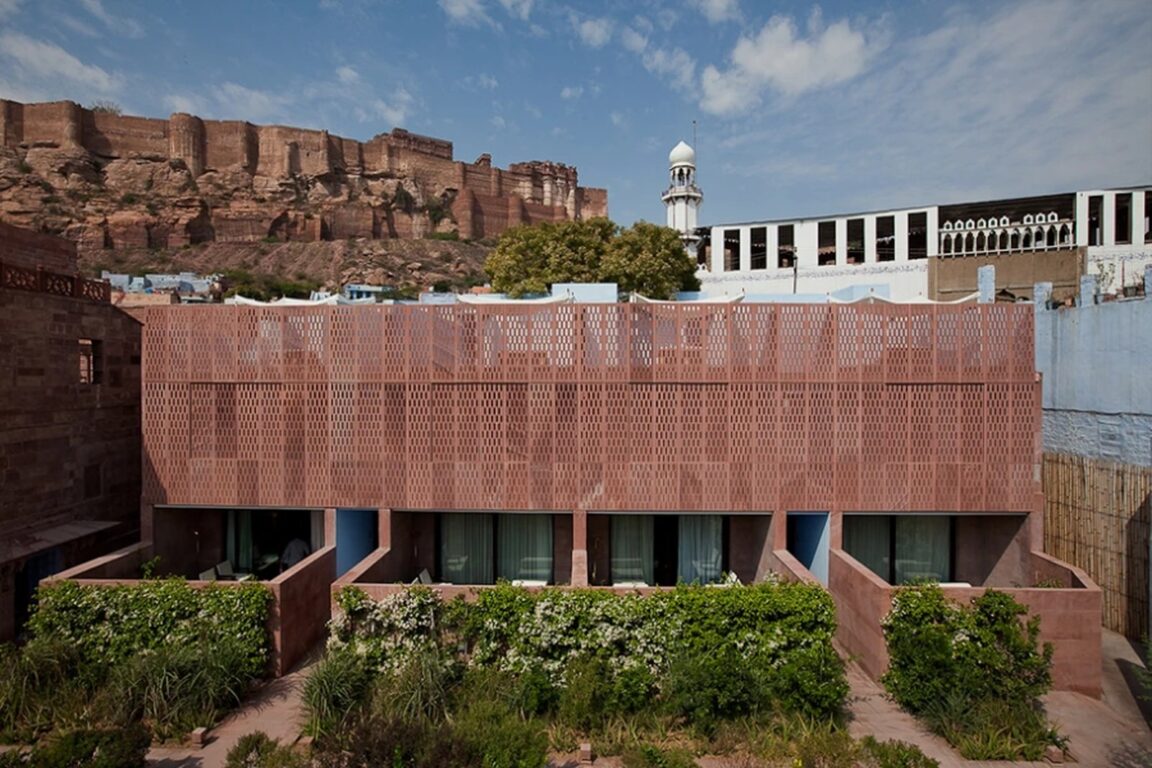
Book RAAS for the view, then let the position win you over. Jodhpur’s first boutique hotel stands in the walled old city at Tunwarji ka Jhalra, a few lanes from the Clock Tower and Sardar Market, built around an 18th century haveli of red sandstone, and from its pool, its rooftop restaurant and a good share of its rooms, Mehrangarh Fort fills the sky exactly as it does in this article’s photograph, the modern sandstone screens in the foreground and the fort on its cliff behind. This assessment, checked against the hotel’s own site on 24 November 2026, judges RAAS on position first: the fort view, the old city walk from the gate, and the room tiers, including the suite that faces the stepwell the hotel is named around.
Quick Facts
Where: RAAS Jodhpur, Tunwarji ka Jhalra, Makrana Mohalla, in Jodhpur’s walled old city
The building: An 18th century red sandstone haveli with modern wings, Jodhpur’s first boutique hotel and the first RAAS property
The view: Mehrangarh Fort from the pool, the rooftop Darikhana restaurant and many rooms
The namesake: Tunwarji ka Jhalra, the 1740 stepwell across the lane, faced by the Stepwell Suite and the Stepwell Cafe
Eating: Darikhana on the rooftop, Baradari for all day dining, and the Stepwell Cafe by the jhalra
Facts checked: 24 November 2026, on raashotels.com
How good is the fort view, really?
It is the hotel’s organising fact, and it is genuinely as the photographs promise. Mehrangarh, one of India’s great forts, rises on its cliff directly north of the old city, and RAAS sits in its sightline with almost nothing tall between. The view performs differently through the day: flat and pale at noon, amber at sunset when the fort’s walls take the light, and floodlit at night from the rooftop, when Darikhana’s tables have the city’s best dinner backdrop. The pool terrace holds the same view at water level, which is why the hotel’s loungers are a scene at the golden hour and why a room with a fort facing balcony is worth more here than a larger room without one.
The honest qualification is orientation. Not every key opens onto the fort; garden rooms face inward to the courtyard and its lawns, which are quieter and greener and perfectly handsome, but they are a different product from the fort view the hotel is famous for. Book the view by name, luxury rooms and above in the fort facing lines, and confirm it in writing with the hotel, because at RAAS the category names describe space and finish while the view is the variable that decides whether the stay matches the brochure in your head.
What does the old city position give you on foot?
The whole of old Jodhpur, starting at the gate. RAAS stands inside the walled city, so the stay begins where other hotels’ excursions end: the Clock Tower and Sardar Market are a short walk, the blue painted lanes of the old town climb toward the fort from your door, and the stepwell across the lane, Tunwarji ka Jhalra, built in 1740 and restored to use, is the neighbourhood’s living room, where local teenagers dive and the hotel’s own cafe watches from the edge. The walk up to Mehrangarh from the old city side is the way to arrive at the fort, through the lanes rather than around them by car, and the hotel’s position makes that walk a morning’s pleasure instead of a logistics problem.
The trade for a walled city address is the arrival. The lanes are narrow, the last stretch is not a boulevard, and the first time a driver threads a car toward the hotel’s gates you will understand why the courtyard inside feels like a held breath: red sandstone, water, lawn and quiet, sealed against one of India’s most full on old cities. Travellers who want resort spacing and a driveway should stay outside the walls and visit; travellers who want Jodhpur itself, with the fort as a ceiling, should be inside them. Our Singita Sabora assessment makes the same argument at the opposite scale, position as the product, and White Desert in Antarctica is the argument’s extreme case.
How do the room tiers divide, and which should you book?
By view and by era. The garden rooms, in the modern wing, are the calm, green entry point, with private garden space and the courtyard’s quiet. The luxury rooms add size and, in the fort facing lines, the view that defines the hotel. The duplex suites stack living and sleeping over two levels for families and longer stays. The heritage suites put you inside the original haveli, in the 18th century fabric itself, with the carved stone, the deep walls and the irregularities that heritage rooms honestly carry. And at the top stands the Stepwell Suite, the hotel’s signature: a suite arranged around its relationship to Tunwarji ka Jhalra, with the stepwell as its outlook and its own generous living space, the room to book when the trip has one splurge and it is this hotel.
Choose by trip, not by ladder. A first Jodhpur stay of two nights is best spent on a fort facing luxury room, because the view is the memory. A heritage traveller should take the haveli suite and accept a smaller bathroom as the price of the real walls. A family should take the duplex and the garden. And anyone booking the Stepwell Suite should plan an evening in, at the cafe below and on the suite’s own terrace, because the stepwell at dusk, divers and all, is a private show no rooftop can buy.
What about eating and the pool?
Book Darikhana for your first night and Baradari for your last. The rooftop works because the food, Rajasthani and North Indian cooking alongside international plates, does not have to carry the evening alone; the fort does the theatre while the kitchen does its steady work. Baradari, the all day room in the courtyard, is the hotel’s calm centre, and the Stepwell Cafe is the local’s choice, coffee and light plates at the jhalra’s edge with the neighbourhood passing. The pool, long and shaded in the modern wing’s courtyard, is a genuine swim rather than a plunge, and its terrace holds the fort view at the hour the old city cools. None of these spaces is large, and that is the point: RAAS feeds and waters a few dozen guests in rooms built for a haveli’s household, and the service ratio feels like it.
Frequently Asked Questions
Does every room at RAAS Jodhpur have a fort view?
No. Many rooms, the pool and the rooftop face Mehrangarh Fort, but garden rooms face the courtyard. Book a fort facing category by name and confirm the view with the hotel in writing.
What is the stepwell at RAAS Jodhpur?
Tunwarji ka Jhalra, a stepwell built in 1740 across the lane from the hotel. The Stepwell Suite faces it, the hotel’s Stepwell Cafe sits by it, and it remains a living neighbourhood place where local swimmers dive.
Where in Jodhpur is RAAS located?
Inside the walled old city at Tunwarji ka Jhalra, Makrana Mohalla, a short walk from the Clock Tower and Sardar Market, with the lanes to Mehrangarh Fort starting from its gate.
What restaurants does RAAS Jodhpur have?
Darikhana, the rooftop restaurant under the fort; Baradari, the all day dining room; and the Stepwell Cafe by the jhalra. The rooftop at sunset is the table to prioritise.
Is RAAS Jodhpur a heritage hotel or a modern one?
Both, deliberately. The core is an 18th century haveli, the wings are contemporary red sandstone with carved screens, and the heritage suites sleep in the old fabric while the garden and luxury rooms are modern rooms in a heritage setting.
Photo: RAAS Jodhpur’s modern sandstone rooms behind their carved screens, with Mehrangarh Fort on its cliff above the old city. Photo: RAAS Hotels, via raashotels.com, the hotel’s official website, used with credit.