 Priya Nair
Choose the doctor before you choose the resort. Classical Ayurveda in Kerala is a medical tradition with its own diagnostic method, its own pharmacy and its own calendar of treatment, and a genuine Panchakarma centre is organised around a physician’s consultation, daily supervised therapies and a stay measured in weeks, not weekends. Spa marketing borrows the same vocabulary, the oils, the warm rooms, the word detox, for treatments that are pleasant and entirely different. This guide, checked against Kerala Tourism’s published classification of Ayurveda centres on 24 November 2026, gives you the questions that separate the two before any deposit is paid, and it makes no medical claims: Ayurveda is a system of traditional medicine, and anyone with a health condition should discuss a program with their own doctor first.
Quick Facts
Where: Kerala, India, Ayurveda’s home state, from Kovalam and Varkala to Kochi and the backwaters
The tradition: Panchakarma is the classical fivefold purification and rejuvenation program supervised by an Ayurvedic physician, a vaidya
Official signal: Kerala Tourism classifies Ayurveda centres as Green Leaf or Olive Leaf certified, an official quality marker to ask about
Stay length: Classical programs are built in blocks, commonly 7, 14 or 21 days and longer; a weekend is a spa break, not Panchakarma
First step: A consultation with the vaidya precedes any treatment plan at a classical centre
Facts checked: 24 November 2026, on keralatourism.org’s Ayurveda classification information
What should happen in the first consultation?
Time, questions and a pulse. At a classical centre the program begins with a consultation with the resident vaidya, who takes a history, asks about sleep, digestion, appetite, energy and existing conditions and medicines, examines tongue and pulse in the Ayurvedic method, and arrives at an assessment of your constitution and current imbalance, the prakriti and vikriti of the textbooks. Only then is a treatment plan written: which therapies, in what order, on which days, with what diet and rest rules around them. The consultation is the product. A centre that books you straight into a fixed package of massages from a brochure, with the doctor available on request or by video at an extra charge, is telling you plainly which tradition it belongs to.
Ask three questions of any centre before booking. Is a vaidya resident on site every day, and will the same doctor review your progress during the stay? Are medicines and oils prepared or sourced as classical formulations, and can the centre say by whom? What does a treatment day actually contain, hour by hour, including the rest periods the tradition prescribes between therapies? The answers, given specifically and without embarrassment, are the clearest quality signal a traveller can collect from home.
What does a classical treatment day look like?
Early, quiet and structured. Days at a serious centre start near dawn, treatments are sequenced through the morning, meals are prescribed as part of the therapy rather than chosen from a menu, and the afternoons carry deliberate rest, because the classical texts treat rest as an active ingredient. The signature therapies have names worth learning so a brochure cannot blur them: abhyanga, the synchronised oil massage; shirodhara, the warm oil flow on the forehead; pizhichil, the warm oil bath; and the internal and preparatory procedures that a physician schedules around them according to the plan. None of this is unpleasant, much of it is deeply relaxing, but its logic is clinical: dose, sequence and duration are prescribed, and the guest’s job is compliance, including the unglamorous rules about cold water, late nights, screens and exertion.
This is also where the spa comparison resolves itself. A spa sells you choices, a menu, a favourite therapist, a glass of something cold after. A classical centre removes choices in favour of a plan, and travellers who want the first should book the first happily and pay spa prices. The mistake is paying classical prices for a spa product with Sanskrit on the door, which is why the consultation test in the previous section matters more than any photograph of a treatment room.
How long does a real program take?
Longer than a holiday usually allows, and the centre should say so. Panchakarma’s classical structure moves through preparation, the main procedures and a recovery and rebuilding phase, and centres organise that arc in blocks most often quoted at 7, 14, 21 or 28 days, with the longer programs being the ones physicians describe as complete. A seven day stay can be a legitimate introduction, a structured week of consultation, daily therapy and prescribed rest, if the centre is honest about what a week can and cannot do. The red flag is the opposite promise: transformation in three days, a full Panchakarma in a long weekend. Duration honesty is a proxy for every other kind of honesty at a centre, and Kerala’s own tourism classification, the Green Leaf and Olive Leaf certifications awarded to Ayurveda centres that meet its standards, exists precisely because the state knows the marketing problem and audits against it. Ask which classification a centre holds, and check the claim against Kerala Tourism’s published lists.
Season plays a supporting role. The monsoon months, roughly June to August, are traditionally considered a favourable season for treatment in Kerala, when the air is cool and damp and the body is thought to absorb therapies well, and the classical centres fill with long stay guests then. The winter months suit travellers who want to combine a shorter program with the backwaters and the coast. Either way, build the stay as the trip’s purpose, not as an add on between sightseeing days, because the rest rules and the sightseeing impulse fight each other, and the program loses. Travellers building a slower wellness trip can pair this guide with our account of Chefchaouen’s hammams and recovery days, and those who want luxury resort wellness instead should look at Six Senses Yao Noi, which makes no classical claims and keeps its promises beautifully.
Frequently Asked Questions
What is Panchakarma, in plain terms?
The classical Ayurvedic program of preparation, main purification and rejuvenation procedures and recovery, prescribed and supervised by an Ayurvedic physician. It is a structured course of treatment over days to weeks, not a single massage or a spa day.
How can you tell a classical centre from a spa using Ayurvedic words?
By the consultation. A classical centre begins with a vaidya’s assessment and writes an individual plan, with daily medical supervision. A spa books you into a fixed menu of treatments. Also ask about Kerala Tourism’s Green Leaf or Olive Leaf classification for Ayurveda centres.
How long should you stay for a genuine program?
Centres build programs in blocks of about 7, 14, 21 or 28 days. A week can be an honest introduction; promises of a complete Panchakarma in a weekend are a warning sign.
When is the traditional season for Ayurveda in Kerala?
The monsoon, roughly June to August, is traditionally favoured for treatment in Kerala and is the long stay season at classical centres. Winter suits shorter programs combined with the coast and backwaters.
Should you consult your own doctor before booking?
Yes, especially with any existing condition or medication. Ayurveda is a traditional medical system, this guide describes how to choose a centre and makes no medical claims, and a serious centre will itself ask about your medical history at consultation.
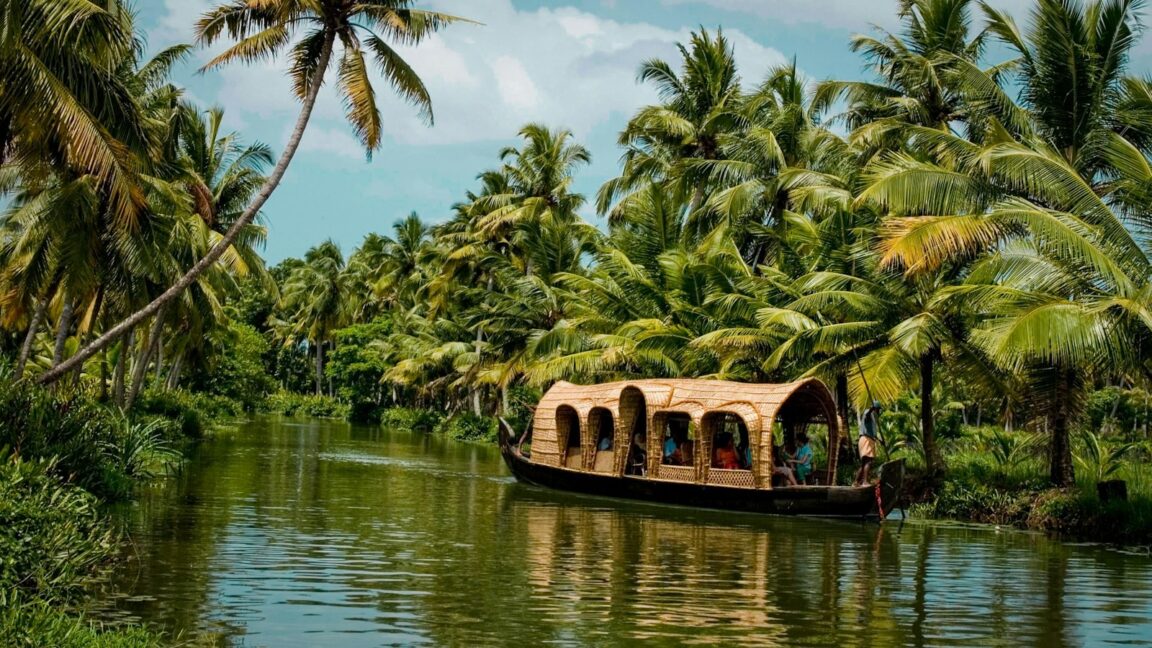
Photo: A covered boat on Kerala’s backwaters under coconut palms, the landscape that hosts the state’s classical Ayurveda centres. Photo via Unsplash (photo 1602216056096-3b40cc0c9944), Unsplash License, used with credit.