 River Callahan
Go to Tavira if you want the Algarve at a lower volume: a whitewashed river town on the Gilao, about 30 kilometres east of Faro, where the beach sits offshore on an 11 kilometre barrier island, the working landscape is salt pans and lagoon, and evenings belong to the riverside rather than a resort strip. Tavira works best as a base of two to four nights for the eastern Algarve, with one full island day, one slow old town day, and easy side trips to Cabanas, Santa Luzia and the Spanish border town of Vila Real de Santo Antonio. It is not the place for cliff scenery or nightlife, and that trade is exactly its appeal.
Quick Facts
- Where: Eastern Algarve, Portugal, on both banks of the Gilao River, inside the edge of the Ria Formosa Natural Park
- Nearest airport: Faro, about 30 kilometres west, with a direct rail link from Faro station to Tavira
- Beach access: No beach in town. Ferries cross the lagoon to Ilha de Tavira from the town quay in summer and year round from Quatro Aguas, 2 kilometres south
- Signature sights: The seven arched old bridge, Tavira Castle and the church of Santa Maria do Castelo, the salt pans, Praia do Barril and its anchor cemetery
- Best base for: Travellers who prefer a real town with restaurants and a station over a purpose built resort
- How long: Two nights minimum, three to four if you want both island beaches and a border side trip
Why does Tavira feel different from the rest of the Algarve?
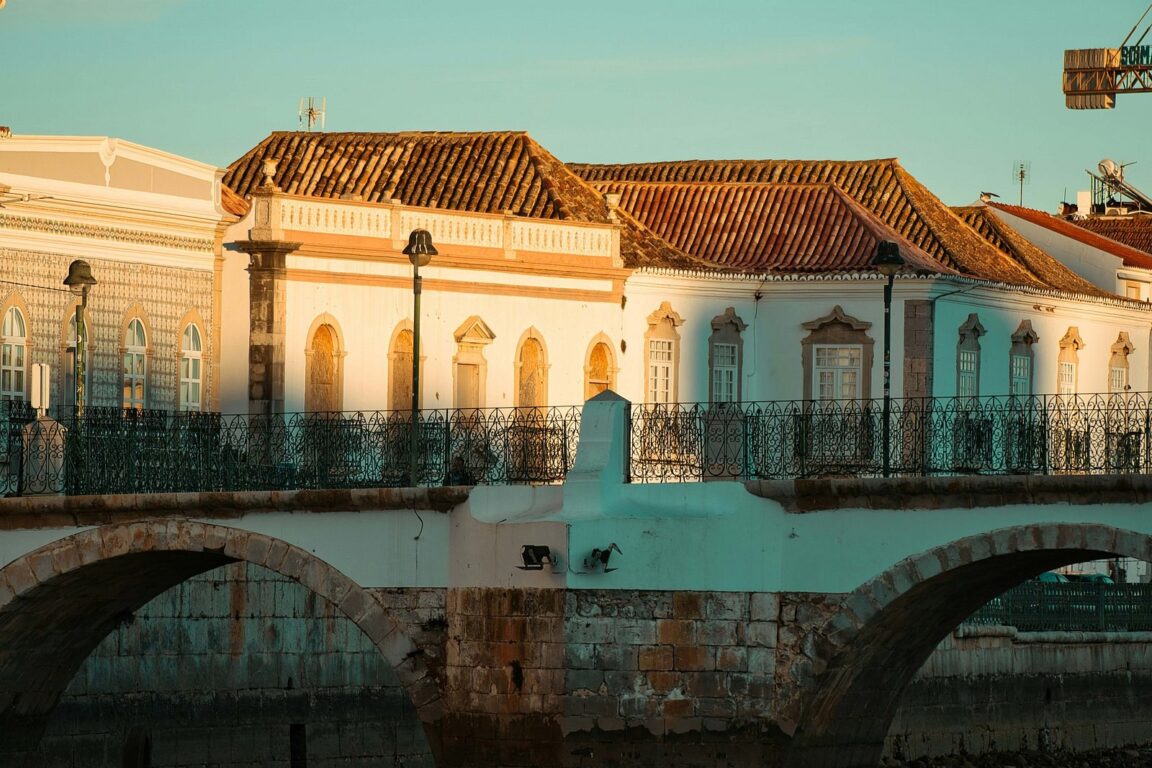
Most Algarve resorts face the sea. Tavira faces a river and a lagoon. The town grew as a salt and tuna port on the Gilao, and its historic centre still reads that way: tiled facades, traditional four sided hipped roofs, and a skyline crowded with church towers. Local guides count 37 churches in and around the town, an extraordinary number for a municipality of roughly 26,000 people. The seven arched old bridge, usually called the Roman bridge, links the two banks and is the natural centre of any walk, with the Praca da Republica and its bandstand garden on the west side.
Above the river, the castle walls and the church of Santa Maria do Castelo anchor the oldest quarter. Santa Maria stands on the site of a former mosque and holds the tombs associated with Dom Paio Peres Correia, the knight credited with taking Tavira in the 13th century Reconquest. The castle garden and walls give the best free view in town, across the rooftops to the salt pans and the lagoon. A fuller orientation to the town and its island is set out in the Portugal Getaways Tavira guide, which covers the same castle, bridge and island circuit.
How do the Ilha de Tavira ferries actually work?
This is the detail that shapes every Tavira day, so plan around it. Ilha de Tavira is a barrier island in the Ria Formosa with no road access. Two ferry routes serve the main beach, Praia da Ilha de Tavira. From the town quay, boats run down the Gilao and across the lagoon in about 15 to 20 minutes, a scenic ride past salt pans and mudflats, but this service is seasonal. From Cais das Quatro Aguas, at the end of the salt pan road about 2 kilometres from the centre, the crossing takes about five minutes and runs year round. Return fares are small, in the region of 2 euros, but they are sold at the quay and schedules change with the season. The practical rule, repeated by local operators including Velo Algarve in its Ilha de Tavira guide, is to check the last return sailing on the board at the quay before you settle on the sand. There is no other way off the island.
Near the ferry landing the beach has restaurants, a campsite and lifeguards in summer, and it is busy. Walk ten minutes in either direction along the sand and the crowds thin out quickly, because the island runs for about 11 kilometres. Take water and shade for any long walk, since services cluster at the landing.
What about Praia do Barril and the other island beaches?
Praia do Barril, on the western end of the same island, is reached completely differently. From Pedras d’El Rei, near the fishing village of Santa Luzia, a footbridge crosses to the island, then a path of about 1 kilometre runs to the beach, with a small tourist train covering the same route for a few euros. Barril is a Blue Flag beach known for the Cemiterio das Ancoras, the anchor cemetery, where rows of rusting anchors from the old tuna fleet are planted in the dunes. It is the most atmospheric beach day in the Tavira area and the better choice outside high summer, when you can walk rather than queue for a boat.
East of town, Cabanas de Tavira, about 7 kilometres away, has its own short ferry hop to a long, quieter sandbar, Praia de Cabanas. If Tavira itself feels discovered, Cabanas is the answer locals give, and it pairs well with a seafood lunch in the village.
Why do the salt pans matter to a Tavira trip?
Between the town and the sea, the Ria Formosa is divided into evaporation pans that still produce sea salt by hand through the summer. Workers rake the crust and skim flor de sal, the fine surface crystals, with wooden tools, continuing the trade that made Tavira prosperous in the 18th century. For visitors the pans are the town’s second landscape: flat, reflective and full of birds. Flamingos are present year round and most numerous between November and March, alongside avocets, spoonbills and black winged stilts. The level lane east from town toward Quatro Aguas and the small Forte do Rato runs through the pans and is an easy walk or cycle at any hour, best in early morning or late afternoon light.
How should you plan a day in Tavira?
Start early in the old town before the heat builds. Cross the old bridge, climb to the castle for the rooftop view, and visit Santa Maria do Castelo while the quarter is quiet. Late morning, choose your beach route deliberately: the Quatro Aguas ferry for the classic island beach, or the Barril footbridge and train if you want the anchor cemetery and a walk built into the day. Build lunch around the beach landing or back in town, because island services are seasonal. In the late afternoon, walk or cycle the salt pan lane toward Forte do Rato for birds and low light, then return to the riverside for dinner. Tavira’s restaurant strength is grilled fish and seafood rice in unpretentious dining rooms rather than tasting menus, and the town empties pleasantly after the day trip buses leave.
Is Tavira a good base for the eastern Algarve?
Yes, with clear limits. As a base it offers a station on the Algarve line, a bus network, plenty of small hotels and apartments, and a town that functions outside tourism, which keeps prices and atmosphere steadier than the central Algarve resorts. Faro and its old town are an easy train ride west, Olhao and its island ferries sit between the two, and Vila Real de Santo Antonio and Ayamonte in Spain are a short hop east. What Tavira does not offer is the western Algarve’s cliff and grotto coastline. Travellers building a wider Portugal route should pair it with the slower interior covered in our Alentejo, Portugal travel guide or with the capital sequence in our 3 Days in Lisbon itinerary, rather than expecting Tavira to substitute for Lagos or the Benagil coast.
When is the best time to go to Tavira?
May, June, September and early October give the full package: warm sea, running ferries and a town that is lively without being strained. July and August bring the best swimming and the longest ferry days, plus queues at Quatro Aguas and full island restaurants. Winter is mild and quiet, the town quay ferry stops, the Quatro Aguas crossing continues, and the salt pans are at their best for birdwatching, but the island becomes a walker’s beach rather than a swimmer’s one. Whenever you go, confirm ferry times on the day, since lagoon services respond to weather and season rather than a fixed annual timetable.
Frequently Asked Questions
Can you walk to the beach in Tavira?
No. Tavira has no town beach. All of its sand is on barrier islands in the Ria Formosa, reached by ferry to Ilha de Tavira or Cabanas, or by the footbridge and path to Praia do Barril.
Which ferry should you take to Ilha de Tavira?
Take the town quay boat in summer if you want the scenic 15 to 20 minute ride down the Gilao. Take the Quatro Aguas ferry for the short, year round crossing, shorter queues and parking. Check the last return time at the quay either way.
How many days do you need in Tavira?
Two nights is the minimum for one island day and one old town day. Three to four nights lets you add Barril, Cabanas and a side trip to Faro or the Spanish border without rushing.
Is Tavira good in winter?
Yes for walking, birdwatching in the salt pans and a quiet town break, with the Quatro Aguas ferry still running. It is less good for swimming, and some island services close outside the season.
Do you need a car in Tavira?
No. The old town is walkable, the station connects to Faro and the rest of the Algarve line, and taxis or buses cover Quatro Aguas, Santa Luzia and Cabanas. A car only helps for wider eastern Algarve exploring.