 Maya Chen
For the Night of the Dead around Lake Patzcuaro, the honest plan is to do less, in the right places, and to book it months ahead: base in Patzcuaro town, visit the island of Janitzio by day rather than in the night ferry surge, and give the night of 1 November to one land based cemetery vigil, at Tzintzuntzan, where the old Purepecha capital holds its procession of altars and its graveside watch in a setting that can still breathe. Dia de Muertos falls on 1 and 2 November every year, so the next occurrence to plan for is Monday 1 and Tuesday 2 November 2027, with the great vigil, the velacion, running through the night of the 1st into the small hours of the 2nd. This is a religious observance by Purepecha communities, not a festival staged for visitors, and the whole guide is written on that basis: one night, one vigil, quietly.
Quick Facts
- Where: Patzcuaro and the lake towns of Michoacan, Mexico, including Janitzio island and Tzintzuntzan, about 17 kilometres from Patzcuaro town.
- When: Dia de Muertos, 1 and 2 November annually. The next occurrence is 1 and 2 November 2027, with the main cemetery vigil on the night of 1 November into 2 November.
- Recognition: The Indigenous festivity dedicated to the dead was proclaimed by UNESCO in 2003 and inscribed in 2008 on the Representative List of the Intangible Cultural Heritage of Humanity.
- The signature sights: Candlelit cemetery vigils, ofrenda altars with cempasuchil marigolds, the fishermen’s butterfly net ceremony on the lake, and Tzintzuntzan’s procession of altars.
- Book ahead: Patzcuaro hotels, months ahead for the nights around 1 November. The town’s room stock is small and the observance draws visitors from across Mexico and beyond.
- Facts checked: 19 November 2026, against the Michoacan guides and the UNESCO account linked below.
What is the Night of the Dead around Lake Patzcuaro?
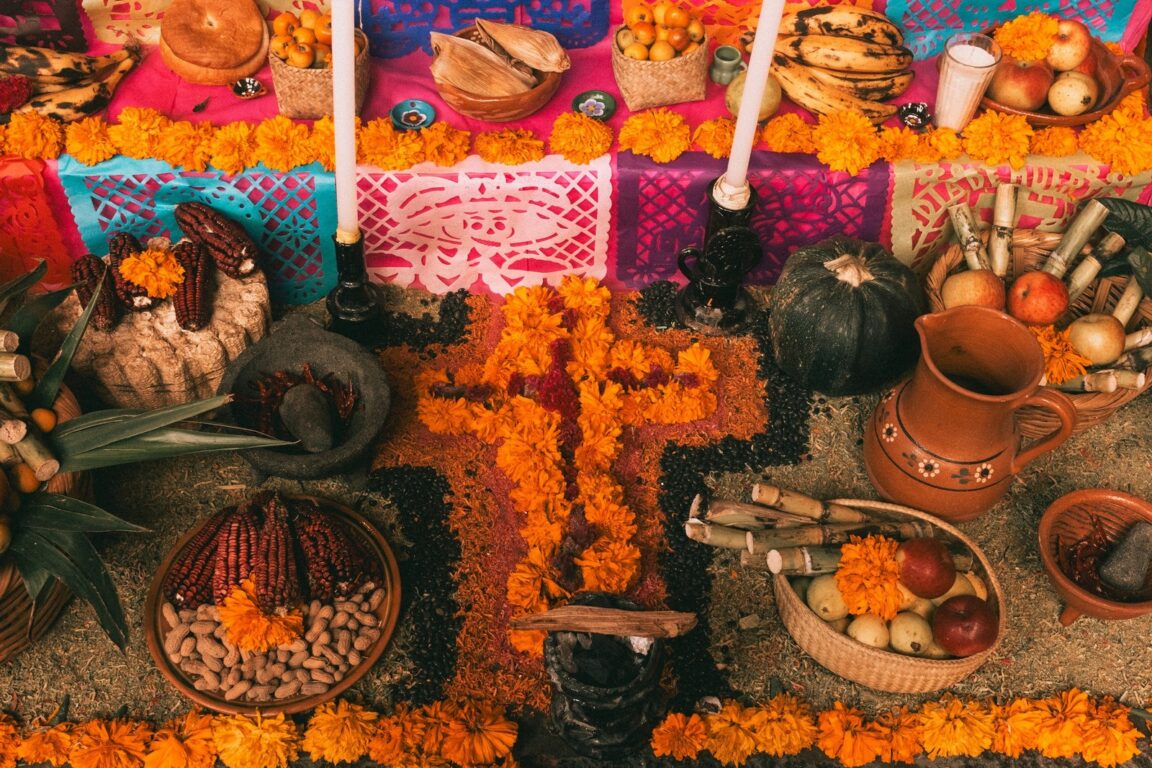
Around Lake Patzcuaro the observance has its own names and its own depth. In the Purepecha communities of the lake, the night is the Noche de Animas, the Night of the Souls, and its traditional form is the velacion: families clean and decorate the graves of their dead with cempasuchil, the Mexican marigold whose scent and colour are held to guide the returning souls, with candles, arches of flowers, food and photographs, and then they keep watch beside the graves through the night, eating, talking, praying and remembering, until dawn. AFAR’s Day of the Dead guide describes the Janitzio version of the same night: thousands gathering in the island cemetery as the Purepecha keep the rituals late into the night, with fishermen illuminating the lake with torches. The wider tradition, as UNESCO records it, commemorates the temporary return to earth of deceased relatives and loved ones, and it sits at the centre of the lake communities’ year.
The calendar inside the night matters. The night of 1 November is given first to the angelitos, the souls of children, and the vigil rolls into 2 November, All Souls, for the adults, which is why the cemeteries fill on the evening of the 1st and stay full until morning. The days around the vigil carry their own programme in Patzcuaro town: altar exhibitions, markets full of sugar skulls, candles and marigolds, craft fairs for the lake region’s famous pottery, copper, wood and textile work, and the plazas, Vasco de Quiroga and Gertrudis Bocanegra, at their most beautiful. Arrive by 31 October at the latest, because a Night of the Dead trip that begins on the morning of the 1st has already missed its own beginning. For the other great Mexican observance of the dead, in a city setting, our Day of the Dead in Oaxaca guide is the companion read.
Janitzio by day or by night: how do you handle the island honestly?
Janitzio is the small, steep island in the lake crowned by the great statue of Jose Maria Morelos, and its cemetery vigil is the most photographed Night of the Dead scene in Mexico. It is also, on the night itself, the hardest to reach and the hardest to leave. Boats run to the island from Patzcuaro’s docks, the Muelle General and San Pedrito, and on 1 November the demand inverts the system: the Cultures Traveled Michoacan guide warns visitors to expect waits of two hours or more for a boat out to Janitzio and four hours or more in line for a boat back, in the cold, in the small hours. The island’s single steep street and small cemetery carry crowds far beyond their scale, and a visitor who goes at night is committing the whole night to queues in both directions.
The working solution, recommended by the Michoacan itineraries for exactly this reason, is to split the island from the vigil. Go to Janitzio in daylight, on the morning of 1 November or on 31 October: climb to the Morelos statue, walk the cemetery while the families are preparing the graves, which is a privilege to witness quietly and at a distance, eat the lake fish in the island’s small restaurants, and take a boat back in the afternoon while the system still flows. You will have seen the island whole, in light, and understood its geography. Then give the night to a vigil you can reach and leave on foot and by road. One refinement is worth naming: the fishermen’s ceremony on the lake, the butterfly nets raised with candles and torches, belongs to the night waters around the island, and it is seen from boats and shores in the late evening. If your heart is set on it, watch from the Patzcuaro shore and docks rather than joining the island ferry surge after dark.
Why is Tzintzuntzan the vigil to choose, and how does its night run?
Tzintzuntzan, about 17 kilometres from Patzcuaro on the lake’s north eastern shore, was the capital of the Purepecha world, and its ceremonial centre, the great platform with its circular yacata pyramids, still stands above the town. Its Night of the Dead is built around the atrium and cemetery of its sixteenth century Franciscan complex, and it opens with the observance’s most moving public act: the procession of altars, in which families carry the ofrenda they have built for their dead through the streets to the cemetery, dropping marigold petals and burning copal incense to guide the souls, and set the altar at the graveside as the candles are lit. The Cultures Traveled guide, linked above, photographs and describes that procession as the heart of the Tzintzuntzan night. As dark falls the cemetery fills grave by grave with candlelight, flowers and food, and the vigil settles into its long form, families beside their dead, music at intervals, the town’s craft stalls and food stands working the streets outside the walls.
Run the night in this order. Travel out in the late afternoon, because the road along the lake clogs as the evening builds and a 30 to 60 minute drive can double; the Michoacan three day itinerary builds its whole plan on this same shape, Patzcuaro as base, Janitzio in daylight, one night given to Tzintzuntzan. Eat something hot in the town before the vigil deepens. Enter the cemetery quietly as the procession arrives, find a position at the edge of the graves rather than among them, and stay for the hours after dark when the candlelight is complete and the crowd thins to the families and the committed. Leave when you are tired rather than at dawn; the vigil belongs to the families until morning, and a visitor’s respectful few hours are a complete experience. Other lake towns, Ihuatzio and Santa Fe de la Laguna among them, hold smaller, more community closed vigils, and they are best left to their communities unless you are specifically invited.
What are the etiquette rules, where do you base, and what does it cost?
Etiquette is the whole ballgame at a velacion, and it is not complicated. A cemetery vigil is a family religious observance that visitors are tolerated within, not an event performed for them. Ask before photographing any person, family or grave at close range, and accept a refusal instantly and without disappointment. Never use flash at a graveside, never step between a family and its grave, never touch offerings, food or photographs on a grave or altar, and keep voices low and phones away in the cemetery itself. Dress warmly and plainly, in dark, modest clothes rather than costume: face paint and fancy dress belong to city parades, not to a Purepecha graveside, and in the lake towns they mark the visitor who has mistaken the night for Halloween. Bring a small torch, water and patience, buy candles, flowers and food from the town’s sellers, whose stalls are the observance’s economy, and if a family offers food or drink, accept it graciously; that offer is the night’s highest courtesy.
Base in Patzcuaro town, in the streets around the two plazas, where the hotels, restaurants and combi and bus connections to the lake towns all sit within walking distance, and where the town’s own altars, markets and exhibitions fill the daylight hours of 31 October and 2 November. Book that base months ahead: Patzcuaro is a small town, its good rooms are finite, and the nights around 1 November are its most demanded of the year, with Morelia, the state capital with its larger hotel stock and the nearest airport, as the workable fallback, at the cost of a drive of about an hour each way at the busiest times. Costs in the lake towns themselves stay human: market food, candles, flowers, combis and boats are all small money purchases. What surges is only the bed, which is one more reason the booking, not the budget, is the decision to make early. Round the trip out in the capital before or after with our Mexico City food guide, and give Patzcuaro itself the unhurried days it deserves either side of the night.
Frequently Asked Questions
When is the Night of the Dead in Patzcuaro in 2027?
Dia de Muertos falls on 1 and 2 November every year. In 2027 those dates are Monday 1 and Tuesday 2 November. The main cemetery vigil, the velacion, runs through the night of 1 November into the early hours of 2 November, with the town programme building from 31 October.
Should you go to Janitzio at night?
For most visitors, no. The night ferry queues run to two hours or more out and four hours or more back, and the small island cemetery is overwhelmed. Visit Janitzio in daylight on 31 October or the morning of 1 November, and give the night itself to a land based vigil such as Tzintzuntzan.
How far ahead should you book Patzcuaro hotels?
Months ahead for the nights around 1 November. Patzcuaro is a small town with a finite stock of good rooms and the observance is its peak demand of the year. If the town is full, base in Morelia and accept the drive, rather than arriving without a bed.
Can you photograph the cemetery vigils?
Only with permission, and never with flash at a graveside. Ask before photographing any family, person or grave at close range, accept a no instantly, and keep photography wide, distant and brief. Many visitors find the right choice is to put the camera away entirely after dark.
What should you wear and bring to a vigil?
Warm, plain, modest clothes: the lake sits high and the night is cold, and costume or face paint is out of place at a family graveside. Bring a small torch, water, small cash for candles, flowers and food from local sellers, and the patience to stay quietly at the edge of the graves.
Featured image: A Dia de Muertos ofrenda, marigolds, candles, papel picado, pan de muerto, fruit and maize laid out for the returning souls, of the kind built in homes and at gravesides around Lake Patzcuaro. Photo by Chris Luengas on Unsplash, Unsplash License, via a captioned hosted copy on AFAR.