 Jonas Lindqvist
Eat in Sarajevo in this order: cevapi in Bascarsija first, while you are hungriest, then a pie baked under the sac, then Bosnian coffee taken slowly with a cube of rahat lokum, and only then the cooked dishes of an ascinica. The old town is small enough that all of it sits within a few cobbled lanes, and the rules are simple once someone states them plainly. Cevapi arrive in a warm somun flatbread with chopped raw onion, kajmak is the creamy extra worth paying for, and the word burek, in Bosnia, means the meat pie only. Every other filling has its own name, and ordering by the wrong name is the fastest way to be served something you did not intend.
Quick Facts
- Where: Bascarsija, Sarajevo’s Ottoman old bazaar in Stari Grad, on the north bank of the Miljacka River.
- First dish: Cevapi, small grilled minced meat sausages served in somun with raw onion.
- The kajmak rule: Order kajmak, the rich clotted cream, on the side or spread in the bread. It is the difference between a good portion and the full Sarajevo version.
- The burek rule: Burek is meat filled only. Cheese is sirnica, spinach and cheese is zeljanica, potato is krompirusa.
- The sac: A domed metal lid set over a pan and covered with hot coals, used for pies and slow dishes.
- Coffee: Bosnian coffee is served in a dzezva pot with a small handleless cup called a fildzan, a glass of water and rahat lokum.
- Booking: The famous cevapi and burek houses are walk in counters. Book ahead only for sit down restaurants at dinner and for a food tour in high season.
- Pairing trip: Sarajevo combines naturally with Mostar, covered in our guide to Mostar, the bridge town beyond the day trip.
What are Sarajevo cevapi, and how should you order them?
Cevapi are skinless, finger sized sausages of seasoned minced meat, grilled over charcoal and served tucked into a somun, the soft round flatbread that is often warmed on the grill and softened with meat juices. A standard portion is ten pieces, with five as the smaller option, and the plate, such as it is, is completed by finely chopped raw onion. There is no salad, no fries and no sauce by default, and that restraint is the point. The meat, the bread and the onion do the whole job.
The order to give is precise. Ask for a full portion, ask for kajmak, and eat the cevapi while the somun is still warm. Kajmak is a thick, mildly tangy clotted cream, and in Sarajevo it is spread inside the bread or served alongside so each bite can carry some. Travellers who skip it often conclude that cevapi are plain. With it, the dish makes sense: smoke, fat, salt, raw onion bite and cream in one handful. A sour cream substitute is not the same thing, and a good house will not pretend otherwise.
Three names anchor the Bascarsija argument, and locals defend them the way other cities defend football clubs. Cevabdzinica Zeljo, on Kundurdziluk in the coppersmiths quarter, is the best known institution and the usual first stop. Petica, the Ferhatovic house, is the other heavyweight, praised for the quality of its meat. Mrkva is the third name in the standard local shortlist, and all three sit within a short walk of one another, which makes a comparative lunch entirely practical. The honest advice is to try two on different days rather than declare a winner after one portion.
One warning matters more than the ranking. Cevapi elsewhere in the Balkans are not automatically Sarajevo cevapi, and the Travnik and Banja Luka styles are proudly different. In Sarajevo, keep the order classic the first time: ten pieces, somun, onion, kajmak, and a drinking yogurt or water alongside. Save experimentation for the second visit to the same counter.
Why is only the meat pie called burek?
Because in Bosnia the filling decides the name, and getting this right is a genuine local language rule, not a pedantic tourist tip. Burek is the spiral or rolled pie of thin dough filled with minced meat. The cheese pie is sirnica. The spinach and cheese pie is zeljanica. The potato pie, peppery and filling, is krompirusa. Order a cheese burek in Sarajevo and you will either be gently corrected or served the meat pie you literally asked for.
The best pies are baked under the sac. The sac is a heavy domed lid placed over the baking pan and heaped with hot coals, so the pie cooks from above as well as below and the top layers turn crisp and lightly blistered while the inside stays moist. Buregdzinica Sac in Bascarsija is named for exactly this method, and Buregdzinica Bosna is the other long established old town name. Pies are commonly sold by weight, so state how much you want rather than pointing vaguely, and expect the server to cut a section from a large round pie.
Eat pie in the morning or at lunch, hot, with a glass of drinking yogurt, which is the classic pairing and cuts the richness cleanly. Pie bought late and reheated is a lesser thing. If you are planning one pie only, make it burek under the sac. If you are planning two, add sirnica, whose soft cheese filling shows the dough at its best.
What are the rules of Bosnian coffee?
Bosnian coffee is a ritual with equipment, an order and a pace, and it is not Turkish coffee under a local alias, a distinction Sarajevans care about. The coffee is finely ground, brought to a rise in a dzezva, the small long handled pot, and served still in the dzezva on a tray with a fildzan, the small handleless cup, a glass of water and rahat lokum, the soft sweet known elsewhere as Turkish delight. Sugar cubes may be provided, and the traditional method is to hold a cube between the teeth and sip the coffee through it, rather than stirring sugar into the cup.
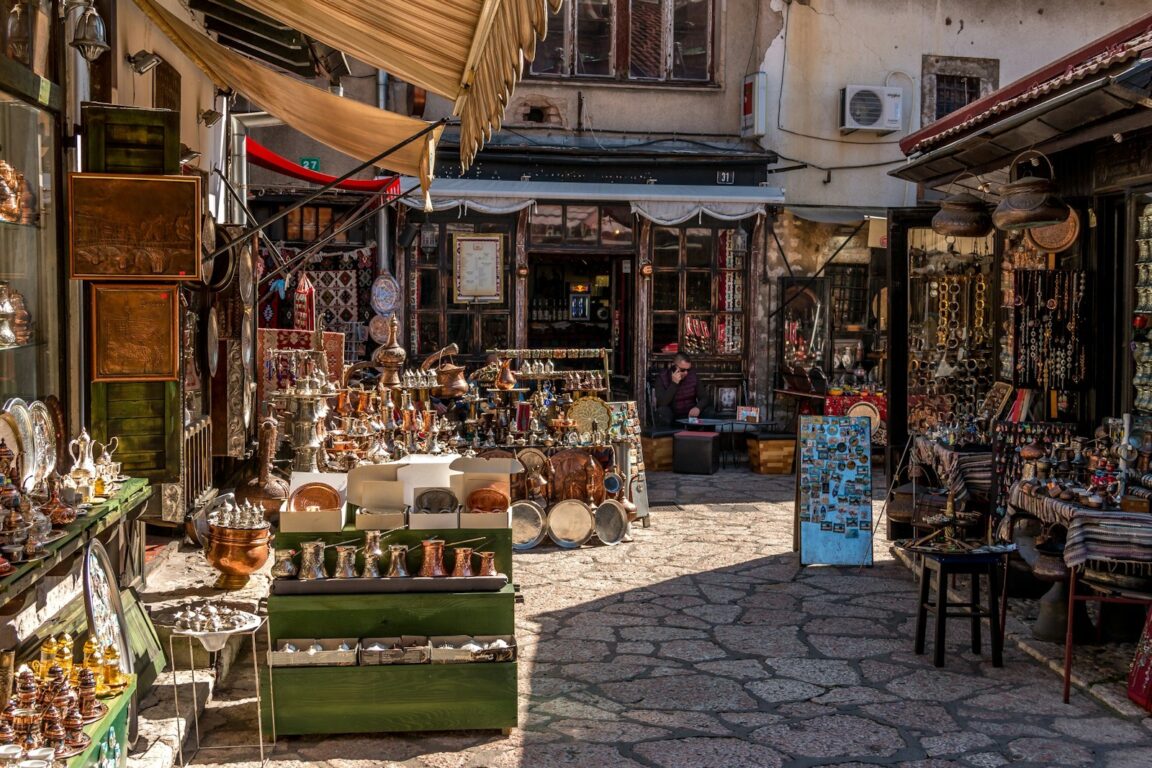
The serving order in the cup matters. Pour a little at a time so the foam, the kajmak of the coffee in local usage, is shared and preserved, and drink slowly. The lokum is not decoration: a small piece between sips is part of the service, as is the water. Coffee in Bascarsija is deliberately unhurried, taken at a low table in a lane such as Kazandziluk, where coppersmiths still hammer the pots and trays the coffee arrives on. Rushing it, or asking for it to go, misses the entire purpose, which is the pause itself.
For a setting with history, Morica Han, the restored travellers inn in Bascarsija, is the classic courtyard choice, and the lanes around the Sebilj fountain are lined with alternatives. If Ottoman influenced eating is the theme of a wider trip, the same coffee and grill culture appears in a different accent in our first timer food guide to Istanbul, which makes a useful comparison read.
What should you eat after the big three?
Once cevapi, pie and coffee are covered, move to the ascinica, the traditional cooked food restaurant where dishes sit ready in pots and trays and you order by pointing at what looks good. This is where Sarajevo eats its daily lunch, and it is where a visitor finds the dishes that rarely travel. Begova corba, the bey’s soup, is a slow cooked chicken and vegetable soup thickened and enriched, often with okra. Klepe are small meat dumplings served with a garlic yogurt sauce. Dolma covers a family of stuffed vegetables, with sogan dolma, stuffed onions, the Sarajevo speciality that rewards anyone who orders it.
Bosanski lonac, the Bosnian pot, is the slow layered stew of meat and vegetables cooked for hours, and it is a dish to order when you have time, not between trains. For dessert, tufahije is a poached apple stuffed with walnuts and topped with cream, and baklava in Sarajevo is walnut based and less syrup heavy than many visitors expect. None of these requires a reservation at lunch. At dinner in a full service restaurant in or near the old town, booking ahead is sensible in summer and during the Sarajevo Film Festival in August, when the city fills.
What should you book ahead, and what should you simply queue for?
Queue for cevapi, pie and coffee. The famous houses are built for volume, service is fast, and the queue is part of the information system: a line of locals is the review. Book ahead for three things only. First, a sit down dinner at a named restaurant on a Friday or Saturday night in season. Second, a guided food walk if you want the ascinica and market context explained on a first day, since the good small group tours sell out in summer. Third, nothing else. Sarajevo is a walk in food city, and over planning it is the most common mistake after ordering cheese burek.
The eating order across a day, then, is this. Pie under the sac for a late breakfast, with yogurt. Cevapi with kajmak for lunch at one of the named houses. Bosnian coffee with lokum in the middle of the afternoon, taken slowly. An ascinica plate or a sit down dinner in the evening, and tufahije to finish. That sequence is not a gimmick. It follows the city’s own rhythm, and it is why Sarajevo, bite for bite, may be the best value eating capital in Europe.