 Kwame Mensah
Before you fly to Sal or Praia, there are two things to settle online: the EASE pre-registration on the government platform at ease.gov.cv, and the airport security tax, the Taxa de Seguranca Aeroportuaria or TSA, that is paid inside that same registration. The government asks travellers to register at least five days before departure, one registration per person, children included. Do that, keep the confirmation, and arrival at Amilcar Cabral International Airport on Sal or Nelson Mandela International Airport in Praia is a short passport check. Skip it, and since 1 July 2026 the UK Foreign Office warns that you pay double the tax at border control while you register on the spot. One caution on price: a November 2026 decree raised the international TSA, and official pages do not all show the same figure yet, so the amount EASE charges you at checkout is the one to trust.
Quick Facts
- The platform: EASE, at www.ease.gov.cv, is the only official pre-registration site. EASE stands for Efficient, Automatic and Secure Entry.
- The deadline: Register at least five days before you travel, and complete one registration for every traveller, including children.
- The tax now: Decree-Law 49/2026, in force since 4 November 2026, sets the international arrival TSA at 4,400 escudos, about 39.90 euros at the fixed euro parity. The consular FAQ still showed the older 3,400 escudos when checked in November 2026, so confirm the figure EASE charges.
- Domestic hops: The TSA on a flight between islands is 200 escudos under the same decree, collected when the ticket is issued rather than through EASE.
- The penalty: Arrive without a completed pre-registration or proof of it and, from 1 July 2026, you pay double the TSA at border control, per UK Foreign Office travel advice.
- Who is exempt: Children under two pay no TSA and need no registration. Cabo Verdean nationals, people born in Cabo Verde and their spouses and children under 18, and passengers transiting without clearing immigration are also exempt from the tax, with documents to prove status where the form asks.
- Passport: Bring a passport valid for at least six months after the day you arrive.
- Visa-free stay: EU, EEA, UK, Swiss, US and Canadian passport holders are among those who can stay up to 30 days without a visa, but EASE and the TSA still apply to them.
What EASE actually asks for
EASE is a pre-arrival registration, not a visa application for most visitors. The form takes your passport details, your flight and arrival airport, your departure date and where you are staying, and it ends with card payment of the TSA unless an exemption applies to you. The consular portal notes that the registration requires your departure date and your place of lodging, so have the hotel or apartment name and island settled before you start, rather than inventing a first night and changing it later. Each traveller needs their own registration, and that includes children travelling on their own passports. When payment clears you receive a confirmation with a reference number. Save it offline and print a copy: the border desk may ask for it, and arrivals halls are a poor place to depend on roaming data.
Use the exact government address, www.ease.gov.cv, typed into the browser yourself. The genuine form is surrounded online by lookalike services that charge a markup for typing your details into the same free government system. The registration itself costs nothing beyond the tax. If a site wants a service fee on top of the TSA, you are not on the government platform.
The tax, the increase, and why two prices are circulating
The TSA was created by Decree-Law 13/2025 and is due from passengers who land at a Cabo Verde airport unless an exemption applies. Through most of 2026 the international figure quoted everywhere, including the consular FAQ, was 3,400 escudos, roughly 31 euros, with 150 escudos on domestic flights. Decree-Law 49/2026, effective 4 November 2026, raised both: 4,400 escudos for an international arrival and 200 escudos for a domestic flight. The escudo is pegged to the euro at about 110.265 escudos to one euro, so the euro equivalent of the new international fee sits just under 40 euros and barely moves.
Because the consular FAQ had not caught up when it was read in November 2026, travellers comparing pages will find both numbers in official places. The practical rule is simple: the EASE checkout applies the law in force on the day you register. Budget for 4,400 escudos per adult, treat anything lower as a pleasant surprise, and never pay a third party a premium to resolve a discrepancy that the checkout resolves for free. For an inter-island hop, say Praia to Mindelo, the smaller domestic TSA is handled by the airline or airport operator at ticketing, not inside EASE.
The exemptions most visitors miss
Three exemptions matter in practice. First, children under two are exempt from both the registration and the tax, which surprises parents who have just completed forms for everyone else in the family. Second, the Cabo Verdean diaspora exemption is wider than many expect: anyone born in Cabo Verde who now holds another nationality is exempt, and so are their spouse and their children under 18, on presenting documents such as a birth certificate and, for a spouse, a marriage certificate. If that describes your family, carry the paperwork rather than assuming the passport in your hand settles the question. Third, passengers who connect through a Cabo Verde airport without clearing immigration neither register nor pay. Legal residents and Cabo Verdean passport holders are likewise outside the tax, and the form is the place to confirm your own status before paying a fee you may not owe.
Visas: the January 2026 change behind the form
EASE does not replace a visa for travellers whose nationality requires one. From 1 January 2026, nationals on Cabo Verde’s published prior-visa list, first issued for 96 countries, can no longer collect a visa on arrival and must hold a consular visa before flying, under penalty of refusal of entry, transit or stopover. A November 2026 decree opened a possible digital application channel subject to a security and migration-risk assessment, but its operation could not be confirmed, so travellers on that list should contact the nearest Cabo Verde embassy or consulate well before booking. Everyone else in the visa-free group still registers on EASE: visa-free has never meant paperwork-free in Cabo Verde. Check your nationality against the current lists on the EASE site or the consular portal before you book, not at the airport.
Arriving at Sal and Praia: what the airports are like
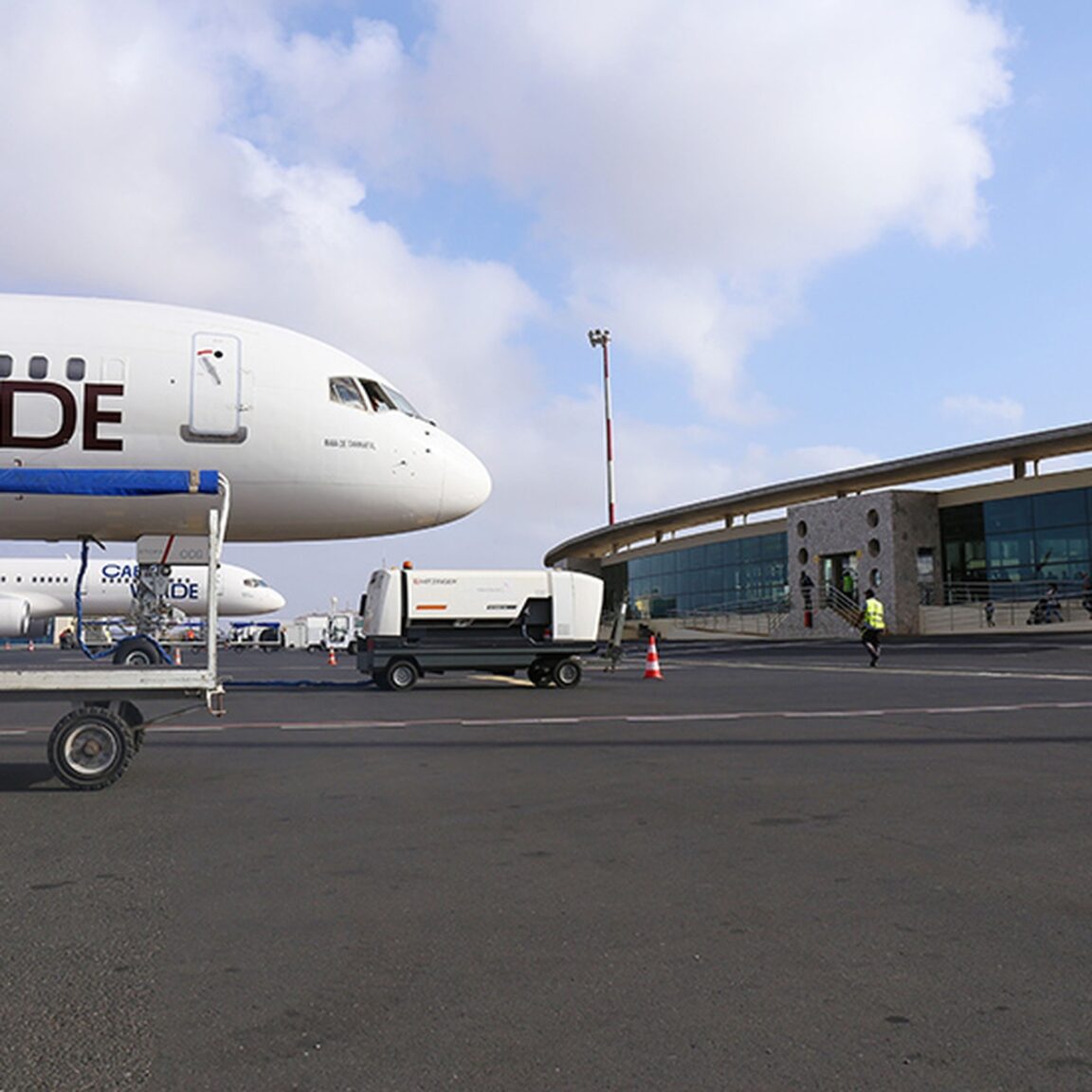
International flights land at four airports: Amilcar Cabral (SID) on Sal, Nelson Mandela (RAI) in Praia on Santiago, Aristides Pereira (BVC) on Boa Vista and Cesaria Evora (VXE) on Sao Vicente. Sal is the main leisure gateway, with the country’s longest runway at 3,000 metres according to its operator VINCI Airports, and Praia is the capital’s airport, a few kilometres from the city centre. Cabo Verde Airports, the VINCI-led operator of all seven airports and aerodromes, is mid-way through a modernisation programme across the network. None of that changes the arrival sequence for a registered traveller: passport control, baggage, customs. The EASE confirmation is checked at the passport desk, which is why the printed copy earns its space in your hand luggage.
How this compares with other arrival-fee systems
Cabo Verde is part of a wider pattern of destinations moving entry paperwork online and folding a visitor fee into the process. Palau pairs its passport pledge with a US$100 environmental fee built into the air ticket, which we explain in Palau’s Green Fee and Passport Pledge: The Eco Rules Every Arrival Signs. Gibraltar’s frontier works on entirely different logic, set out in Gibraltar’s Border Reality After Brexit. Cabo Verde’s version is cheaper than most and, once you know the five-day rule and the exemption list, one of the simplest: one form, one tax, one confirmation.
Frequently Asked Questions
How early should I complete EASE?
At least five days before departure, per the government guidance. The form itself takes minutes, but the deadline exists so payment and data problems surface while you can still fix them from home.
How much is the Cabo Verde airport tax in late 2026?
Under Decree-Law 49/2026, in force since 4 November 2026, the international TSA is 4,400 escudos, about 39.90 euros, and the domestic TSA is 200 escudos. Some official pages still show the older 3,400 and 150 escudo figures, so the amount charged inside EASE when you register is decisive.
What happens if I arrive without registering?
You register on arrival and pay the tax plus a surcharge. UK Foreign Office advice states that from 1 July 2026 travellers without a completed pre-registration or proof of it pay double the TSA at border control.
Do children need their own EASE registration?
Yes, each traveller registers individually, children included, except children under two, who are exempt from both registration and the tax.
I was born in Cabo Verde but travel on another passport. Do I pay?
No. People born in Cabo Verde holding another nationality are exempt, as are their spouses and children under 18, on presenting supporting documents such as birth and marriage certificates.
Does EASE give me a visa?
No. EASE is a pre-registration and tax payment. Travellers whose nationality is on the prior-visa list have needed a consular visa before travel since 1 January 2026, separate from EASE.
Fees and rules checked 21 November 2026 against Cabo Verde government and consular sources, Cabo Verde Airports and UK Foreign Office travel advice. Confirm your own nationality’s status on ease.gov.cv before booking.