 Maya Chen
Yes, all three Flagstaff national monuments fit in one day, and the order that makes it work is the loop road’s own order: Wupatki’s pueblos first, in the cool of the morning at the far end of the drive, Sunset Crater’s lava flows in the middle of the day, and Walnut Canyon’s Island Trail last, back near town, with its hard closing time planned for rather than discovered. One $25 vehicle pass covers Sunset Crater and Wupatki together for seven days, Walnut Canyon charges its own $25, and the whole circuit runs about 100 miles from a Flagstaff base. What follows is the sequence, the clock, and the mistakes that break the day.
Quick Facts
Where: North and east of Flagstaff, Arizona. Sunset Crater and Wupatki share the 35 mile Loop Road off US Highway 89; Walnut Canyon sits off Interstate 40, exit 204, about 7.5 miles east of town.
Fees: $25 per private vehicle covers both Sunset Crater Volcano and Wupatki for 1 to 7 days. Walnut Canyon charges $25 per private vehicle for 1 to 7 days. A $45 Flagstaff area annual pass covers all three for US citizens and residents. America the Beautiful passes are accepted at all three.
Payment: Card only at the monuments’ fee desks. Buy ahead on Recreation.gov if you will arrive outside visitor center hours.
Hours: Walnut Canyon is open daily 9am to 5pm, with entry to the Island Trail closing at 4pm, and is closed 25 December and 1 January. The Sunset Crater visitor center is open 9am to 4:30pm daily except Thanksgiving, Christmas and New Year’s Day; its roads and trails are open around the clock, with occasional weather closures. Wupatki’s grounds follow the loop road; its visitor center has seasonal closures, including Tuesdays in winter, so confirm before a Tuesday visit.
Driving: About 100 miles and roughly three hours of wheel time for the full three-monument day from Flagstaff.
Prices and hours checked: 21 November 2026, against the National Park Service.
Why start at Wupatki, the farthest pueblo?
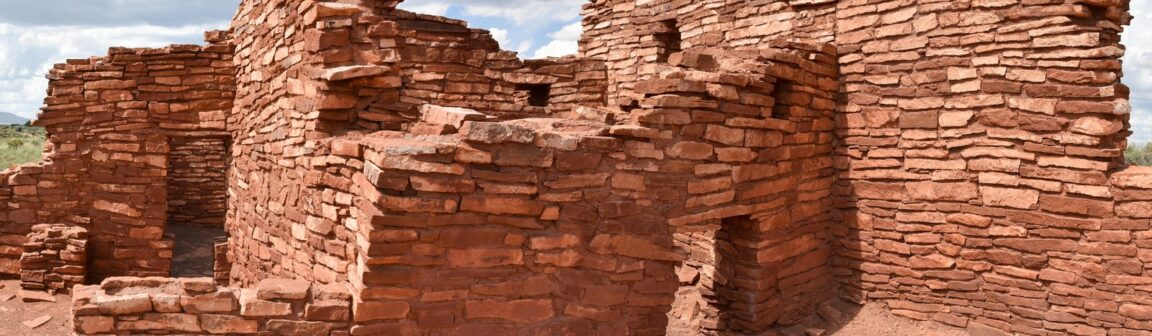
The board intent for this loop, and the practice that works, is pueblos at opening. Wupatki is the monument that rewards an early arrival most. Its great pueblo, the largest freestanding pueblo in northern Arizona, was built in the 1100s and 1200s in red Moenkopi sandstone, and in the first quiet hour the rooms, the ballcourt and the blowhole read as a place people lived rather than a stop on a circuit. The monument protects several pueblo sites spread along the loop road, among them Wukoki, Citadel and Lomaki, each a short walk from its own pullout, so an early start also buys unhurried time at the smaller sites that most drivers skip.
There is a second, practical reason. Wupatki sits lower than Flagstaff, between roughly 4,280 and 5,720 feet, in open Painted Desert country with almost no shade. By early afternoon in the warm months it is the hottest ground on the loop. Walked first, it is cool, still and empty. Walked last, it is a trudge. The visitor center here is also where seasonal hours bite hardest, with winter Tuesday closures listed by the Park Service, so front-loading Wupatki protects the day against the one schedule surprise the loop can spring.
What do you see at Sunset Crater by midday?
Sunset Crater Volcano, the youngest volcano in the San Francisco Volcanic Field, erupted roughly a thousand years ago, the most recent eruption in Arizona, and scattered the cinder cone and lava fields that the loop road crosses on its way south. The cone itself is closed to climbing to protect its fragile slopes, and the monument is honest about that: the experience here is at ground level, among the lava.
The centrepiece is the Lava Flow Trail, a one mile loop at the base of the cone through the Bonito lava flow, where squeezed, jumbled basalt and cinder slopes show exactly what the eruption did to this forest. Shorter stops along the road take in the painted cinder hills and the view back toward the San Francisco Peaks. The visitor center, open 9am to 4:30pm, is the place to buy the joint pass if you entered the loop from the south, fill bottles, and check the occasional closure notices that winter weather and fire season bring. Midday suits Sunset Crater well: the black lava is at its most legible in overhead light, and the trails are short enough that the day’s warmest hour costs nothing.
How does Walnut Canyon close the day?
Walnut Canyon is the monument with a gate, a clock and a staircase, and that is why it goes last, closest to town. The park is open daily from 9am to 5pm, entry to the Island Trail closes at 4pm, and the Rim Trail should be started by 4:30pm. Miss those times and the canyon is a view from the rim, not a visit.
The Island Trail is the reason to come: a one mile loop that descends about 185 feet around a freestanding rock island in the canyon, passing directly alongside the cliff dwellings the Sinagua people built into the limestone alcoves some 800 years ago. It is steep, stepped and exposed in places, and in winter the Park Service warns it may close when snow or ice makes it unsafe, which is worth a same-day check in the cold months. The gentler Rim Trail, 0.7 miles round trip and fairly level, gives the canyon overlooks without the descent. Allow ninety minutes for the Island Trail at a sightseeing pace, and be honest about knees and heights before starting down, because the only way out is back up the same stairs.
What is the actual driving sequence?
From Flagstaff, take US 89 north about 18 miles to the Sunset Crater entrance, but instead of stopping, continue through the monument on the Loop Road, roughly 35 miles end to end, to Wupatki at the northern end, and work the pueblos through the morning. Drive back south through Sunset Crater, stopping for the Lava Flow Trail and the visitor center in the middle of the day. Return to Flagstaff on US 89, cross town to Interstate 40 east, take exit 204 and follow the three mile park road to Walnut Canyon, arriving with at least two hours before the 5pm close. Travellers extending into a longer Arizona road trip can pair this day with our winter guide to Bisbee and the Queen Mine and our where to stay guide for Mesa Verde, which solves the same base-town problem for the Four Corners country.
Which pass should you buy?
Do the simple maths. Two vehicle passes, $25 for the Sunset Crater and Wupatki pair and $25 for Walnut Canyon, total $50 for this day. The Flagstaff area annual pass at $45, sold to US citizens and residents, covers all three monuments for a year and is already the better buy if there is any chance of a return visit. An America the Beautiful pass, if you hold one, covers entry at all three and makes the question moot. Per-person rates for visitors on foot or by bike are $15 for ages 16 and over at each fee area, with under 16s free. All fees above were checked against the National Park Service on 21 November 2026.
What breaks this day, and how do you avoid it?
Three things break it. First, reversing the order and saving Wupatki for last, which puts the shadeless pueblos in the day’s worst heat and against the loop’s longest drive back. Second, arriving at Walnut Canyon after 4pm, when Island Trail entry has closed; build the day backwards from that gate time. Third, weather. In summer, afternoon thunderstorms are the pattern the board intent warns about, and exposed pueblo and lava trails are no place to be under a building storm, another reason the open country belongs to the morning. In winter, snow and ice can close the Island Trail and slick the loop road, and Flagstaff sits near 7,000 feet, so a blue Flagstaff morning does not guarantee an open trail. Check the monuments’ alerts on the morning you go, carry water for the whole day, and fill the tank in Flagstaff, because there is no fuel on the loop.
Frequently asked questions
Can you really see all three Flagstaff monuments in one day?
Yes. The full circuit is about 100 miles with roughly three hours of driving, and each monument needs one to two hours on foot. Start at Wupatki, cross Sunset Crater at midday, and reach Walnut Canyon by mid afternoon so the Island Trail’s 4pm entry closing is comfortably met.
Does one pass cover all three monuments?
One $25 vehicle pass covers Sunset Crater and Wupatki together for 1 to 7 days. Walnut Canyon charges a separate $25 vehicle pass. The $45 Flagstaff area annual pass covers all three, and America the Beautiful passes are accepted at all three.
What time does Walnut Canyon close?
The park closes at 5pm daily, entry to the Island Trail closes at 4pm, and the Rim Trail should be started by 4:30pm. The monument is closed on 25 December and 1 January. Hours checked against the National Park Service on 21 November 2026.
Can you climb Sunset Crater?
No. The cinder cone is closed to climbing to protect its fragile surface. The monument’s trails, including the one mile Lava Flow Trail at the cone’s base, explore the lava fields and cinder slopes at ground level.
Is the Wupatki visitor center open every day?
Not always. The Park Service has listed the Wupatki visitor center as closed on Tuesdays through the winter season, from early November 2026 into March 2027. The pueblos and loop road remain the visit, but confirm the day’s arrangements before a Tuesday trip.
What should you pack for the loop day?
Water for the full day, sun protection for the shadeless pueblos, a warm layer for Flagstaff’s altitude and Walnut Canyon’s shaded descent, and sturdy shoes for lava and the Island Trail’s steps. There is no fuel and only limited food on the loop, so leave Flagstaff full on both counts.
Featured image: The red sandstone rooms of Wupatki Pueblo, Wupatki National Monument, Arizona. Photo: National Park Service (NPS Photo), via nps.gov, the monument’s own official site. Fees and hours verified against the National Park Service on 21 November 2026.