 Wei Chen
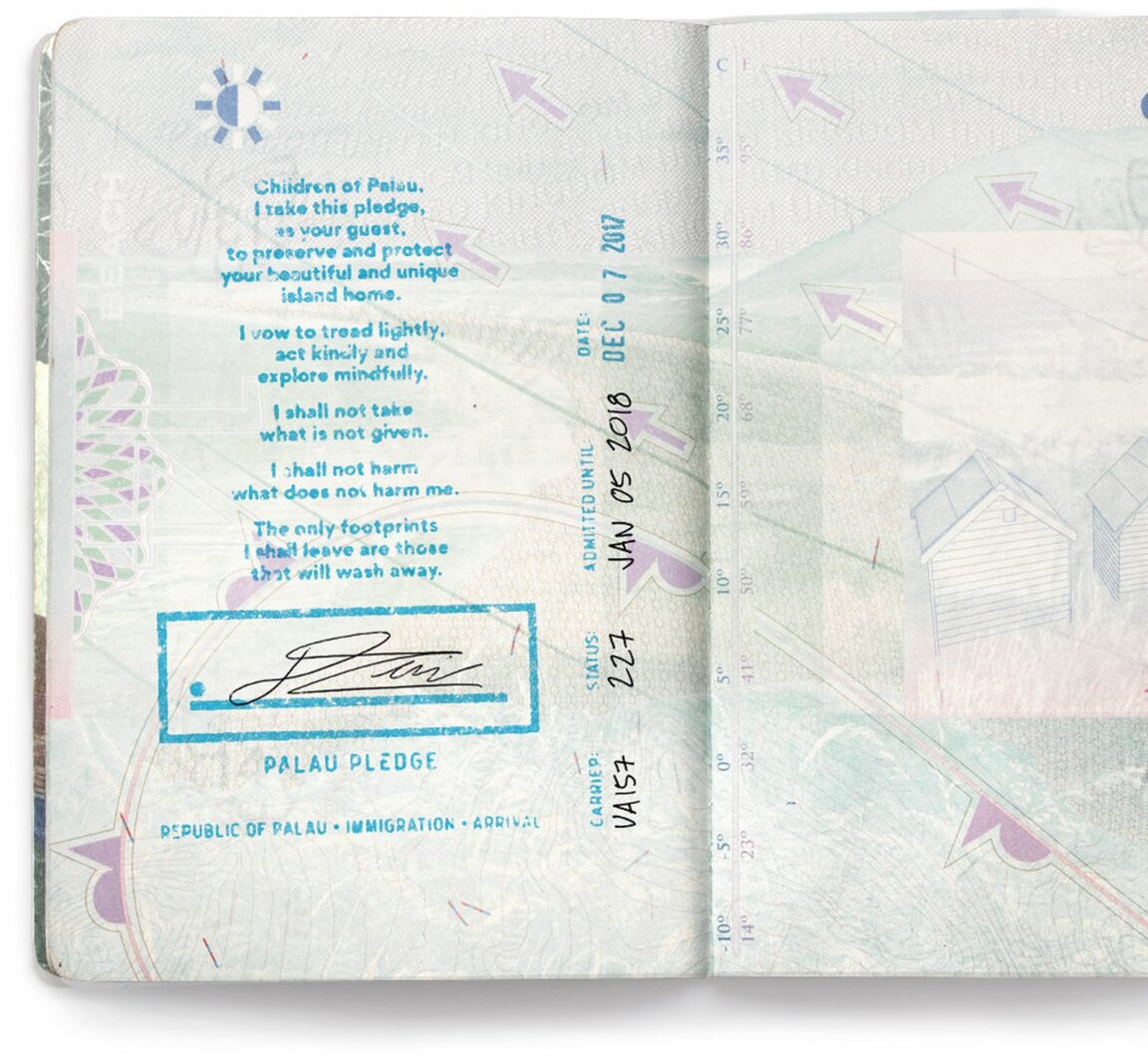
Every visitor to Palau signs the Palau Pledge on arrival. It is stamped directly into your passport at immigration at Roman Tmetuchl International Airport, you sign it in front of the officer, and there is no version of arriving as a tourist that skips it. Separately, every international air ticket into Palau has included a US$100 Pristine Paradise Environmental Fee since 1 January 2018, so the money part of the system is settled before you board. Palau is the first country in the world to write an environmental pledge into its immigration process, and understanding the two parts, the promise and the fee, is the whole of the arrival ritual.
Quick Facts
- The pledge: The Palau Pledge is stamped into every arriving visitor passport and signed at immigration, a world first introduced at the end of 2017.
- The fee: The Pristine Paradise Environmental Fee is US$100 per visitor, included in the price of every international air ticket into Palau sold on or after 1 January 2018.
- The entry form: The Palau Entry Form must be submitted at most 72 hours before departure, and it generates a QR code shown at check-in and again on arrival.
- Passport basics: Your passport should be valid for at least six months at entry, and you should leave room for the pledge stamp, which takes real space on a page.
- Stay length: Most visitors receive a 30-day tourist visa on arrival, with proof of onward travel expected.
- Where you land: Flights arrive at Roman Tmetuchl International Airport on Babeldaob island, roughly a 20 to 30 minute drive from Koror, where most hotels sit.
What exactly is the Palau Pledge?
The pledge is a short promise addressed to the children of Palau, and Palauan children helped draft it. Its text reads: Children of Palau, I take this pledge, as your guest, to preserve and protect your beautiful and unique island home. I vow to tread lightly, act kindly and explore mindfully. I shall not take what is not given. I shall not harm what does not harm me. The only footprints I shall leave are those that will wash away. The Palau Pledge project, backed by the Palau Bureau of Tourism, explains that Palau changed its immigration laws for environmental protection, making the signature a formal part of entry rather than a voluntary campaign visitors might notice on a poster.
That legal framing matters. This is not a hotel sustainability card or an airline offset offer. The stamp goes into the same document that carries your entry stamp, and the signature is made in front of an immigration officer. Travellers who collect passport stamps should know this one is large and legible by design, because it is meant to be read, not just processed.
What does signing the pledge actually commit you to?
Practically, the pledge commits you to the behaviour Palau asks of every guest: do not collect coral, shells or marine life as souvenirs, do not touch or stand on coral, do not feed fish or sharks, and learn the basic cultural etiquette of the islands you are visiting. The pledge guidance published for visitors turns those lines into concrete rules for lagoon tours, village visits and dive boats. Taking protected species, including turtles and sharks, damages the environment Palau’s economy depends on, and local operators enforce the same standards on the water.
Visitors sometimes ask whether the pledge carries a fine of its own. The honest answer is that the pledge works as a signed commitment inside the immigration process, while Palau’s environmental laws, state permit rules and protected area regulations carry their own enforcement. Treat the signature as the moment the rules are put in front of you personally. Nobody can later say they did not know that coral was protected or that collecting marine souvenirs was unacceptable.
How does the US$100 Green Fee work?
The US$100 charge is the Pristine Paradise Environmental Fee, often shortened to PPEF and still widely called the Green Fee. Palau’s Division of Immigration states that every visitor is assessed the fee and that every international airline must include it in the price of the ticket into Palau. It replaced the older pattern of paying departure and green fees in cash at the airport, which is why there is no cash desk moment on arrival and no separate receipt to chase.
The money is divided by law between conservation and the costs of hosting visitors. Shares support the Protected Areas Network that funds management of Palau’s protected sites, state governments, fisheries protection, airport operations and the national treasury. That split explains why Palau describes the fee as environmental even though part of it funds the airport you land at: the system was built so that tourism pays for the infrastructure and protection its own volume requires.
Some travellers are exempt, including transit passengers and accredited diplomats, and Palau’s immigration guidance notes that exempt travellers who were charged through a ticket can claim a cash refund on arrival by showing the itinerary that proves the fee was paid, together with their passport. If you think an exemption applies to you, raise it at immigration rather than with the airline after the trip.
What paperwork comes before the flight?
Start with the Palau Entry Form, the digital arrival and customs declaration. Palau’s Bureau of Customs and Border Protection requires passengers to submit it at most 72 hours before departure. Submitting earlier than that window does not work, so set a reminder for the three days before you fly. The system generates a QR code, which airlines check at check-in and immigration checks again on landing. Keep a screenshot on your phone as well as any emailed copy, because airport connectivity is not the place to discover a login problem.
Check the passport basics at the same time. Palau expects at least six months of validity at the time of entry. Most nationalities receive a 30-day tourist visa on arrival for tourism, leisure or social visits, and immigration can ask for proof of onward travel, so keep your return or onward booking accessible offline. A small number of nationalities must apply before travel, so confirm your own status on the official immigration guidance rather than assuming the on-arrival pattern covers every passport.
Arrival paperwork is a theme across the Pacific this year. Travellers combining Palau with other island stops should read how the Fiji digital arrival card works, and anyone routing through Central Asia on the same long trip can compare the very different approach in our explainer on Uzbekistan’s visa free expansion.
What happens step by step at the airport?
Palau’s only international gateway is Roman Tmetuchl International Airport, in Airai State on Babeldaob, the big island connected by bridge to Koror. The sequence on landing is conventional until the pledge moment: present your passport and the QR code from the entry form, receive the pledge stamp in the passport, read it, and sign beneath it in front of the officer. Then baggage and customs follow as at any small island airport.
Because the airport is small and flights are few, a single wide body arrival is the whole workload at once. The pledge adds a minute, not an hour, but the signing only stays quick if passengers have a pen-ready attitude and their documents in hand. Have the passport open, the QR code up and the onward booking saved before you reach the desk.
Are there other permits the pledge does not cover?
Yes, and this is where visitors confuse the national system with state permits. The pledge and the US$100 fee cover entry to the country. Activities in Koror State’s Rock Islands Southern Lagoon, the UNESCO listed lagoon where most tours run, require state permits bought locally. The Rock Island Use Permit has stood at US$50 and the Jellyfish Lake Permit, which includes the Rock Islands areas plus the lake, at US$100, with validity periods that should be confirmed and written down when you buy. These are state charges, separate from the national fee in your ticket, and tour operators will check them before departure.
Budget for them as part of the trip rather than treating them as a surprise. Palau is an expensive destination to reach, and the permit layer is one of the ways the country keeps its most famous lagoon managed instead of open access. Dive operators, kayak guides and boat charters build their days around the permit you hold, so buy for the full range of activities you plan, including Jellyfish Lake if it is on your list, rather than upgrading midweek.
Why did Palau do this first?
Palau’s environment is both its economy and its identity. The archipelago holds more than 200 limestone and volcanic islands inside an aquamarine lagoon, and tourism is the industry that environment supports. The pledge grew out of Palauan concern that high volume tourism was damaging the places visitors came to see, and it was designed with the generation that will inherit the islands, which is why it is addressed to Palau’s children rather than to a government department.
The model has since been studied and adapted by destinations around the world, but Palau remains the only place where the promise sits inside the passport itself. For travellers, that is the real takeaway. The signature takes ten seconds. What it asks, treading lightly, acting kindly and exploring mindfully, is simply the operating system for the whole trip, from reef safe behaviour on the lagoon to how you move through villages on Babeldaob.
Frequently Asked Questions
Is the Palau Pledge mandatory?
Yes. All visitors must sign the Palau Pledge on arrival. It is stamped into the passport by immigration and signed in front of the officer as part of the entry process.
How much is Palau’s environmental fee and how do I pay it?
The Pristine Paradise Environmental Fee is US$100 per visitor. You do not pay it in cash on arrival, because international airlines are required to include it in the price of every ticket into Palau.
When do I fill in the Palau Entry Form?
At most 72 hours before departure. The form generates a QR code that you present at airline check-in and again to immigration on arrival, so keep a screenshot saved on your phone.
How long can I stay in Palau as a tourist?
Most visitors receive a 30-day tourist visa on arrival, with proof of onward travel expected. Check the official immigration guidance for your nationality before booking, because a small number of passports need approval in advance.
Does the US$100 fee include Rock Islands and Jellyfish Lake permits?
No. The national fee is separate from Koror State permits. The Rock Island Use Permit and the Jellyfish Lake Permit are bought locally, and your tour operator will check them before lagoon trips.
Last checked 21 November 2026 against Palau Bureau of Customs and Border Protection guidance, the Palau Pledge project and Palau Visitors Authority information. Entry rules and fees can change, so confirm them for your passport before you fly.