 Aiko Tanaka
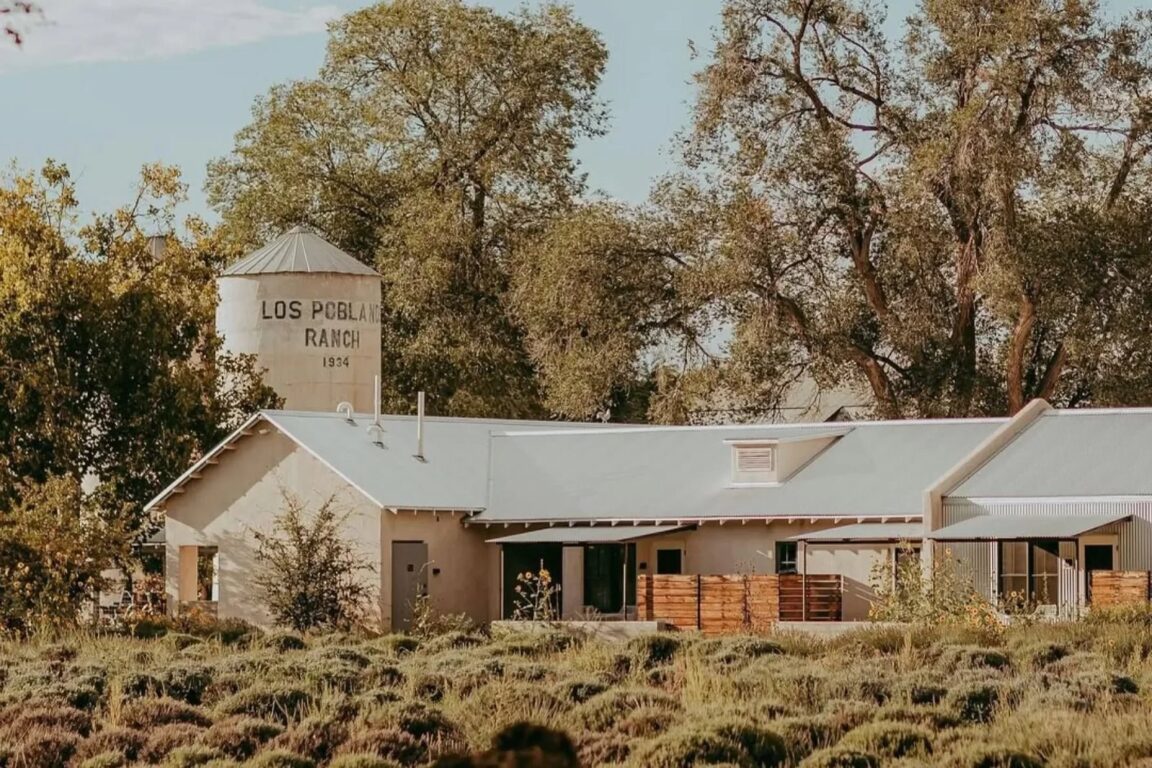
Los Poblanos is a 25 acre working organic farm in Albuquerque’s Rio Grande valley that also happens to be one of the Southwest’s most distinctive inns: 46 guest rooms in buildings designed from 1932 by John Gaw Meem, lavender fields that have grown here since 1999, and Campo, a field to fork restaurant whose menu is informed by the daily harvest from the fields visible from its tables.
Quick Facts
Where: 4803 Rio Grande Boulevard NW, Los Ranchos de Albuquerque, New Mexico, in the North Valley, minutes from the Rio Grande and under 20 minutes from Albuquerque International Sunport.
The estate: 25 acres of lavender fields, cottonwood allees and formal gardens on the historic Los Poblanos Ranch, family owned and stewarded by three generations of the Rembe family.
Rooms: 46 guest rooms across Meem designed historic rooms, field rooms and farm suites in former 1930s dairy buildings.
Dining: Campo for Rio Grande Valley cuisine, plus Bar Campo and the Farm Shop bakery and cafe.
Timing: Lavender typically blooms through June and into July, with harvest around mid July; winter brings sandhill cranes to the fields. Prices checked on the inn’s own site on 21 November 2026.
Why do the buildings matter as much as the farm?
Because Los Poblanos was designed, not accumulated. In 1932 the ranch commissioned John Gaw Meem, the architect known as the father of Santa Fe style, and his buildings, including the La Quinta cultural centre in Territorial Revival style, give the estate its calm geometry: white plaster, exposed beams, carved details and courtyards that frame the cottonwoods. The inn’s own history notes the property was the headquarters of the historic Los Poblanos Ranch, and the Rembe family, who bought it in the 1990s and have stewarded it across three generations, built the modern business explicitly around preservation: sustainable agriculture, hospitality, historic preservation and community, in the family’s own mission words.
The recognition has followed. Los Poblanos earned two Michelin Keys in 2025, reported at the time as the only hotel in New Mexico with that distinction, an award that rewards exactly what this place is: a hotel whose character cannot be copied anywhere else. Staying here is closer to staying on a beloved estate than in a resort, and the architecture is half of that feeling.
Which rooms should you choose?
The 46 rooms fall into families with distinct moods. The Meem Rooms and Suites occupy the historic core, with Pueblo Revival detailing, local art, and in many cases seasonal wood burning kiva fireplaces and large soaking tubs. The Field Rooms and Farm Suites sit in former dairy buildings from the 1930s, closer to the working farm, with patios that look across lavender and cropland toward the Sandia Mountains. Every room carries the estate’s signature lavender amenities, made from the farm’s own distilled oil, and organic bedding.
Choose the Meem rooms for a first stay focused on the architecture and an easy walk to Campo and La Quinta. Choose the field rooms if the farm is the point: dawn over the lavender rows, peacocks on the paths, alpacas, sheep, geese and chickens around the barns, and the saltwater pool and Hacienda Spa a short stroll away. Families and longer stays tend to do best in the farm suites, where the estate’s generous, unhurried scale gives children fields rather than corridors.
What does dinner at Campo actually taste like?
Campo, Spanish for field, cooks what the inn calls Rio Grande Valley cuisine: food rooted in the estate’s own organic harvest and in the fields of neighbouring farmers and ranchers the kitchen has worked with for decades. The menu follows the seasons and the daily harvest, so the honest description is structural rather than dish specific: New Mexican staples and Southwestern techniques applied to whatever the farm is picking, from blue corn and chiles to lavender used with a light hand in both savoury dishes and drinks. Breakfast is a highlight in its own right, and the Farm Shop bakery supplies artisan loaves, pastries and the lavender lattes that day visitors cross town for.
The setting completes it. Tables look toward the fields the food came from, cottonwoods shade the patios, and Bar Campo pours cocktails built on botanicals, including the estate’s own lavender gin, distilled under its Town and Ranch label in downtown Albuquerque. Reserve dinner ahead: Campo draws Albuquerque locals as strongly as guests, and it is the valley’s special occasion table as well as the inn’s dining room.
When should you time a stay for the lavender?
The lavender chapter began in 1999, when the family planted the first crops, choosing a hardy Grosso cultivar suited to New Mexico’s dry climate. Bloom builds through June and typically peaks around the turn of July, with harvest in mid July when the essential oil content is highest; the farm steam distils on site, and the oil goes into the spa products, soaps, salves and culinary goods stacked in the Farm Shop. A late June or early July stay catches the fields at full purple, the longest evenings, and the harvest machinery of a working farm rather than a photo set.
Other seasons have their own arguments. Autumn turns the cottonwoods gold along the allee. Winter is the birdwatcher’s season, when sandhill cranes work the fields and the Hacienda Spa, with treatments built on farm grown botanicals including an herbal poultice massage and a signature treatment using Los Poblanos lavender oil, becomes the centre of the day. Spring brings the gardens back and the year’s first plantings. There is no wrong month; there is only the lavender month, which books first.
How does Los Poblanos fit an Albuquerque trip?
As the calm counterweight. The inn sits in Los Ranchos de Albuquerque in the North Valley, about two miles from the Rio Grande Nature Center State Park and a short drive from Old Town, so a stay divides naturally: mornings on the farm and the bosque trails, afternoons in the city’s museums and Old Town plaza, evenings back under the cottonwoods. Cruiser bikes, the saltwater pool, the fitness room and guided tours of the greenhouse, distillery and grounds fill the estate hours without effort. Travellers pairing great American inn dining with rural quiet should also read our assessment of the Inn at Little Washington in Virginia, the East Coast’s closest analogue, and for another lodge where landscape drives the whole stay, Blanket Bay on Lake Wakatipu.
Frequently Asked Questions
How many rooms does Los Poblanos have?
The inn’s own site lists 46 guest rooms, across historic Meem rooms and suites and the field rooms and farm suites in the converted 1930s dairy buildings.
When does the lavender bloom at Los Poblanos?
Bloom builds through June and peaks around early July, with harvest typically in mid July. The farm has grown lavender since 1999 and distils its essential oil on site.
Can non guests eat at Campo or visit the farm?
Yes. Campo takes reservations from non residents, the Hacienda Spa welcomes day guests, and the Farm Shop and its bakery cafe are open to visitors, though the inn’s grounds and pool remain centred on staying guests.
Who designed Los Poblanos?
John Gaw Meem, the leading Pueblo Revival architect known as the father of Santa Fe style, designed the ranch’s principal buildings from 1932, including La Quinta.
How far is Los Poblanos from the airport?
Under 20 minutes by car from Albuquerque International Sunport, in the North Valley village of Los Ranchos de Albuquerque.
Featured image: the Los Poblanos Ranch silo, dated 1934, above the farm buildings and lavender fields. Photo: Los Poblanos Historic Inn and Organic Farm, via the inn’s own official website (lospoblanos.com), used with credit.