 Thandiwe Nkosi
Order oysters in Apalachicola the way the town now honestly serves them: raw on the half shell at a working waterfront raw bar, steamed or baked when you want them dressed, and with one essential question asked first, where are these from, because wild harvest from Apalachicola Bay itself was suspended in 2020 and the oysters on most trays today are farmed locally or brought in from elsewhere in the Gulf while the bay’s reefs recover.
Quick Facts
Where: Apalachicola, Franklin County, Florida, the historic port town at the mouth of the Apalachicola River on Florida’s Forgotten Coast.
The headline: The Apalachicola Bay Chamber of Commerce lists the town’s raw bar circuit, including Up the Creek Raw Bar, Half Shell Dockside at Scipio Creek Marina, the Station Raw Bar, Lynn’s Quality Oysters in Eastpoint and Indian Pass Raw Bar.
The oyster reality: Florida suspended all wild oyster harvest in Apalachicola Bay from August 2020 through 31 December 2025 to rebuild collapsed reefs; oyster aquaculture leases were exempt, and the state has since approved a revised, abundance based management plan for limited reopening.
Order this: A dozen raw, a smoked fish dip to start, grouper or Gulf shrimp as the main, and whatever the board lists as genuinely local that day.
Base note: Everything in the historic centre is walkable; Eastpoint and Indian Pass are short drives. Hours and menus checked against the Chamber’s listings on 21 November 2026.
What happened to the Apalachicola oyster?
For generations this small town supplied a famous share of Florida’s oysters, tonged by hand from bay reefs where the river’s fresh water met the Gulf’s salt at exactly the salinity oysters love. The fishery collapsed in the early 2010s under drought, reduced river flow, overharvest pressure and storm damage, and in 2020 the Florida Fish and Wildlife Conservation Commission closed the bay to wild harvest entirely, first by executive order and then by a five year rule running through the end of 2025, even banning possession of oyster tongs on the water. More than 38 million dollars has since gone into reef restoration, by the Commission’s account, and its revised plan ties future seasons to measured oyster abundance, with restored reefs the first places able to support any harvest.
For the eater, the consequence is simple and worth embracing rather than lamenting. The raw bars are still excellent, the shucking is still skilled, and the town’s seafood culture is intact, but the provenance conversation has changed. Farmed oysters from leased plots in the region, and wild oysters from other Gulf bays, fill the trays. A good Apalachicola raw bar will tell you exactly which is which. Ask, and order the farmed local oysters when they are on: they are the bay area’s future, and they are very good.
Where do you start: the raw bar circuit?
Start at Up the Creek Raw Bar, the funky waterfront room at the mouth of Scipio Creek on the Apalachicola River that gives this guide its name. The Chamber describes fast, friendly, semi self service dining on a dog friendly porch, and that is the experience: order at the counter, take your tray of raw, steamed or baked oysters out to the deck, and watch the working river go past. It is the definitive Apalachicola afternoon.
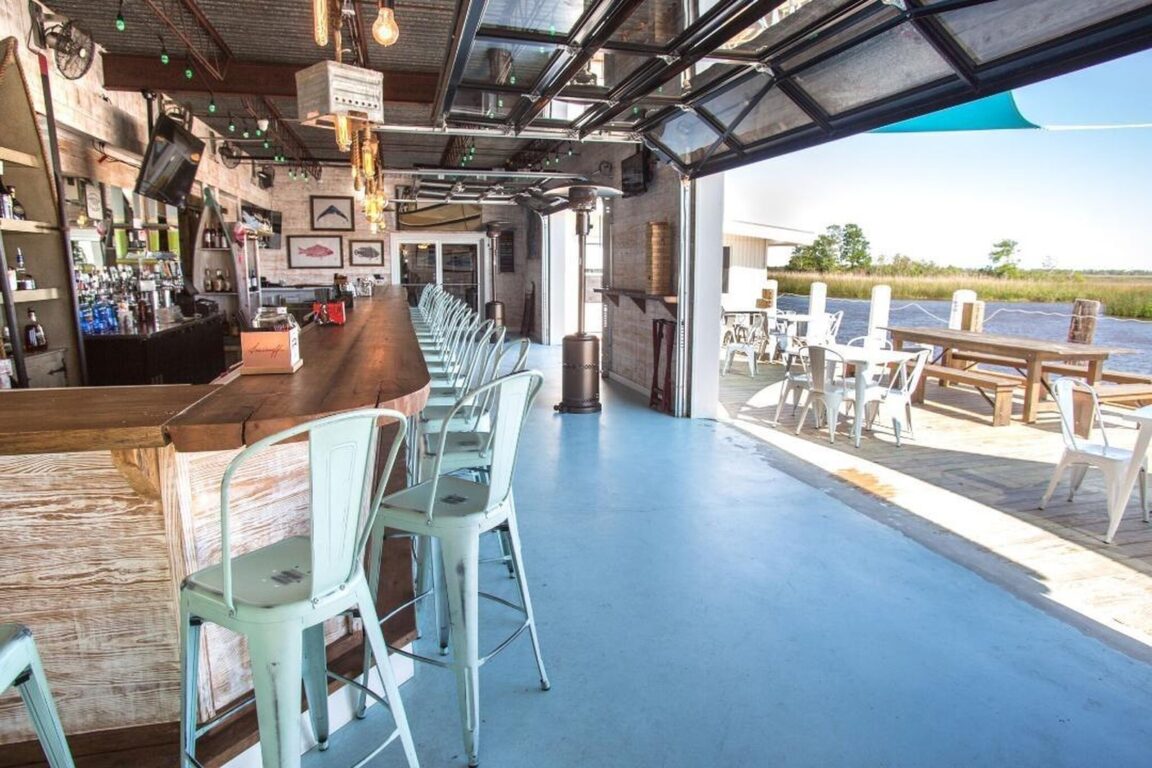
Half Shell Dockside, at Scipio Creek Marina on Market Street, specialises in oysters on the half shell with the marina at its feet, indoor and outdoor seating, and a weekly rhythm of bingo, trivia and live music. The Station Raw Bar takes the format downtown, serving oysters inside a remodelled service station in the historic centre, sports on the screens and the bar as the seat to aim for. Across the bridge in Eastpoint, Lynn’s Quality Oysters runs a raw bar of raw, steamed and topped oysters with steamed shrimp, seafood gumbo and a deck facing the sunset over the bay. And the Original Indian Pass Raw Bar, out toward the cape and operating since 1929 by its own account, keeps the oldest ritual of all: grab a cold drink from the cooler, keep an honour system tab, and eat oysters raw, steamed or baked Indian Pass style on the porch.
What is smoked mullet dip, and why does it matter here?
It is the Forgotten Coast’s defining starter, and the dish that tells you most about this coast’s real food economy. Mullet, the abundant, undervalued fish of the estuaries, is smoked whole, picked, and folded into a seasoned spread served with crackers. Where the oyster has become complicated, the mullet never left: it is local, plentiful, cheap and delicious, and every serious seafood kitchen from Apalachicola to Eastpoint has a version. Order it first, everywhere, and compare. The same logic applies to smoked fish dips made from whatever the boats bring, and to the region’s other honest staples: peel and eat Gulf shrimp, fried or blackened grouper when it is genuinely on, stone crab in season, and low country style seafood boils along the bay.
Round out the circuit beyond the raw bars. The Owl Cafe, on Avenue D at Commerce Street, is the town’s white tablecloth institution for local seafood, steak and pasta, with brunch on weekends. The Franklin, inside the historic Gibson Inn, serves breakfast through dinner in a dining room that suits a slower evening. The Apalachicola Chocolate and Coffee Company covers the morning, roasting in house and baking its own breads and pastries on Market Street. None of this is precious. Apalachicola cooks for watermen first and visitors second, and the food is better for it.
How do you eat Apalachicola in a day?
Breakfast at the Chocolate and Coffee Company, then walk the historic waterfront while the fleet works. A late morning dozen at the Station downtown, raw and unadorned, with the provenance question asked and answered. Lunch proper at Up the Creek: smoked mullet dip, a second dozen steamed, grouper if the board backs it. The afternoon belongs to the river and the bay: a boat run up the creek, the maritime museum, the galleries on Market Street. Sunset oysters and gumbo at Lynn’s in Eastpoint as the light goes over the water, then dinner at the Owl or the Franklin back in town. That is the Forgotten Coast’s whole argument in one day: small, salty, unhurried and honest about where dinner came from.
Travellers building a wider seafood itinerary can compare this Gulf order with San Sebastian’s pintxos circuit in Spain and with Hanoi’s breakfast order of pho, bun cha and egg coffee, two other cities where the day is best planned meal by meal.
Frequently Asked Questions
Are the oysters in Apalachicola restaurants actually from Apalachicola Bay?
Often not, at present. Wild harvest from the bay was suspended from 2020 through the end of 2025, so trays are filled by regional oyster farms and oysters from other Gulf waters. Good raw bars state the source; ask before ordering.
When will Apalachicola Bay oysters be harvested again?
Florida has approved a revised management plan tying limited seasons to measured oyster abundance on restored reefs, replacing the blanket closure. Expect small, controlled openings rather than a return to the old free for all.
What should a first timer order at an Apalachicola raw bar?
Smoked mullet or fish dip to start, a dozen oysters raw, a second plate steamed or baked for contrast, and Gulf shrimp or grouper as the main. Finish with whatever pie or cake the kitchen makes itself.
Which raw bar suits which mood?
Up the Creek for the river deck and self service ease, Half Shell Dockside for the marina scene and music nights, the Station for downtown convenience, Lynn’s for sunset in Eastpoint, and Indian Pass for the honour tab, old Florida ritual.
Is Apalachicola worth the drive from Tallahassee or Panama City?
Yes, precisely because it is not on the way to anywhere. The Forgotten Coast’s quiet is the product, and a day of raw bars, river views and historic streets is the region’s best single day out.
Featured image: the bar and waterfront deck at Half Shell Dockside, Scipio Creek Marina, Apalachicola. Photo: Apalachicola Bay Chamber of Commerce, via the town’s official visitor website (apalachicolabay.org), used with credit.