 Priya Nair
Castle Hot Springs is an all inclusive, adults oriented desert resort built around a natural thermal spring in a Bradshaw Mountains canyon north of Phoenix: three rock lined soaking pools step down a palm shaded hillside below the spring source, a working farm grows much of what the Harvest restaurant serves, and the Spring Bungalows fill their private outdoor stone tubs with the same mineral water, all at the end of a 7.2 mile dirt road on a 1,100 acre ranch.
Quick Facts
Where: 5050 North Castle Hot Springs Road, Morristown, Arizona 85342, roughly an hour north of Phoenix in the Sonoran Desert.
The setting: A 1,100 acre ranch at the end of a 7.2 mile four wheel drive road, per the resort’s own location page; helicopter and car service arrivals are also arranged.
The water: Natural hot springs feeding three hillside pools and the private soaking tubs of the Spring Bungalows, with minerals the resort lists as including potassium and aluminium oxide.
Stay types: Spring Bungalows, Sky View Cabins sleeping two, lodge rooms and the Historic Cottage sleeping six, the largest detached option.
Board basis: All inclusive: meals at Harvest, the hot springs, farm access and a programme of activities are included in the nightly rate. Prices checked on the resort’s own site on 21 November 2026; this is a premium, special occasion rate level, so confirm the current tariff before planning around a number.
What makes the springs themselves special?
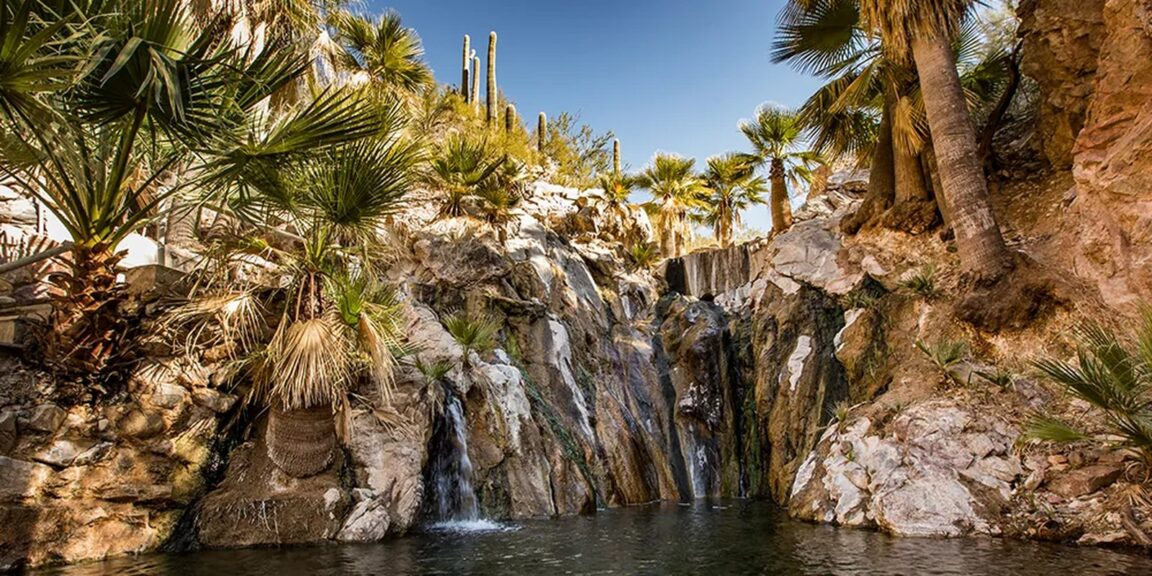
Many desert resorts heat a prettily shaped pool and call it a day. Castle Hot Springs starts from the opposite direction: the water arrives first, and the resort is arranged around it. The resort’s own site describes deep rock waters rising from the earth, feeding a sequence of pools that step down the hillside through palms and rock, each terrace a degree more secluded than the last. The setting reads almost tropical against the saguaro desert around it, a green canyon floor created entirely by the spring’s flow.
The Yavapai people knew these waters as a healing place long before any resort existed, and the modern property’s history runs from the 1890s, when it first opened as a health resort drawing wealthy winter visitors, through a long closure after a 1976 fire destroyed the main Palm House, to its purchase in 2014 and a careful restoration that reopened it in February 2019. Some of the original palms, burn marked, still line the paths. That arc matters to the experience: this is a rebuilt historic resort, not a new build in vintage costume, and the springs are the same source every era of the property has gathered around.
Spring Bungalow, Sky View Cabin or Historic Cottage?
The room decision is really a decision about how you want to meet the water. The Spring Bungalows are the signature stay: each has a private patio with a Sonoma stone tub supplied directly by the hot springs, so the deepest soak of the trip can happen at midnight, in private, steps from the bed. Inside, expect covered patios overlooking the spring fed brook, double sided fireplaces and generous bathrooms. For most couples on a first visit, this is the room the resort is famous for, and the one to book.
The Sky View Cabins trade the private tub for elevation and sky. Set on a raised foundation, they look one way over the Sonoran Desert and the other across the resort landscape, sleep two, and are built for stargazing: telescopes and dark skies are part of the pitch, and the Bradshaw canyon delivers genuinely dark nights. The Historic Cottage, sleeping six, is the group and family gathering option, with a spacious covered patio for morning coffee and evening wine. Lodge rooms suit travellers who plan to spend their hours at the pools, the farm and the trails rather than in the room.
How does the farm shape the food?
Unusually literally. The Castle Hot Springs farm grows 130 varieties of fruits and vegetables, including more than 30 varieties of heirloom tomatoes, irrigated in a desert that grows almost nothing without help. The Harvest restaurant, included in the stay, builds its menus from that production: the resort invites guests to tour the farm that fuels their meals, then sit down in a Southwestern styled dining room to eat what they walked past that morning. In a region where luxury resorts truck produce across state lines, a kitchen supplied by its own rows, a few hundred metres from the table, is the resort’s strongest sustainability claim and its freshest flavour argument at once.
The all inclusive structure reinforces the rhythm: meals, snacks, soft drinks, activities and gratuities are bundled into the nightly rate, so days organise themselves around soaks, farm walks, yoga and dinner rather than around signing chits. Travellers comparing desert wellness addresses should weigh that bundling honestly against room only rates elsewhere; the headline tariff is high, but almost nothing is added later.
What fills a day beyond the pools?
The resort programmes the canyon. Guided hikes climb toward Salvation Peak, the farm tour runs as a headline activity rather than an afterthought, and morning yoga, via ferrata style adventure and wellness treatments fill the middle hours. The property is guests only, with no day visitors, which keeps the pools and paths quiet in a way Arizona’s public hot springs rarely are. Adults only policies reported by the resort keep the tone hushed; confirm the current minimum age when booking, as it has been stated as both 16 and over and 18 and over in different sources.
Seasonality matters. The resort operates seasonally, closing through the fiercest summer heat and returning in early autumn; its own site trailed a September 3 return for the experience. Winter and spring are the classic Castle Hot Springs months, when desert days are warm, nights are cold enough to make the hot water feel miraculous, and the farm is in full production.
How do you actually get there?
Slowly, and that is the point. The resort’s location page is candid: the ranch sits at the end of a 7.2 mile four wheel drive road, reached after driving into the heart of the Sonoran Desert north of Phoenix. Guests self drive suitable vehicles, arrange car service from the airport, or arrive by helicopter, a transfer of roughly a quarter of an hour from Scottsdale. There are no crowds because there is no passing trade; everyone at the pools has committed to the journey. Build the drive into daylight, follow the resort’s vehicle guidance, and treat the dirt road as the decompression chamber it functions as.
For travellers building a wider hot springs itinerary, the contrast with Europe’s great free soak is instructive: read our guide to Saturnia’s free Cascate del Mulino pools in Tuscany for the communal, dawn raid version of the same pleasure, and our desert national parks packing guide for the layer and water system a Sonoran Desert trip demands.
Frequently Asked Questions
Is Castle Hot Springs all inclusive?
Yes. The nightly rate includes meals at Harvest, access to the hot springs and farm, a programme of activities and gratuities. Alcohol and some premium experiences may sit outside the bundle, so check the current inclusions list when booking.
Can you visit the springs without staying overnight?
No. The resort is reserved for overnight guests, which is central to how uncrowded the pools stay.
What is the difference between the bungalows and the cabins?
Spring Bungalows have private outdoor stone soaking tubs filled with spring water on their patios. Sky View Cabins sit elevated for desert and night sky views, sleep two, and share the main pools rather than offering a private tub.
How remote is it, really?
The resort occupies a 1,100 acre ranch at the end of a 7.2 mile dirt road north of Phoenix. Helicopter and car service transfers are available for guests who prefer not to drive it.
When is the best season to go?
Autumn through spring, when the resort is open and desert temperatures make hot soaking a pleasure rather than a dare. The resort closes for part of the summer.
Featured image: the spring fed rock pools and waterfall grotto at Castle Hot Springs, Arizona, palms and saguaros above. Photo: Castle Hot Springs, via the resort’s own official website (castlehotsprings.com), used with credit.