 Hana Kim
Camp Denali is a family run, all inclusive wilderness lodge near Kantishna at the end of the 92 mile Denali Park Road, where stays run on fixed Monday and Friday arrivals, every day starts with a choice of naturalist led hikes at three levels, and the journey in is a 90 mile interpreted drive through the park with a flightseeing return by bush plane as the optional finale.
Quick Facts
Where: Near Kantishna, deep inside Denali National Park and Preserve, Alaska, at about Mile 89 of the Denali Park Road, per the lodge’s own directions and listings.
Access: By the lodge’s own bus on the Park Road from the rail depot near the park entrance, or by air taxi with its partner Denali Air to Kantishna. Private cars cannot drive the road to the lodge.
Stay pattern: Three night stays begin on Fridays and end on Mondays; four night stays begin on Mondays and end on Fridays, per campdenali.com. Longer stays are built from those blocks.
Included rhythm: Meals, guided naturalist hikes at three levels each full day, evening natural and cultural history programmes, and independent activities including bicycles, canoes on Wonder Lake and fishing for Arctic grayling on Moose Creek.
Season: A short summer season, June into September, with the month by month wildlife and wildflower pattern set out on the lodge’s own Plan Your Stay pages. Confirm current season dates and rates directly with the lodge.
Why stay at the far end of the road instead of the park entrance?
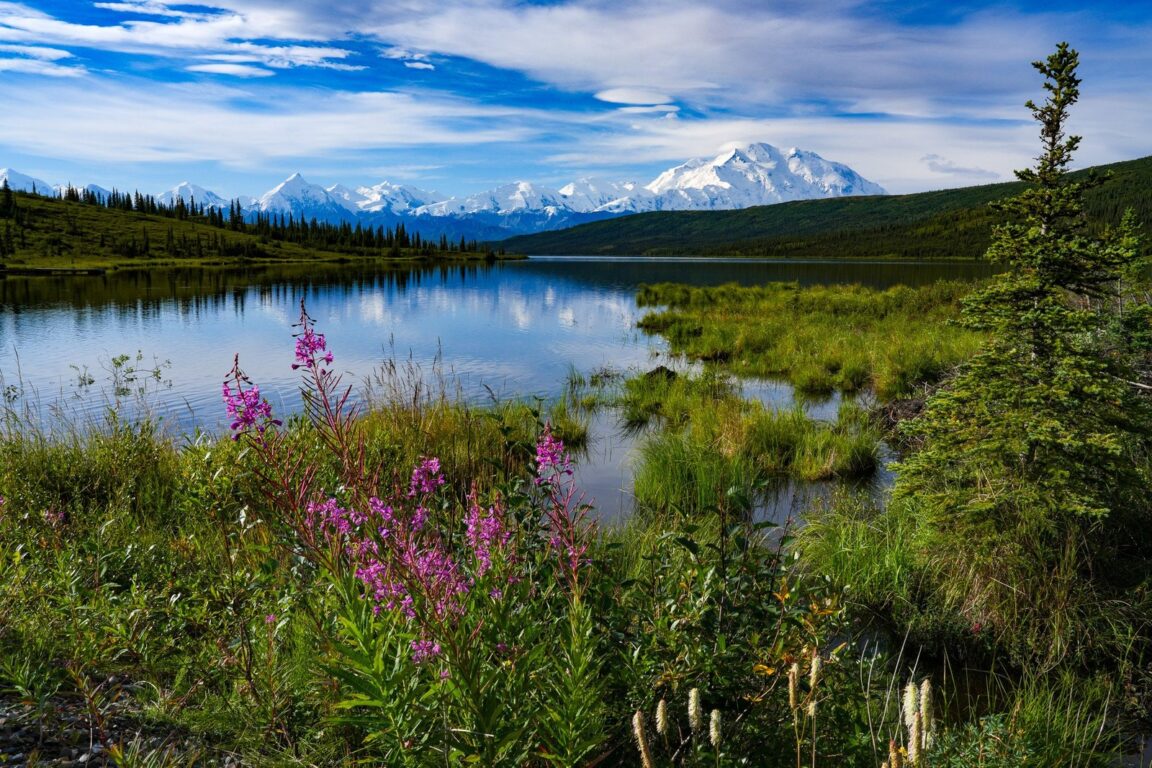
Denali has two very different trips hiding inside one park. At the entrance, a busy village of hotels serves travellers who take day buses into the park and return each night. At Kantishna, 90 miles in, a handful of lodges sit inside the wilderness itself, and the day begins where the day buses turn around. Camp Denali is the Kantishna original in spirit: a family run camp of individual cabins on a hillside with views toward Denali and the Alaska Range when the mountain shows itself, run as a learning camp as much as a hotel.
The difference is not thread count. It is time and interpretation. Staying at the end of the road removes the daily commute, puts Wonder Lake and the tundra trails at your door, and surrounds the walking with staff naturalists whose job is to read the landscape with you. Travellers who mainly want a checklist photo of the mountain can be served at the entrance. Travellers who want to understand taiga, tundra, glaciers and wildlife behaviour over several unhurried days are the ones this lodge is built for, and they should also read the very different bear viewing logistics in the Katmai Brooks Falls guide before choosing between Alaska’s two great bear parks.
How does getting there actually work?
The lodge’s own logistics page lays the journey out plainly. Most guests arrive at the park entrance area by the Alaska Railroad’s Denali Star train or the Park Connection motorcoach, from Anchorage or Fairbanks. Coming from Anchorage by train, you arrive the afternoon before your stay and overnight near the entrance; from Fairbanks, the train arrives in time to meet the lodge bus the same day. Drivers get complimentary long term parking near the depot. Everyone converges on the lodge buses at the train depot, at 12.30pm on departure day by the current published schedule.
What follows is not a transfer but the first programme item: a 90 mile drive the length of the Park Road with a naturalist guide driving and interpreting geology, ecology and cultural history, with stops for vistas and wildlife and a picnic at the midway point. The return reverses it, leaving camp at 6.45am to reach the depot by 11.45am for train and coach connections. The alternative is the sky. Denali Air, the lodge’s air taxi partner, flies guests between the entrance area and Kantishna, and the lodge recommends the hybrid most veterans choose: drive in for the ground level story, fly out for the aerial one. One access warning belongs in every plan: the Park Road has been cut by the Pretty Rocks landslide in recent seasons, with a bridge project restoring through access, so the exact mix of road and air access for a given summer must be confirmed with the lodge when booking rather than assumed.
What does a day at Camp Denali look like?
Breakfast is at 7.30am, and then the camp’s defining choice appears: guided hikes at three levels. The lodge describes easy naturalist forays for a slower day of looking closely, moderate hikes across varied terrain, and strenuous climbs, including ridge ascents, for strong walkers, each day exploring a different area of the park. You carry a sack lunch, and the naturalist sets the real curriculum, a flower, a track, a Dall sheep band on a slope, explained in place.
Independent time is properly equipped rather than left empty. Bicycles wait for the Park Road, canoes for Wonder Lake, rods for Arctic grayling on Moose Creek, and local trails for a self paced walk, while the resource centre offers exhibits, a natural history library and a microscope for the day’s finds. Dinner is at 6.30pm in a dining room with views toward the mountain, and the evening closes with a presentation by a staff naturalist or a visiting specialist on Alaska’s natural or cultural history, including the lodge’s Special Emphasis Series speakers on set weeks. It is a full, analogue day, and the absence of an entrance village’s distractions is the luxury being sold.
June flowers or September colour: when should you go?
The lodge’s own month guides are unusually honest, and they make the choice clear. June is renewal: nearly endless daylight, snow still on the high country, the tundra flowering in sequence, migratory birds returning, and moose, caribou and bears with new young. July is peak summer, with wildflowers at their loudest, forget-me-nots, fireweed and monkshood, and wildlife feeding hard in the long light. August turns: berries ripen, bears enter their pre winter feeding push, the tundra starts to colour red and gold, and the mosquitoes finally fade. September is the photographer’s favourite on the lodge’s own account, crimson tundra, golden willow, snow dusted peaks and the moose rut, closing the season in a blaze before winter.
There is no wrong month, only a wrong expectation. Go in June for flowers and newborn wildlife, July for abundance, August for berries and bears, September for colour and crisp air. And build the mountain no promises: Denali makes its own weather, and the multi night stay pattern exists precisely because a single day so often draws cloud.
Why does it book out so far ahead?
Arithmetic. A short season, fixed Monday and Friday arrival days, a small cabin count and a high return rate compress demand into very few berths, and the lodge’s reputation among naturalists and photographers fills them early. The working rule for travellers is to enquire a year ahead for prime July and August blocks, stay flexible between the three and four night patterns, and treat the deposit and cancellation terms on the lodge’s own site as required reading. Travellers comparing remote park lodges will find the same scarcity logic at work in the base choices in the Isle Royale ferry and bases guide, where boat capacity, not marketing, sets the calendar.
Frequently asked questions
Is Camp Denali inside the national park?
Yes. It sits near Kantishna at the end of the Denali Park Road, around Mile 89, deep inside Denali National Park and Preserve, which is why access is by lodge bus or air taxi rather than private car.
How long should you stay?
The lodge runs three night stays from Friday to Monday and four night stays from Monday to Friday, and recommends multi night stays for a real chance at mountain views, varied weather and a range of guided hikes. Seven night stays combine the blocks.
What is included in the day programme?
On the lodge’s published pattern: meals, a choice of three levels of naturalist led hikes on full days, evening presentations, and independent activities including cycling the Park Road, canoeing on Wonder Lake and fishing Moose Creek for Arctic grayling.
Can you fly in instead of taking the bus?
Yes, through Denali Air, the lodge’s air taxi partner serving Kantishna. The lodge suggests driving in with the naturalist interpretation and flying out for the aerial perspective, and asks guests to arrange flights through its office when booking.
When should you book?
As early as possible, ideally around a year ahead for midsummer, because the season is short, arrivals are fixed to Mondays and Fridays, and capacity is small. Confirm the current season’s dates, rates and road access arrangements directly at campdenali.com.