 River Callahan
You do not need to win the Brooks Lodge lottery to see bears at Brooks Falls. The lottery only rations beds at the one lodge at Brooks Camp. The falls platforms themselves have no lottery and no reservation: they are first come, capped at 40 people on the Falls Platform, with rangers running a waiting list in July. So a traveller who missed the lottery has three real alternatives: a floatplane day trip from King Salmon or Homer, a Brooks Camp Campground reservation when the January booking window opens, or a September trip, when the bears are at their fattest, the crowds have thinned and the action shifts to the lower river. This guide lays out each route, the platform etiquette and the weeks the salmon run actually peaks.
Quick Facts
- Platform access: No lottery, ticket or reservation for the Brooks Falls Platform. Capacity is 40 people, and when it is full you may be asked to yield after one hour, per the National Park Service.
- The lottery: Brooks Lodge, the only roofed lodging at Brooks Camp, allocates rooms by lottery, held in December well over a year ahead of the season. Losing it does not close the park to you.
- Getting there: No roads reach Brooks Camp. Fly commercially to King Salmon, then by floatplane or water taxi to Brooks Camp on Naknek Lake.
- First step on arrival: A mandatory bear safety orientation, known as bear school, at the Brooks Camp Visitor Center, before anything else.
- Peak timing: July for bears fishing the falls on the sockeye run, September for fat bears on the lower river and at the falls, with a softer stretch in mid August.
- Cost basics: Katmai charges no entrance fee. The campground is the budget bed, day trips the expensive convenience, the lodge the premium.
- Facts checked: 21 November 2026, against the National Park Service Katmai pages.
What exactly did you lose when you lost the lottery?
Less than it feels like. Brooks Lodge is the only hotel-style lodging at Brooks Camp, a small complex of cabins beside the lower river, and demand for its rooms in July is so far beyond supply that the concessioner allocates them by a random lottery. Applications are taken in December, roughly a year and a half before the season they cover, winners are contacted in the following weeks, and a win requires a large deposit quickly, with final payment well before the stay. If any night of a requested stay falls in July or September, stays are capped at three nights, and each party can win only one such date.
Everything else at Brooks Camp is separate from that draw. The viewing platforms are National Park Service infrastructure, open to every visitor who reaches Brooks Camp, whether they sleep at the lodge, at the campground, or arrived that morning by floatplane and leave that evening. The campground, which holds 60 people inside an electric fence, is booked through Recreation.gov in a January reservation window, not through the lodge lottery. And day trips need neither: they need a seat on a floatplane and a day of decent flying weather.
How do floatplane day trips work, and from where?
Day trips run from two main gates. King Salmon, the commercial airport town about a short floatplane hop from Brooks Camp, is the classic departure point, with operators flying wheeled planes in from Anchorage and floatplanes out to the lake at Brooks Camp. Homer, on the Kenai Peninsula, is the second gate, with longer direct floatplane flights across to Brooks Camp that suit travellers already touring the Kenai. Anchorage-based packages combine the two legs for you. Either way, the structure of the day is the same: fly in during the morning, complete bear school, walk to the platforms, and fly out in the late afternoon or early evening.
The honest constraints are weather and time on the ground. Floatplanes do not fly in high wind or low cloud, and a cancelled day is usually lost rather than moved, so build a spare day into an Alaska itinerary if Brooks is its centrepiece. On the ground you will have perhaps five to seven usable hours, which in July means joining the Falls Platform waiting list early and using the Riffles and Lower River platforms, which have no capacity cap and no time limit, while you wait. In September a day trip is arguably better value: the list is shorter, the bears are heavier, and the lower river, a short walk from the floatplane beach, is where much of the viewing happens.
What is the platform etiquette you need to know?
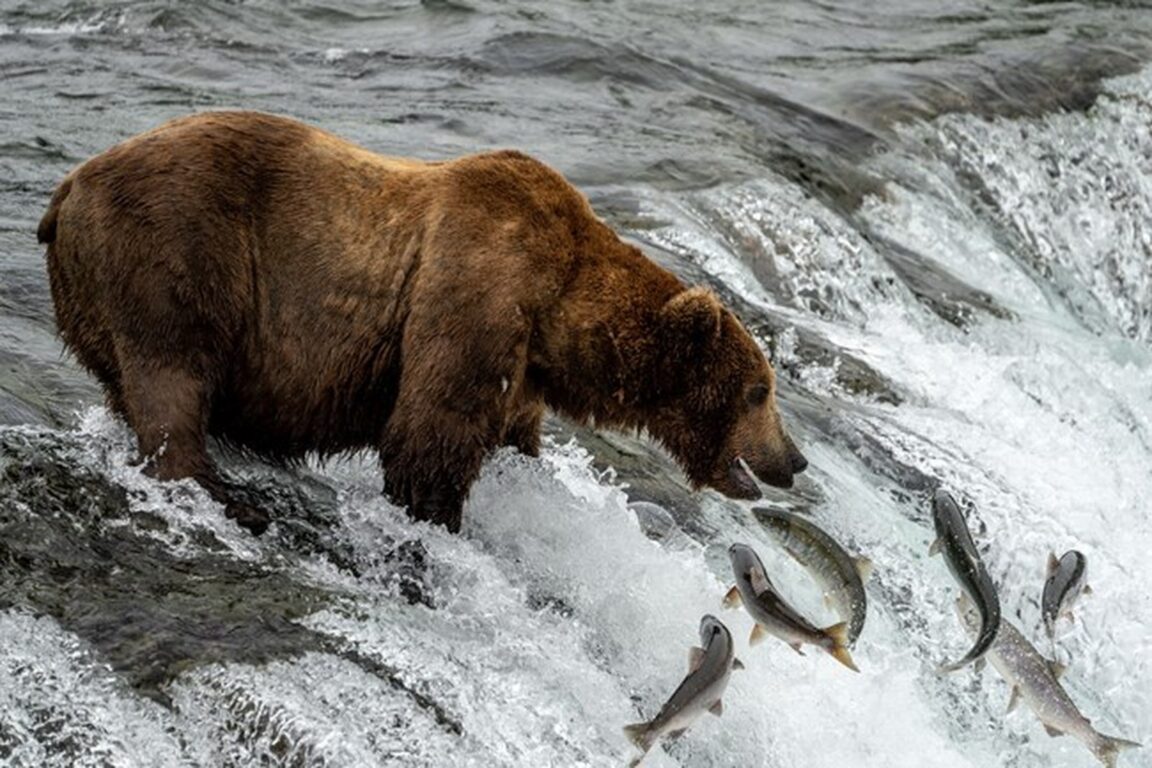
Brooks Camp has five elevated platforms. The Falls Platform is the famous one, looking down on bears standing at the lip of the six-foot waterfall catching leaping salmon, and it is the only one with the 40-person cap and the yield rule: after one hour, when the platform is full and others are waiting, you may be asked to give up your spot, and you can rejoin the list as soon as you leave. In peak July the wait commonly runs well past an hour at midday, so early and late turns are the smart ones. Tripods are not permitted on the Falls Platform in peak season. The Riffles Platform and the three Lower River platforms carry no cap and no time limit, and on many days the lower river, where mothers with cubs fish away from the dominant males at the falls, gives the longer and calmer viewing.
The wider rules are bear rules, and they are enforced. Every arrival, day tripper included, attends bear school and receives a pin to prove it. Food and scented items go into the caches provided, never into a tent or a daypack left unattended. You stay at least 50 yards from bears, you yield trails to bears, and when a bear approaches the bridge or a platform access point, rangers hold visitors until it passes. The Falls and Riffles platforms close overnight in season, typically from 10 in the evening to 7 in the morning. None of this is bureaucracy for its own sake: Brooks concentrates dozens of brown bears and hundreds of people into a few hundred metres of river, and the system is why both sides tolerate each other. Our earlier deep dive into the platform system itself is at Brooks Falls platform, beyond the famous sight, and the wider Alaska pattern pairs well with Olympic National Park in the rain for travellers building a northern parks trip.
Which weeks does the salmon run actually peak?
The bears follow the fish, and the National Park Service is consistent about the calendar. Bears return to the Brooks River from mid to late June as the sockeye arrive, and July is the peak at the falls themselves, when as many as 25 bears have been counted fishing at Brooks Falls at once and the classic lip-fishing photographs are made. August is the complicated month: the falls quieten as salmon move through and bears disperse to other food, though the wider river still holds bears, and the softest stretch falls in mid August. In September the bears return in force to feed on spawned-out and dying salmon, now visibly fat, and viewing shifts toward the lower river and the river mouth, with good action often continuing into early October and the bearcams running from late June to early October.
So the timing call for a lottery loser is simple. If your heart is set on the falls photograph, pay for a July day trip and accept the waiting list as part of the day. If you want the bears themselves, go in September, when a day trip or a campground night delivers more viewing per hour and per dollar, and the tundra around Brooks Camp has turned gold and red.
What does each alternative actually cost you in effort?
The campground is the cheapest bed and the hardest to get in July, because the January Recreation.gov window moves fast. It is also the most immersive option: nights inside the electric fence, dawn and evening platform turns when the day trips have left, and bears wandering the beach at first light. Day trips are the opposite profile, the most expensive per hour and the easiest to book, available through the season from King Salmon and Homer with no lottery and no January alarm clock. The third route is patience: enter the next lodge lottery in December for a season two summers away, and use a day trip or campground attempt in the meantime. Many visitors who eventually sleep at Brooks Lodge first stood on the platform as day trippers, and the trip is not diminished by that order.
Frequently Asked Questions
Is there a lottery for the Brooks Falls viewing platform?
No. The National Park Service runs the platforms first come, with a 40-person capacity on the Falls Platform and a one-hour yield rule when it is full and others are waiting. The lottery covers only rooms at Brooks Lodge.
How do you get to Brooks Camp without a lodge booking?
The same way lodge guests do: fly to King Salmon, then take a floatplane or water taxi to Brooks Camp. Day trips also run from Homer. There is no road access at any point.
When is the best month for Brooks Falls?
July for bears fishing at the falls on the sockeye run, September for the fattest bears and thinner crowds on the lower river. Bears are present from mid June to late October, per the National Park Service.
What is bear school?
A mandatory bear safety orientation at the Brooks Camp Visitor Center that every visitor, including day trippers, must complete on arrival before walking to the platforms or campground.
Does Katmai charge an entrance fee?
No. Katmai National Park charges no entrance fee. Your costs are transport, which is unavoidably by air or boat, plus lodging or camping fees where they apply.
Featured image: A brown bear lunging at leaping salmon at Brooks Falls, Katmai National Park, Alaska. NPS Photo by L. Law, via the National Park Service (nps.gov), the park’s own official site, used with credit. Native 650px wide, upscaled to exactly 1600px. Facts checked 21 November 2026.