 River Callahan
Olympic National Park in the rain is not a compromised version of the park. It is the park working as designed. The Hoh Rain Forest receives an average of 140 inches of precipitation a year, according to the National Park Service, and that water is what drapes the maples in club moss, keeps the Quinault valley green and feeds the wild coast at Rialto Beach. The practical task is sequencing: walk the rainforest loops while the forest is at its best, time the coast to a falling or low tide rather than to the clock, and drive the Highway 101 circuit in the order that puts each stop in the right light and the right water. Done that way, a wet forecast stops being a warning and becomes the plan.
Quick Facts
- Park: Olympic National Park, Washington, on the Olympic Peninsula, with coast, temperate rainforest, lowland forest and alpine zones
- Entrance pass: $30 per private vehicle, $25 per motorcycle, $15 per person on foot or bicycle, each valid 7 consecutive days; Olympic annual pass $55; park is cashless
- Rainfall: About 140 inches a year in the Hoh Rain Forest, per the NPS
- Signature loops: Hall of Mosses Trail, 0.8 miles; Spruce Nature Trail, 1.2 miles, both from the Hoh Rain Forest Visitor Center
- Long option: Hoh River Trail, 17.3 miles to Glacier Meadows and 18.5 miles to the Blue Glacier moraine viewpoint
- Coast anchor: Rialto Beach, for the walk north to Hole in the Wall, passable only with attention to tides
- Circuit: Highway 101 loops the peninsula; no road crosses the park interior
- Sources checked: National Park Service, checked 19 November 2026
Start with the rainforest, and start early
The Hoh is the west side anchor and the right first stop on a wet weather circuit. The NPS guide to visiting the Hoh Rain Forest places it about a two hour drive from Port Angeles and under an hour from Forks, reached by the Upper Hoh Road off Highway 101. The visitor center sits at the end of that road beside the trailheads. Its hours follow the season: open daily in summer, generally Friday through Sunday in spring and fall, and closed from January through early March. In the wet months, that pattern matters. A Friday to Sunday visit can pair trails with ranger advice and exhibits; a midweek winter visit should be planned as a self guided trail day with conditions checked in advance.
Walk the two short loops as a pair, because they show different forests. The Hall of Mosses Trail, at 0.8 miles, is the iconic loop through old growth and a grove of bigleaf maple draped with abundant club moss. The Spruce Nature Trail, at 1.2 miles, loops through both old and new growth forest alongside Taft Creek and the Hoh River, which makes it the better of the two for understanding how the forest renews itself after a giant falls. The NPS describes those fallen giants as nursery logs, feeding lines of young trees that can still be read in the straight rows rising from a rotted trunk. Rain improves both walks in specific ways: moss and fern colour deepens, the forest floor darkens, and the canopy drip that keeps summer visitors moving becomes the atmosphere itself. Waterproof layers, rather than an umbrella, are the working kit, and trail shoes will get wet whatever the forecast says.
For travellers with a full day and dry enough boots, the Hoh River Trail extends the same valley deep into the park. The NPS lists useful turnaround points for day hikers: first river access at 0.9 miles one way, Mineral Creek Falls at 2.7 miles, Cedar Grove at 4.0 miles and 5 Mile Island at 5.0 miles. Backpackers continue to Glacier Meadows at 17.3 miles, with the trail ending at 18.5 miles at the Blue Glacier moraine below Mount Olympus. Pets are not allowed on trails in the Hoh Rain Forest.
Add Quinault as the quieter second rainforest
The Highway 101 circuit continues south to the Quinault valley, the park second major rainforest system and the natural comparison to the Hoh. Where the Hoh concentrates its experience into two famous loops and one long river trail, Quinault spreads out around its lake with a loop drive, shorter walks and big tree sites, and it generally carries a calmer feel even in season. On a rain focused trip the two valleys divide the work well: give the Hoh a full, early morning for the Hall of Mosses and Spruce Nature loops, then use Quinault for a slower afternoon of short walks between showers, when a lodge or cafe stop on the lake sits conveniently between trailheads. Travellers short on time should pick one valley and do it properly rather than sprinting both; the Hoh is the essential first choice, and Quinault is the better pick for anyone basing on the south side of the peninsula or travelling outside the Hoh visitor center open days.
Time the wild coast by the tide, not the itinerary
Olympic protects a long strip of wild Pacific coast, and Rialto Beach, reached from the Mora area near La Push, is its most practical walk in point. The headline walk runs north along the beach to Hole in the Wall, a sea arch that can only be approached and passed with the tide out. That single fact should set the day schedule. Check a tide table before leaving, aim to walk north on a falling tide, reach the arch near low water, and start back with time in hand before the returning tide cuts off the headland points. The NPS plan your visit guidance for the park stresses planning activities with time and distance in mind, and on this coast the distance is measured in tide height as much as miles.
Rain changes the coast calculus in the visitor favour in one respect and against it in another. Storm season seas are dramatic, drift logs shift, and the beach rewards walkers who watch the surf and never turn their backs on it. The same weather can push high tides further up the beach and make creek crossings and headland scrambles slower. The honest rule is simple: the tide chart outranks the itinerary, every time. If the low tide window falls early, do the coast first and the rainforest second; the forest, unlike the arch, is open in any order. Tide pooling along this coast follows the same logic, with the lowest tides of the visit reserved for the beach rather than the forest.
Drive Highway 101 in circuit order
There are no roads across Olympic, so every trip is a loop or an out and back on Highway 101 around the peninsula edge. The NPS is explicit that the park is very large and that distances between key destinations should be checked on its mileage chart before committing to a day. A rain centred circuit that respects those distances runs like this. Enter from Port Angeles on the north side if arriving from the Seattle ferries, or from Olympia and Aberdeen on the south side if driving up the coast. Work the west side in one direction only: Lake Crescent and the north side first if starting at Port Angeles, then Forks as the supply town, then the Hoh spur road, then south to the Kalaloch coast and Quinault, and out through Aberdeen. Reversing that order works equally well from the south. What does not work is zigzagging: each rainforest spur, Upper Hoh Road included, is a there and back drive off the highway, and doubling back burns the daylight that the tide window needs.
Basing choices follow the same geometry. Forks sits under an hour from the Hoh and serves the west side rainforest and Rialto Beach with the least daily driving. The Hoh Campground, open year round with 72 sites in old growth forest along the river and reservable in peak season through Recreation.gov, puts the Hall of Mosses at walking distance for dawn. Port Angeles suits travellers combining the rainforest with Hurricane Ridge and ferry connections, at the cost of the two hour drive to the Hoh. For the pass itself, the NPS Olympic fees page confirms the standard pass prices and that the park does not accept cash, so buy online or carry a card.
The season trade offs, stated plainly
Summer, roughly June through September, is the busiest season and the driest, which in Olympic terms still means a wet forest and full services: every visitor center schedule at its widest, all campgrounds and lodges operating, and the longest days for pairing a morning rainforest loop with an evening low tide. The cost is competition for parking at the Hoh and for the best tide windows at Rialto.
Fall and spring trade services for solitude. The Hoh visitor center drops to weekends outside summer, some park lodges close seasonally while Kalaloch Lodge operates year round, and daylight shortens fast by November. In return the rain returns in earnest, the moss and fungi peak, rivers run high, and the loops are quiet enough to hear the forest working. Winter is the connoisseur season and the serious one: the Hoh visitor center closes from January through early March, storms reshape the coast, and short days force a one valley per day pace. Travellers who want the rainforest at its wettest and emptiest accept those terms gladly; travellers who want ranger programs, open lodges and easy logistics should choose the summer window and simply dress for the rain that will still arrive. Either way, the strategy that transfers from other big western parks applies: start the famous trail early, as in Lassen Volcanic for first time visitors, and let one anchor sight set the day, the way Capitol Reef for first time visitors builds around Fruita and Hickman Bridge.
Frequently Asked Questions
How much rain does the Hoh Rain Forest actually get?
The NPS states that rain falling through the winter contributes to a yearly average of 140 inches, about 3.55 metres, of precipitation in the Hoh. It is one of the finest remaining examples of temperate rainforest in the United States.
How much is the Olympic National Park entrance pass?
The NPS fees page lists a standard pass at $30 for a private vehicle, $25 for a motorcycle and $15 per person entering on foot or by bicycle, each valid for seven consecutive days. The Olympic annual pass costs $55, America the Beautiful passes are accepted, and the park is cashless.
When is the Hoh Rain Forest Visitor Center open?
According to the NPS, it is open daily during summer, generally Friday through Sunday during spring and fall, and closed from January through early March, with hours varying by season. The trails remain the focus of a visit outside those open days.
Can the Rialto Beach walk to Hole in the Wall be done at any tide?
No. The arch and the headland points on the way are tide dependent. Plan the walk around a falling tide and low water using a current tide table, and turn back in time for the returning tide regardless of how close the arch looks.
Is there a reservation or timed entry system for Olympic?
The NPS plan your visit page states that no reservations are required for entrance to the park. Reservations do apply to specific campgrounds, including Hoh, Kalaloch, Fairholme, Mora, Sol Duc and Staircase, and to popular wilderness camping areas.
Are dogs allowed on the Hoh trails?
No. The NPS states that pets are not allowed on trails in the Hoh Rain Forest, and its park guidance directs visitors to the pets page for the limited places where dogs can go.
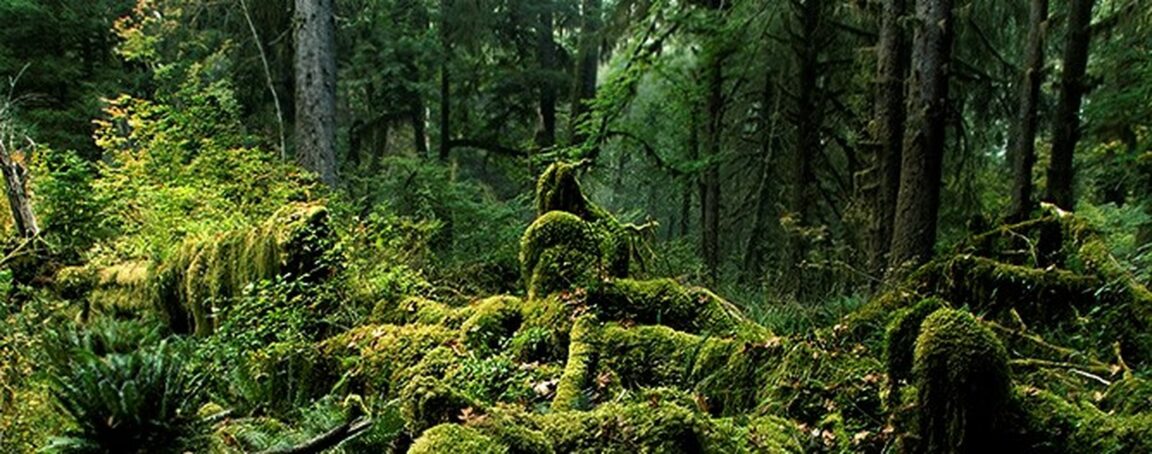
Facts, fees and trail distances checked against the National Park Service on 19 November 2026. Tide times change daily; always work from a current tide table for the exact beach and date. Featured image: moss covered forest floor in the Hoh Rain Forest, Olympic National Park. Photo by Ken and Mary Campbell via the National Park Service, the park official website, used with credit. Source image was 668 pixels wide and has been upscaled to 1600 pixels for publication.