 Lucas Meyer
Guadalupe Mountains National Park has no hotel, no lodge and no restaurant inside its boundaries, so where to stay is the first real decision of the trip, and it is a three way choice. Sleep at Pine Springs Campground and walk to the Guadalupe Peak trailhead at dawn. Sleep in Van Horn, 62 miles south, for a small Texas town base with motels and an easy Interstate 10 exit. Or sleep in El Paso, about 110 miles west, for the full city choice of hotels, restaurants and the airport, at the cost of a two hour drive each way. Each base changes the trip: Pine Springs maximises trail time and minimises comfort, Van Horn balances road time against services, and El Paso suits travellers folding the park into a wider West Texas itinerary. This guide weighs all three on cost, access and style, using National Park Service figures checked today.
Quick Facts
- Park: Guadalupe Mountains National Park, West Texas, on US Highway 62/180
- Entrance fee: $10 per person aged 16 and over, valid 1 to 7 consecutive days; park annual pass $35
- In park lodging: None. Camping only, at Pine Springs and Dog Canyon campgrounds
- Pine Springs Campground: $20 per night, reservations required through Recreation.gov, no hookups, no dump station, no showers
- Summit trail: Guadalupe Peak Trail, 8.4 miles round trip, about 3,000 feet of climbing, rated very strenuous, 6 to 8 hours
- Highest point: Guadalupe Peak, 8,751 feet, the highest point in Texas; El Capitan, 8,085 feet, is the eighth highest peak in Texas
- Distances: El Paso about 110 miles west; Carlsbad, New Mexico, about 56 miles northeast; Van Horn 62 miles south on Highway 54
- Water rule: No water on trails. Carry at least one gallon per person per day
- Sources checked: National Park Service, checked 19 November 2026
Option one: Pine Springs, for the trailhead start
Pine Springs is the park front room. The visitor center, open daily from 8.00 a.m. to 4.00 p.m. according to the NPS Guadalupe Mountains fees page, handles passes, permits and advice, and the campground and main trailhead cluster sit beside it. For anyone whose trip is really about Guadalupe Peak, this is the base that removes every friction: no pre dawn highway drive, no fuel calculation, and a start time set by daylight rather than by a motel checkout.
The terms are strict and worth reading before booking. Every site at Pine Springs requires a reservation through Recreation.gov, released up to six months ahead, at $20 per night, with Senior and Access pass holders paying half. The campground mixes tent sites and RV sites, and the NPS is clear about what is not there: no hookups, no dump station and no showers anywhere in the campground. Potable water and flush toilets are provided. Spring and fall weekends, spring break and Thanksgiving sell out, so the six month window is a real planning tool rather than a formality. Dog Canyon, the park second campground on its remote north side, follows the same reservation logic for travellers entering from the New Mexico side.
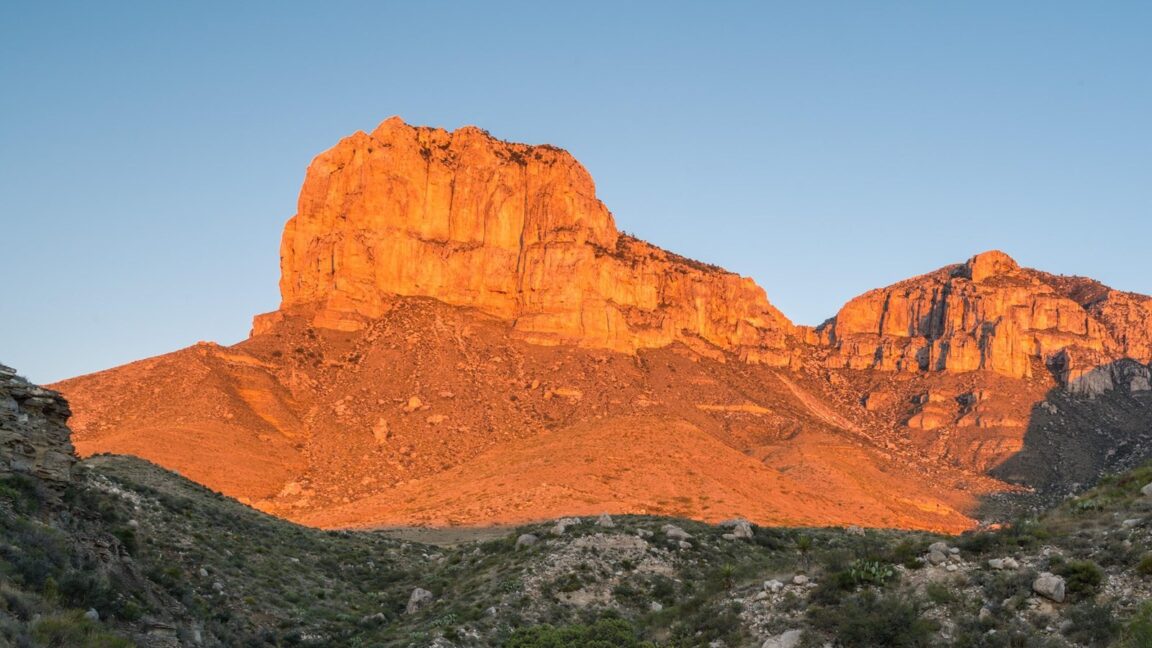
Style wise, Pine Springs is honest desert camping under big limestone walls, exposed to the wind this range is known for, with El Capitan catching first and last light from the campground area. The NPS El Capitan page notes that at 8,085 feet it is the eighth highest peak in Texas, that no formal trail reaches its summit, and that it is best seen from US Highway 62/180 near the park, which is exactly the view campers get for free. Choose Pine Springs if the summit is the point of the trip, if the budget matters, or if a second trail day, to Devils Hall, McKittrick Canyon or the Pinery, is on the plan. Skip it if anyone in the group needs a shower, a bed or shelter from a windy night to enjoy the hike.
Option two: Van Horn, the small town compromise
Van Horn sits 62 miles south of Pine Springs on Highway 54, where it meets Interstate 10, and it is the closest full service Texas town to the park. Its lodging is a line of highway motels and small hotels along the interstate corridor, plus one famous exception: the Hotel El Capitan in the town center, a restored 1930 railroad era hotel that gives Van Horn a stay with genuine character rather than a pure pit stop feel. Dining follows the same pattern, a short list of local restaurants and interstate staples rather than a scene, which is fine for a hiker schedule built around an early night and an early start.
The maths of a Van Horn base are friendly. The drive to Pine Springs takes roughly an hour and a quarter on a quiet highway, so a Guadalupe Peak day means leaving in the dark in winter or comfortably before dawn in summer, hiking the 8.4 mile round trip with its roughly 3,000 feet of climbing in the NPS listed 6 to 8 hours, and driving back in daylight or early evening. Fuel is available in town, which matters in a park where the NPS warns there is no gas for about 35 miles in either direction from Pine Springs. Van Horn also pairs naturally with a second night strategy: one night in Van Horn for the summit, then onward along Interstate 10 toward Marfa, Fort Davis or Big Bend country without backtracking.
Choose Van Horn if the group wants beds and hot food without the El Paso drive, or if the park is one stop on a West Texas road trip. Its weakness is choice: in peak periods the town rooms fill with park and interstate traffic, and anyone wanting a special dinner or a late evening will not find it here.
Option three: El Paso, the city base
El Paso is about 110 miles and roughly two hours west of Pine Springs on US Highway 62/180, and it offers everything the park and Van Horn do not: the nearest major airport, the widest range of hotels at every price level, supermarkets for a proper trail food shop, outfitters, and restaurants enough to make the night before and after the hike part of the trip. For travellers flying in, renting a car and giving the Guadalupe Mountains one or two days inside a longer Texas or New Mexico loop, El Paso is usually the sensible hub, often paired with Carlsbad, about 56 miles northeast of the park, for the Carlsbad Caverns combination.
The cost of the city base is paid in trail time. A Guadalupe Peak summit day from El Paso means about four hours of driving inside the same day as a 6 to 8 hour very strenuous hike, which pushes the start into the small hours and the finish toward dusk for much of the year. The workable patterns are these: drive out the evening before and take one night in Van Horn or at Pine Springs for the summit, then return to El Paso; or, if El Paso is the only base, treat the park day as a shorter trail day, to Devils Hall or McKittrick Canyon, and save the summit for a trip based closer in. Splitting the stay is not indecision here. It is the standard solution to a park with no beds of its own.
The trail day itself decides the base
Guadalupe Peak is the reason most visitors come, and its numbers should drive the lodging choice. The trail climbs about 3,000 feet over 8.4 miles round trip from the Pine Springs trailhead, and the NPS rates it very strenuous with a 6 to 8 hour allowance. There is no water on the trail, and park guidance is to carry at least one gallon per person per day, which is four litres of weight before food. Heat and wind, rather than distance, are the usual reasons hikers turn back, and both argue for the earliest start the base allows. That is the Pine Springs advantage in one sentence, and the El Paso penalty in the same sentence.
Entry itself is simple. The NPS charges $10 per person aged 16 and over, with children under 16 free, and the pass covers 1 to 7 consecutive days. Payment is by card at the Pine Springs Visitor Center or at self pay stations at trailheads, where the green fee envelope stub goes on the dashboard. Holders of Annual, Senior, Military, 4th Grade and Access passes can bring in three adults under their pass. There is no timed entry and no day use reservation; the only bookings that matter are the campground reservation and, for backpackers, the wilderness permit, reserved on Recreation.gov and collected in person at Pine Springs.
Travellers building a desert parks loop will find the same base town logic at work in a weekend at White Sands, where Alamogordo plays the Van Horn role, and in Organ Pipe Cactus, where distance and water discipline matter just as much. In all three parks, the right base is the one that puts the hiker at the trailhead, watered and rested, at first light.
Frequently Asked Questions
Is there any hotel or lodge inside Guadalupe Mountains National Park?
No. The NPS lists no lodging or dining inside the park. The only in park overnight options are the Pine Springs and Dog Canyon campgrounds, both reservation only, plus permitted wilderness campsites for backpackers.
How much does Pine Springs Campground cost and how far ahead can it be booked?
Sites cost $20 per night, or $10 with a Senior or Access pass, and every site requires a reservation on Recreation.gov, released up to six months in advance. There are no hookups, no dump station and no showers.
How long does the Guadalupe Peak hike take?
The NPS describes an 8.4 mile round trip with about 3,000 feet of elevation gain, rated very strenuous, taking 6 to 8 hours. Carry at least one gallon of water per person, as there is no water on the trail.
How far is the park from El Paso and Van Horn?
Pine Springs is about 110 miles east of El Paso, roughly two hours on US Highway 62/180, and 62 miles north of Van Horn on Highway 54. Carlsbad, New Mexico, is about 56 miles northeast.
What is the entrance fee?
The NPS charges $10 per person aged 16 and over, valid for 1 to 7 consecutive days, with under 16s free. The park annual pass costs $35 and admits up to four adults.
Where is the nearest fuel?
There is no fuel in the park, and park guidance warns of no gas for about 35 miles in either direction. Fill up in El Paso, Carlsbad, Van Horn or Whites City rather than arriving on a low tank.
Facts, fees, distances and campground terms checked against the National Park Service on 19 November 2026. Hotel prices in Van Horn and El Paso change daily and are not quoted here; check the property for the exact date. Featured image: El Capitan at sunrise, Guadalupe Mountains National Park. Photo by Laurence Parent via the National Park Service, the park official website, used with credit.