 Jordan Ellis
Organ Pipe Cactus National Monument rewards travellers who treat it as a route, not a stop. The deciding evidence is a single loop and a single spring. The Ajo Mountain Drive, a 21 mile one way circuit of gravel and asphalt through the monument’s eastern mountains, is where the organ pipe cactus grows in dense stands found almost nowhere else in the United States, and it needs a slow half day, not a photo pause. Quitobaquito Springs, a true desert oasis at the end of South Puerto Blanco Drive on the Mexican border, is the second half of the argument. Base yourself at Twin Peaks Campground, 208 sites at $20 a night a mile and a half from the visitor center, and the monument stops being a detour between Phoenix and the border and becomes what it actually is: the finest intact Sonoran Desert landscape in the national park system, best driven slowly in the cool months. Entry is $25 per vehicle for seven days, the monument is open 24 hours, and everything here runs on cards, not cash.
Quick Facts
- The headline drive: Ajo Mountain Drive, a 21 mile (34 km) one way gravel and asphalt loop, 1 to 2 hours of pure driving and a half day done properly. Vehicles over 25 feet are prohibited
- Entry fee: $25 per private vehicle, $20 per motorcycle, $15 per person on foot or by bicycle, each valid for 7 days. The monument annual pass is $45 and interagency passes are accepted. Payment is by card only
- The base: Twin Peaks Campground, 174 RV sites and 34 tent only sites, $20 per night, no hookups, reservable on Recreation.gov from the same day up to six months ahead. Senior and Access pass holders pay half
- The oasis: Quitobaquito Springs, reached via South Puerto Blanco Drive. The full Puerto Blanco loop is 41 miles and takes roughly 4 to 5 hours
- The visitor center: Kris Eggle Visitor Center on Highway 85, open daily except Thanksgiving and Christmas, with the free Ajo Mountain Drive guide, exhibits and a short accessible nature trail
- The monument: Established in 1937, protecting about 330,000 acres of Sonoran Desert on the Arizona and Mexico border, and designated an International Biosphere Reserve. Mount Ajo, at 4,808 feet, is the highest point
- Best season: December to April, when days are mild, ranger programs run and the campground fills. Summer heat here is extreme and genuinely dangerous
- Border basics: The southern boundary is the international border. Check the NPS alerts page before travelling, because border works have closed crossover roads near Quitobaquito since August 2026, stay on official roads and trails, and carry more water than you think you need
Why should the Ajo Mountain Drive anchor the whole visit?
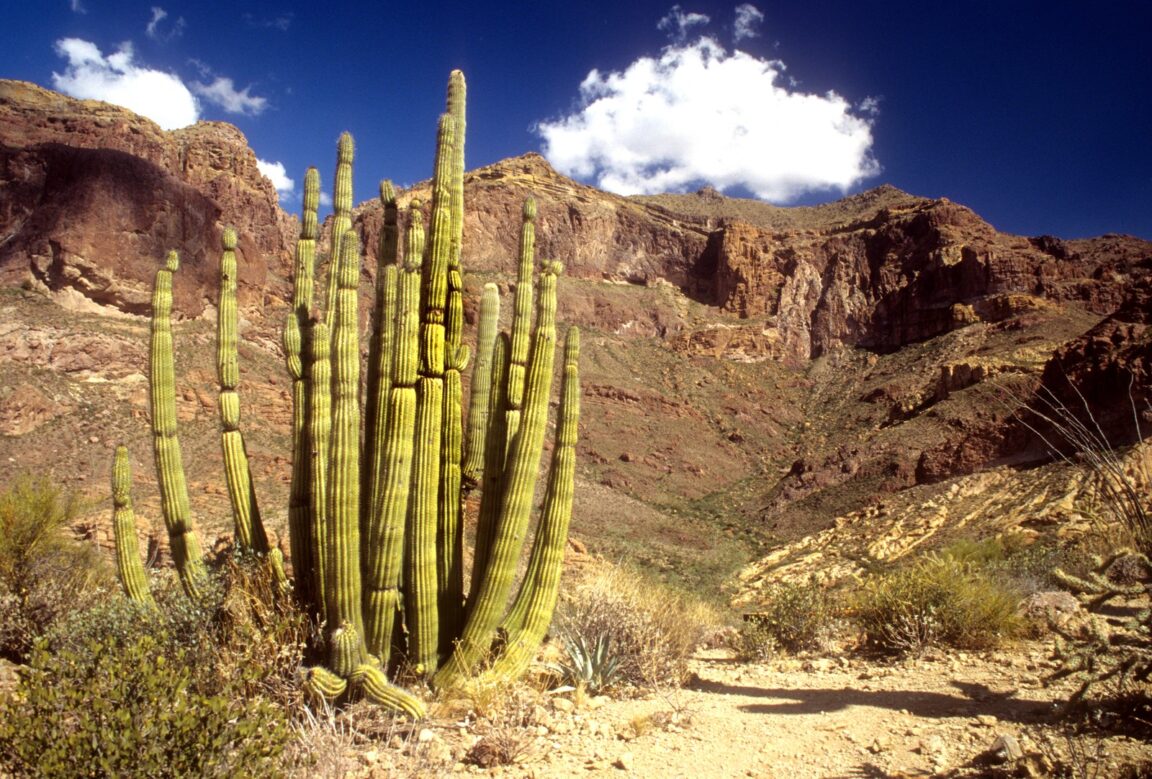
Because it is the monument in miniature, sequenced by geology. The drive starts across Highway 85 from the Kris Eggle Visitor Center, and the National Park Service describes it as the most popular scenic drive in the monument for a simple reason: it compresses the whole ecosystem into 21 miles. You leave the creosote flats, climb through desert washes into the Ajo Mountains, and pass through the densest stands of organ pipe cactus in the park, alongside saguaro, cholla and barrel cactus, with the pink granite of the mountains closing in around the road. Set your odometer to zero at the entrance, where the fee signage stands, and work through the free drive guide stop by stop, exactly as the Park Service intends.
The logistics are forgiving but not unlimited. The road is one way, gravel and asphalt, usually passable by ordinary passenger cars, and prohibited to vehicles over 25 feet because of its twisting and dipping profile. The Park Service allows 1 to 2 hours for the drive itself, but that is wheels turning time. Add the Arch Canyon trail, an easy 1.2 mile round trip to a natural arch, and the Estes Canyon and Bull Pasture trailhead about 35 minutes in, where there is a picnic area with a vault toilet, and the loop becomes a proper half day. Bull Pasture itself is a strenuous climb with views into Mexico for those who want one real hike inside the drive day.
Timing is the difference between a good loop and a great one. Go early, when the light is low on the cactus stands and the desert is cool, or go late and let the mountains turn red, but do not start the loop at noon in the warm months and expect to enjoy the trailheads. There is no water anywhere on the drive. Carry it all, and carry it in the car, not in your intentions. Travellers building a wider desert parks itinerary will find the same plan around the scenic drive logic in our guide to US national park reservations in 2026.
What makes Quitobaquito Springs worth the second drive?
Quitobaquito is the counterpoint to everything else in the monument: permanent fresh water in one of the driest landscapes in North America. A spring fed pond, shaded by cottonwoods, sitting a short walk from the border fence, home to the endangered Quitobaquito pupfish, a tiny fish that survives in only a handful of places, and to mud turtles, dragonflies and birdlife drawn in from miles of dry desert. The Tohono O’odham people have deep ties to this spring, and it has watered travellers, wildlife and border communities for centuries. Standing there, in green shade, with organ pipe cactus on the hills behind you, explains the monument better than any exhibit panel.
Reaching it is a commitment, and that is part of its value. Quitobaquito sits at the end of South Puerto Blanco Drive and can be reached either by driving the full Puerto Blanco loop, 41 miles taking roughly 4 to 5 hours, with the northern section becoming one way, high clearance 4WD country beyond Pinkley Peak, or by driving South Puerto Blanco Drive directly, which the Park Service says is drivable by all vehicles under 25 feet. Most visitors in ordinary cars should take the southern route out and back and treat the full loop as a separate, vehicle dependent expedition.
One current warning matters here. Border construction has changed access in the south of the monument: a closure order in effect since 24 August 2026 covers crossover roads south from South Puerto Blanco Drive and a strip along the border fence, with the construction footprint sitting close to the border at Quitobaquito itself. South Puerto Blanco Drive has remained the access route, but this is a live situation. Read the alerts and conditions page on nps.gov before you plan a Quitobaquito day, and confirm the spring’s status at the visitor center on arrival rather than discovering a closure at the end of a long dirt road.
Why does Twin Peaks Campground change the trip?
Because sleeping inside the monument converts a drive through into an immersion. Twin Peaks is a big, orderly campground of 208 sites, 174 for RVs and 34 tent only, set among organ pipe and saguaro just over a mile from the visitor center. Sites cost $20 a night, there are no hookups, and reservations run through Recreation.gov or by phone on 877-444-6777, from same day booking up to six months in advance. The entrance fee is separate: your $25 vehicle pass is not included in the camping fee, and rangers ask to see interagency passes at the visitor center and at the campground kiosk when it is staffed, roughly December to March.
The campground buys you the two best hours of the desert day. Dawn at Twin Peaks means cactus wrens, Gila woodpeckers and the mountains catching first light while the Ajo Mountain Drive is still empty. Dusk means the reverse, and then a night sky of a quality most visitors have never seen: the monument’s remoteness and lack of nearby light pollution make it a celebrated dark sky destination, and on a moonless winter night the Milky Way is a physical presence. Ranger programs run in the main season, from December to mid April, including evening talks at the campground amphitheatre, which is another thing day visitors simply never see.
Practicalities decide whether the base works. The campground fills quickly from December to April, so book ahead in that window rather than trusting to luck. There is no food, fuel or supplies inside the monument; the nearest services are in Ajo, about 35 miles north, and at Why and Lukeville on the highway. Arrive with a full tank, full water containers and full food boxes. Cell service inside the monument is unreliable to nonexistent, so download your maps, your Recreation.gov confirmations and the NPS app content before you leave Ajo. The desert packing discipline in our Namibia self drive packing guide, dust, distance, water and no assumptions, applies here almost word for word.
What are the borderlands basics every visitor needs?
Organ Pipe’s southern edge is the United States and Mexico border, and the monument is managed with that fact in plain view. This is not a reason to stay away; hundreds of thousands of visitors drive these roads without incident. It is a reason to follow the Park Service’s standing advice precisely. Stay on official roads and trails. Lock your vehicle at trailheads. Do not pick up hitchhikers. If you see someone in distress, call 911 and report it rather than approaching; if you see something suspicious, report it to a ranger and move on. Border Patrol operates in the area and checkpoints on Highway 85 are a routine part of the drive north, so keep identification accessible and expect to stop.
The other borderland basic is older than the border itself: heat and distance. The monument is open 24 hours a year round, but summer temperatures routinely reach levels where hiking becomes dangerous, and even in winter the sun is strong, the air is dry and there is no water on any scenic drive. The Park Service pattern is the right one: a gallon of water per person per day as a planning floor, a hat and sun protection, and trail choices made for the cool hours. Quitobaquito pupfish also live in the small pond on the visitor center nature trail, a tenth of a mile accessible loop, so even a one hour stop at Kris Eggle gives you the spring’s rarest resident without the long drive south.
Finally, plan the approach as part of the route. The monument sits on Highway 85, roughly two and a half hours south of Phoenix and a similar distance southwest of Tucson, through Ajo and Why to the visitor center at 10 Organ Pipe Drive. That remoteness is the point. Organ Pipe is not competing with Saguaro National Park on convenience; it wins on completeness, on cactus diversity, 31 species of cactus and succulent on the park’s own count, and on the feeling, rare in the park system now, of having a world class landscape almost to yourself.
Frequently Asked Questions
How much does it cost to enter Organ Pipe Cactus National Monument?
Entry is $25 per private vehicle, $20 per motorcycle or $15 per person arriving on foot or by bicycle, and each pass is valid for seven consecutive days. The Organ Pipe annual pass costs $45, and America the Beautiful interagency passes are accepted. Camping is extra: Twin Peaks Campground costs $20 per night on top of entry, with a 50 percent camping discount for Senior and Access pass holders. The monument is cashless, so bring a card.
Can a normal car drive the Ajo Mountain Drive?
Yes. The National Park Service says the 21 mile one way gravel and asphalt road is usually passable by all vehicles, with one hard rule: vehicles and RVs over 25 feet are prohibited because of the road’s twists and dips. Allow 1 to 2 hours of driving, and half a day if you plan to walk Arch Canyon or stop at the Estes Canyon picnic area. There is no water on the route, so fill up at the visitor center before you start.
Is Quitobaquito Springs open?
Check before you go, every time. Quitobaquito is reached by South Puerto Blanco Drive, which is drivable by vehicles under 25 feet, but border construction has kept a closure order in force since 24 August 2026 covering crossover roads and border strip areas near the spring. The Park Service updates access on its alerts page and at the Kris Eggle Visitor Center. Build the day so that a closure disappoints you rather than strands your itinerary: do Ajo Mountain Drive first, Quitobaquito second.
Do I need to reserve Twin Peaks Campground?
Yes. All Twin Peaks sites, including group sites, are reserved through Recreation.gov or by calling 877-444-6777, from the same day up to six months in advance. The campground has 208 sites at $20 a night with no hookups, and it fills quickly in the December to April high season. The smaller Alamo Canyon Campground is the monument’s primitive alternative. Book the site first and the drives will organise themselves around it.
When is the best time to visit?
December to April is the monument’s season: mild days, cold and starry nights, ranger programs, and the possibility of desert wildflowers after wet winters. Spring brings cactus blooms, with the organ pipe itself flowering at night in early summer. Visit in high summer only with extreme heat discipline, very early starts and no midday hiking. The monument is open 24 hours year round, and the visitor center opens daily except Thanksgiving and Christmas.
Is Organ Pipe safe given its border location?
The Park Service’s position is that visitor encounters with illegal border activity are unlikely, and the monument welcomes large numbers of visitors every year. Its advice is consistent: stay alert, stay on official trails and roads, lock your car, do not pick up hitchhikers, and report anything suspicious or anyone in distress by calling 911 rather than making contact yourself. Combine that with ordinary desert discipline on water, fuel and sun, and the realistic risks of this trip are the same as any remote desert park: heat, distance and unpreparedness.
Image: A large organ pipe cactus with the Ajo Mountains behind, Organ Pipe Cactus National Monument. Photo: NPS Photo, National Park Service (nps.gov), public domain.