 Elena Vasquez
A weekend at White Sands works best when it is built around one road, one sled and the light. The National Park Service lays out the essentials plainly: the park’s gypsum dunefield covers 275 square miles in New Mexico’s Tularosa Basin, the largest gypsum dunefield in the world; Dunes Drive runs eight miles one way from the visitor center into the heart of the dunes; entry costs 25 dollars per private vehicle and is valid for seven consecutive days; and the gate opens at 7 in the morning and closes after sunset, with the exact closing time posted for the day. Base in Alamogordo, about 15 miles east on US Highway 70, because the park has no lodge and no developed campground. Do the visitor center and the sled purchase first, drive Dunes Drive in stops on day one, walk the Alkali Flat Trail early on day two, and, if your weekend falls in the May to October season, time one evening to a Full Moon Night, when the park stays open later under the moon. That order, base, timing and booking sequence is the whole trip, and the rest of this guide fills in each step.
Quick Facts
- Entry fee: 25 dollars per private vehicle, 20 dollars per motorcycle, 15 dollars per person on foot or by bike, each valid for seven consecutive days, per the National Park Service. The park annual pass is 45 dollars, and America the Beautiful passes are accepted.
- The road: Dunes Drive, eight miles one way and 16 miles round trip from the visitor center, the first five miles paved and the last three miles packed gypsum. Allow about 45 minutes of pure driving, before stops.
- Hours: The park opens at 7 a.m. daily and closes 30 minutes after sunset, or one hour after sunset in the summer season. The visitor center and gift shop generally run 9 a.m. to 5 p.m. The park is closed on Thanksgiving and Christmas Day.
- Base: Alamogordo, about 15 miles east, is the practical overnight base with hotels and food. Las Cruces, about 52 miles west, is the larger alternative.
- Sleds: Waxed plastic saucers, sold and rented at the White Sands Trading Company gift shop behind the visitor center. Its listed prices, checked in autumn 2026, were 27 dollars to buy a sled and 17 dollars to rent one, plus a few dollars for sled wax.
- Headline hike: The Alkali Flat Trail, a strenuous five mile round trip over dunes up to 60 feet high, from the trailhead at the end of Dunes Drive, 7.4 miles from the visitor center.
- Water: The visitor center is the only source of drinking water in the park. Carry more than you think you need, and start hikes early.
- Night program: Full Moon Nights run in season, May through October, with extended evening hours and no separate ticket beyond park entry. The separate ranger led Moonlight Hike is ticketed through Recreation.gov and sells out.
Where should you base a White Sands weekend?
Alamogordo. The park itself offers no hotel, no restaurant and no developed campground, so every White Sands weekend is really a stay in a gateway town plus two days of drives into the dunes. Alamogordo sits about 15 miles east of the park entrance on US Highway 70, close enough that a sunrise departure and a post sunset return are both painless, and it has the supermarkets, fuel and early opening diners a dune weekend quietly depends on. Las Cruces, about 52 miles west, is the fallback for travellers who want a bigger city with more hotels and restaurants and accept an hour of highway at each end of the day. Either way, book the room before you book anything else, because the park side of the trip needs almost no advance booking at all: general entry is first come, first served at the entrance station, and the only reservations in the whole weekend are the ticketed ranger programs described below.
How do you work Dunes Drive on day one?
Start at the visitor center, a 1930s adobe complex that is a sight in its own right, and do three jobs there in one stop: watch the park film, fill every bottle, and sort the sled. The White Sands Trading Company gift shop behind the visitor center sells and rents the waxed plastic saucers the Park Service recommends, and the staff can tell you which sledding areas are in best shape that day. Buy the wax as well as the sled: a waxed saucer on gypsum is a ride, an unwaxed one is a slow shuffle, and reapplying wax between runs is the difference the whole sledding stop turns on. From the visitor center, the entrance station sits a short drive up the road, the 25 dollar vehicle pass is valid for seven days, and Dunes Drive begins.
Drive it in stops, not in one sweep. The Playa Trail and the Dune Life Nature Trail, a one mile loop with signs explaining the plants and animals that live on the dune edges, belong early in the day while you are fresh. The Interdune Boardwalk, a short accessible boardwalk out over a playa between dunes, is the park’s easiest way to get a mobility limited traveller into the landscape, though you should check current alerts at the visitor center, because sections of the drive corridor have had restrictions in recent seasons. Save the loop at the end of the road, with its picnic areas and the tall dunes around the Alkali Flat trailhead, for the afternoon’s sledding and the sunset. The Park Service’s own sledding guidance is simple and worth following exactly: choose a gentle slope with a clear, level run out at the bottom, ride seated or lying feet first, and never sled head first or standing.
What does day two look like around Alkali Flat?
Day two belongs to the Alkali Flat Trail, and it should start as close to the 7 a.m. gate opening as you can manage. The Park Service describes the hike without romance: a strenuous five mile out and back route, climbing 60 foot dunes the whole way, with no shade and no water, marked across a landscape where wind can erase footprints and reshape the view within hours. Follow the trail markers rather than your outward footprints, carry a gallon of water per person in warm weather as the Park Service advises for desert hiking, wear a hat and sunscreen, and turn around without argument if the wind picks up or the markers become hard to spot. The reward is the park at its emptiest: a white basin ringed by the San Andres and Sacramento mountains, with no road, no sledders and no sound but the wind.
Keep the second afternoon deliberately light. A short return to a favourite sledding dune, the visitor center exhibits on the fossilised footprints discovered in the park, casts of which have been displayed there since 2024, and an early dinner in Alamogordo make a better close than a second big hike. Travellers building a longer New Mexico loop can pair White Sands with the region’s other dune country reading in our weekend guide to Indiana Dunes National Park for a very different dune system, and with our seasonal guide to Death Valley’s Mesquite Flat dunes in winter, the natural third leg of an American dune itinerary.
How do the full moon programs work, and what should you book?
Two different night offerings are easy to confuse, and only one needs a ticket. Full Moon Nights, held on full moon evenings in season from May through October, simply keep the park open about two hours later than usual, often with live music or a guest presentation, and they are included with park entry: no reservation, just check the park calendar for the date and the evening’s program before you plan the weekend around one. The Moonlight Hike is the scarce one: a ranger led walk on a night around the full moon, run in season through the warmer months, ticketed through Recreation.gov, released about a month ahead and prone to selling out quickly. If a moonlight hike matters to your trip, that ticket release is the first booking of the whole weekend, before the hotel. Note the honest limitation for a November visit: the Full Moon Night season has ended, so a late autumn weekend gets its night sky the ordinary way, from Alamogordo after the park closes at sunset, which in the dark skies of the Tularosa Basin is no hardship.
What can close the park, and what should you check the day before?
The missile range. White Sands National Park sits inside the White Sands Missile Range, and missile tests can close Dunes Drive, and sometimes US Highway 70 itself, for up to about three hours, occasionally on short notice. The visitor center and gift shop stay open during test closures, so a closure costs you dune time, not the whole day, but it can wreck a tightly timed Alkali Flat start. Check the park’s alerts and closure list the evening before each park day, and keep one flexible hour in the morning plan to absorb a test window. Weather is the second check: summer brings extreme heat and the monsoon season’s lightning, winter brings cold nights well below freezing despite mild afternoons, and wind can arrive in any month. The park’s own rhythm handles most of it: hike early, sled in the afternoon, watch the light change at the end of the day, and let the posted closing time, not your watch’s idea of sunset, set the exit.
Frequently asked questions
How much does it cost to enter White Sands National Park?
25 dollars per private vehicle, valid for seven consecutive days, per the National Park Service. Motorcycles pay 20 dollars and visitors on foot or by bike pay 15 dollars each. The park annual pass costs 45 dollars and America the Beautiful passes are accepted.
Where do you get a sled for White Sands, and do you need wax?
At the White Sands Trading Company gift shop behind the visitor center, which sells and rents waxed plastic saucers, or bring your own. Yes, wax matters: the Park Service recommends waxed saucers, and the gift shop sells sled wax for a few dollars. Listed prices checked in autumn 2026 were 27 dollars to buy and 17 dollars to rent, but confirm current prices with the shop.
How long is Dunes Drive?
Eight miles one way, 16 miles round trip, from the visitor center into the heart of the dunefield. The first five miles are paved and the last three are packed gypsum, and the Park Service suggests allowing about 45 minutes for the drive itself before stops.
Can you camp at White Sands?
There is no developed campground and no lodging in the park, which is why this guide bases the weekend in Alamogordo, about 15 miles away. The park has a small number of primitive backcountry sites whose availability changes; check the Park Service camping page for current status before planning around them.
When are the Full Moon Nights at White Sands?
In season, on full moon evenings from May through October, when the park stays open about two hours later than usual, often with music or a presentation, included with park entry. The separate ranger led Moonlight Hike is ticketed through Recreation.gov and should be booked as soon as its release opens, about a month ahead.
What is the one safety rule that matters most at White Sands?
Water and orientation. The visitor center is the only drinking water in the park, trails cross a shifting landscape where footprints vanish, and the Alkali Flat Trail is a strenuous five miles with no shade. Carry more water than feels necessary, follow trail markers, start early and turn back early if conditions change.
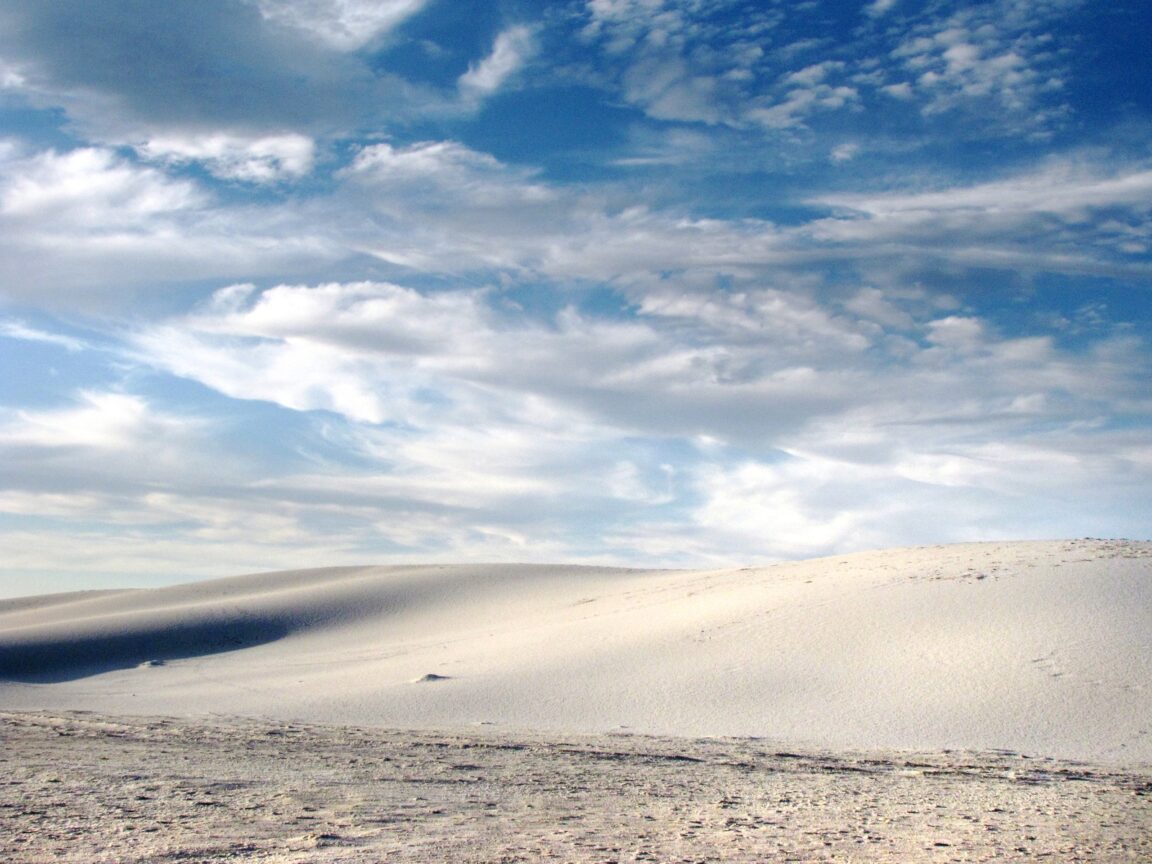
Photo: White gypsum dunes under a wide sky at White Sands National Park, New Mexico, NPS Photo, National Park Service via NPGallery (nps.gov), public domain, used with credit. Visually verified: the park’s white dunes, asset titled Sky and sand.