 Aiko Tanaka
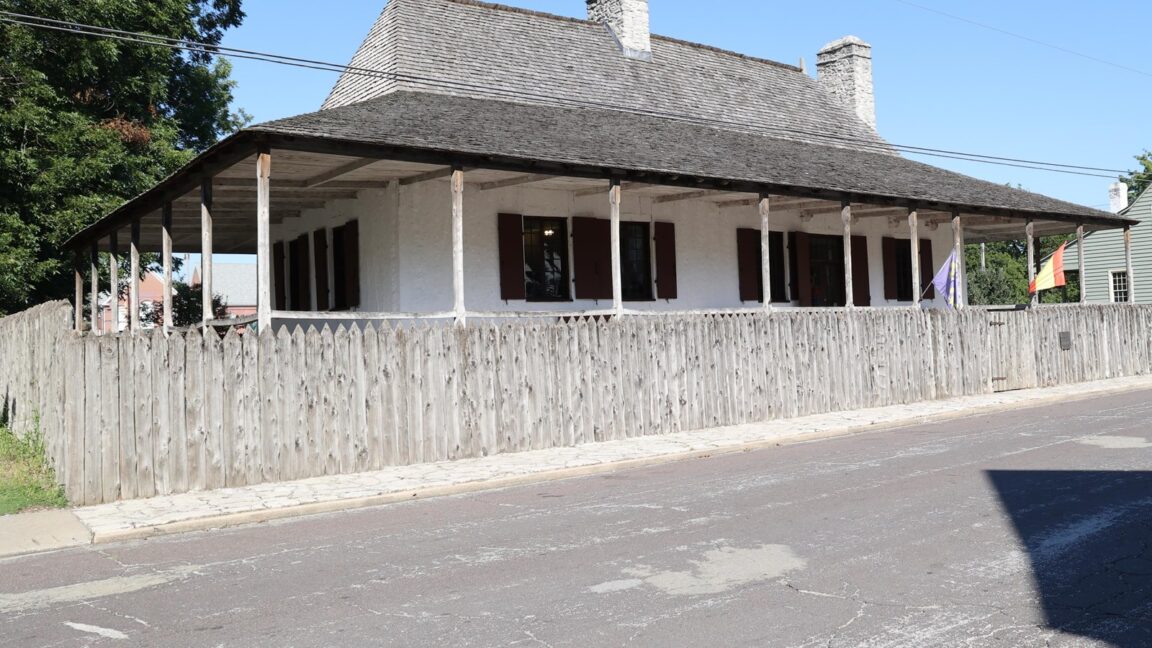
Ste. Genevieve is the oldest permanent European settlement in Missouri, and it still reads that way on foot: a compact grid of streets above the Mississippi River where French colonial houses built from vertical logs survive in numbers found nowhere else in the United States. Come for the Louis Bolduc House and its palisade fence, stay for a full day that layers a national historical park, a state historic site, Creole food and a river ferry into one walkable loop. The town sits about an hour south of St. Louis, entry to the national park sites is free, and almost everything in this story is within a ten minute walk of the Welcome Center on South Main Street.
Quick Facts
- Where: Ste. Genevieve, Missouri, on the west bank of the Mississippi River, about 60 miles south of St. Louis
- Start here: Ste. Genevieve Welcome Center, 66 South Main Street, shared by the town and Ste. Genevieve National Historical Park
- Park hours: 9 am to 5 pm daily from March to October, 10 am to 4 pm daily from November to February, closed Thanksgiving, Christmas Day and New Years Day (National Park Service)
- Cost: National park entry and ranger tours are free; the Bolduc House campus is run by French Colonial America and charges its own admission
- Signature building: Louis Bolduc House, first occupied around 1793, National Historic Landmark since 1970
- River link: Ste. Genevieve to Modoc ferry across the Mississippi to Modoc, Illinois, running Wednesday to Sunday, weather and river permitting
- Best base: One full day on foot, with a second morning if you add the ferry and the wineries west of town
Why does Ste. Genevieve look so different from other river towns?
Most American river towns were rebuilt in brick after fires, floods and booms. Ste. Genevieve kept its first architecture because its French Creole builders worked in a tradition carried from Canada and the Caribbean: walls made of vertical logs rather than horizontal ones. The National Park Service singles out two surviving methods. In poteaux sur sole, or post on sill, upright timbers sit on a horizontal sill beam above a stone foundation. In the rarer poteaux en terre, or post in ground, the timbers go straight into the earth, a technique so perishable that only a handful of examples survive anywhere in North America. Ste. Genevieve holds an unusual concentration of both, wrapped in wide galleries, the deep shaded porches that run around the houses, and topped with steep Norman style roofs.
The town itself moved to earn that survival. French settlers first farmed the rich bottomland across the river and on the west bank in the mid 1700s, and after severe flooding in 1785 the community rebuilt on the higher ground where the historic district stands today. That relocation is why a visitor now walks an intact late 1700s streetscape rather than a reconstruction: the houses were carried uphill, log by log in some cases, and the town that grew around them stayed small enough that later centuries layered in rather than bulldozed through.
What should you see at the Bolduc houses first?
Start at 123 South Main Street, where the Louis Bolduc House stands behind its pointed wooden palisade fence, the stockade that once marked a town lot boundary and kept livestock out of the garden. According to the National Park Service, the house was first lived in around 1793 by the Bolduc family, whose wealth came from trade, farming and lead mining, and that standing shows in the furnishings and decoration. It was built in the poteaux sur sole style with a hipped Norman truss roof, then heavily modified over the following century and a half before a mid 1900s restoration returned it to a close approximation of its original appearance, refurnished with original 18th and 19th century household goods. The Park Service notes that the restoration was judged one of the best restored examples of French Creole architecture in the United States, which led to National Historic Landmark designation in 1970.
Next door, the Bolduc LeMeilleur House tells the next chapter. The Park Service dates it to about 1821 and describes a modified French Creole style that mixes vertical timbers with red brick, a bookend to the colonial period that shows American building habits arriving in a French town. The two houses are seen together on guided tours run through French Colonial America at the Centre for French Colonial Life, the museum campus on Market Street that interprets the Bolduc properties. Build your morning around a tour here, because the interiors, the gallery construction and the bousillage infill between the posts, a mix of clay and straw or hair, only make sense with the construction explained at close range.
How does the national historical park fit into a day on foot?
Ste. Genevieve National Historical Park is one of the newer units in the park system, and it works differently from a fenced park with a gate. Its buildings are woven through the living town, and the Welcome Center at 66 South Main Street doubles as the place to ask rangers what is open, which houses have tours that day and how the schedule is running. The Park Service lists standard hours of 9 am to 5 pm daily from March to October and winter hours of 10 am to 4 pm daily from November to February, with closures on Thanksgiving, Christmas Day and New Years Day. Ranger led tours of park houses are free but can require a same day reservation made in person, and group sizes are small, so the single smartest move of the day is to arrive at opening, book your tour slots, and then fill the gaps with the partner sites.
Two park houses anchor the story alongside the Bolduc campus. The Green Tree Tavern on St. Marys Road is described by the town visitor authority as Missouri oldest verified building, dated to 1790 by dendrochronology, the science of tree ring dating. It began as a tavern and trading post and now sits inside the national park, a vertical log building that predates the Bolduc House and shows the commercial side of the settlement. The Jean Baptiste Valle House, across from the Welcome Center, was the home of the town commandant and grounds the political history of a place that answered, in turn, to France, Spain and then the United States after the Louisiana Purchase. If you are tracking how park access rules are changing across the system this year, our guide to US national park reservations in 2026 explains which parks kept timed entry and which dropped it.
What else fills the afternoon?
The Felix Valle House State Historic Site adds the American era merchant story, a Federal style limestone building from the 1820s with a historic store, run by Missouri State Parks on Merchant Street. Between sites, the historic district rewards slow walking: the Memorial Cemetery holds burials from the town earliest generations, the courthouse square and South Main Street carry the Creole and German layers that followed the French founding, and the riverfront levee gives you the working Mississippi that made the town necessary in the first place. For lunch and dinner, expect a small town mix of cafes, bakeries and winery kitchens rather than a long restaurant row, with the wine country west of town, along the Route du Vin, close enough for a late afternoon tasting run if you have a car and a designated driver.
The comparison that helps most visitors is New Orleans, the other great French Creole city on the river, and the two reward being read together: Ste. Genevieve is the rural, vertical log original, New Orleans the urban, later flowering. If the river is pulling you south next, our roundup of the best hotels in New Orleans for a first visit picks up the story where this town leaves it.
How does the Modoc ferry change the trip?
Drive or cycle north on Main Street, following the railroad tracks to the ferry landing, and the Ste. Genevieve to Modoc ferry, nicknamed the French Connection, carries cars, motorcycles, bicycles and foot passengers across the Mississippi to Modoc, Illinois in about 10 to 15 minutes. The town visitor authority lists the ferry as operating Wednesday to Sunday, year round when weather and river conditions permit, and advises calling the Welcome Center for current status before you rely on it, because river levels have shut this crossing down for long stretches in past drought and flood years. For cyclists it is an official crossing point for the Mississippi River Trail, and for drivers it turns a dead end day trip into a two state loop through southern Illinois. Treat it as a bonus rather than a promise: check status in the morning, cross early if it is running, and keep the bridge route through Chester as your backup.
When is the best time to go?
Spring and fall suit Ste. Genevieve best, with mild weather for a walking day, the full 9 am to 5 pm park schedule from March to October, and the ferry most likely to be running on a settled river. Summer brings heat, humidity and afternoon storms off the river, workable if you tour interiors at midday and walk early and late. Winter is quiet and atmospheric, but the park shifts to 10 am to 4 pm hours and some partner sites trim their days, so a winter visit needs the Welcome Center hours checked twice. Festival weekends and French heritage events fill the small lodging stock fast, which is the one time this easy day trip needs booking ahead.
Frequently Asked Questions
Is Ste. Genevieve National Historical Park free to visit?
Yes. Entry to the national historical park and its ranger led house tours is free. The Bolduc House campus is operated separately by French Colonial America and the Felix Valle House is a Missouri state historic site, so those partner sites set their own admission and hours.
How long do you need in Ste. Genevieve?
One full day covers the Welcome Center, a Bolduc campus tour, the Green Tree Tavern, the Jean Baptiste Valle House and an unhurried walk of the historic district. Add the Modoc ferry or the wine route west of town and a second morning makes the trip feel complete rather than rushed.
What does poteaux sur sole mean?
It is French for post on sill, a building method in which vertical logs stand on a horizontal sill beam set on a stone foundation. Ste. Genevieve also preserves the rarer poteaux en terre, post in ground, method, and the contrast between the two is the core of the town architecture story.
Can you still ride the ferry to Modoc?
Yes, when the river allows it. The town visitor authority lists crossings Wednesday to Sunday with a 10 to 15 minute crossing time, and advises calling the Welcome Center the same day to confirm, since high water, low water and weather all stop the boat.
How far is Ste. Genevieve from St. Louis?
About 60 miles, roughly an hour by car via Interstate 55 and Highway 61, which makes it one of the easiest history day trips in the Midwest and an easy overnight pairing with a St. Louis weekend.
Image: The Louis Bolduc House behind its palisade fence in Ste. Genevieve, Missouri. Photo: National Park Service, via nps.gov. Prices and hours checked November 18, 2026.