 Rafael Santos
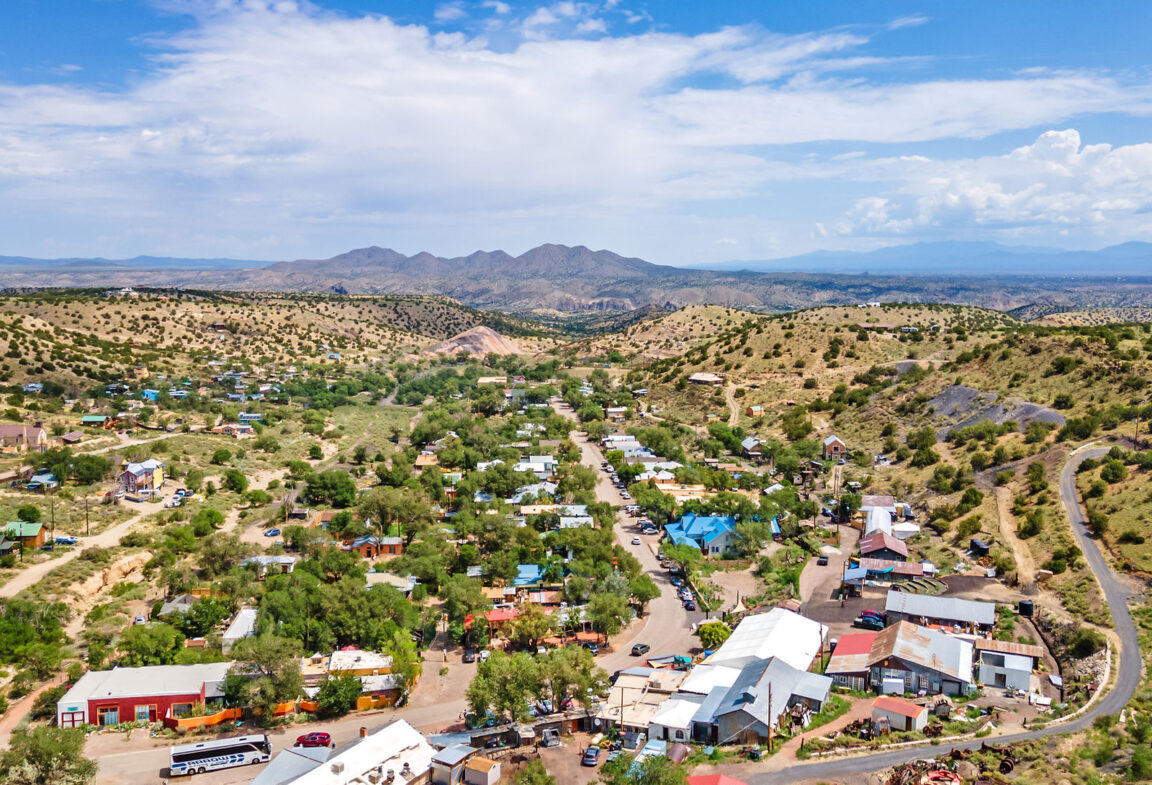
Madrid, New Mexico is a coal town that died and came back as an art village, and you can read both lives in a single walk down its one main street. Pronounced MAD rid, not like the Spanish capital, the village strings along New Mexico State Road 14, the Turquoise Trail National Scenic Byway between Santa Fe and Albuquerque, where more than 40 galleries, shops and cafes now occupy the converted miners cabins of a company town that once supplied coal to the Santa Fe Railroad. Anchor the visit at the Mine Shaft Tavern, rebuilt in 1947 and still the social center of town, then walk the gallery row, step into the Old Coal Town Museum and, if you come in December, stay for the Christmas parade and lights that revive a tradition famous enough in the 1920s and 1930s that airlines once diverted flights so passengers could see it.
Quick Facts
- Where: Madrid, Santa Fe County, New Mexico, on NM 14 (the Turquoise Trail), about 25 miles southwest of Santa Fe and about 40 miles northeast of Albuquerque
- Say it right: MAD rid, with the stress on the first syllable
- Population: 247 at the 2020 census, against several thousand in the coal era
- Anchor sight: Mine Shaft Tavern and Cantina, 2846 NM 14, current building completed in 1947, with a 40 foot lodge pole pine bar billed by the tavern as the longest stand up bar in New Mexico
- Gallery count: More than 40 galleries, shops and restaurants along the main street boardwalks, per the town visitor site and Santa Fe tourism sources
- Museum: Madrid Old Coal Town Museum, entered through the Mine Shaft complex, with Engine 769, a 1900 steam locomotive, on the grounds
- Best timing: A half day pairs with Cerrillos and the rest of the Turquoise Trail; December adds the Christmas parade and town lighting
How did a coal camp become an art village?
Coal mining began around 1835 in the gulch the miners called Coal Gulch, and the town that became Madrid grew up as a company town of the Albuquerque and Cerrillos Coal Company after the Santa Fe Railroad extended a spur line in 1889. At its peak the mines west of the Mississippi trade supplied coal for the railroad and the US Government, and the company town that housed the miners was anything but rough: Madrid fielded the Madrid Miners baseball team, built what local histories call the first lighted ballpark in the Southwest, and under mine superintendent Oscar Huber staged Christmas light displays so elaborate that, by the town own retelling, TWA flights were rerouted overhead at night so passengers could look down on them.
The end came with the diesel locomotive. When the railroad stopped burning coal in the 1950s the mines closed, the company sold off what it could, and Madrid emptied into a genuine ghost town for roughly two decades. The revival began in the 1970s, when artists and craftspeople bought the cheap, solid miners cabins, turned the best of them into studios and galleries, and kept the bones of the coal town intact while changing its economy from extraction to art. That is the walk you take today: a company town street plan, with a gallery in almost every cabin, and a population of 247 at the 2020 census doing the work of a place ten times its size.
Why does every visit start at the Mine Shaft Tavern?
Because the tavern is the one business that bridges both Madrids. The original tavern was established around 1895, burned down on Christmas Day 1944, and was rebuilt under Oscar Huber, with the current Mine Shaft Tavern completed in 1947 as the last company town structure built in Madrid. The tavern own history, published on its official site, notes that much of the interior is the same today, including the 40 foot lodge pole pine bar, built long so miners could stand at it after a day hunched underground, and billed as the longest stand up bar in New Mexico. Above the bar and behind the stage, paintings by Tinkertown folk artist Ross Ward retell Madrid history from mining days to the melodrama era, and the adjoining Engine House Theatre keeps that performance tradition going.
Today the tavern and its cantina deck are the town living room: roadhouse cooking built around the Mad Chile burger, New Mexico microbrews on tap, live music on weekends and a patio that looks over the village. Film and television crews found it too. The tavern interior stood in for the Red Pony bar in the series Longmire, and Madrid itself played the biker town in the 2007 film Wild Hogs, which is why the main street can feel oddly familiar on a first visit. Hours and the music calendar change by season, so check the tavern official site before you build an evening around it.
What should you look for on the gallery row?
The galleries are the point of modern Madrid, and they reward browsing on foot rather than driving cabin to cabin. More than 40 galleries, shops and restaurants line both sides of NM 14 as it slows through town, most of them in converted miners cabins along wooden boardwalks. The mix is deliberately uncurated: Cerrillos turquoise and Santo Domingo Pueblo jewelry in one doorway, glass art and an old fashioned soda fountain in the next, painting, pottery, fiber art, photography and vintage finds further along. Prices run from postcard level to serious collector work, and many spaces are the artist own studio, so the person behind the counter is often the person who made what is on the wall.
Give the row at least two unhurried hours and work it in one direction, then back on the other side, because the cabins read differently from each approach and the light in the Ortiz Mountains changes fast. Riders on the Turquoise Trail, motorcyclists especially, treat Madrid as the natural midpoint stop between Santa Fe and Albuquerque, and weekend afternoons can fill the boardwalks. Come on a weekday morning and you will have the galleries, and the conversations that come with them, largely to yourself. For a slower small town counterpoint in a very different landscape, our guide to Salento and the Cocora Valley in Colombia follows another former working town that learned to live by welcoming visitors well.
Where does the coal story survive intact?
At the Madrid Old Coal Town Museum, reached through the Mine Shaft property, where the exhibits cover the full arc: mining tools and a view of the coal seam economy, the Madrid Miners baseball years, the ghost town decades and the Christmas displays. Outside stands Engine 769, a steam locomotive built in 1900 that worked the railroad the mines existed to serve, and ringing its bell is the sanctioned hands on moment of the visit. The museum grounds hold the industrial clutter the galleries cleaned out of the cabins, ore carts, machinery and shaft structures, and it is the stop that stops Madrid from feeling like a stage set. Budget 45 minutes, more if a volunteer is telling stories.
Complete the context with the drive itself. The Turquoise Trail runs about 50 miles between Santa Fe and Albuquerque through Cerrillos, where turquoise was mined for centuries before coal mattered, and Golden, another mining camp turned quiet village. If the high desert is your landscape, pair this trip with our guide to Amangiri in Utah, the luxury end of the same Southwest desert story, and notice how Madrid sits at the opposite, handmade end of it.
What happens in Madrid at Christmas?
The Christmas tradition is not a marketing invention; it is the town oldest claim to fame. In the coal era the company owned the electric plant, power was effectively unlimited, and Madrid lit itself so extravagantly for Christmas, with displays including a Toyland and tens of thousands of lights by contemporary accounts, that it drew visitors from across the state and, in the town telling, those diverted airliners. The displays died with the mines in the 1950s. The artists who revived Madrid revived the lights too, from the mid 1970s onward, in a handmade register that suits the new town: a Christmas parade led in recent years by a yak, costumed residents, decorated vehicles, dogs in costume, and a townwide lighting contest along Main Street, with galleries staying open late on December weekends. It is joyful, slightly unruly and entirely local, and it is the one time of year when this village of under 300 people needs you to arrive early for parking.
How do you plan the stop?
Madrid works best as a half day inside a Turquoise Trail day: drive NM 14 south from Santa Fe, stop in Cerrillos for the historic main street and Cerrillos Hills State Park trails, spend the middle of the day in Madrid, and continue to Albuquerque, or reverse the order. There is no fuel and limited services in the village itself, parking is along the highway shoulders and side lots, and cell coverage fades in the gulches, so download directions before you leave the interstate corridor. Lodging in town is a handful of inns and vacation cabins that book out on festival and December weekends; Santa Fe, 25 miles away, is the practical base for most visitors.
Frequently Asked Questions
How do you pronounce Madrid, New Mexico?
MAD rid, stressed on the first syllable. Locals will correct the Spanish style pronunciation gently and immediately, and using the local version is the fastest way to stop sounding like a first timer.
Is Madrid a real ghost town?
It was one, for about two decades after the mines closed in the 1950s, but today it is a lived in art village of 247 residents at the 2020 census, with more than 40 galleries and businesses. The ghost town layer survives in the museum, the mine structures and the cabin architecture, not in abandonment.
What is the Mine Shaft Tavern known for?
Its 40 foot lodge pole pine bar, billed as the longest stand up bar in New Mexico, its 1947 company town building, Ross Ward history paintings, the Mad Chile burger, weekend live music and its screen role as the Red Pony interior in Longmire.
When is the Madrid Christmas parade?
The parade and town lighting launch the holiday season in early December, with events and late gallery hours on December weekends. Dates are set each year by the local business community, so confirm the current year schedule on the town visitor site before driving out.
How long do you need in Madrid?
Three to four hours covers the tavern, the museum and a full gallery row walk. Add Cerrillos and the Turquoise Trail overlooks and it becomes a satisfying full day between Santa Fe and Albuquerque.
Image: Aerial view of Madrid, New Mexico, looking along Main Street (NM 14) through the village toward the Ortiz Mountains. Photo: Visit Madrid, NM, the town official visitor site, visitmadridnm.com. Details checked November 18, 2026.