 River Callahan
A first trip to Lassen Volcanic National Park in northeastern California has to be settled in one order, and it is not the order most people use. Settle the park highway window first, because the 30 mile road decides whether the rest of the trip exists at all. Settle Bumpass Hell second, because the park’s largest hydrothermal area is a summer and fall experience reached only when that highway is open. Settle the Manzanita Lake base third, because the cabins and campground in the park’s northwest corner are the easiest place to sleep while you work through the first two. And settle all three with November in mind: the National Park Service closed the park highway for the season on November 6, 2026, so a trip planned today is either a summer or fall trip built around the next opening, or a winter trip that looks completely different from the postcards.
Quick Facts
- Park: Lassen Volcanic National Park, northeastern California, open 24 hours a day, 365 days a year
- The decision order: park highway window first, Bumpass Hell second, Manzanita Lake base third
- Park highway: 30 miles of Highway 89 connecting the northwest and southwest entrances, open to through traffic only in the snow free months, roughly June to November
- 2026 highway season, for reference: opened May 22 and closed November 6, per the park’s historic opening and closing table
- Bumpass Hell: the park’s largest hydrothermal area at 16 acres, reached by a 3 mile round trip trail, open approximately June through October
- Best first timer base: Manzanita Lake, at 5,800 feet in the northwest corner, with the park’s largest campground and its only camping cabins
- Cabins: 20 rustic cabins, reservations required through recreation.gov, open mid May through mid October
- Entry: $30 per private vehicle for 7 days in the high season, card only, the park does not accept cash, and no entry reservation is required
- November reality: the through drive, the Bumpass Hell trail and the cabins are all out of season; winter visits run on snowshoes and skis from the two entrance areas
- Facts checked: November 18, 2026, against nps.gov
Why does the park highway have to be settled first?
Almost everything a first timer wants at Lassen sits along or beyond one road. The Lassen Volcanic National Park Highway is a 30 mile stretch of Highway 89 that winds around the east side of Lassen Peak and connects the northwest and southwest entrances. The park plans a one hour drive time for it without stops. When it is open, a visitor based at Manzanita Lake can drive through the high country to the Bumpass Hell trailhead, Lake Helen and the southwest entrance in a single arc. When it is closed, the park splits into two separate entrance areas with no through route between them.
The window is set by snow, not by a calendar the park controls. The highway crosses avalanche prone slopes and can hold a snowpack up to 40 feet deep, and the park states plainly that it has no established date for the full opening. Clearing usually begins in March or April and takes about two months. Across the historic record the road has opened as early as May and as late as July, and closed as early as October and as late as December. In 2026 a lighter snowpack brought a May 22 opening, and the road closed on November 6. In 2025 it opened on June 27 and closed on October 24. A June trip and a late May trip are not the same bet, and an early November trip can lose the through drive to the first settled snow.
So the working rule is simple. Pick dates in the heart of the window, from late June through early October, if Bumpass Hell and the full drive both matter to you. Treat May, late October and November as shoulder gambles that need a Plan B. Then check the park’s Alerts and Conditions page again in the week before you travel, because temporary closures for ice, rockfall and early storms can bite even inside the season.
What does a November or winter visit look like instead?
It looks like a different park, and it can still be a good one, as long as nobody arrives expecting the summer version. Once snow settles in, usually from November to May, vehicles go no further than the Loomis Plaza at the northwest entrance and the Kohm Yah-mah-nee Visitor Center at the southwest entrance. The Manzanita Lake area stays accessible year round on its gentler, lower slopes, and the southwest area, which starts at 6,700 feet and receives the most snow, becomes the park’s steep snow play and snowshoeing ground. The visitor center keeps winter hours, open Friday, Saturday, Sunday and holidays from 9:30 am to 4:30 pm, closed on Thanksgiving Day and Christmas Day, while the Loomis Museum at Manzanita Lake closes for the winter.
The park’s conditions page shows how quickly the season turns. On November 15, 2026, the park reported 5 to 6 inches of wet, heavy snow at the Kohm Yah-mah-nee Visitor Center, a dusting at Manzanita Lake and 18 inches at the Lower Lassen Peak site. Winter travel here is over snow travel: snowshoeing and skiing along the closed highway corridor and around the lakes, with limited services and weather checked the same morning. Bumpass Hell is not part of that picture. Its trail is a snow free season route, and the park closes it when snow and ice cover the tread, even when the road itself is open to vehicles.
How does the Bumpass Hell boardwalk actually work?
Bumpass Hell is the largest hydrothermal area in the park, a 16 acre basin of boiling pools, mud pots and roaring fumaroles, which the park describes as vents of steam and volcanic gas. The system underneath is straightforward geology. Rain and snowmelt sink into the highlands, are heated by hot rock beneath Lassen Peak, and rise again as boiling water and superheated steam. The Bumpass Hell Trail is a 3 mile round trip from a parking area on the park highway, 7 miles from the Southwest Entrance, and inside the basin a boardwalk carries visitors up close to the features. The park lists the trail season as approximately June through October, which is why it belongs second in the planning order: it only exists as a walk up visit when the highway window and the trail season overlap.
The safety rule has no exceptions. Visitors must stay on the trail and the boardwalk in every hydrothermal area, and off trail travel in those areas is prohibited. The ground beside the boardwalk can be a thin crust over boiling, acidic water. Allow time for the altitude as well as the distance: this is a high elevation trailhead, and the walk back out of the basin climbs. Go early for cooler air and a quieter boardwalk, carry water, and treat the park’s trail conditions page as the final word on the morning you hike, because snow patches can hold a closure in place after the road opens.
One consolation belongs in every plan. Sulphur Works, the park’s most easily accessed hydrothermal area, sits beside a sidewalk one mile north of the Southwest Entrance, with mud pots and steam vents visible without a hike. In the open road season it works as a fallback if Bumpass Hell is closed. In winter, once the road closes beyond the visitor center, reaching it becomes an over snow outing rather than a roadside stop.
Why is Manzanita Lake the right base for a first visit?
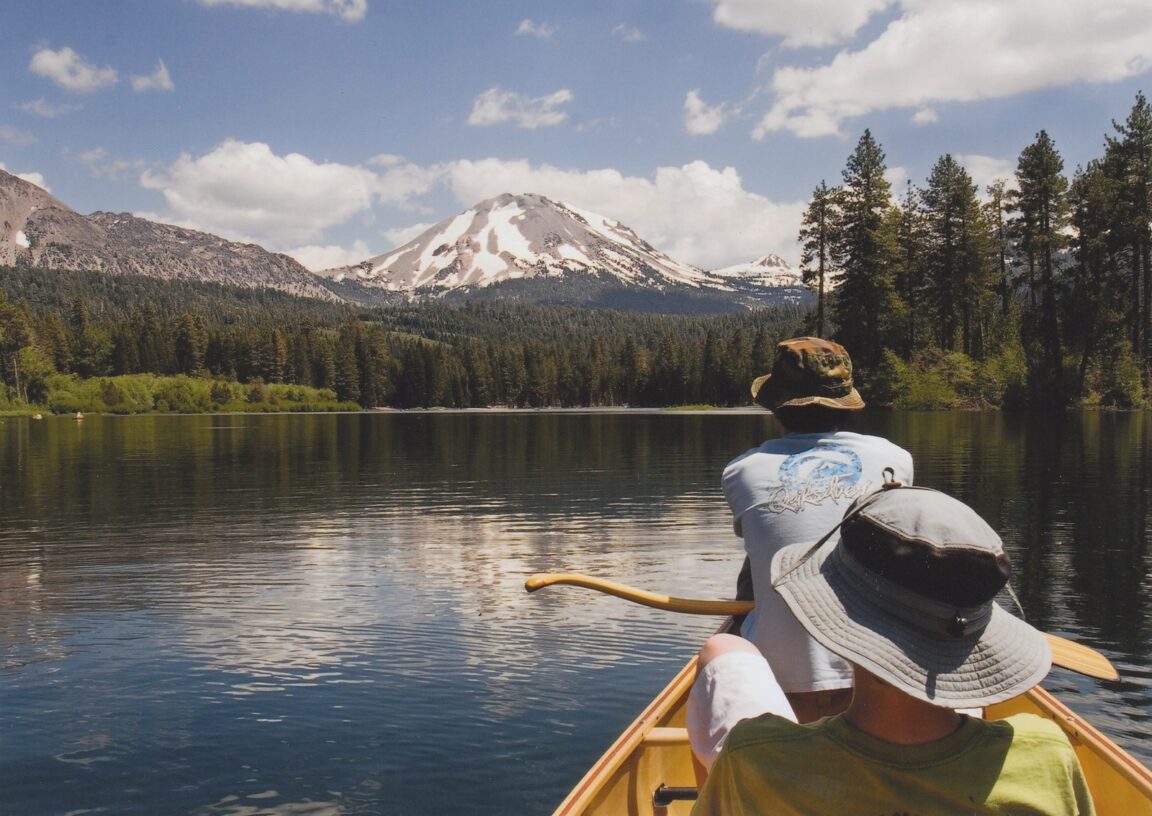
Manzanita Lake sits at 5,800 feet in the northwest corner of the park, and the park calls the area the one with the most amenities, popular with campers and families. The lake itself is the calm counterweight to the hydrothermal areas: a flat 1.8 mile loop trail circles it, the short Lily Pond Nature Trail adds an easy second walk, and the lake allows swimming, fishing and non motorized boating. The Loomis Museum and Loomis Plaza anchor the area in season, with ranger programs nearby, and the Manzanita Lake Camper Store, open mid May through mid October, covers groceries, gasoline, hot showers and a laundromat in one stop. For a first timer, that combination removes most of the friction from a park where services are otherwise thin and spread out.
The base also de risks the calendar. Because the Manzanita Lake area is accessible year round and the highway closes beyond Loomis Plaza rather than at the entrance, a shoulder season stay here still works when the through drive does not. You lose Bumpass Hell and the high country, but you keep the lake, the plaza and the northwest entrance trails. If your dates sit near the edges of the highway window, sleep northwest.
The campground is the park’s largest, and its season shows the same pattern as everything else at Lassen. Full service dates at Manzanita Lake ran May 23 to October 7 in the park’s current operating schedule, with Loops A and B shifting to dry camping from October 8 until the snow closure. Reservations are required at the park’s campgrounds and are made through recreation.gov, so a summer weekend site is a book early item, not a drive up hope. Readers comparing park entry systems will find Lassen refreshingly simple on that front, as our guide to US national park reservations in 2026 sets out: this park asks for campsite and cabin reservations, but no timed entry ticket and no entry reservation at all.
What do the Manzanita Lake cabins include, and what do they leave out?
The first loop of the Manzanita Lake Campground holds 20 rustic camping cabins, the only cabins in any park campground at Lassen, offered in three models: two room, one room and bunkhouse. Each cabin includes at least one bed with a mattress, propane heat and a propane lantern, a picnic table, a fire ring and a bear resistant storage locker, and the one room and two room cabins add a table and chairs. Four cabins, numbers 1, 8, 14 and 18, are wheelchair accessible. What the cabins do not include matters just as much for packing: bedding and linens are not provided, so sleeping bags or your own bedding are part of the reservation, not an afterthought.
Two administrative facts catch people out. The park does not manage the cabins. They are run by the park concessioner, Snow Mountain LLC, operating as Lassen Lodging, and reservations are made through recreation.gov. And their season, mid May through mid October, ends weeks before the campground’s dry camping tail and long before the lake area’s year round access does. A cabin stay is therefore a summer and early fall plan. Anyone picturing a cozy cabin base for a November snow trip is picturing a product that is closed, which is exactly the kind of mismatch this guide exists to prevent.
What does entry cost, and what should the first days look like?
Entrance fees apply year round. The standard pass for one private, non commercial vehicle costs $30 and is valid for up to 7 consecutive days in the high season, with a discounted rate in winter, and the park does not accept cash, so payment is by card at the Southwest and Manzanita Lake entrance stations or online through recreation.gov when a station is unstaffed. The park’s own annual pass costs $55 and also covers Crater Lake National Park, Whiskeytown National Recreation Area and Lava Beds National Monument for a year, which makes it the sensible buy for a northern California and southern Oregon road trip. America the Beautiful passes are honored as well. No reservation is required to enter the park itself.
With the order settled, a first summer trip assembles itself. Arrive through the northwest entrance, settle into Manzanita Lake, and use the first afternoon for the lake loop and the Loomis Museum while you adjust to the elevation. Give the park highway its own unhurried day, driving south past Lake Helen, and walk the Bumpass Hell Trail in the morning before the boardwalk crowds build. Keep Sulphur Works and the Kohm Yah-mah-nee Visitor Center for the end of that drive, and hold one spare half day in reserve for weather or a slow morning on the lake. First timers planning a wider California park circuit can pair this trip with our look at Pinnacles National Park beyond the famous sight, another California park where choosing the right entrance decides the day, and with the first timer approach in our Badlands National Park first timer guide, which uses the same settle the logistics first method.
Frequently Asked Questions
Is Lassen Volcanic National Park open in November?
Yes, the park is open 24 hours a day, year round, but a November visit is a winter visit. In 2026 the park highway closed for the season on November 6, the Manzanita Lake cabins had already ended their season in mid October, and the Bumpass Hell trail was out of season. November visitors get the two entrance areas, Manzanita Lake and over snow travel, not the through drive or the hydrothermal boardwalk.
When is the best time for a first visit to Lassen Volcanic?
Late June through early October is the dependable window, because the park highway, the Bumpass Hell Trail season of approximately June through October, the cabins and the Camper Store all overlap then. The highway has opened as late as July in heavy snow years, so the earliest summer dates still deserve a conditions check.
Do I need a reservation to enter Lassen Volcanic National Park?
No entry reservation is required. Reservations are required for campgrounds and for the Manzanita Lake camping cabins, both booked through recreation.gov, and entrance fees apply year round whether or not a station is staffed.
Can I stay in a cabin inside the park?
Yes, in season. The 20 rustic cabins at Manzanita Lake Campground are the park’s only campground cabins, they run mid May through mid October, and they are managed by the concessioner Lassen Lodging rather than the park. Bring your own bedding, because linens are not provided.
How long is the Bumpass Hell hike?
The Bumpass Hell Trail is 3 miles round trip from the parking area on the park highway, 7 miles from the Southwest Entrance, ending at a boardwalk through the 16 acre basin. Stay on the trail and boardwalk at all times, because the crust beside them can be thin over boiling water.
What if the park highway is closed during my trip?
Build the trip around one entrance instead of two. From the northwest, Manzanita Lake, Loomis Plaza and the lake loop remain accessible year round. From the southwest, the Kohm Yah-mah-nee Visitor Center stays open year round with reduced winter hours, and the area becomes a base for snow play, snowshoeing and skiing rather than road touring.