 Sofia Rossi
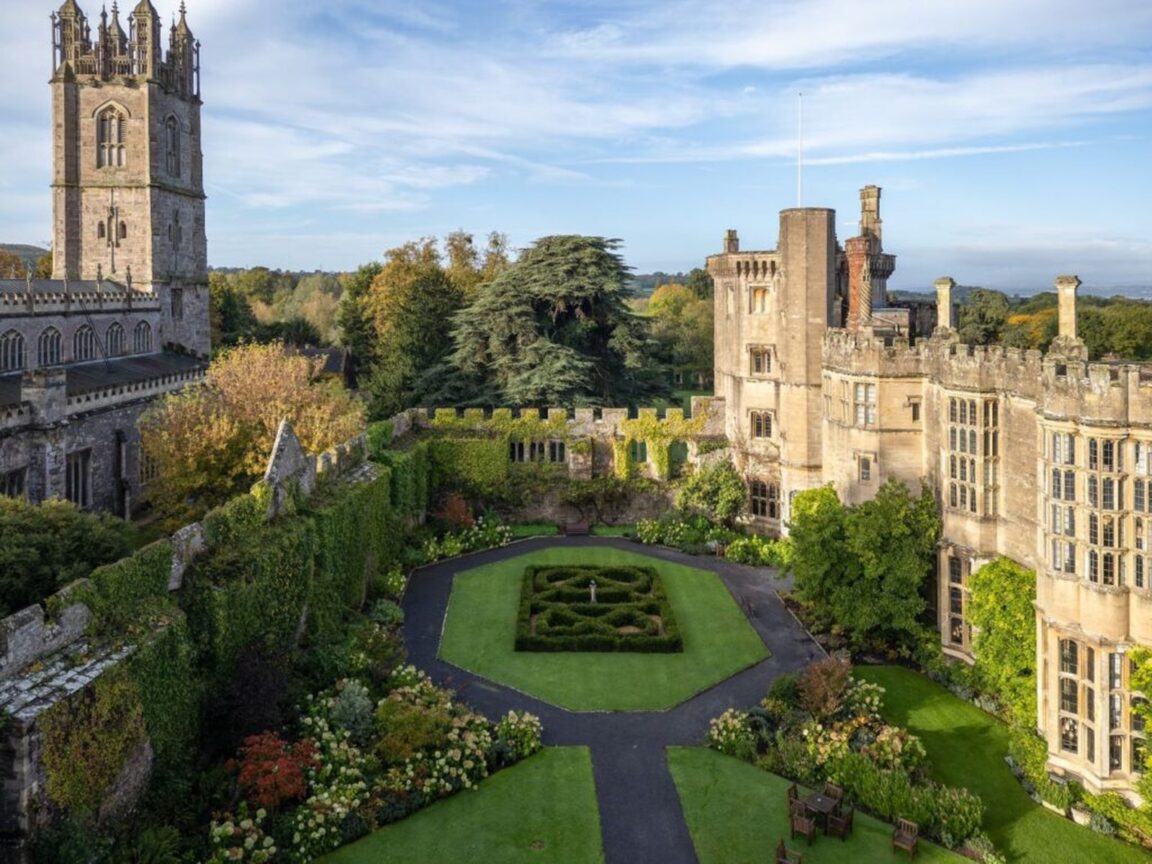
Thornbury Castle is the real thing, not a themed imitation: a genuine Tudor palace where Henry VIII and Anne Boleyn stayed for ten days in 1535, now a Relais and Chateaux hotel with 27 bedchambers, a 3 AA Rosette restaurant, gardens inside castellated walls, and a vineyard in the outer court. It is the only Tudor castle in England open as a hotel, it sits in the market town of Thornbury in South Gloucestershire, and as a stay it delivers the rarest trick in British hospitality: sleeping inside the history lesson, about 20 minutes from Bristol and within day trip reach of Bath.
Quick Facts
Where: Castle Street, Thornbury, Gloucestershire BS35 1HH, just north of Bristol; the hotel notes it is only 20 minutes drive from Bristol
Built: Begun in 1511 for Edward Stafford, 3rd Duke of Buckingham, who was executed in 1521; the castle was then taken by Henry VIII
The royal stay: Henry VIII and Anne Boleyn stayed ten days in 1535, during their summer progress, per the castle’s history
Rooms: 27 individually designed bedchambers, including tower suites and the Duke’s Bedchamber
Dining: 3 AA Rosette restaurant, per the hotel, with produce from the castle’s kitchen garden
Grounds: Walled Tudor gardens, a vineyard in the outer court, a kitchen garden, lawns, and the neighbouring parish church of St Mary
What is the history you are sleeping inside?
Edward Stafford, 3rd Duke of Buckingham, began remaking his manor at Thornbury in 1511 into one of the grandest houses in England, a palace in all but name, with a gatehouse, castellated walls, and gardens laid out in the newest Tudor taste. It was a dangerous statement. Buckingham was executed for treason in 1521, Henry VIII seized Thornbury, and in 1535 the king brought Anne Boleyn here for ten days on their summer progress, sleeping in what is now marketed, with some justification, as the Duke’s Bedchamber. Princess Mary, later Mary I, also lived at Thornbury for periods. After centuries of decline into a romantic ruin, the Howard family restored the castle in the 19th century, and the building that greets you now is that layered result: Tudor bones, Victorian restoration, and a modern luxury hotel fitted carefully inside both.
The hotel leans into the story without turning it into a pageant. Its own site describes a retreat channelling 1520s grandeur, lists activities from falconry and birds of prey displays to axe throwing, and runs a restaurant it rates at 3 AA Rosettes, serving British inspired cooking in panelled dining rooms a short walk from your bedchamber. That combination, genuine fabric plus working hotel, is the whole appeal. Compare the English country house model at Heckfield Place in Hampshire, a Georgian estate hotel, and the difference is clear: Heckfield is a house in a landscape, Thornbury is a fortress palace in a town.
What are the bedchambers actually like?
There are 27 of them, each individually realised behind heavy wooden doors, in the hotel’s phrase, and the range runs from classic bedchambers in the main ranges to suites up the spiral stone stairs. Expect the Tudor vocabulary: four poster and coronet beds, oriel windows, tapestries, panelled walls, and bathrooms thoroughly modernised behind the historic fabric. The Tower Suite, the highest bedchamber in the castle, is the headline for romantics; the Duke’s Bedchamber carries the Henry VIII association. A two bedroom gatehouse cottage in the castle yard suits families who want the grounds without the stairs, and the stairs matter: this is a 500 year old building, with steep spirals, uneven thresholds, and no lift serving the tower rooms, so anyone with limited mobility should talk to the hotel about the ground floor and courtyard rooms before booking.
What do you do at Thornbury besides sleep Tudor?
The grounds are the daytime programme. Inside the walls sit formal gardens on Tudor lines, a kitchen garden that supplies the restaurant, lawns for croquet, and, in the outer court, the vineyard, first planted in the 1970s and producing Thornbury Castle’s own white wine, which appears on the restaurant list and in tastings in the old dungeon cellar. Garden tours run with the head gardener, archery and falconry can be arranged, and the parish church of St Mary, whose tower rises beside the castle garden, completes a view that has barely changed in outline for centuries. The town of Thornbury itself is a few minutes walk: a proper Gloucestershire market town with pubs, delis, and a high street, which makes the castle feel lived around rather than marooned.
Dinner is the evening’s fixed point. The 3 AA Rosette restaurant spreads across historic dining rooms, the kitchen garden drives the menus, and private dining in the dungeon is the castle’s most theatrical table. Book dinner when you book the room; a castle this size, this close to Bristol, fills its restaurant with non residents on weekends.
Does Thornbury work as a base for Bristol and Bath?
Yes, with one honest caveat about driving. The hotel itself puts Bristol at 20 minutes drive, and Bristol Temple Meads station connects onward by rail, so a castle night pairs naturally with a city day. Bath is the longer run, roughly 45 minutes to an hour by road depending on traffic, entirely feasible as a day trip for the Roman Baths and the Georgian crescents, with the castle as the quieter, cheaper feeling alternative to Bath’s own premium hotels. The pattern that suits most guests is two nights: arrival and gardens on day one, Bristol or Bath on day two, dinner in the castle both nights. Drivers should note the castle is approached through the town, parking is on site, and the nearest mainline stations are Bristol Parkway and Bristol Temple Meads, both a taxi ride away. For the London end of an England itinerary, our guide to The Connaught in Mayfair covers the city counterpart.
Who should book Thornbury Castle, and who should not?
Book it for anniversaries, history obsessives, garden people, and anyone who has done the country house circuit and wants the older, stranger original. The castle is at its best in a two night stay with dinner both evenings, garden time in the morning, and one city day trip. Skip it if you need a spa resort, a lift to every floor, or a large hotel’s anonymity: Thornbury is small, personal, and unapologetically a 16th century building, with everything that implies for stairs, room shapes, and the occasional creak. Judged as a stay rather than a sight, that is precisely its value. Plenty of hotels describe themselves as historic. This one had a king and queen in residence in 1535, grows its own wine inside its walls, and lets you sleep up the same spiral stairs. There is nothing else quite like it in England, because, as the hotel rightly says, it is the only Tudor castle hotel there is.
Frequently Asked Questions
Did Henry VIII really stay at Thornbury Castle?
Yes. After seizing the castle from the executed Duke of Buckingham, Henry VIII stayed ten days in 1535 with Anne Boleyn during their summer progress, per the castle’s recorded history.
How many rooms does Thornbury Castle hotel have?
27 bedchambers, each individually designed, plus a gatehouse cottage in the castle yard. The hotel is a Relais and Chateaux property.
How far is Thornbury Castle from Bristol and Bath?
The hotel states 20 minutes drive to Bristol. Bath is roughly 45 minutes to an hour by road, making both workable as day trips from the castle.
Does Thornbury Castle have its own vineyard?
Yes. A vineyard stands in the outer court, planted in the 1970s, and the castle produces its own white wine, served in the restaurant and at cellar tastings.
Who built Thornbury Castle?
Edward Stafford, 3rd Duke of Buckingham, began the present castle in 1511. He was executed in 1521 and the property passed to the Crown.