 Rafael Santos
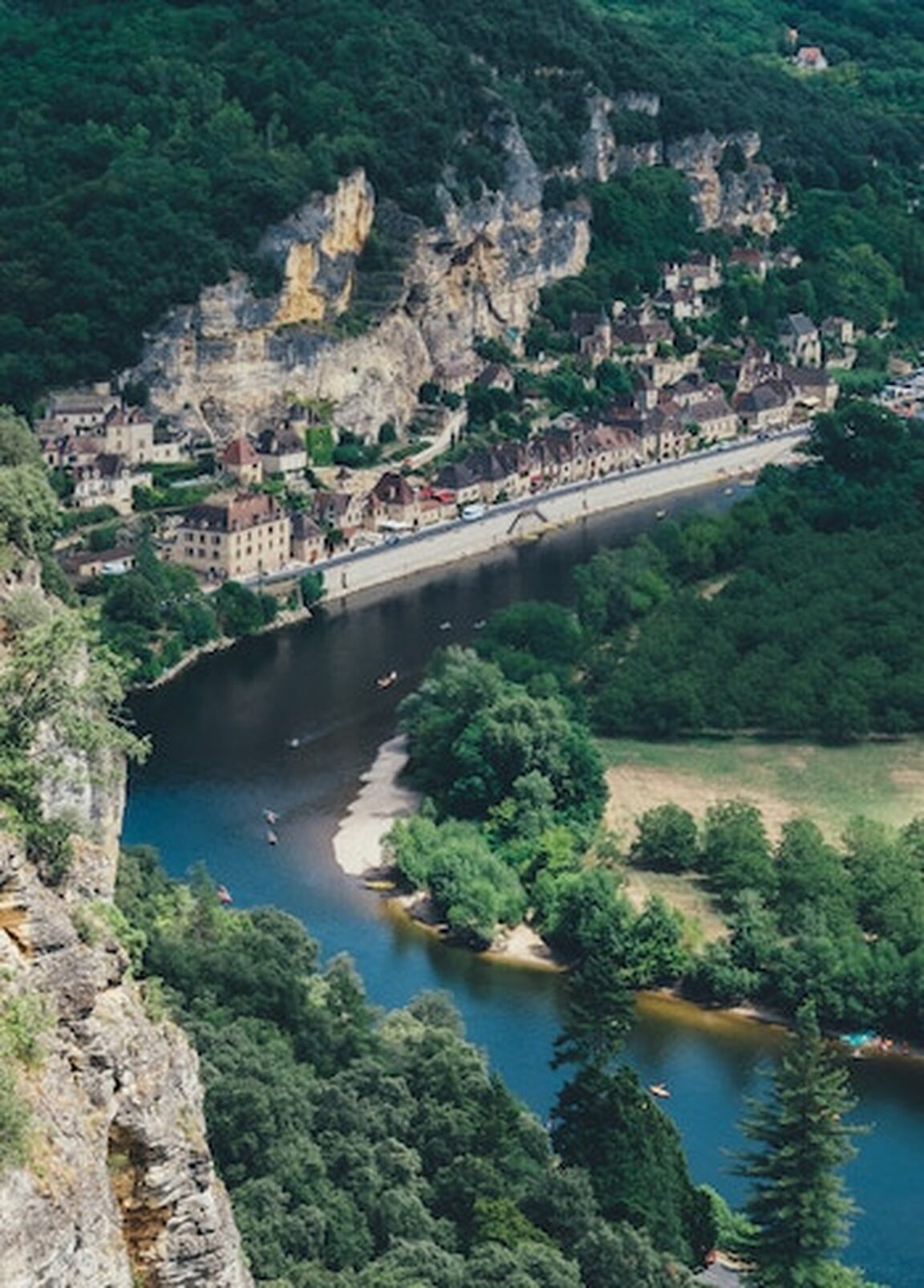
The classic Dordogne canoe day is a one way drift, not a workout: put in upstream around Cenac or Vitrac, let the current carry you past Domme, La Roque-Gageac, Castelnaud, and Fayrac, and finish beneath the cliff castle at Beynac, where a shuttle bus returns you to your car. The castles arrive in sequence from the water, the swimming beaches appear exactly when you want them, and the paddling required is mostly steering. It is the finest half day in the Perigord Noir, and it works because the river does the work.
Quick Facts
The classic route: Vitrac to Beynac, 16 km, about 3 hours of paddling, rated the best seller by Canoe Dordogne, the operator based at Vitrac
The Cenac start: Cenac to Beynac is about 13 km and roughly 3 hours with stops, sold by bases near the Cenac bridge below Domme
Short option: Vitrac to Castelnaud via La Roque-Gageac, 12 km, about 2 hours; Carsac to Vitrac, 9 km, about 1 hour 30 minutes
Prices, operator published: Canoe Dordogne lists routes from 11.50 euros for the 9 km, 12.50 euros for the 12 km, and 13.50 euros for the 16 km, with shuttle return included in the standard rental model
Castle sequence downstream: Domme above the bank, La Roque-Gageac, Malartrie, Castelnaud, Fayrac, then Beynac
Season: Rental bases operate through the warm months, typically spring to autumn; the river is at its busiest in July and August
How does the one way system actually work?
You park at the rental base, not at the finish. Bases cluster at Vitrac, Cenac, La Roque-Gageac, and Beynac, and the model is the same everywhere: check in, collect paddles, a buoyancy aid, and a waterproof barrel for phones, keys, and lunch, get a short safety briefing, and launch from the base beach. You paddle downstream only. At the arrival beach, staff collect the boat and the shuttle bus, the navette, drives you back up the valley to your car. Some bases bus you upstream first and have you paddle back to base instead; either way, the car, the boat, and the bus form a triangle that means nobody paddles against the current and nobody walks back along the D703 with a paddle.
That logistics detail is what makes the Dordogne different from a lake rental. The route is a journey with a plot: villages and castles in a fixed order, a beginning at a quiet upstream beach, and a finale under Beynac’s cliff. Book ahead in high summer, since the popular morning departures from Vitrac and Cenac sell out, and aim to launch by mid morning so the castle stretch falls in good light and the shuttle queues at the far end stay short. Travellers touring the wider southwest can pair the river day with the city framework in our 3 Days in Bordeaux guide.
What do you actually see, castle by castle?
Domme and the first reach: what opens the run?
From a Cenac or Vitrac start, the first landmark is Domme, the golden bastide town perched on its cliff high above the left bank. You see the town’s walls and rooftops from below, which is the angle the river gives you all day: the Perigord’s famous viewpoints inverted. The water here is wide, slow, and green, with pebble beaches on the inside of bends that become the day’s swimming and picnic stops.
La Roque-Gageac: why does everyone slow down here?
About 7.8 km below the Vitrac base on the operator’s route card comes La Roque-Gageac, a single golden street of houses pressed between the river and a sheer limestone cliff, with troglodyte dwellings in the rock above and gardens running down to the water. From a canoe it is the postcard of the whole valley, and it is also a practical stop: land for coffee, ice cream, and a leg stretch, or simply drift past slowly and take the photograph every Dordogne album needs. Just beyond it stands the small Chateau de la Malartrie, at 10.4 km on the same route card, a turreted manor right at the water’s edge.
Castelnaud, Fayrac, and Beynac: how does the finale build?
Castelnaud la Chapelle arrives at about 12.2 km, its great fortress on the hill above the village, the English stronghold of the Hundred Years War and now a museum of medieval warfare. Fayrac’s chateau follows at 13.2 km, private and photogenic across the meadows. Then the river bends, the cliff rises, and Beynac fills the sky: the French counterweight to Castelnaud, staring at its old enemy across the valley for six centuries. Finishing at the beach below Beynac et Cazenac, with the castle on its rock directly overhead, is one of the great arrivals in European travel, and it costs a rental fee and a bus ride. The valley’s landward story continues in our guide to Albi, in the neighbouring Tarn, another river town built from the same golden stone and old wars.
Which route length should you choose?
Match the distance to the day, not to your fitness, because the current sets the pace. The 9 km Carsac to Vitrac run, about 1 hour 30 minutes, suits families with small children and anyone canoeing for the first time. The 12 km Vitrac to Castelnaud run, about 2 hours, adds La Roque-Gageac and the best village scenery, and is the sweet spot for a morning on the water and lunch in a village after. The full 16 km Vitrac to Beynac run, about 3 hours of paddling before stops, is the one this article is about: the complete castle sequence and the Beynac arrival. The 25 km Carsac to Beynac option, about 4 hours 30 minutes, is a full day for paddlers who want the river more than the villages. With swimming stops, picnics, and a La Roque pause, add an hour to every operator estimate and the day will feel unhurried rather than behind schedule.
What should you know before you launch?
French river rules require that every paddler can swim, and bases enforce it; children wear buoyancy aids throughout, and everyone gets one in the barrel of kit regardless. Wear shoes that stay on in water, since the pebble beaches are the day’s landings, and put sunscreen on before the briefing, because shade is scarce mid river. The waterproof barrel floats and seals, but a phone in a second dry pouch inside it is the belt and braces standard. Water levels fall through summer, which slows the current and can mean the odd shallow scrape over gravel; spring runs are faster and colder. Finally, respect the finish time the base gives you: the last shuttle is a real deadline, and the valley road walk back is nobody’s idea of a finale.
How does the day fit together, hour by hour?
A well built canoe day runs like this. Arrive at the base by 09:30, park, check in, and take the briefing without rushing it, since the put in, the landing beaches, and the finish point are all explained once, on land. Launch by 10:00 and paddle the quiet first reach while the river is empty, stopping at a pebble beach for a first swim before La Roque-Gageac crowds the water around midday. Drift the village stretch slowly, land for coffee or an ice cream if the group wants it, then take the castle reach, Castelnaud, Fayrac, and the Beynac bend, in the early afternoon, when the light turns the limestone gold and the day boats have thinned. Land at the Beynac arrival beach by mid afternoon, hand back the kit, and take the shuttle up the valley with time left to climb to Beynac castle itself or drive the ten minutes to Sarlat for dinner. In July and August, shift everything an hour earlier: the river belongs to those who launch before the heat and the flotillas.
Frequently Asked Questions
How long is the canoe trip from Cenac to Beynac?
About 13 km and roughly 3 hours including stops, per the Cenac bases. The comparable Vitrac to Beynac route is 16 km and about 3 hours of paddling, per Canoe Dordogne’s published route card.
How much does Dordogne canoe rental cost?
Canoe Dordogne publishes from 11.50 euros for its 9 km route, 12.50 euros for 12 km, and 13.50 euros for the 16 km route to Beynac. Prices vary by base and season, and the shuttle return is part of the standard rental.
Do you paddle back upstream?
No. The system is one way: you drift downstream and a shuttle bus returns you to the base and your car, or buses you upstream first so you paddle back to base.
What castles do you pass on the classic route?
In downstream order: Domme above the bank, La Roque-Gageac village, the Malartrie, Castelnaud, Fayrac, and finally Beynac, per the operator’s route card distances.
Can beginners and children do the Dordogne canoe run?
Yes, on the shorter routes. The river is gentle, rental includes buoyancy aids and a briefing, and bases require that participants can swim. The 9 and 12 km routes suit first timers and families best.