 Jonas Lindqvist
Reykjavik does not fight the winter dark; it schedules around it, heats its pools against it, and once a year answers it with a column of light fired four kilometres into the sky from Videy Island. The city’s winter light culture runs from the October night the clocks go back, through the Imagine Peace Tower season, to the geothermal pool evenings where half the city seems to be sitting in hot water under a black sky. Visit in the dark months and this, not a checklist of sights, is the Reykjavik worth travelling for.
Quick Facts
Daylight: Reykjavik drops to roughly four to five hours of daylight around the December solstice, with long twilight at both ends of the day
Imagine Peace Tower: Yoko Ono’s memorial to John Lennon on Videy Island, unveiled 9 October 2007, lit each year from 9 October to 8 December and on selected dates after
Tower lighting hours: From 8 pm in October, 7 pm in November, and 6 pm in early December, running to midnight, per the tower’s published schedule
City pools: Eight municipal geothermal pool complexes run by the City of Reykjavik, adult entry 1,500 ISK, free with the Reykjavik City Card
Pool hours: Core pools such as Laugardalslaug open 06:30 to 22:00 on weekdays and 08:00 to 22:00 at weekends
Hot pots: Outdoor hot tubs at the city pools run roughly 38 to 44 degrees Celsius, against lap water near 28 degrees
What happens in Reykjavik when the clocks go back?
Iceland keeps a single time all year in one sense, since the country does not move its clocks, but the light moves dramatically on its own. Through October the day shrinks by several minutes daily, sunrise slides toward late morning, and the city crosses into the season when lunch is the brightest meal of the day. Reykjavik’s response is cultural rather than miserable: windows fill with candles and small lamps, the cafe day lengthens, outdoor life moves to the pools and the harbour paths at twilight, and the calendar fills with light festivals, concerts at Harpa, and the long run up to Christmas markets and New Year fireworks. Our two day framework in 2 Days in Reykjavik shows how to sequence the sights; this piece is about the rhythm underneath them.
What is the Imagine Peace Tower, and when is it lit?
The Imagine Peace Tower, Fridarsulan in Icelandic, is Yoko Ono’s memorial to John Lennon, installed on Videy Island in Kollafjordur Bay and unveiled on 9 October 2007, what would have been Lennon’s 67th birthday. Fifteen searchlights with prisms reflect a column of light vertically from a white stone wishing well inscribed with the words Imagine Peace in 24 languages. On a clear night the beam can reach around 4,000 metres, and the power comes from Iceland’s geothermal energy grid, a deliberate part of the work: a peace memorial that runs on the earth’s own heat.
The lighting season is the spine of Reykjavik’s autumn. The tower is lit every year from 9 October, Lennon’s birthday, to 8 December, the date of his death, starting at 8 pm in October, 7 pm in November, and 6 pm in December, and running to midnight. It returns around the winter solstice and New Year, when it stays lit all night on New Year’s Eve, again for Yoko Ono’s birthday on 18 February, and for a week around the spring equinox. You can watch the beam for free from the city waterfront, near the Sun Voyager sculpture, on any clear night in season. To stand at the base, you need the Videy ferry, which runs a limited winter service, mostly at weekends, so check the sailing times before building an evening around it.
Why do Reykjavik evenings happen in the pools?
Because the pool is the city’s living room. The City of Reykjavik runs eight geothermal pool complexes, and the ritual is year round and weatherproof: a thorough wash without a swimsuit in the changing room first, as the posted rules require, then out into the steam, a few lengths of the warm outdoor lap pool, and a long sit in the hot pots where neighbours, teammates, and grandparents conduct the real business of the city. Adult entry is 1,500 ISK across the municipal pools, and the Reykjavik City Card includes pool entry, which makes a nightly soak close to free for visitors who buy the card for museums anyway.
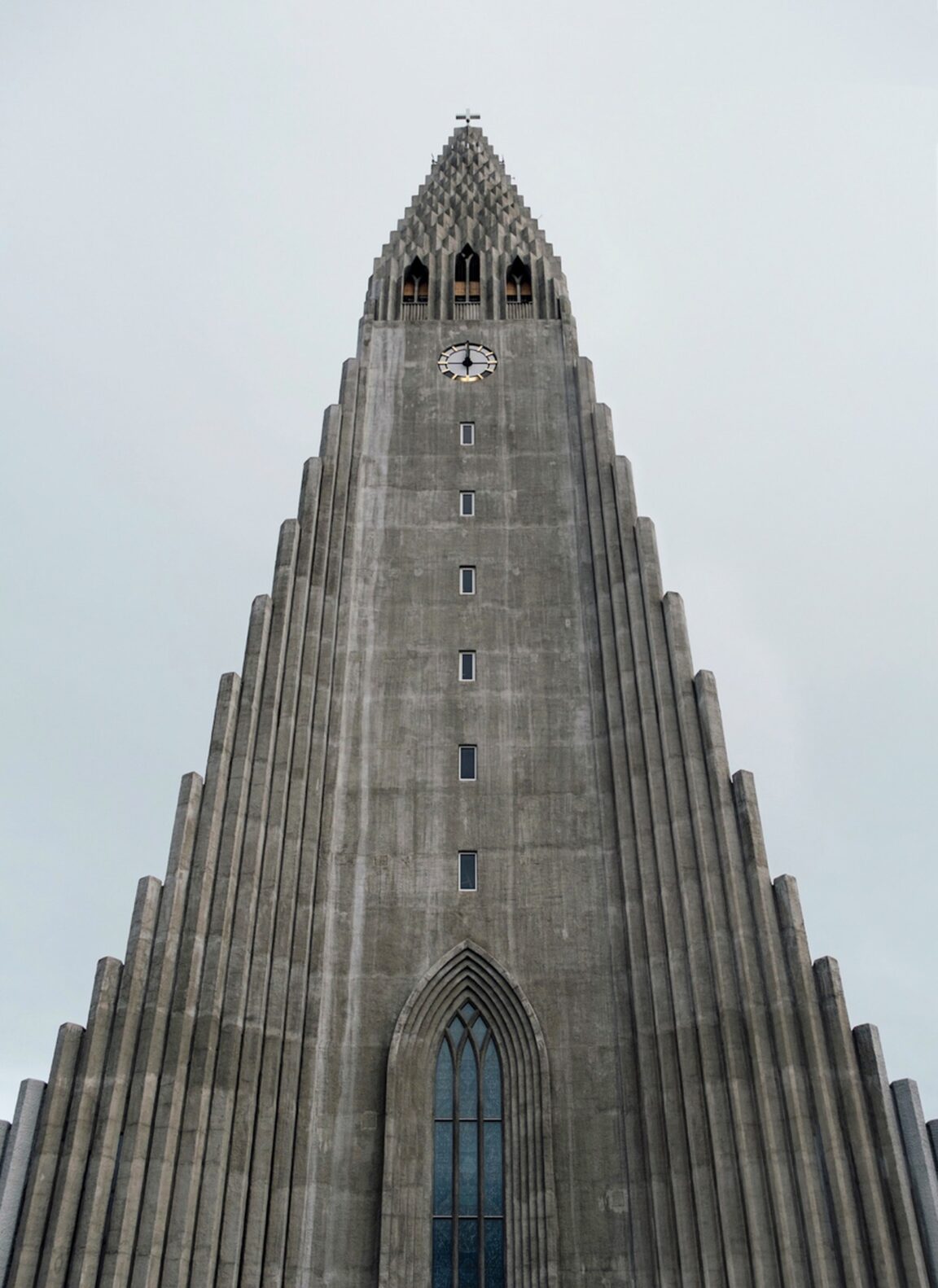
Three pools cover most visitor needs. Sundhollin, on Baronsstigur in the centre, is the city’s oldest pool, opened in 1937 in a neoclassical building by state architect Gudjon Samuelsson, with an indoor pool and rooftop hot tubs a short walk from Hallgrimskirkja, whose tower clock anchors the downtown skyline. Laugardalslaug, in the Laugardalur valley, is the largest: a 50 metre outdoor pool, indoor pool, hot tubs including a saltwater tub, a cold tub, steam, and slides, open 06:30 to 22:00 on weekdays. Vesturbaejarlaug, in the old west town, is the neighbourhood favourite, smaller and more local in feel. In winter darkness all three deliver the same essential scene: steam rising into floodlit black air, snow or rain falling through it, and nobody in a hurry. For the bigger spa version of the same idea, compare Sky Lagoon versus the Blue Lagoon, and for the north of the country, the Myvatn Nature Baths.
How do locals actually schedule a four hour day?
By treating daylight as an appointment, not a backdrop. Outdoor plans, runs, dog walks, football training, and any photography worth doing get stacked into the late morning to mid afternoon window, and the long twilights on either side are used for the harbour, the Grotta lighthouse path, and the pool. Work and school run on normal hours under artificial light, then the evening economy takes over: pools until 22:00, restaurants, cinemas, and the city’s dense calendar of gigs and exhibitions. Visitors do best copying the pattern exactly: one outdoor block at midday, culture and cafes in the dark hours, a pool in the evening, and the Peace Tower or an aurora check last, since both need full dark and a clear sky.
What should a visitor plan around the light, practically?
Time a trip between 9 October and 8 December and you get the full stack: Peace Tower season, pool evenings at their most atmospheric, pre Christmas Reykjavik, and a real chance of northern lights on clear nights outside the city glow. Book the Videy ferry only after checking the winter timetable, dress for wind rather than cold, since Reykjavik winter temperatures hover near freezing but the harbour wind cuts, and remember that heated pavements in the centre, warmed geothermally, keep the main streets walkable when side streets ice over. The dark is the attraction here. Plan for it, and Reykjavik in winter stops being a compromise and becomes the point.
What other light rituals fill the dark season?
The Peace Tower and the pools are the anchors, but the season is stitched together with smaller rituals. The Winter Lights Festival in February brings installations and illuminated trails to the centre, timed for the point when the day is visibly lengthening again. Restaurants and bars lean into candlelight as a matter of design rather than decoration. The harbour’s Grotta lighthouse, at the tip of the Seltjarnarnes peninsula, becomes the city’s informal aurora and sunset observatory, with the small Kvika hot footbath beside the path, built for exactly the winter ritual of sitting with your feet in geothermal water while the sky performs. Even the city’s famous hot dog stand and its coffee houses do seasonal work: in the dark months, warm indoor light spilling onto wet pavement is not a backdrop in Reykjavik, it is the social infrastructure. Visitors who build one of these small rituals into each dark evening, rather than waiting for a single big aurora night, come home understanding the city best.
Frequently Asked Questions
When is the Imagine Peace Tower lit in 2026?
Nightly from 9 October to 8 December, from 8 pm in October, 7 pm in November, and 6 pm in December until midnight, with further lightings around New Year, on 18 February, and around the spring equinox, per the tower’s published schedule.
How much does a Reykjavik city pool cost?
Adult entry is 1,500 ISK at the eight municipal pools, with entry included for Reykjavik City Card holders. Towel and swimsuit hire cost extra.
Can you see the Peace Tower beam without going to Videy Island?
Yes. On clear nights the beam is visible across the bay from the city waterfront, including near the Sun Voyager. The ferry is only needed to visit the monument itself.
How many hours of daylight does Reykjavik get in December?
Roughly four to five hours around the solstice, plus long twilight periods at both ends of the day that extend usable outdoor light.
What is the pool etiquette visitors must follow?
Wash thoroughly without a swimsuit, with soap, in the changing room before entering, as the city pools’ posted rules require. Phones and cameras are not allowed in changing rooms or pool areas.